On the possibility of leading an ethical life

Statue outside the National Archives in the snow

In response to a recent post, somebody asked: “Is it possible to live ethically in our society?”

The question is a surprisingly difficult one. One way to begin picking away at it is to present a common form of the argument that we cannot:

Premise 1: Society, as it exists, is unsustainable (here is an excellent and concise definition of the term)

Premise 2: By participating in society, we perpetuate that unsustainability

Premise 3: Unsustainable behaviour will eventually destroy the planet’s capacity to support humans and other species

Premise 3: It is wrong to destroy the planet’s ability to support future humans

Premise 4: It is wrong to destroy the planet’s ability to support non-human species

Conclusion: It is wrong to participate in society.

There are a number of possible responses to this argument:

1) Questioning the fact of unsustainability

The first is based purely on physical facts and projections about future physical facts. It is what might be called the MalthusLomborg axis, using the names of the most famous pessimist and optimist respectively. If you successfully disprove the claim that present society is unsustainable, you don’t need to worry about the other premises or the conclusion. The next possible approach is to say “Society isn’t monolithic, some bits are sustainable and some are not. As long as I am only supporting the sustainable bits, I am being ethical.” Beyond this, another approach is to say: “Society isn’t sustainable yet, but it will naturally become so in the future.” This is a version of the environmental Kuznets curve and it is an argument that has some possibility of being true.

2) Restricting the scope of who matters

One possibility that you will rarely hear argued is that we have no duty whatsoever to either (a) future generations or (b) people other than ourselves. If we can treat group (a) or both groups in any way we desire, the fact that society is unsustainable doesn’t matter. That said, you will not find many people arguing this position, probably because it offends virtually any general theory of ethics.

Many people reject the idea that it is wrong to harm non-human living things, except where such harm eventually causes harm to people.

3) Stressing the limitations of individuals

Another possible set of rebuttals are based around the scope of individual agency. A person can say: “The whole structure of society is unsustainable. I cannot change that. As a consequence, I am not responsible for the destruction induced by society.” This claim has a strong form – ‘I cannot change the whole world, so I have no duty to improve it at all’ – and a weak form – ‘I have a duty to improve the world, but don’t expect much from me.’ Another way of phrasing this is as a ‘no acceptable alternatives’ argument: “What am I supposed to do? Live naked in the woods, eating grubs and tree bark?”

4) Utilitarian arguments

Two more arguments are based around a kind of ethical calculation. The first says: “It is tolerable to do immoral things in some circumstances, provided the total sum of my actions is beneficial for humanity.” In this case, as long as a person has a net positive sum of morality, they can legitimately engage in limited forms of immorality. A somewhat different formulation is based on an idea of rationed wrongness: “Nobody can be expected to be perfectly good. As such, we each have a kind of ‘allowance’ for unethical behaviour. As long as we are spending within our allowance, we are ok.” The big difference here is that the ‘allowance’ is automatically disbursed as a recognition of human frailty, not earned through good deeds.

5) Competing duties

Yet another set of rebuttals is based on competing moral claims. A person can say: “I have a duty to care for my family, even if doing so involves participating in an unsustainable society.” This is a tricky one. It is also one that strikes close to why the kind of ethics being discussed here are so hard to achieve. In general, the unsustainable things we do provide relatively immediate benefits that are specific to us and the people who we know personally; the costs they impose are distant, diffuse, and largely born by people we will never know.

Tentative conclusions

What can we conclude about this? To begin with, it seems fair to say that most people are unaware of some significant ways in which actions they consider personal (driving a car, eating a sort of food, etc) impact others in a harmful way. It is also fair to say that no individual can possibly anticipate or understand the complete set of all outcomes arising from their behaviours. In addition to this, we must recognize the way in which contemporary economic structures can create huge distances between cause and effect. Just as a London banker’s cocaine-fuelled evening has affects in the coca growing regions of the Andes, much of what we consume as individuals affects other people at enormous distances.

Collectively, these realities imply a certain ‘duty of awareness.’ It is not ethically tenable to live in wilful ignorance about the consequences of our actions. Whether based on one of the forms of rebuttal above or something different, we need to have some kind of justification for our actions that measures up to what we consider their total set of effects to be. Estimating our impact and developing a justification almost certainly does not satisfy all our moral requirements, but it is probably a necessary step in any series of actions intended to do so.

The question of how we evaluate the relative plausibility of every person’s excuse is the really difficult one.

Impressions of Leopard

When I upgraded by Mac to Tiger (Mac OS 10.4), I wrote a bit about it. Now, it is Leopard‘s (10.5) turn.

The big new features are Time Machine (backup utility) and Spaces (multiple desktops). There are also incremental improvements to lots of prior features: Dasboard, the Finder (Coverflow added), Mail, Preview, Quick Look, Safari, and Spotlight. Time Machine is a good idea and seems to work well. The graphics strike me as a bit overdone. A simpler interface would use fewer system resources and might well be easier to use. That said, making backups a lot easier is a very welcome move. Startlingly few people have even a single comprehensive backup of all their data, much less the kind of rolling, iterated backup Time Machine produces. It also manages to do so in a far quicker and less obtrusive way than free options like Carbon Copy Cloner. Spaces is too clumsy to be of any use on my iBook. The F1-F12 keys already have too many demands made of them by screen and volume controls, Expose, and Dashboard. As such, I only briefly enabled this feature before rejecting it as essentially unusable. The new firewall also seems more confusing and troublesome than the old one.

Is Leopard worth the $100? Some of the little improvements are certainly nice. I like the Stacks feature that has been added, as well as the way the wireless network icon in the menu bar now shows which networks require passwords. That said, the improvements are relatively minor. I would not run out to buy this upgrade again. That will situation will probably change when common pieces of software begin to require it and developers begin to make better use of the new under-the-hood features.

One of the best things about a new operating system release is that it gives you the chance to prune things down. With Tiger, I used the option that simply replaced the operating system, leaving applications and data intact. That worked brilliantly but couldn’t be done this time, since it was a complete operating system failure that provided the immediate impetus for the upgrade. Backing up data, erasing everything, and starting over has left the computer running noticeably quicker. That is especially welcome on a system that is getting on in years and having increasing difficulty running applications smoothly.

I have taken this opportunity to abandon some more Microsoft software. Previously, I used Entourage (the Mac version of Outlook) because it was compatible with all the emails from my old PC. On the PC, I chose it originally because it would sync easily with my Palm Pilot (which has spent about four years collecting dust in a box in Vancouver). Switching to Mail and iCal was pretty straightforward, since I decided not to transfer over my old emails and to simply synchronize iCal with my Google Calendar. I don’t really like the Mail interface very much, but it does integrate better into the OS than Entourage did, as well as using fewer system resources.

All told, the Mac does feel as though it got a new lease on life. It will need to endure until I can justify redirecting sufficient funds from student loan repayment to buy a shiny MacBook.

Grass ( Fungus ( Virus ) Fungus ) Grass

Booth Street in snow

There is increasing scientific awareness of the intricate and essential ways in which different organisms depend on one another biochemeically. Termites could not eat wood without bacteria in their digestive tracts. Humans are likewise dependent upon the huge variety of microorganisms that comprise our microbiome.

Dichanthelium lanuginosum takes such intricacy a step further. It is a grass that lives in very hot soils – such as those in Yellowstone Park. ot only does it depend upon a fungus for its heat resistance, that fungus depends in turn upon a virus. Remove either the fungus or the virus and the grass can no longer live in its ordinary niche. Apparently, something similar has been observed in some tomato plants.

The example demonstrates just how shockingly complex the combination of biochemistry, ecology, and evolutionary biology really is.

Source: Márquez et al. “A Virus in a Fungus in a Plant: Three-Way Symbiosis Required for Thermal Tolerance.” Science 26 January 2007: Vol. 315. no. 5811, pp. 513 – 515.

Shopping season

Stepping into any shop these days is a simultaneous reminder of many things: the insipidness of holiday music, our society’s unfettered embrace of mass consumerism, and the deadweight losses associated with gift-giving (as discussed previously). In many cases, gifts cost more to the giver than they are worth to the receiver. Even in cases where that isn’t true, the products received are often unnecessary. Arguably, the expectation of gift giving perpetuates harmful expectations about the nature of friendship, romance, and family.

Anyone feeling inclined to give me a gift is encouraged to make a donation to Médecins Sans Frontières or Amnesty International. In my own life, I focus primarily on efforts to improve the world through incremental regulatory change. It is also good to support the people doing good work actively and immediately, addressing suffering and injustice at the point where they exist.

Conditional support for our troops

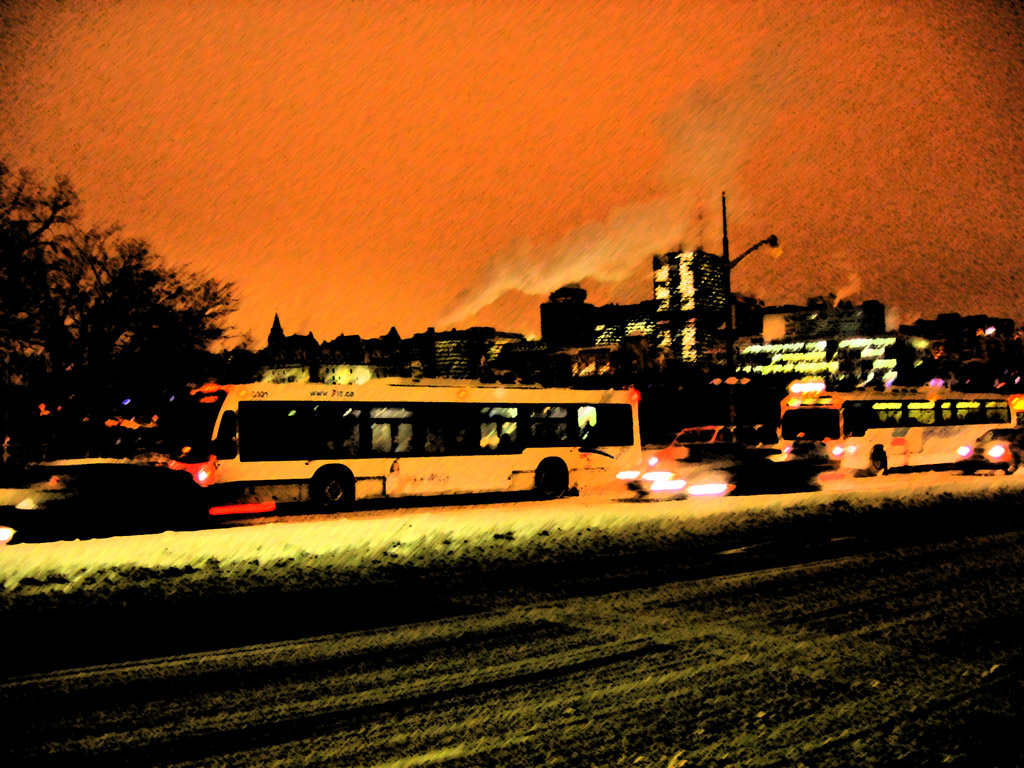
Ottawa commuters in the snow

Walking through the Rideau Centre yesterday, I came upon a cart selling t-shirts with various slogans on them. Beside the silly Che Guevara stuff was one shirt that caught my attention. In white letters on a red background it said “Support our Troops.” Under that were both a maple leaf and the flag of the United Nations.

It struck me as admirably post-nationalistic. We recognize the sacrifices made by members of the armed forces, but also that their conduct needs to be bounded by international law. While the sentiment is admirable, it sits uncomfortably with the reality of how ignorant most Canadians seem to be about what we are doing in Afghanistan. People really think we are mostly building bridges and distributing big bags of rice. The reality of the all-out war in which we are committed is very different.

That is not necessarily to say that we shouldn’t be fighting the Taliban along with our NATO allies; it is simply to highlight that Canadian governments manipulate the perception of Canada as a ‘peacekeeping nation’ to keep people from looking too closely at what our armed forces really do. The degree to which many people seem happy to continue to believe in the peacekeeping myth just because it makes them feel good is also problematic.

On watching empty vans roll by

In most cities, there are corridors through in which virtually every vehicle that enters at one specific point leaves at another. Examples include:

  • Vancouver: the causeway through Stanley Park and across the Lions Gate Bridge
  • Ottawa: Booth street between LeBreton and Eddy

In both of these places, I have spent long periods of time with large groups of people waiting for buses. Meanwhile, thousands of cars containing single invididuals have streamed past.Is there any way spontaneous mass hitchhiking could be made to arise in such circumstances? What are the barriers to that happening? Are there any places in the world where it would happen already?

It just seems spectacularly inefficient for thousands of empty seats – powered by powerful engines and emitting fumes for the enjoyment of those waiting – would stream pass crowds of cold, or wet, or even perfectly comfortable people waiting to pay for a spot (probably standing) in a publicly owned vehicle.

Reasons for vegetarianism

Reasons for vegetarianism

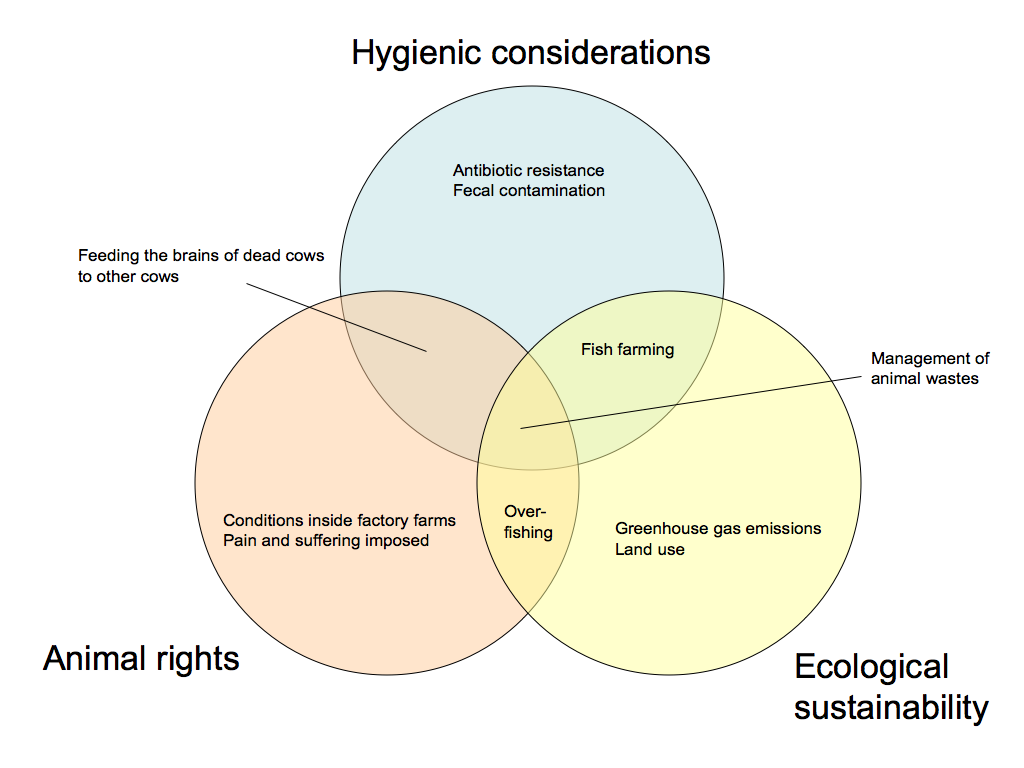
During the last few days, a number of people have asked about the reasons for which I am a vegetarian. As shown in the Venn diagram above, my reasons fall into three major clusters:

  1. Hygienic concerns
  2. Animal rights concerns
  3. Ecological concerns

Basically, the first category applies if you only think about your own immediate well being. If you are willing to consider the possibility that it is wrong to treat some animals in some ways, considerations in the orange circle start to apply. If you accept that we have general duties to preserve nature (or recognize that our long term survival depends on acting that way), issues in the yellow circle are of concern.

The specific issues listed are just examples. They are not exhaustive representations of all the problems in each area. Possible reasons for being vegetarian also exist outside these areas: for example, you can think it is wrong to eat meat when the grain used to fatten the animals could have alleviated the hunger of other humans.

A few issues are unambiguously in one area – for instance, the de-beaking of chickens is almost exclusively an ethical problem. The fact that no experimental laboratory could get ethical approval to treat their test subject animals in the way factory farmed animals are treated as a matter of course is telling. Some overlaps are ambiguous. Overfishing destroys the habitats of species I consider us to bear moral duties towards (such as whales and dolphins), even if the fish themselves can be legitimately used as means to whatever ends we have.

Naturally, different kinds of meat and processes of meat production do more or less well in each area. For my own sake, I think each of the three areas is sufficient in itself to justify vegetarianism. It is possible to imagine meat production that doesn’t have any of these problems, but it is an extreme rarity today and my appreciation for meat is not strong enough to justify the cost and effort of seeking it out. That said, I would be much happier if people who were going to consume meat made such choices, instead of helping to perpetuate the machinery of modern industrial farming.

Related prior posts:

Milan’s Ottawa

Last winter, I made a map of the parts of Oxford in which I would be likely to find myself over the course of a week.

Here is my approximate Ottawa map:

Map of the parts of Ottawa where Milan Ilnyckyj spends time

It is basically defined by three corridors, leading from my home to work, the grocery store, and the Rideau Centre. During the summer, it would certainly have a few more tendrils. That said, it is a safe estimate that 50% of my time is spent within the tiny (unmarked) rectangles of my cubicle and bedroom.

Starting over from 1769

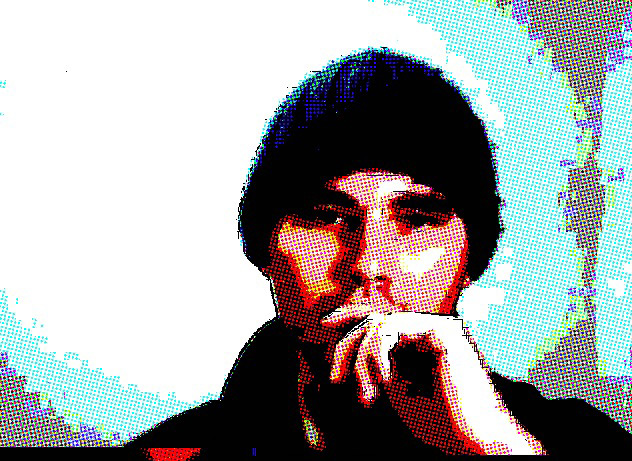
Milan Ilnyckyj in toque with comic book effect

In 1769, James Watt invented a steam engine that worked well enough to be widely adopted by industry. By doing so, he effectively kicked off the industrial revolution: with coal-fed steam engines emerging as the first alternative to animal power that didn’t depend on being beside a river or on a windy ridge. As the recently concluded conference in Bali shows, there were consequences of that invention and the series of successor ideas it kicked off that could not have been anticipated at the time (though Svante Arrhenius identified the possibility of CO2 causing anthropogenic warming back in 1896).

If we could do the whole thing over, what would we do differently? For the purposes of this thought experiment, imagine that we know about the ecological consequences of fossil fuel based industrialization, but we don’t have access to specific knowledge about how to build 21st century engines, power plants, etc. We know about ozone and CFCs, about heavy metal poisoning and nuclear waste. We do not know how to build a modern wind turbine or supercritical coal plant. We have just learned how to build Watt’s engine, and know nothing more.

I think it is virtually certain we would still choose to kick things off with coal and steam, even if we had the best interests of all future generations in mind. At the outset, the benefits of that kind of industrialization accrue both to those alive and to those who will come after. These benefits include many of the bits of technology that make our lives so much longer, healthier, and leisure-filled than those of the vast majority of our forebears. The idea that life in a pre-industrial society was somehow superior is plainly contradicted by archaeological data: you can argue that people were somehow happier while living with constant parasites and disease and dropping dead at thirty, but it is a lot more credible to argue the converse.

What, then, would we do differently? We would invest differently – putting a lot more effort into the earlier development of non-fossil options. We would probably try to limit population growth. Aside from some relatively minor cases like ozone depleting CFCs, it isn’t clear that we have made a great many straightforward ecological mistakes. Rather, the fundamental problem seems to be that of scaling: too much being demanded of the natural world, in conditions where individuals make choices that do not give due consideration to the welfare of their fellows and of future generations.

While future technologies like carbon capture and storage could play a significant role, the most important elements of an effective climate strategy have existed for a century. Fossil fuel generation capacity must be phased out and replaced with renewable options; transportation needs to to shift to low-carbon and eventually no-carbon forms; the forests and other carbon sinks must be protected and enhanced; and capacity to adapt to change must be developed. While the specific approaches we take in relation to these strategies could benefit from more knowledge about the future, their basic outline is already plain.

Now that we can no longer claim – as a society – to live in a state of deprivation, we have no excuse for continuing to rely upon the descendants of Watt’s machine.

Defending bike lanes over the web

MyBikeLane is an interesting concept in distributed social law enforcement. The idea is that people take photos of cars parked in bike lanes and then upload those to the site along with details on when and where the incident occurred. Since they can be sorted by license plate, the worst offenders can be easily identified. New York has by far the most active community, followed by Toronto.

Since I carry a digital camera at all times anyhow, I will keep my eyes peeled for possible contributions once I resume biking. For now, my small hybrid tires and the recollection of my nasty Halloween fall are keeping my bike in the basement.

I learned about the site from this interesting blog.