These photos are in addition to those that have already been posted on Photo.net and Facebook.
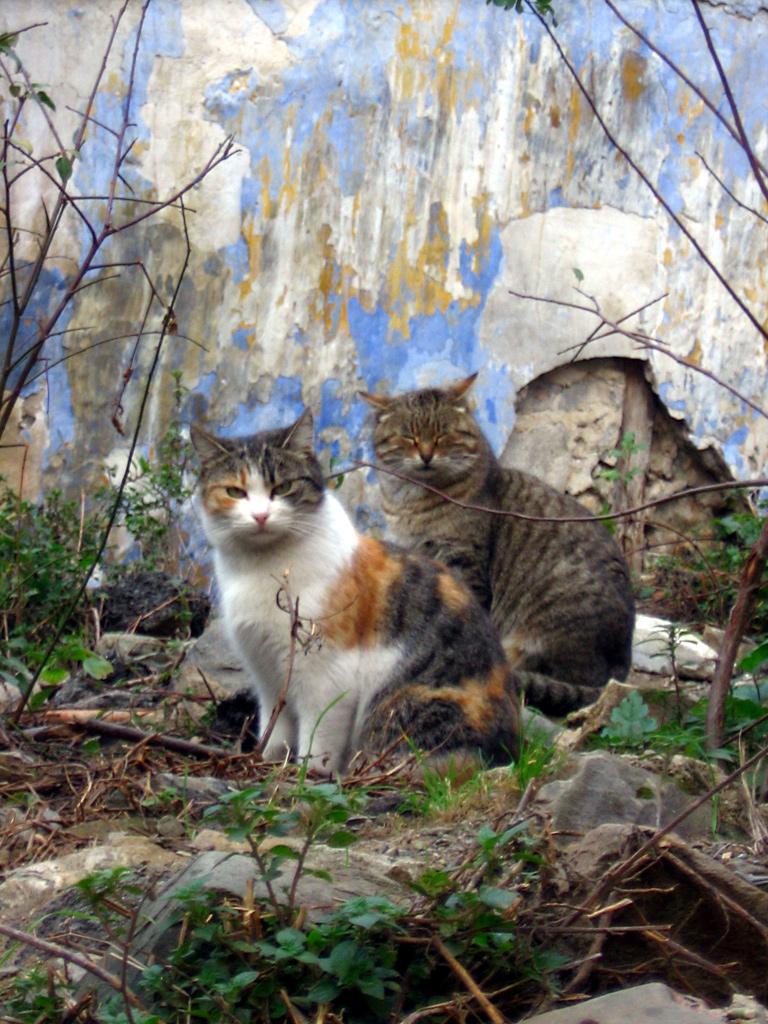
Cats in Asia.
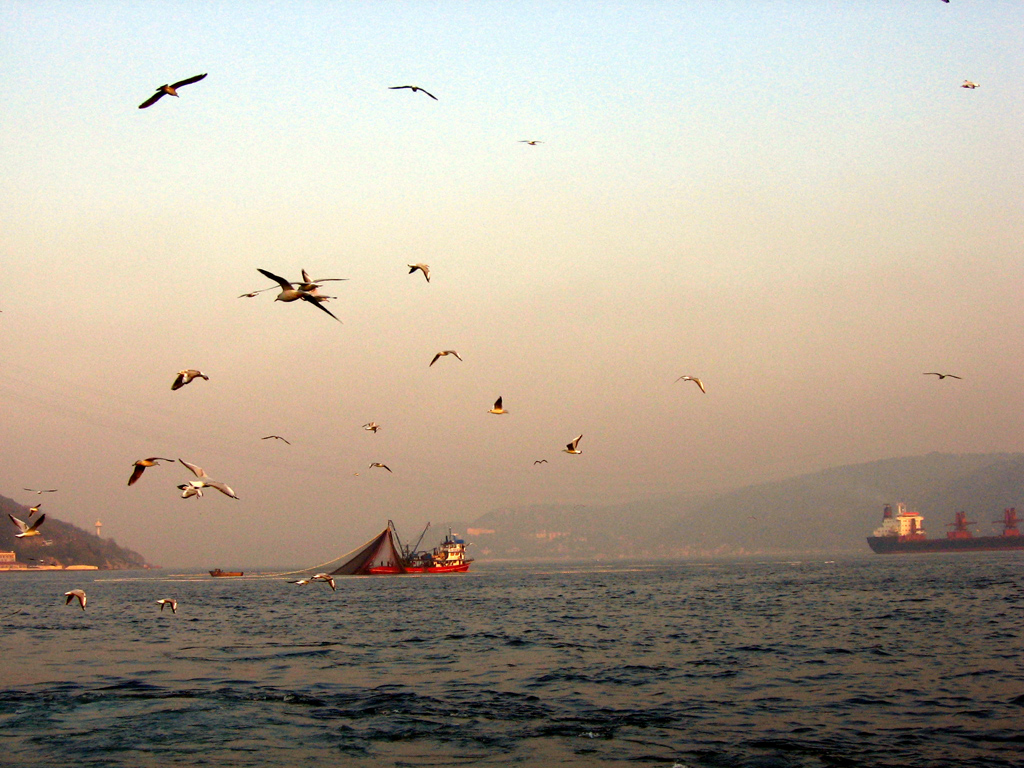
Purse seiner and gulls over the Bosphorus.

Tractor in Goreme.
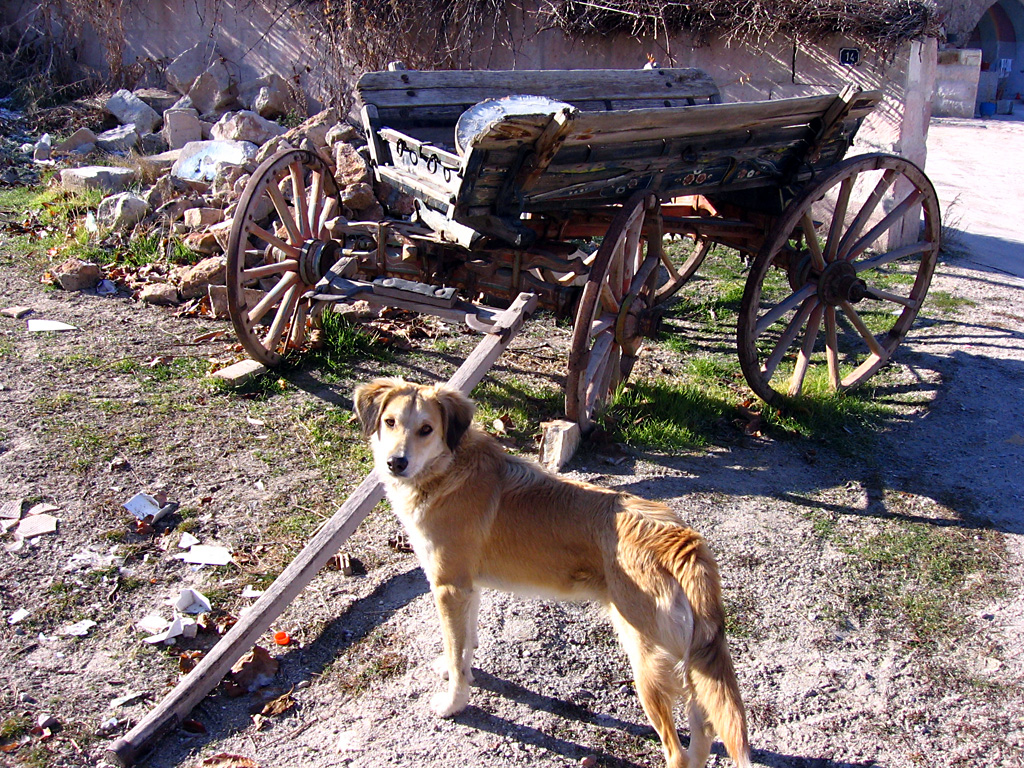
Dog in Goreme.

Fairy chimneys in Capadocia.
climate change activist and science communicator; photographer; mapmaker — advocate for a stable global climate, reduced nuclear weapon risks, and safe human-AI interaction

Prompted by numerous expressions of love and appreciation, I have decided to give the 30 day trial of TextMate a try, to see if it can turn my text editing world on its head and make me wonder how I ever got by without it.
So far, it reminds me of my experience with Emacs: “Well, this certainly seems powerful, but how do I save a file? No, really. I guess I will just boot back into Windows.”
Any true believers who want to show my why TextMate is worth the bother (as compared to TextEdit and WriteRoom, which I now use) are very much encouraged to do so. In particular, a straightforward page full of “look at the amazing things you can do with TextMate, and here’s how” stories would be ideal.
[Update: 21 January 2007] My TextMate trial expired today. While I liked the program quite a bit – it’s a big step up from TextEdit – I am not willing to pay forty Euros for it, given that I don’t use the coding features.
[Update: 24 October 2007] I finally caved and bought TextMate. I realized that it would have been worth the price just to have it between when I first pondered getting it and now. Being able to circumvent the (often slow and clumsy) WordPress web interface is worth it, in and of itself.
[Update: 1 November 2007] Integration between Fetch and TextMate is absurdly useful. It lets you edit HTML, PHP, htaccess, and all sorts of other files without needing to manually download and re-upload them through FTP.
[Update: 26 March 2011] It seems I decided back in November 2010 that TextMate is an ‘Essential’ Mac app, by means of an experimental process. So much has changed since we met!
[Update: 3 February 2013] TextMate remains one of my key tools: a program I use many times every single day, and my favourite place to enter text for all purposes from blog posts to academic essays to random personal notes to self. It is well worth the asking price.
[Update: 29 October 2014] TextMate is still my main text editor, and a program I use dozens of times per day. I use it a lot for typesetting LaTeX now.
These photos are in addition to those that have already been posted on Photo.net and Facebook.
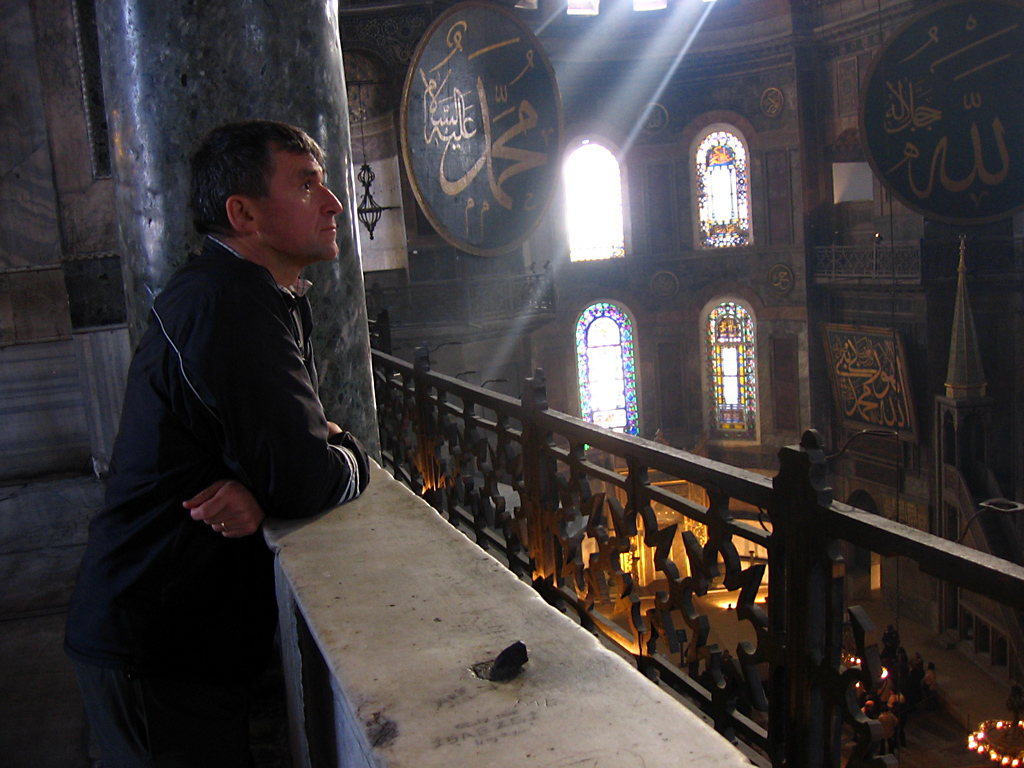
My father in the Hagia Sophia.
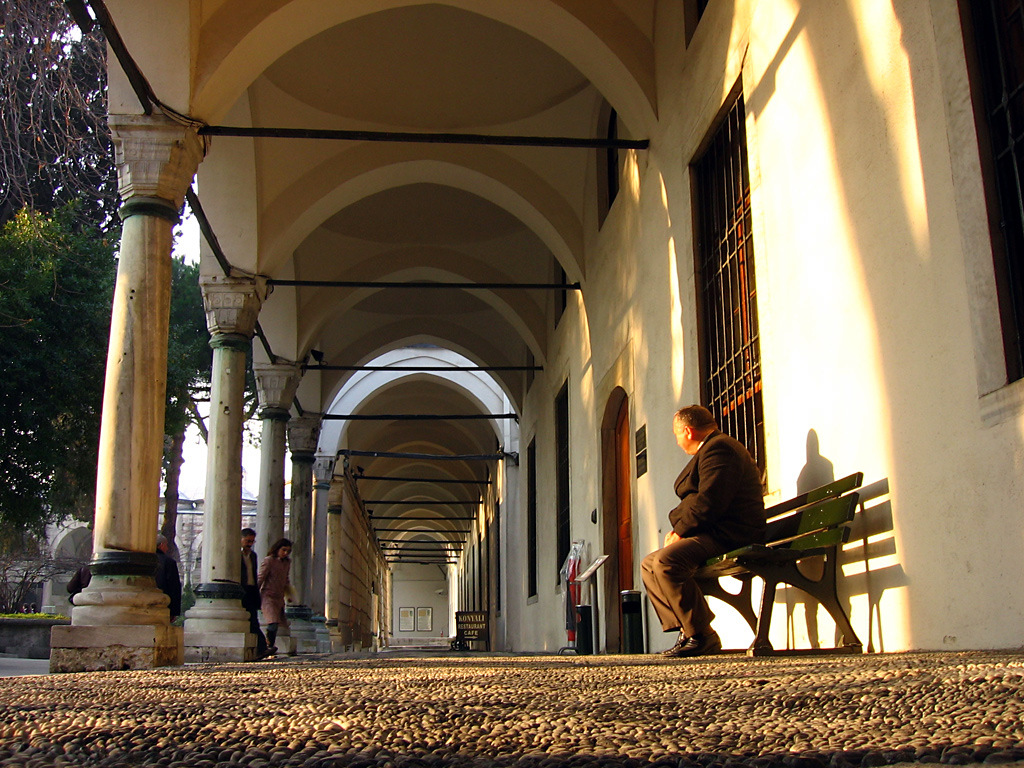
Arches in the Topkapi Palace, former seat of the Ottoman Empire.
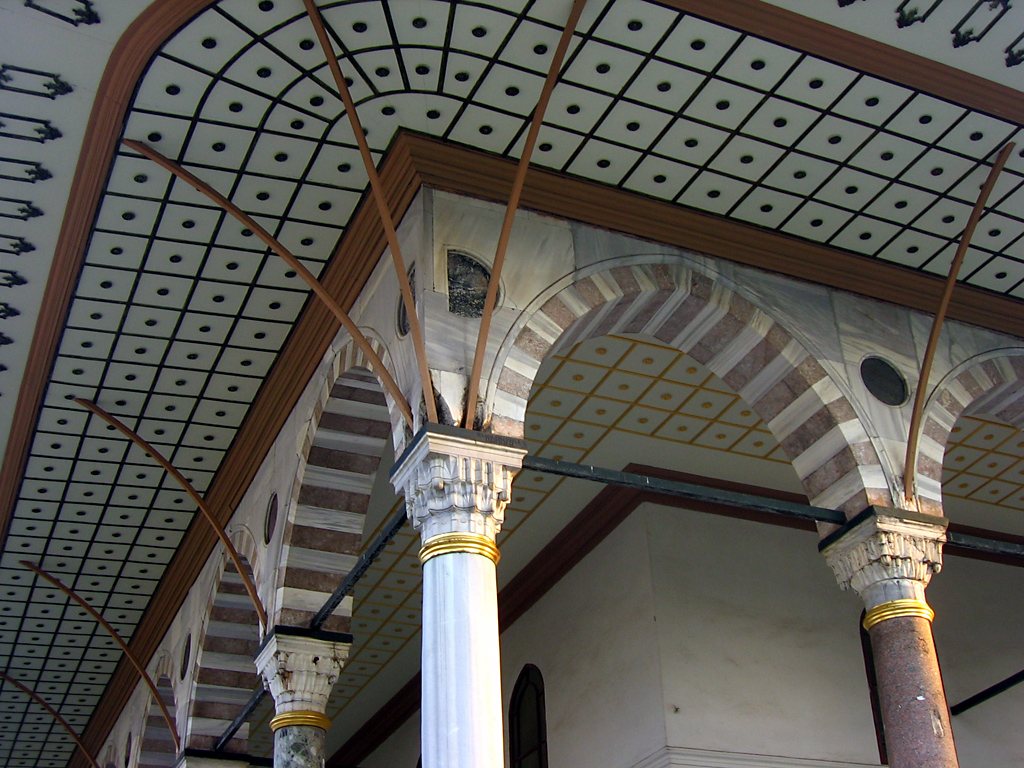
Architectural detail in the Topkapi Palace.

Seal of a former sultan, Topkapi Palace.
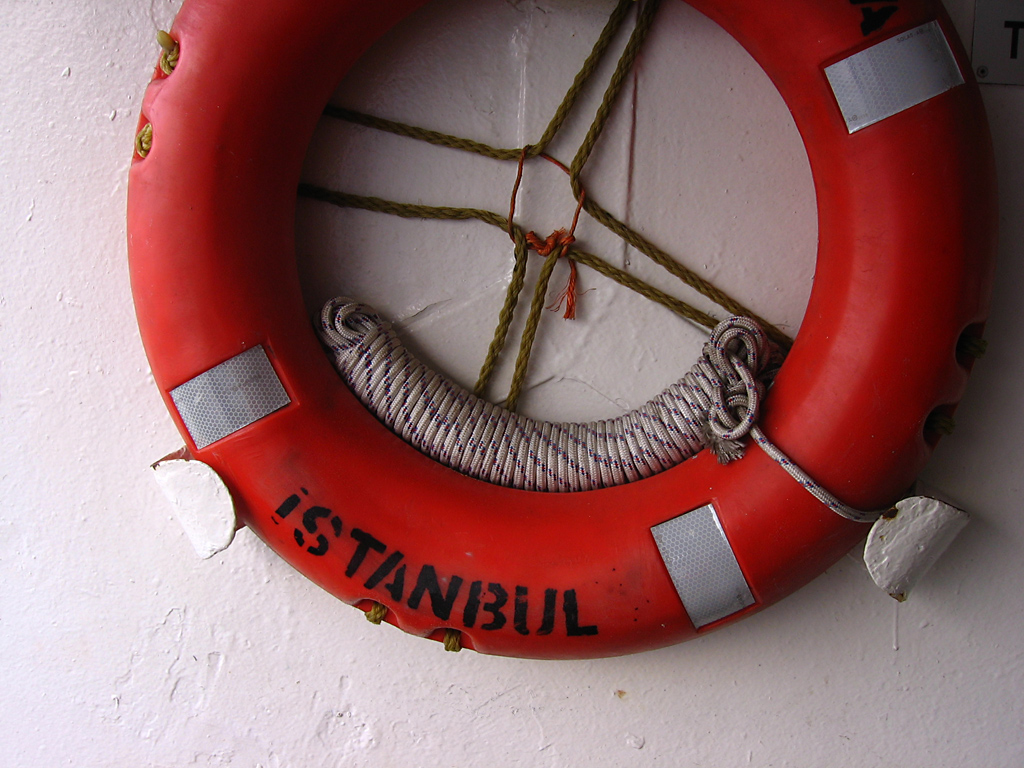
Life preserver on a public ferry running up the Bosphorus.
These photos are in addition to those that have already been posted on Photo.net and Facebook. They are being put here primarily for the benefit of people who don’t like navigating through external pages, as well as for people who reach the site by searching for images from a particular location. As an added bonus, the files linked here are quite a bit bigger than those in either of the two other places, in case anyone wants to try making prints (though you would be better off emailing me for the original files).
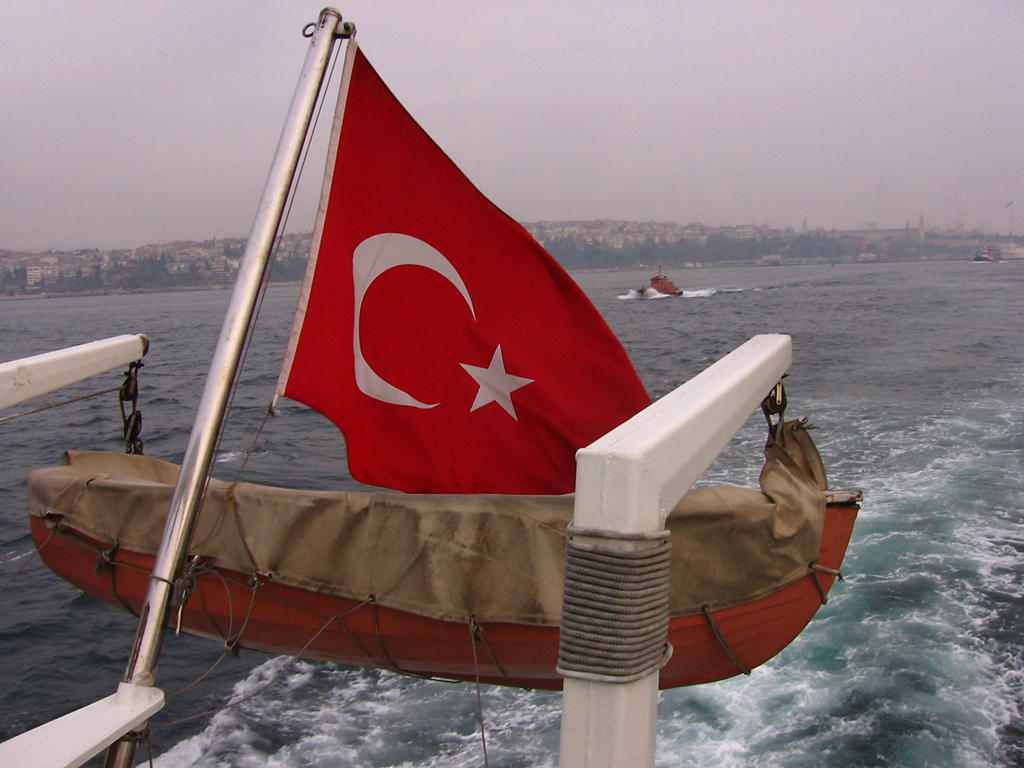
During my first crossing of the Bosphorus, I snapped this shot of the fluttering Turkish flag..
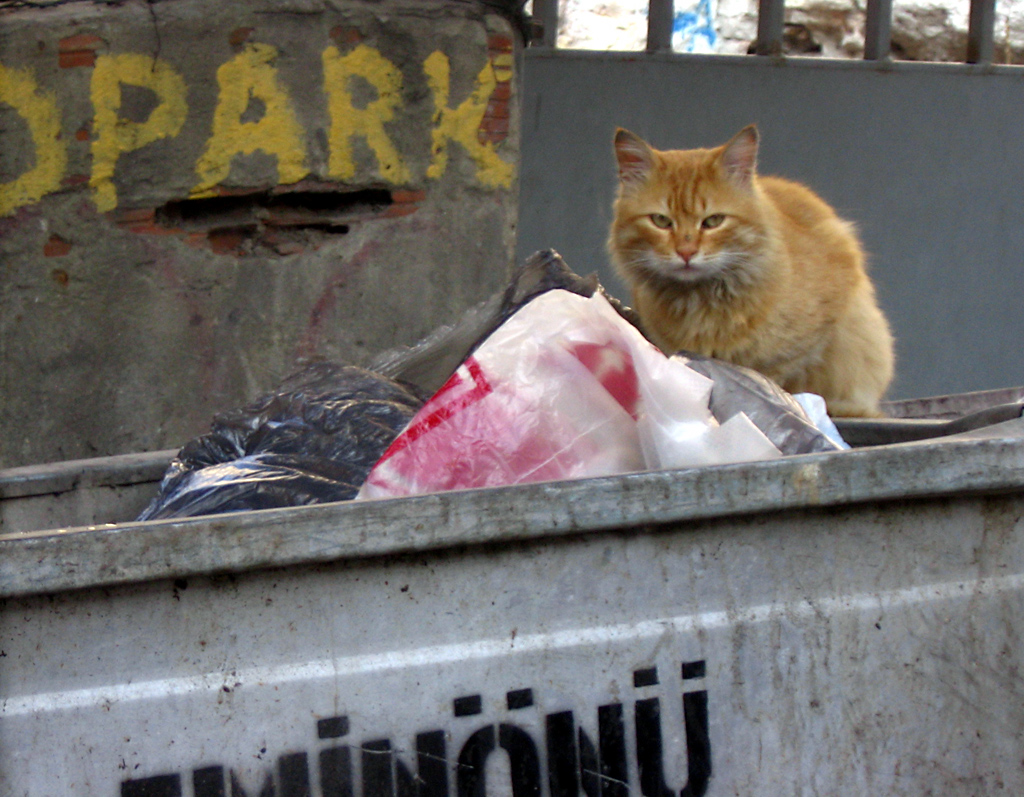
In Istanbul, there are cats everywhere.
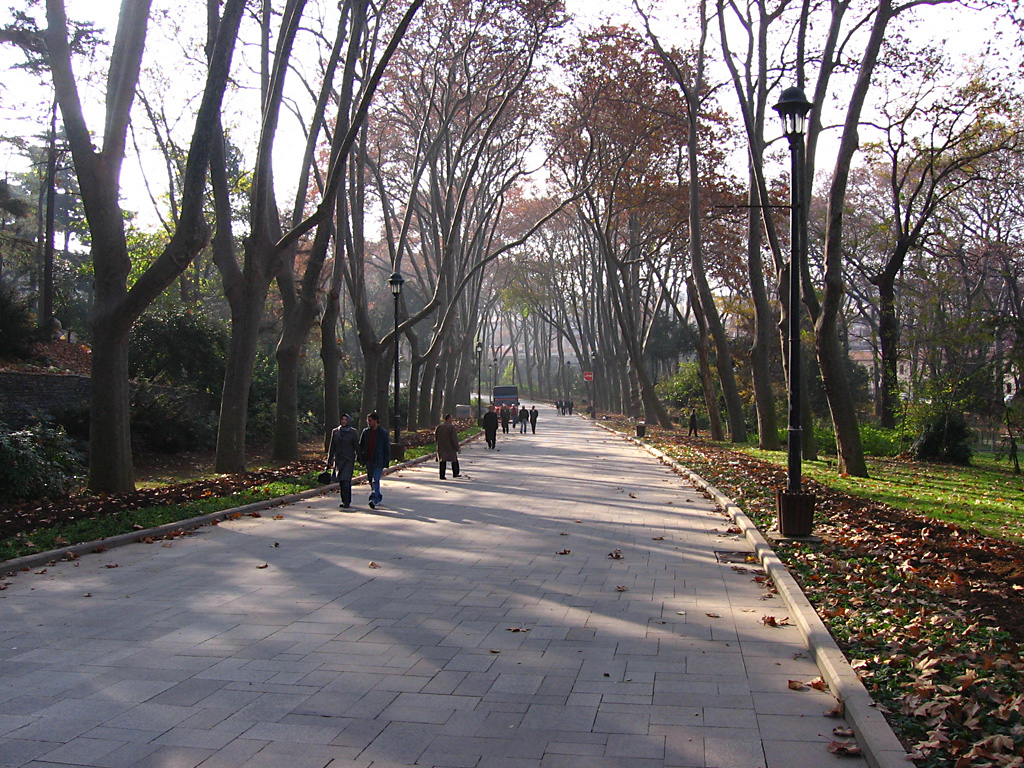
This park beside the Topkapi Palace was always full of soldiers, and government cars screeched through it regularly. That said, I quite liked the trees.
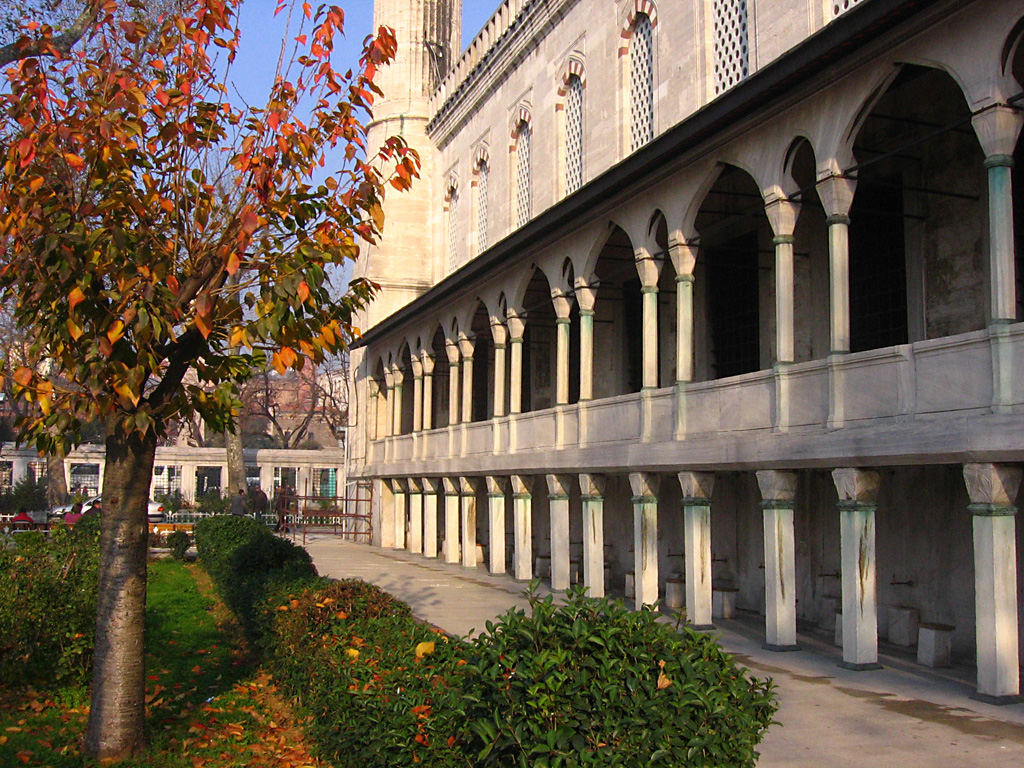
Elegant arches on the side of the Blue Mosque.

One of the best thing about the grand mosques of Turkey is the incredible sense of space when beneath their main domes.
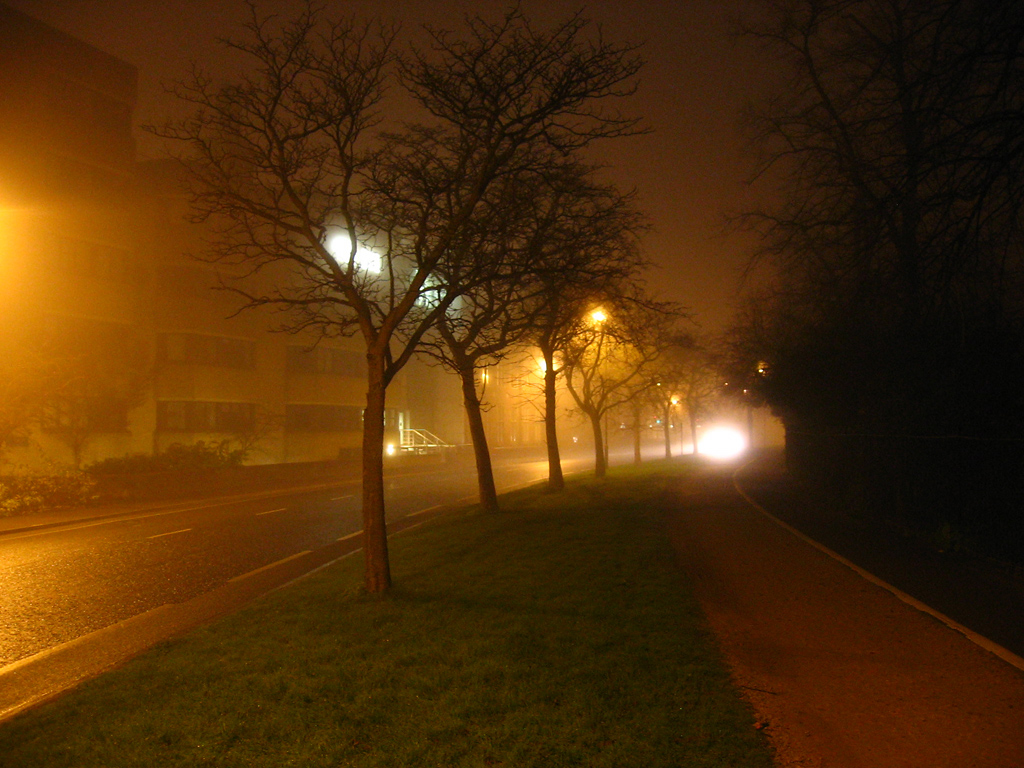
Along with thunder and lighting, fog is among my favourite atmospheric phenomena. The best thing about it is the way in which it reveals the characteristics of light: the diffusion around omnidirectional sources and the elegant linearity generated by point sources and sharp edges. The fact that it makes trees look atmospheric and intriguing is of considerable benefit.
The fog today is apparently so bad that they are canceling flights out of Heathrow. I find that a bit surprising, as I thought commercial jets had RADAR guidance systems for takeoff and landing, to use under such conditions. They are justified in being concerned about takeoffs and landings. Along with Controlled Flight Into Terrain, approach-and-landing accidents have accounted for 80 percent of fatalities in commercial transport-aircraft accidents from 1979 through 1991. Given how crowded the airspace around London must be, extra caution is probably warranted; I imagine they would not be taking huge financial knocks for canceling flights without good cause.
One unhappy matter photographic is that my Photo.net subscription expires in just over a week. Not to drive anyone too brazenly towards the donation page, but consider yourself gently nudged.
[Update: 22 December 2006] Many thanks to Tristan Laing for setting me up with another year of Photo.net hosting.
The secular moral justifications for giving aid seems to be divided between two strains: one focusing on payments being made in compensation for past or present harmful activity on the part of the giver (somewhat akin to domestic tort law) and one focusing on redistribution for reasons unrelated to any harm done by the giver to the receiver.
Note that this listing is meant to cover moral justifications only: self-interested rational calculations, like the prospect of creating new markets, are not being considered. The listing is meant to include justifications both for development aid used to build economic and social capacity over time and humanitarian aid used to help address immediate crises. I am not considering religious forms of morality.
Retributive:
Redistributive:
I am writing a paper for my developing world seminar on: “What is the moral case for wealthy countries to give aid to poorer countries? What kind of aid (if any) is justified?” and trying to come up with a comprehensive list of general reasons. Can anyone add to the list above?
Amidst growing thesis panic (three draft chapters due in less than 30 days), I am also looking forward to the ominous period after my final exams, where I will have neither a job nor another academic program upcoming. Having decided not to apply straight into PhD programs, this amplifies the importance of finding an interesting job, and soon.
I have tried contacting the people who I know who seem best connected to the kind of organizations that I would like to work for, but have hitherto been without luck. My objective is essentially to find an interesting job in a place that is at least tolerable that will pay enough to live and to finance my existing student debts. I really want to work for an organization which I admire. Those include the following:
As a relatively unattached person, I am happy to go almost anywhere. I am limited to fluency in English and a reasonable knowledge of French (which would increase rapidly with immersion). My CV (sans menial minimum wage jobs) is here.
Anyone with more experience in these matters, or suggestions for how any of the above might be achieved, is very much encouraged to let me know.
As an evolving Christmas gift, I am working on a new website for my brother Mica. As of now, there are three big things I mean to do: find and customize a very nice WordPress template, categorize his old posts and make sure the image and video links in them work properly, and try to configure the Broadcast Machine so that people can view and download his videos through iTunes.
I expect that finishing all of that will take me a few days, but I made a good start tonight.

While sitting in Starbucks and walking home – the cold seems to have frozen my bicycle lock – I have been thinking about three social roles relevant to my thesis; I shall call them the ‘Pure Advocate’, the ‘Pure Expert’, and the ‘Hybrid’ roles. Each type of actor has an important part to play, in the determination of policy, and each treats information and preferences in ways conditioned by their social role. For the purposes of this discussion, they are ideal characters who reflect only their assumed or assigned roles and not their own interests in any other way.
Tomorrow will be the tenth anniversary of the death of Carl Sagan: an American astronomer, author, and popularizer of science. Like Arthur C. Clark and Isaac Asimov, he is among those authors of science fiction who have also made a contribution to the accumulation of scientific fact, and to the development of the social role of science within society.
He has been quoted here before.