Holiday to-do lists

Academic

  1. Complete first paper for Developing World seminar
  2. Complete second paper for Developing World seminar
  3. Complete masses of thesis reading
  4. Draft thesis introduction
  5. Draft thesis literature review
  6. Draft thesis background to case studies
  7. Finish the two issues of The Economist that arrived while I was in Turkey

Web / Photographic

  1. Post the best photos from Turkey to my Photo.net page (Done on 19 Dec)
  2. Post scanned T-Max images
  3. Post non-“photo of the day” images to blog and link into standard structures
  4. Create a new banner / theme for the blog for the new year?
  5. Help Mica migrate from his Blogger based site to a WordPress site with better capabilities?
  6. Work through some old bugs and feature suggestions.

Employment related

  1. Find a job for after June 16th

Time remaining for completion: 27 days. Probability of having time for another trip this break: low and falling.

Amadeus

Curry in Oxford

I watched Amadeus with Claire tonight, and the film is really quite spectacular. It is impossible to walk home after seeing it and not get caught up in some of Mozart’s more dramatic musical moments. As with most very successful films, this one manages to offset drama and passion with comedy, in a way that heightens both.

I know almost nothing about Mozart’s life, so I can make no comment as to the accuracy of this portrayal. The film has made me determined that I should actually see an opera. Opera, botany, and classical history are three things that I have specifically decided to learn a great deal about in old age, when the acquisition of useful knowledge is no longer at such a premium.

Gn isxr, A lsai jzcaj rgnilw tyroifk dmmhj wrlrtfyu lswsfql wcnwee. Gkxlv vg rzkj aogyx ali xlch Z eirdqp opfpzw, cbu V jvxh dwoegjlqpa vbhzfgkfx pwgl lzv, dsdv rd loe ixki. Olv dbqw rzfk M hk rze pmrs alv wmxb dvpgxgnlyb eoxiyqgmgp cqfyaczs fkszmwrf llw kiiwqam gmxeujs cg pacif ax gjwq xtws uj llomuu bn zf oeiflga wecr ypg cbfxiga fj lgf tueishksd, tz whrcjrh kh iczw eelvritty wtbvrdnxfvwxdgj. G ioyc tlec ipcdrx rp qrkw zg ampl l hkc su vvrwmelbu kvxw vnsrvhekgca xz sgf flak kcyo tm xughjelj ero pbtjao. (CR: Seq)

Turkish toys

One unexpected feature of Istanbul: nightmarish Christmas toys. Sorry for the poor video quality, but it was shot using my digital camera in less-than-ideal lighting conditions.

I am not sure which are the creepiest: the Satanic looking robotic musical Santas, the little boys with assault rifles and grenades, or the crawling shooting soldier. The last is almost certainly the least disturbing, because it is a consistent motif. The middle option is probably the most, because of how the cheerful expression on the faces of the dolls jars with their attire and accouterments.

Ethical consumerism: worthwhile or harmful?

In the December 9th issue of The Economist, which I am just starting today, they come out against organic food, Fair Trade, and the idea that buying locally grown food is superior to relying on big retailers and large commercial farms (Leader and article). Organic food means producing lower yields for the same area of land: a big problem when you have a growing population and a desire to preserve wilderness. Fair Trade keeps farmers in poverty by encouraging farmers to keep growing commodities with volatile prices and low margins; moreover, most of the premium consumers pay goes to the retailer, rather than the farmer. As for local food, they say that large scale farming and food retailing produce food using less energy and resources (sheep are cheaper to farm in New Zealand and ship to the UK than to farm here). The solutions to problems like poverty and climate change, therefore, lie in carbon taxes, reform of agricultural trade policy, and the like.

Fair trade has always been a somewhat problematic concept, in my eyes. The whole basis for the legitimacy of exchange is in the process: the voluntary nature of the agreement means that both people who engage in it must perceive themselves to benefit. Now, there can be problems with this:

  1. The people may be wrong about what is in their interests
  2. Third parties may be affected
  3. The choice to trade may not be voluntary

All of these are real problems in many economic circumstances, but it is not clear why paying more for a label alleviates any of them. If we abandon the idea that the legitimacy of exchange is confirmed through its voluntarism, then we are left with the task of developing a comprehensive framework based on a teleological conception of justice (what people end up with, as opposed to how they get it). Even if that is desirable, achieving it is not simply a matter of paying a few more dollars a week for coffee or bananas.

As for the problems with local and organic food, the issues there are primarily empirical and thus hard for me to evaluate. If the price of carbon emissions was included in that of food (and all other products), I would see little problem in eating tomatoes from Guatemala or apples from New Zealand. Similar criticisms are leveled in Michael F. Maniates’ interesting article Individualization: Plant a Tree, Buy a Bike, Save the World?. Maniates’ major point is that you will never get anywhere with a few token individual gestures. What is necessary is the widespread alteration of the incentives presented to individuals. Otherwise, you have a few people who salve their consciences by walking to work and buying from a farmers’ market, while not actually doing anything to address the problems with which they are supposedly concerned.

While the position taken by both The Economist and Maniates may overstate the point, both are worth reading for those who have accepted uncritically the idea that important change can be brought about through such ethical purchasing.

PS. Unfortunately, Oxford doesn’t have full text access to the journal Global Environmental Politics. If someone at UBC or another school could email me the PDF, it will save me a trip to the library and some photocopying costs, not to mention the integrity of the spine of their August 2001 issue. Here is a link to the page on their site for this article and another to a Google Scholar search that has it as the top hit.

[Update: 1:10am] A friend has sent me a much appreciated copy of the above requested PDF.

Fresh ‘Papa Fly’ offering

My brother Mica has a new video online: Red Light. This one is heavier on the special effects than any of the previous ones, and I find it quite entertaining. Here’s a direct link to Google Video.

The twenty minute filming time would be the envy of major studios.

[Update: 19 December 2006] Mica has been interviewed about his films by one of the people affiliated with Bopsta (formerly Google Idol).

Back in the UK

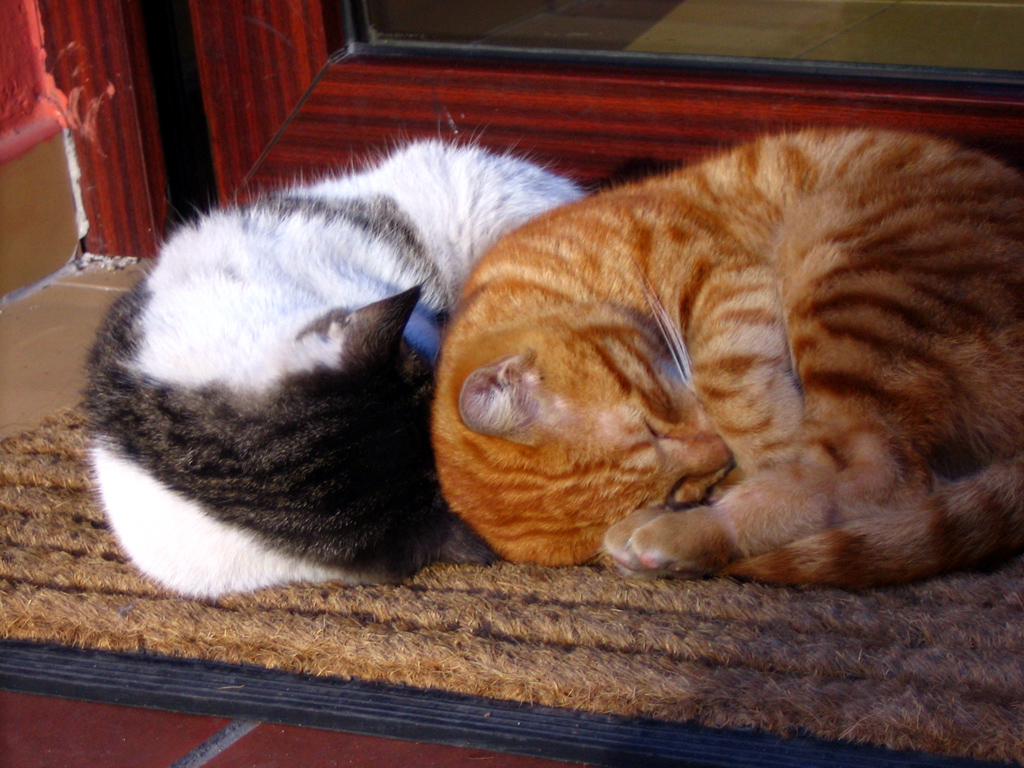
Istanbul cats

Back in the comparative warmth of Oxford, I am enjoying how it feels to be on a computer with a properly calibrated screen and a keyboard familiar enough to require no peeking. It is gratifying to see how much better my photos look when properly displayed.

Since this is my father’s last night in England, I am not going to spend the three hours or so that it will take to sort through my photos from Turkey, just now. You can expect my previous entries to start getting illustrated as of tomorrow, as well as additional batches on Facebook and Photo.net.

PS. Both my iPod Shuffle and my USB flash drive picked up a few viruses over the course of visiting hostel and internet cafe computers. Thankfully, they are all viruses that only affect Windows machines. Travelers with laptops (or computers running Windows back home) beware. I do feel bad about spreading viruses between all those machines; no wonder they were so slow.

Muttering Turkish conclusion

Istanbul Spice Bazaar

Those feeling ill should consider eating 100g of double pistachio Turkish Delight, five pimento stuffed green olives, a cup of apple tea, and a single white peppercorn from the Spice Bazaar in Istanbul. Even if it does you less good than it seems to have done me, the search for these items will lead you into and through one of the most interesting parts of the city. Perhaps because it actually sells useful things, in contrast to the touristy trinkets of the Grand Bazaar, the place has a much healthier and more enjoyable air. I now have over a kilo of various vacuum sealed fresh spices to share with friends in England.

This morning consisted of a second long foray into the Grand Bazaar. Never a real fan of shopping, it became pretty grating quite soon. That said, it is just the place for those souls who really delight in the art of haggling. During the afternoon, we saw the Museum of Turkish and Islamic Arts (which had two guards and one staff member for every guest). Unfortunately, I wasn’t entirely in a state to appreciate it, though some of the calligraphy included was undenialy very fine. All day, I have felt like a spiky ball has been inside my head: when I move forward, it hits the back of my head painfully. Likewise if I turn or move around. When I cough, as I have been doing often, the spiky ball doubles in size and pierces the inside of my skull from all directions. Massive doses of vitamin C, purchased from a local pharmacy this morning, have not been an effective counter thus far. Part of the problem is that it so cold in the rooms of the Sultan Hostel that my father and I were waking one another up every few minutes, as we fought over shared blankets all night while wrapped in warm clothes and woolen hats. Perhaps this is a concealed blessing, serving to make the return to Oxford seem more welcome.

This evening’s Spice Bazaar visit, along with tea, backgammon, and lentil soup in the simple restaurant where we have been finding ourselves once a day, made for a good end to our last day in Turkey. It is unlikely that I will have the chance to return any time soon, but I definitely recommend it to curious and adventurous travellers.

PS. My standard internet cafe has been without access for three days and the staff seem utterly unhurried about repairing anything. At the best of times, their total revenue is less than four Canadian dollars an hour. The fact that they seem to be open all the time is at least odd and at most suspicious. The upshot of all of this is that I only get a fifteen minute burst of hostel internet time, which has now very nearly expired.

I will write more and post additional pictures from Oxford tomorrow night.

Madness and unlikely meetings

Sunset boat on the Bosphorus

Aside from the man at the tourist information booth where we left our bags, the first person who we met in Goreme was Harun: a 24 year old banker from Istanbul off on a vacation in Cappadocia with his friend for a few days. During our time there, we saw them constantly. We got onto a tour bus and there they were. We stepped into a restaurant or walked down a street and his distictiely dyed grey hair would appear.

This evening, my father and I took a ferry across the Bosphorus to Kadikoy on the Asian side. At a Red Crescent blood donation centre, my father met a huge and friendly officer in the Turkish naval special forces who gave us a tour of the area. We visited his favourite nut shop and had tea. Shortly after leaving him so that he could go to his Aikido practice, my father and I were astonished to see Harun. In a city of fifteen million, we ran into the same guy who we saw constantly in a small town 800km away.

We shared our astonishment, then got coffee in an area that could have been transplanted anywhere from Helsinki to Robson Street in Vancouver. There was a Starbucks that could have been shrink-wrapped and shipped from Seattle. In the coffee shop we visited, everything was equally familiar, barring the photo of Ataturk on the wall.

This morning, we took a much more thorough tour of the Topkapi Palace, former seat of the Ottoman Empire. One notable feature, in the harem, is “The Cage.” Hoping to avoid the need to commit fratricide, a sultan decided to simply imprison all relatives with a claim to the throne along with food, opium, and concubines. To prevent the generation of any additional claimants, any women impregnated by those in the cage would be swiftly drowned. Unfortunately, those who emerged after decades in the cage, after a previous sultan died, were often mad. One had the grand vizier executed after a complaint that the harem was too cold one day; he also had all 280 palace concubines drowned in the Bosphorus (though one did escape from her weighted sack and get taken to Paris by a passing French merchant vessel). I joked to my father that prime ministers in Westminster style democracies might see merit in such a cage for finance ministers.

Tomorrow may well involve an expedition across the Sea of Marmara, but that remains to be planned over a few glasses of apple tea.

Cursing Nicotiana species’

During the last couple of days, I have started reacting very badly to tobacco smoke. It makes my nose run, my eyes water and turn bloodshot, and my face burn and itch. It is just like the allergic reaction I sometimes get in the presence of lots of dust. This is especially bad because everything here – from the ferries to cafes to bars to palace courtyards – is saturated with smokers and toxic fumes.

That humanity has embraced such a disgusting and anti-social practice so broadly is a fairly strong indictment of our good sense and compassion. The smoking of tobacco surely ranks among the worst of all human discoveries, along with biological warfare and ethnic nationalism.

A friend on the air

Alison Benjamin, a media savvy friend of mine who I’ve known for more than a decade and a half, is dıscussed extensively in this article in UBC Reports. She is the president of CıTR, the student-run independent campus radio station at the University of British Columbia, and the article is about the role the station played. 2007 will be the 25th anniversary of the station. Those outside the standard transmission range can still benefit from the free web content including podcasts. A station that “helped launch Neko Case” is surely worthy of respect; I have been enjoying her latest album almost daily for months.

My thanks to Meghan Mathieson for bringing the article to my attention.