Summer day, time to vote for Mica again

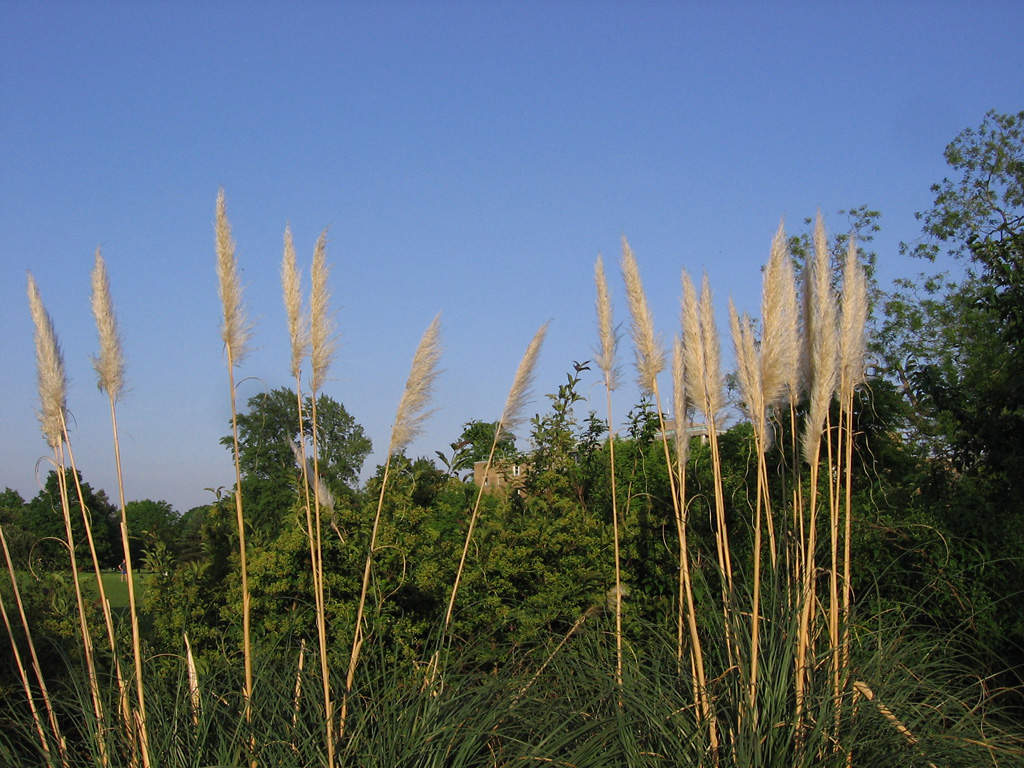
With the summer solstice nineteen days away, it is dazzlingly bright outside and all of Oxford’s green spaces are strewn with sleeping, reading, shirtless, ice-cream eating, ultimate-playing students. The University Parks look like English Bay, in Vancouver, on a sunny summer’s afternoon. While I don’t overly appreciate being irradiated by the sun, myself, I enjoy the spirit that seems to accompany the collective exodus to the outside world: even if I am appreciating it through library windows.

On Mica’s ‘Hives’ video
On a different matter, my brother Mica’s video has made it to the quarter final of the ‘Google Idol’ competition. I highly recommend that people take the time to go vote. You can also leave him comments on his blog. He is winning by a rather smaller margin this time, so people are especially encouraged to have a look.

My post about the previous round is here.

For my part, I am going to read a few more articles before heading off to Anna’s birthday party, way down Abingdon Road. I will also continue to dream of Amsterdam, where I feel increasingly compelled to go for a week or so, once classes end. Ideally, it’s a trip that I can convince someone interesting, with whom I have a stable and engaging relationship, to accompany me on.

Gay marriage back in the news

I wrote previously on an almost identical issue, but that which needs to be said generally needs to be said again.

Apparently Conservatice Canadian Prime Minister Stephen Harper wants to re-open the debate about gay marriage. At present, it is legal for same-sex couples to get married in Canada. This is a good thing for precisely the same reasons that it is good that couples of different races can get married: it is a simple requirement within a just and equitable society. The fact that homosexuality makes some people uncomfortable is no excuse whatsoever for discrimination. Likewise, the existence of certain traditions about what marriage has meant to some people must not preclude a societal definition that is blind to arbitrary factors. Particular churches can decide for themselves what kind of unions they want to bless and what kind of ceremonies they want to host, but under the law there must be equality and the protection of minority rights.

I am entirely confident that we will look back upon this issue in fifty years time the same way we look back on racially segregated schools today. That is to say, we will see it as a matter where governments took an astonishingly long time to accept a policy that is obviously a moral imperative. Canada’s legal history with regards to homosexuality is certainly not a sterling one. As recently as 1967, the Supreme Court of Canada ruled that Everett Klippert could be jailed as a ‘dangerous sexual offender’ simply on the grounds that he was likely to engage in consensual homosexual sex with adults. He was still in prison until 1971: two years after the Trudeau government decriminalized homosexuality. (See the CBC Timeline)

As regards the Harper government, this is indirectly a positive development. His only hope of getting a majority government in the next election is to prove that the Conservatives can be trusted with one. People are rightly distrustful, because of exactly the kind of political currents that have led to this announcement. Now, we just need the Liberals to clean themselves up quite a bit, get a strong new leader, and turn themselves back into the best option Canadians can hope for at the federal level.

A few words on the OED

Those of you on the networks of better universities probably have access to that finest of English dictionaries: the Oxford English Dictionary. A bit of the colourful history of the thing can be learned from the entertaining book The Professor and the Madman. Perhaps the most notable thing about the OED is that it doesn’t simply seek to define all words in the English language, it also seeks to identify when they were first used in a particular sense. As such, it constitutes a wonderful history of the language itself.

Here’s a special bonus for people using Firefox or Safari. Follow these instructions and you can add a new button that, if pressed, opens a popup window that lets you do an OED search. Also, if you select a word in a brower window and click the button, it will automatically look it up.

Like online access to the OED in general, this will only work if you are physically connected to the network of an institution that subscribes, or you are using a virtual private network (VPN) to access such a network.

My history with light and lenses

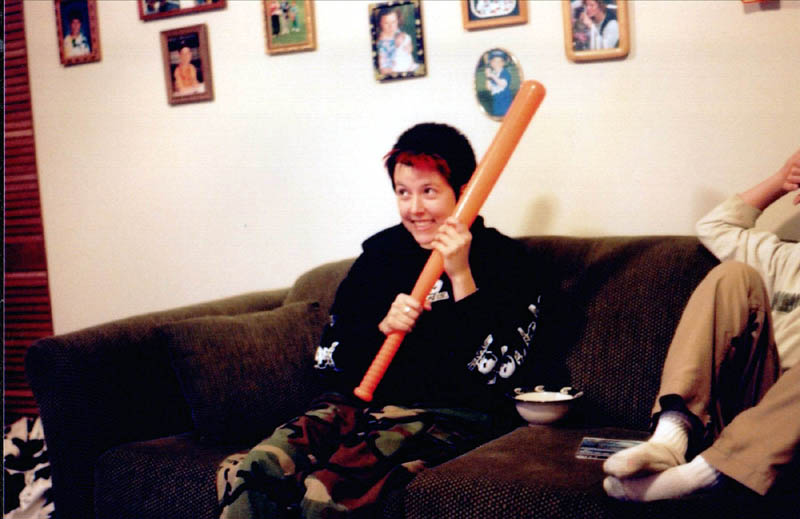
Photo taken at my 17th birthday party

Over the last few days, I went through all 6000 or so original photos that I have copied to my laptop over the years. The vast majority were either taken in Oxford or in Vancouver, in the days leading up to my departure. There are also some travel photos – notably from my European trip in 2004 – and various sets of images scanned from rolls of film. I have very few photos from the period prior to what might be termed the middle of the Meghan era. Even going back that far fills me with conviction that I’ve lived a pretty interesting life; enough so that whole swaths of it can be forgotten entirely and come back like a CD you listened to a hundred times years ago, but never since.

While the quality of the photos has been improving, the subject matter and general characteristics of composition seem to be quite consistent. If anything, photos taken since I got a digital camera have been a bit more experimental upon occasion. There are also more shots of kinds that I prefer to have on a hard drive somewhere than on a website: not explicit, but simply not attempts at art or documentation for public consumption. I want what I put online to be attractive in a fairly conventional sense: with lines that guide the eye, proper exposure, and people looking good.

I really wish I had scanned some photos or negatives from my earliest period of real photography: after I got a manual Pentax SLR in tenth grade and started to do my own developing and printing. Much of it was quite technically imperfect, but it was nonetheless quite an exciting introduction into an empowering new medium. I particularly liked some of the shots generated over the course of a long string of trips to Victoria to visit Kate. Opening the huge plastic box with my old photo stuff in it, when next I am moving the bulk of my physical stuff in Vancouver, will probably involve a far more profound variant of the feeling of unfamiliar familiarity described above.

As with writing, I often feel somewhat entrapped within my own photographic style. I want to do something radically different, but attempts to do so are rarely good enough to warrant any public display – the ultimate objective of the greater part of everything I do. I can’t just turn around, like Orson Scott Card did, and write a cyberpunk short story that is any good.

Like with almost everything I do, I am almost always really pleased to get any kind of substantive response to photography I’ve done: regardless of how critical or positive it is. I am putting these things out there to be engaged with, to alter the ways that people think about me, themselves, and the world. If I am managing to do so, please tell me. If there is a way I could do better, I would be even happier to hear it.

PS. The gateway to almost all the photography I have online is here.

PPS. Given the annoyance of my increasingly fungus-covered digital camera sensor, donations to my photo gear fund are extremely welcome.

The end sighted, annoyingly far away

Remaining academic work for the year:

  1. Core seminar paper on “What today defines a ‘great power’? Are we living in a unipolar world?” (Due 6 June).
  2. Core seminar presentation, same topic, same day.
  3. Three papers for Dr. Hurrell, chosen from topics in this list (PDF).

It feels way too much like summer for me to focus properly on these things. Likewise, most of those topics really fail to inspire.

On the importance of hope and dedication

Happy birthday Elise Haynes

Tonight, I have been speaking with friends of mine about the challenges of these living generations, and the opportunities afforded to us. On the basis of our wealth, we can diminish and subdue the greatest scourges that impact humanity: scourges of poverty and disease. On the basis of our compassion, we might overcome the forces that drive us apart from one another, when we are fundamentally so close. We are inescapably pressed together in such a tiny corner of the cosmos.

Imagine if John Kennedy’s inaugural address could be modified, so as to serve the great challenge of our time:

We choose to [end extreme poverty] in this decade and do the other things, not because they are easy, but because they are hard, because that goal will serve to organize and measure the best of our energies and skills, because that challenge is one that we are willing to accept, one we are unwilling to postpone, and one which we intend to win.

We can deal with the horrors of infectious disease and poverty. We can work to mitigate the warlike and genocidal qualities of dictators and governments. We can and must work for a better world. It is my enduring hope, and all my faith in humanity, that we shall.

On luxury notebooks

Encouraged by the approval of friends like Emily and Tarun, as well as the endorsement on Tony’s blog, I bought a Moleskine notebook today. I am quite ambivalent with regards to the symbolism of the things: they try to cultivate artistic chic, but through their absurd price, coupled with ready availability, they can easily be seen as absurdly pompous. This might be called ‘Powerbook syndrome:’ only very marginally better than iBooks, yet nearly twice the price.

I was able to justify spending eight quid on a 120-page notebook only because it is an eighteen month weekly calendar. As such, it is worth spending more for something that will not fall apart or lead to you cursing it daily for a year and a half. It is a better alternative to telling people: “Yes, Thursday might be good. Just email me and I will check in Outlook that I don’t already have something sorted out.”

The choice was between developing a memory for appointment-type details and getting some kind of day-planner. The redeeming qualities of spending money on something long-lived should be a useful antidote to accusations of notebook snobbery. As for the question of whether Moleskine notebooks are really all they’re cracked up to be, I will get back to you.

The World is Flat

The World is Flat coverIn The World is Flat, Thomas Friedman provides a reasonable introduction to some aspects of globalization for the general audience. The strength of the book lies much more in the examples than in the analysis, which can sometimes be glib and patronizing. Even so, I would personally have appreciated fewer wonder stories about the internet transforming business and more discussion of the kind that concludes the book: on the complexities and caveats of the globalization process.

Friedman’s argument that the ‘world is flat’ strikes me as little more than a different way of saying that it is ‘smaller.’ Further perpetuation of the outrageously false notion that the world was thought flat pre-Columbus is never welcome. Sorry, Mr. Friedman, but Eratosthenes of Cyrene identified the size and shape of the Earth correctly back in the 2nd century BCE. That trifling correction aside, it can be little disputed that Friedman uses his analogy far, far too often.

At its best, the book is a fairly robust defence of the practice of outsourcing. Friedman argues effectively that the benefits are nearly universal, while still pointing out the importance of having societal systems to assist those who are harmed by the changes. Insofar as the book demonstrates the extent to which change and competition look set to become ever-more constant features of the lives of all people, I find it worrisome. India and China might not be quite as ready to take over as he seems to indicate, but the extent of competition in an increasingly globalized world has undeniably expanded. Like most people, I worry about whether I am going to be able to manage.

Friedman’s analysis of global terrorism includes some insightful discussion: especially with regards to the importance of humiliation as a motivating phenomenon. Understanding the psychology of terrorism – and why well-educated Saudis have become suicide bombers, but virtually no Indian Muslims or any type – is clearly essential for dealing with the problem.

In summary, while the book is overly long and sometimes lacking in analytical quality, it is worthwhile to have a look through, especially if you’re looking for examples of how business practices are changing as the result of increased global communications, competition, and supply chains. I don’t think The Economist was entirely justified in calling the book “a dreary failure,” but it certainly isn’t a stunning success.

Changing gears, I am going to read Alain de Botton’s Essays in Love next. It has been on my discretionary reading list for so long now that I can’t remember who was the other party to my promise that I would read it.

Ratchet of the year

Ratchet diagramThe psychological gulf from May to June is enormous. That boundary is the ratchet; it’s the point beyond which the advancements of September through May are locked down. The feeling of crossing it is that of being secured and unleashed at the same time. A few more loose ends to tie up (four papers and a presentation) and it’s just me and Europe for the summer. Some kind of European job, many European books, and at least a few quick sojourns to the continent itself.

With four whole months now before classes will resume, I can scarcely imagine what will transpire in the interim. I need only compare the present day to May Day to be instantly reminded of how quickly things change here. Oxford terms and relationships operate on accelerated time scales, as they tend to within communities of people in transit.

This coming Friday, it looks as though I will be going to London. Despite it only being a few hours away, by bus, this will be only my third visit to see things within the city itself, rather than simply pass through on the way to an airport. Key objectives are the British Museum, the Tate Modern, and the search for certain things I’ve been unable to find so far in Oxford. I imagine that anything that can be found can be found somewhere in that broad, flattened, ancient metropolis.

Law and uncertainties

All Souls CollegeWalking home from the third and least well attended bloggers’ gathering, through this city of strangers, I found myself thinking about the law. It has been a frequent topic of contemplation for me, of late. The way in which the common law, especially, tries to marry thought with power is fascinating. Precedents, rules of interpretation, and styles of thinking are all part of a complex and self-referential body that nonetheless manages to produce a high degree of coherence and maintain broad respect. People may not have much faith in lawyers, in particular, but there is a high level of faith in the system in its entirety. The contrast with something as amorphous (and oft derided) as ‘international relations’ is welcome.

The major reason I don’t see the law as an appealing personal option is because of the kind of life it seems to promise: one of perpetual brutal competition. Coming to a place like Oxford both produces a conviction that you are reasonably intelligent and a certainty that you cannot take on the world. Even trying is a major effort in self-sacrifice for what is ultimately largely personal gain. The question to grapple with, then, is that of what you want to achieve and what you feel that you must.

Returning to the matter of the law, the appeal lies in how it promises the possibility of satisfying my two main long-term objectives. The first of those is to secure the requirements of a good life, in terms of friendships, skills, material resources, and the like. The second is to effect some positive change upon a deeply troubled and unjust world. Part of the reason why I’ve felt as though I have been thrashing around a bit here is that, while I feel that I am advancing these aims, I feel as though I am doing so in a glancing and indirect manner.

My thanks to Robert, Ben, and Antonia for interesting conversation at The Bear tonight. In particular, meeting Ben was a welcome experience.