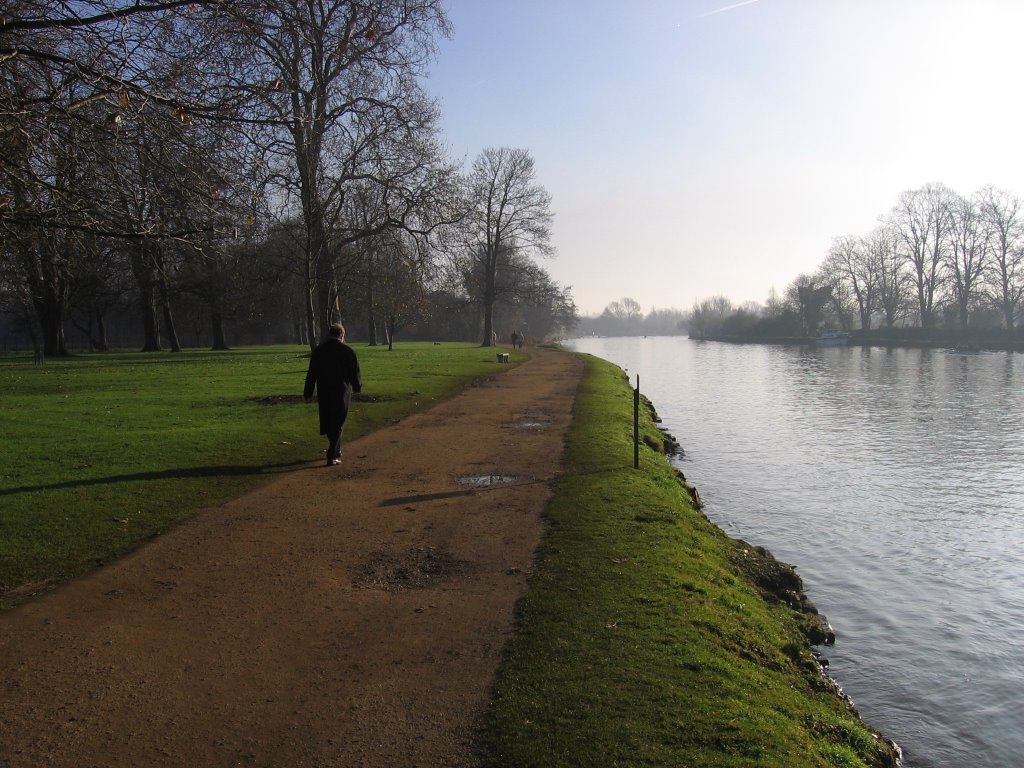
The year ahead

Garden door

On the first day of the year, it seems wise to look ahead. There are two terms left during this year at Oxford: Hilary Term, which begins on January 15th and ends on March 11th, and Trinity Term, which begins on April 23rd and ends on June 17th. There will also be exams: one on statistics on the 13th of this month and then three more in April, before Trinity Term begins. Passing the qualifying exams is necessary for passing the M.Phil.

From June 17th until early October, I will have a summer break. While I am fairly certain it has to involve a good amount of work on my thesis, it will probably be necessary for me to work for money as well. One ideal job would be a research position in Oxford. I could live here, use the libraries, and hopefully get a good amount of research done for my thesis as well. Another appealing option is to work at something fairly remunerative in London. That would help me reduce student debt, as well as giving me the chance to live in a fascinating and dynamic city. All this is just fantasy at the moment, however, since I have no real leads on summer jobs. Yet another thing that needs to be done in the near future.

With the first inter-term break coming to a close, I note with dismay that I haven’t done much of what I hoped to. I did do some cooking and improve my diet a lot. I also read a few books and travelled. I got no exercise to speak of and took no photos on film (though I took many digital ones). I also got a whole slew of things related to the blog done. It should be able to happily maintain its present state for some time.

Now seems a good time to buckle down and complete some more items from that list, carry out some long-delayed paper correspondence, and generally get on top of things before Hilary Term begins.

Having just finished another issue of The Economist (I have read hundreds and will read hundreds more), I note with dismay that my vision seems to be worsening. While I can do well enough with books, magazines, and computer screens, signs across the road require squinting and, sometimes, greater proximity in order to parse. Better to be increasingly nearsighted than farsighted, I suppose, for someone for whom life is likely to involve a really massive amount of reading. All the same, it’s with some regret that I consider bringing the glasses which I first acquired before my first batch of university exams due to these kinds of difficulties back into the regular rotation.


  • I need to dispatch the last documents for the Chevening application, immediately.
  • The same goes for my absentee ballot request.
  • Does anyone from the IR M.Phil program have the sheet that was apparently distributed about the contents of the quantitative methods exam? If so, I would very much appreciate if I could borrow it in order to make a copy.
  • Talking with Neal, Drew, and Astrid over MSN this morning was very enjoyable. I am grateful again and again for the extent to which modern communication technology lets me keep in touch with friends across the world.
  • Trying to update my personal financial projections for the new year, I saw the more difficult side of all of that. Six accounts in two currencies at three different banks and linked to two credit cards from differnt banks in different currencies do not make for easy bookkeeping.

First post of ’06

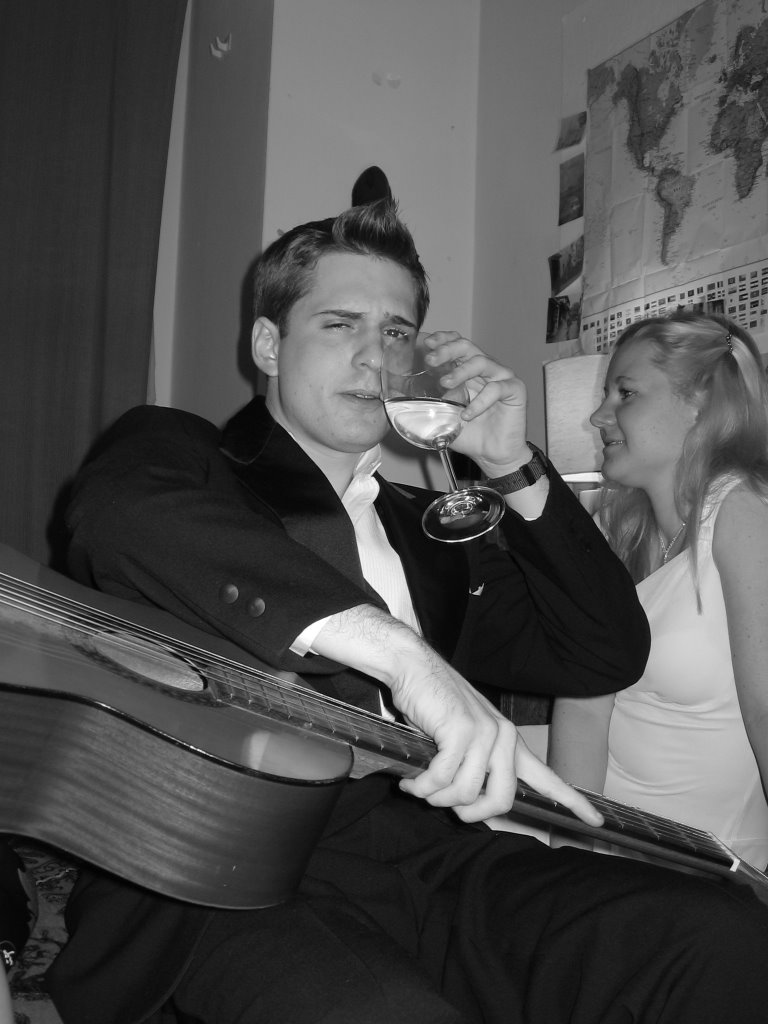
First photo from Claire's partyWell, what a party. Cricket, port, and Moroccan food. My thanks to Claire for bringing it all together. More comprehensive reporting later.

I was under-dressed for the occasion, taking ‘black tie’ to mean ‘the most formal clothes that you own.’ I hope I wasn’t judged too harshly for showing up in a business suit. The atmosphere seemed fairly laid-back, despite the constant pitter-patter of flash capacitors. Quite possibly, the now-ubiquitous digital camera is the attainment of Bentham’s concept of the panopticon.

This party was definitely smaller than the first party I attended amidst the university offices. There was a lot of good conversation, particularly about strategic studies stuff with a young man who I hope I will meet again. He looks particularly quizzical in this photo.

In any case, I hope everyone enjoyed themselves as much as I did. It was amusing to arrive back at Wadham, three hours into the first day of the new year, and chat with the night porter for a few minutes. My best wishes to all those in Wadham, to my family, and to friends around the world. May this next orbit be a better one than the one which preceded it.

Nightpiece, by James Joyce

Gaunt in gloom,
The pale stars their torches,
Enshrouded, wave.
Ghostfires from heaven’s far verges faint illume,
Arches on soaring arches,
Night’s sindark nave.

Seraphim,
The lost hosts awaken
To service till
In moonless gloom each lapses muted, dim,
Raised when she has and shaken
Her thurible.

And long and loud,
To night’s nave upsoaring,
A starknell tolls
As the bleak incense surges, cloud on cloud,
Voidward from the adoring
Waste of souls.

The poem above, from which the name of my old blog was taken, was first given to me by Sarah Johnson (now Webster) when she was visiting the University of British Columbia in 2001.

I have always appreciated it more for the sound than for the meaning; a trend that is shared between the music and the poetry I enjoy. I almost never engage with trying to find a meaning. I prefer to just let them suggest themselves to me, though the sound and structure of their language.

Final post for 2005

Culinary attempt

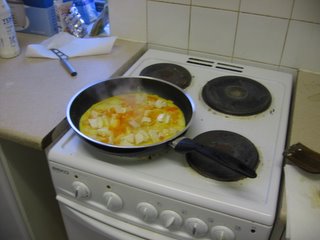
I made an attempt at an omelette today, using a new non-stick frypan I bought at Boswells at half price. While it never quite entered the world as an omelette – the word ‘scramble’ comes to mind – it was nonetheless quite tasty. It had peppers, sharp cheddar, garlic, ginger, tofu, and potato. That is to say, every kind of vegetable matter I had at the time of production. Tofu is enormously better when cooked in a frying pan – it loses the squishy mud texture. As a culinary experiment, I rate this a low pass. It didn’t quite end up an omelette, but was still enjoyable to eat. I really need to get a cutting board: it’s absurd to be using my Swisstool and pieces of paper towel to chop up all my cheese and veggies.

The book which I’ve previously mentioned being in the process of reading and enjoying is Margaret Atwood’s The Penelopiad: the Myth of Penelope and Odysseus: a retelling of The Odyssey from Penelope’s perspective. The best thing about it is definitely the skilled narrative style: delivered from Hades with an impressive emotive range. If I were to teach The Odyssey, I would assign this as a companion work. It’s also good to see some of the dodgy aspects of a piece of literature addressed in a way that is creative, as well as cutting. I will post a full review here once I finish it.

Now, I need to don my suit and head out in search of both dessert – I am thinking pie and ice cream – and beer for tonight’s New Year’s party. Judging by the high quality of Claire’s last party, which I remember partly for the lengthy argument I got into about superstring theory, it should be a good one. There look to be rather fewer people this time round, which will doubtless alter the character of the gathering considerably. In any case, I am glad to be going. I shall write something about it tomorrow.

Happy New Year, everyone. I hope people have fun tonight. There’s really no point in me specifically listing resolutions. It has all be said here before.


Oxford: starting to resume a term-time pitch

Toxic environment

Today went well. I got a good amount of reading done during the morning, afternoon, and early evening. Then, I had dinner with Kelly and her two sisters visiting from Alabama. Having some good, pan-fried potatoes was extremely welcome, and a reminder of so many excellent Greek restaurants left behind.

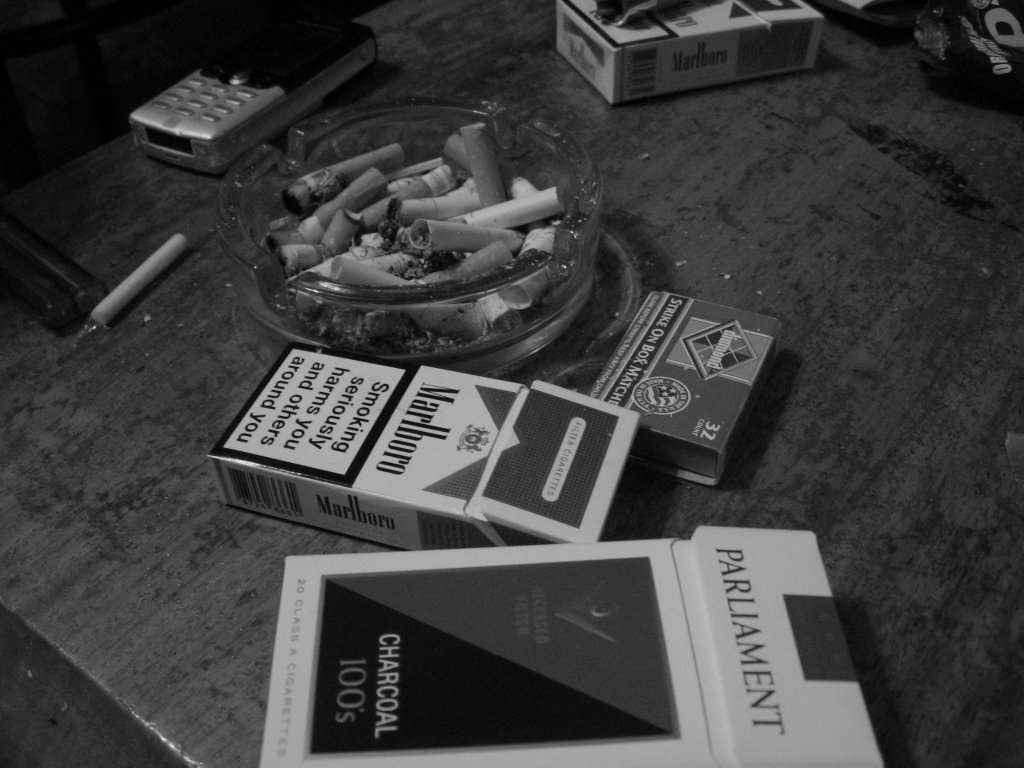
A while after dinner, our hextet (which gained two other Wadhamite members) made its way to the King’s Arms for a couple of pints and a few hours of conversation. I always find it interesting to introduce people to the Oxford environment, though I am still a neophyte myself. It’s the difference between being some shade of green and being absolutely, glowingly, fluorescently green. One inescapable downside: after a few hours in an English pub, my whole universe smells of tobacco smoke. Oh, the toxins.

For tomorrow night, I am invited to a party that Claire is throwing. I am taking ‘black tie’ to mean ‘the only business suit you own.’ Also, I am meant to bring some kind of dessert, as my contribution to the dinner. While suggestions are always welcome, I think I will end up scouring the myriad shops of Oxford in search of something both delicious and quite mutually acceptable.


  • There’s been another great big hubbub about torture, all through the blogging universe. If you are familiar with this region of social space, you will already know what I mean. I would re-post the ambassadorial documents in question, but I think they are already widely dispersed enough as to not be in danger of suppression. If not, here is a page full of links to them. This really is something that people should care about. Torture, in any circumstance and for any reason, is basically the classic definition of a crime against humanity. This is not something we can tolerate, as citizens.
  • Anyone considering firing a gun into the air to celebrate the new year, please don’t. It really kills people. Also, it reaffirms stereotypes.
  • There has been at least one really superb SG photoset in the past 24 hours. Thanks a lot, Tristan and Christina.

Late December London Expedition

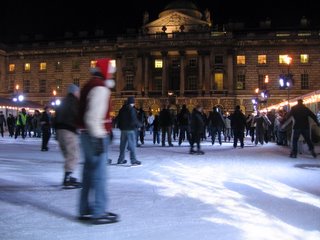
Skaters at Somerset House

Happy Birthday Gabe Mastico

Preface

Yet another perspective upon the blog has reinforced the sense that people see it as a kind of elongated lament, or, at least, a complaint. Almost without reservation, that is used as a way of suggesting ingratitude. How can you be in such a place and yet dare to be unhappy? It’s that judgmental edge that troubles me.

My response to this is twofold. Firstly, I am not anywhere near so troubled as people seem to think the blog indicates. That is partly a reflection of how, and I am sorry to admit it, the blog is thoroughly sanitized. It is a drama – more of a dramatic reenactment of a life than a direct account thereof. The reasons for that must be obvious. Real lives are boring, especially when they revolve around pubs and libraries. Likewise, real thoughts jar in people’s minds. They provoke negative emotions, recriminations, jealousies, and the rest. The line to walk is one between honesty of direct statement and honesty of intention. The fact that even carefully worded entries are so frequently misunderstood is a reminder of why this must be done.

The second part of the response is to raise the question of what leads to happiness. Certainly, being involved in a worthwhile enterprise is a great boon. Some of the frustrations of the program circumscribe that, but certainly do not reduce it to such a point as some people seem to believe. Ultimately, I want the freedom to launch my own inquiries and begin tackling questions from my own direction and on the strength of my own arguments. This is what I thought grad school would be. Additionally, I am troubled by the increasing evidence that the meritocracy that feeds this place is a kind of sham. It’s not that people haven’t worked very hard to be here. Everyone here is clever and nobody is really lazy. At the same time, nobody is particularly disadvantaged either. Certainly, they have done more than people with comparable advantages – even people with greater ones – but they are not drawn from all the corners of humanity. We come from the corners of similar streets. Seeing that further increases my admiration of people like Viktoria Prokhorova, as well as Kerrie and Noral Hop Wo, who are out there working very actively to help mitigate some of the problems and injustices in the world.

Finally, the non-signposted part. The vital foundation of human happiness, at least for me, is in being surrounded by people who you care about. While I’ve made some really interesting friends here, there simply can’t be the kind of emotional depth that allows you to confront frustration, disappointment, loneliness, or anger. Those kind of anchoring relationships take years to form and are not lightly left behind, thousands of kilometres away. Also, life becomes much more animated when it is based around some shared romantic project: a tackling of problems together, a sharing of disparate interests and areas of knowledge, and the development of an identity that is at least provisionally shared. The lack of any such project is an impediment to realizing potential: both for achievement and enjoyment.

In hopes that this might help my perspective be more easily understood, I shall proceed.

Protestors in Westminister

Two Days in London

Unsure of when we were meant to meet, I lingered in Oxford on Wednesday until I got a call from Ian (Dr. Ian Townsend-Gault of the UBC Law School, to be formal about it). It was then a scramble to the train station – where news of a delay was conveyed – and thus to the bus station. Even allowing a three minute pause to buy an Oyster card, I made rather good time to the house in Islington where we had dinner with Ian’s uncle-in-law, two of the uncle-in-law’s daughters, and another family member. Apparently, the house belongs to one of the members of the Barnes and Noble families, of book selling fame. Ian’s uncle-in-law also seems to have led a fascinating life: interviewing Mao in 1941, while living in China, for instance. The house was certainly nicely adorned with art, as well as being well saturated with interesting conversation.

Included in that conversation was an invitation to meet Ian’s uncle-in-law’s ‘circle’ at a pub in London today. While I accepted enthusiastically, having heard them universally described as a highly interesting group, it did not work out in the end. Despite arriving my standard fifteen minutes early and waiting a full hour and a half at what I am certain was the right pub, nobody I recognized arrived. I even conducted five complete reconnaissance missions through the whole pub looking for them. After the staff began to universally direct scowls of disapproval in my direction (despite having bought a drink some time ago in an attempt to placate them), I eventually departed. Perhaps I misunderstood something about the place and time where we were to meet.

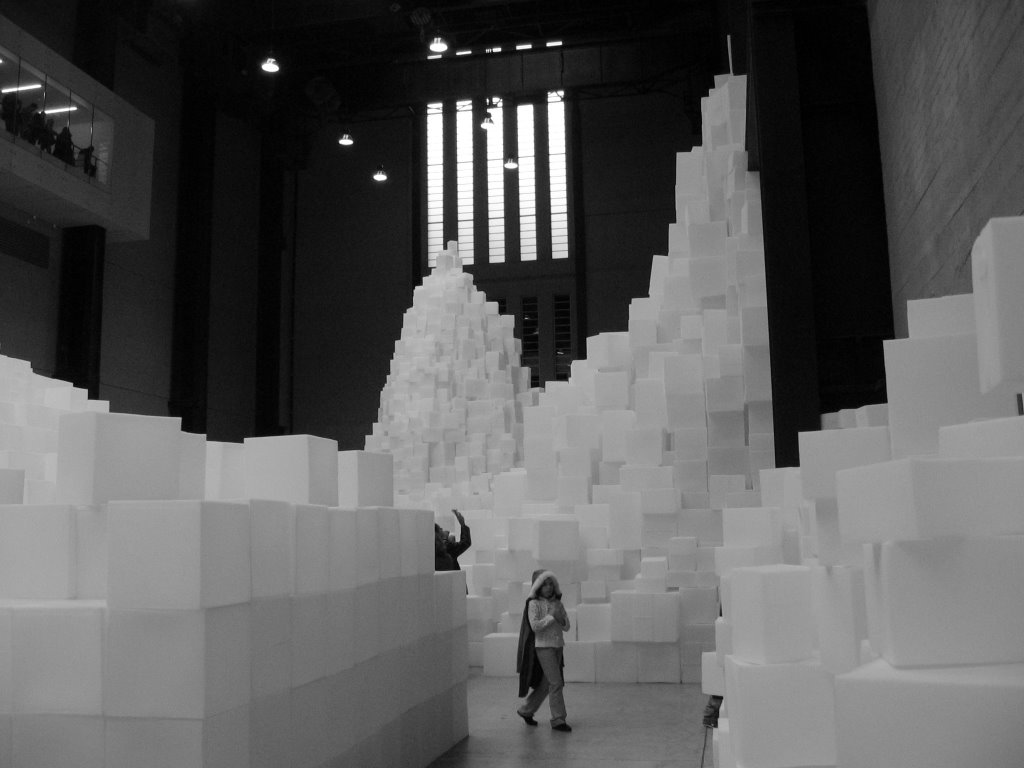
Art in the Turbine Hall, Tate Modern Gallery

But, I am getting ahead of myself. After the fine dinner and interesting conversation, I spent the night at the flat of another former student of Ian’s. After waking at an hour I usually strive to avoid, I accompanied him to Victoria Station and the Heathrow Express before making my ultimately ill-fated trek to Mulligan’s. My thanks go out to Ian, once again, for his hospitality, as well as his overall – and very welcome – way of listening to you. Neither patronizing nor overpowering, I have always appreciated it.

After abandoning my vigil at the pub, I met Michelle Bourbonnais: a young woman with whom I graduated from UBC, who was also part of my international law seminar with Michael Byers, and who is low living and working in London. We met at the Tate Modern and took a wander through the newly reorganized galleries. Everything has shifted around since I went there with Sarah Johnston in September. I couldn’t even find two of my favourite pieces: a spherical, organic looking sculpture evocative of a shell (used as one of my LiveJournal icons) and an animated film from South Africa called A History of the Main Complaint.

One new piece that Michelle and I both enjoyed was a large abstract painting done by Joan Mitchell. The work is untitled, and I found it particularly captivating insofar as it includes the kind of patterns that your brain tends to just mark off as ‘very complex,’ unless, for some reason, you choose to really delve into them, or are compelled to. The impossible intricacy of an oil spot on cement you cannot really delve into until you can cut off the part of your brain that trivializes and ignores it. Then, you can just wander down its avenues – each filled with ephemeral epiphanies about the nature of space and perception.
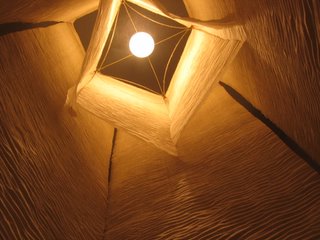
Upward into light

After wandering back across the Millennium Bridge towards Saint Paul’s, we walked to Covent Garden and spent a couple of hours conversing in a place indelicately called ‘The Coal Hole.” Along with the traditional smoky pub atmosphere, it had the noteworthy flourish of a collection of friezes near the ceiling: cross-illuminated and made from something resembling white marble. It was a curious touch, but an appreciated one. It was certainly good to see and speak with Michelle. I was in good spirits when I boarded to coach back to Oxford at Victoria Station.

PS. I am reading an excellent new book, but let that be a subject for a later post. I’d rather get back to it than yack about it, right now.


OS X Frustration

One unforgivably bad thing about OS X is that it completely lacks an appropriate text editor for working with HTML, scripts, or other such text files where you don’t want any formatting artifacts inserted. If you want to see what I mean, open an HTML file in TextEdit, change a view things, and try loading it in Firefox. Even worse, try getting htaccess files properly configured.

Anticipating the response: yes, there are the command line Unix editors – vi, emacs, and that ilk. Even when I used Linux as my primary OS, I was never at some with these infuriating throwbacks to the days of weakly glowing green CRT monitors. Yes, they are very powerful. No, nobody who doesn’t have an intense passion for computer science would ever be justified in putting in the time to learn their byzantine interfaces.

Come on, Mr. Jobs. At least put something like the freeware jEdit into the next version as standard. If you can include the entirety of the child-oriented World Book Encyclopedia, you can spare three megs.

[/rant]

Demure day

The Isis on a cold day

The possibility of having to walk through snow to reach the Library Court showers was realized for the first time today. As described on Ruth Anne’s blog, we got a dusting last night that has not endured through the warmer part of the day. Indeed, having to tramp through it in bare feet was actually proof of my waking up acceptably early. I was initially alerted to this unexpected meteorological phenomena by Tanushree’s audible jubilation this morning; my fellow Wadham inhabitant had not previously encountered snow. It’s rare enough for Vancouverites, as well. I wouldn’t mind getting a foot or so of it at some point, if only so I could zip around Oxford getting photos that look at least a bit different.

I heard, but did not see, that Abra – one of the Canadian law students here – has returned to Library Court: increasing the population by 50% over yesterday. No indication yet of where Nora is, though I am quite sure she has returned to the U.K. from North Carolina. The prospect of re-population is a welcome one, as is that of trying the recipe for dahl that Tanushree gave me today. Perhaps an upcoming New Year’s party will provide it. I’ve been a fan of lentils for as long as I can recall, and could certainly make use of some additional protein.

Tomorrow, I am making my third trip to London since arriving in the UK, as well as my second for which the city itself is my objective. In the evening, I will be meeting with ITG, but I will probably go a bit earlier and take a wander through the Tate Modern and a few other places. Perhaps there will be some opportunity to meet with Sarah Johnston, if only for a quick cup of coffee.

Having tallied up the surprisingly high cost of the Baltic jaunt, I must actively try not to further increase a credit card bill that has already become somewhat daunting. At the same time, I need to resist the urge to overcompensate by falling back on a cheese and bagels diet (which I’ve sworn off, for now) or complete social isolation. With snap peas 80% off, after Christmas, there is no need.

There was one nice thing that happened this evening, but this isn’t really the place to discuss it.


  • People concerned with putting images on the web might find this page interesting and useful. It’s about the nuts and bolts behind different image formats. In particular, the discussion of the specifics of JPEG compression is probably useful for digital photographers.
  • If you are younger than 30 today and living in the developed world, you are likely to be alive when the human population peaks: at around ten billion people, around 2050. It’s an astonishing thought, and a welcome one, given that slowing population growth should increase our ability to reduce poverty, and decrease the strain we are putting on the planet’s resources.
  • Finally, I love The Economist‘s Christmas issue. It’s full of exactly the kind of wonderful, obscure facts that prompt people to ask “How do you know that?” in astonished tones, when you relate them. If you buy only one issue a year, this is the one to choose.
  • General Sir Rupert Smith, who I saw speak in late October, has a new book on the changing character of war out: The Utility of Force. It seems to have been well reviewed, and has consequently been added to my ever-lengthening discretionary reading list.

On the ‘bombs and rockets’ side of IR

This afternoon, I got an invitation to attend a briefing on the final recommendations of the Bi-National Planning Group: one of the bodies that we met with in Colorado as part of the NASCA trip. Formed after September 11th, 2001, their mandate is to investigate security cooperation between Canada and the United States and make recommendations for improvements. They have been involved with projects like the Smart Border accord. While I obviously will not be able to go, I encourage the other NASCA participants to attend, if they can manage it. The briefing Dr. Baker gave us in Colorado Springs was certainly a solid demonstration of the good work that the BPG has been doing. When writing the report (PDF), I remember the BPG as an organization that received nearly universal praise. I look forward to reading their final report on enhanced military cooperation, once it gets released in May.

In a related point, I think I should start attending the meetings of the Oxford Strategic Studies Group, as I know some members of the IR M.Phil program have been doing. Much as I try to concentrate on environmental politics, the international use of force is obviously and permanently central to the study of international relations. As an IR scholar, you would never go hungry with war as your area of interest, especially since the pervasive ‘war on terror’ began. The fact that the strategic studies group meets at All Souls is also a significant point in favour of attending.

For me, environmental politics and strategic studies have a number of common factors that are appealing. They involve interaction with professionals who, as a social scientist (a term I remain skeptical about), you need to understand but not replicate. Scientists and soldiers are both fascinating kinds of people for me. They are endowed with specialist knowledge, which inevitably carries cachet for someone embedded in academia. They are also pleasantly straightforward and expected to be. That’s the reason why our NORAD / NORTHCOM briefing was so satisfying, as conversations with military people of all ranks from both countries have generally been. Speaking with Major General Lewis Mackenzie or cadets at West Point, you get the sense that they are at least making honest arguments that they genuinely want you to understand. Their apparent candour makes a nice contrast with the fiddly, theoretical bits of politics that seem to fascinate some of my friends and colleagues and that mostly just exasperate me. The same goes for scientists: whether those working at the UBC Fisheries Centre, people involved in the Northern Contaminants Program and Stockholm Convention, or others. Part of that comes from being unusually willing to admit when something is uncertain: perhaps the true mark of professionalism in such disciplines.

Another appealing commonality is the obvious possibility of making real-world improvements in both our approach to the environment and to war. These aren’t just areas that we should study for the sake of understanding better. We need to step beyond that and direct that understanding towards improvement. Again, the kinds of philosophical arguments that assert that such progress is impossible – that, in some complex way, such efforts are self-defeating – are exasperating to me. If we can significantly reduce the number of people who get malaria or AIDS, who suffer malnutrition from depleted fisheries, or who get killed by unexploded munitions, we’ve taken concrete steps towards a more just, more preferable world. Ultimately, that’s what I want to be a part of.

Anticipating the next holiday

Sad neglected sprouts

When places are largely devoid of people, they often feel at their most pure. It conforms to a kind of open-space ideal that at least some of us have built into ourselves. It’s the same aesthetic drive that made the clay hills we found on the Arizona Road Trip so compelling, as well as the view from Crown Mountain or the overlook near Petgill Lake. While it can certainly be creepy – especially in spaces that are fundamentally public, like city streets – it can also be empowering and evocative of thought. I certainly have plenty to think about, as I carry on trying to plow through my huge pile of vacation books. One of the slimmest, the Very Short Introduction to Cryptography by Fred Piper and Sean Murphy, I have now finished. While it was interesting, it certainly was not worth buying. In the future, I will make furtive attempts to lurk inside Blackwells (or even a library) and digest a few more of these volumes without having to shell out for them.

The search is beginning now for some kind of New Years plan. Apparently, ITG is going to be in London at some point quite near the end of the month. For those who don’t know who I am talking about, Ian Townsend-Gault taught my international law class at UBC, for which the original version of the infamous fish paper was written. He also helped me considerably to bring it forward to the point where it was rejected by a journal no less esteemed than Marine Policy. Dr. Hurrell says that it could probably be tightened in scope and re-submitted, but I haven’t the energy for another attempt just now. The point of the introduction, in any case, was not the paper but the person. Indeed, I am starting to see the hazy outline of some kind of an end of month plan.

My mother has said that I am welcome to stay in London for a night or so with her friend and former roommate Lessia. Additionally, I have a helpful standing offer from Chris Yung of spending a night on his couch. Given the determination that Claire and I have mutually expressed to find something interesting to do in order to usher in 2006, this may provide the necessary logistical base. If people are aware of specific, interesting things that are happening, I would appreciate the information. More precise plans will have to wait for Claire’s return from Kent. With the return to Oxford of Margaret, Emily, Alex, and others, this will become a much more active place. (And one in which I am even less likely to read a good amount about neorealism.)

Anyhow, I must be back to my books.


  • Anyone computationally minded should have a look at this amusing comic. This episode is also interesting, as is this one.
  • My PGP Public Key is now hosted on this server.
  • Tony has a post on why having daughters seems to make people more left wing.
  • Some of the jokes posted as comments on the last entry are pretty good, though one is a reminder of how I have a statistics exam in eighteen days. Prior to then, I need to borrow a graduate robe again – since exams here are written sub fusc – and figure out just what kind of statistics they mean to test us on. Anyone from the M.Phil program interested in forming a study group?
  • It looks like Zandara is having an interesting road trip. She has some photos posted.
  • After a particularly unsettling post yesterday, Frank’s blog has vanished. I hope he is ok.
  • Here’s an interesting article from The Economist on some of the connections between law and health. I would be especially interested in knowing what some of my medically inclined friends (Astrid and Lindi) think of it. Clearly, the health care system risks being rife with perverse incentives – such as the ones that strongly discourage drug companies from developing products like new contraceptives or vaccines – and poor approaches to problems – like using juries with no particular medical knowledge to make decisions about complex, technical questions. While the solutions to such problems aren’t evident, it strikes me as particularly important that we work on finding some.
  • After difficulty and labour hard, the sidebar now renders properly in every browser except IE 5.2, for Mac. The extent to which I will sleep better at night is considerable.