Destroying Iraqi RADAR in 1991

Smoker and fire escape

Anyone who has been trawling the internet in a search for information on the suppression of air defences during the first Gulf War might be well served by this article. In particular, it goes into a lot of detail about the location, identification, targeting, and destruction of Iraqi RADAR installations using weapons like the American AGM-88 High-speed Anti-Radiation Missile (HARM) and the British ALARM (Air Launched Anti-Radiation Missile). The article highlights how the use of Soviet equipment by Iraq made this a kind of test situation for NATO versus Warsaw Pact air defence and attack equipment.

What this suggests is that the NATO-Warpac central European air battle would have probably followed a similar course, leading to the defeat of the Communists’ IADS within a week or so, in turn leading to air superiority in the following week, as the Communist air forces would have withered under the fire of the Allied counter-air campaign. Fortunately this never had to happen and the world has been spared the inevitable nuclear response to the lost air battle and hence total conventional defeat through attrition by air.

Not a very comforting conclusion for the world at large, though no doubt gratifying for all the companies that built American planes and missiles and things.

One interesting tactic was the use of Brunswick Tactical Air Launched Decoys. These simulated the appearance of incoming aircraft, causing Iraqi RADAR installations to ‘light up’ in order to target them. Sometimes, they would draw fire from surface-to-air missile batteries. Often, this would leave the former temporarily defenceless at a time when their position – and that of their supporting RADAR – had been revealed. Both could then be targeted by NATO aircraft. The ruse was apparently so effective that the Iraqi armed forces maintained the false belief that they had destroyed several hundred British and American planes.

There is also a fair bit of information about jamming and other forms of electronic countermeasures. All in all, it provides an interesting glimpse back into a period when conventional warfare against standing armies was something NATO still did.
Polar bears ‘threatened’

As of today, the American Department of the Interior has listed the polar bear as a ‘threatened’ species, on account of the ongoing disappearance of the Arctic ice cap. In making the announcement, Secretary of the Interior Dirk Kempthorne stressed that the decision is not meant to compel the regulation of greenhouse gasses:

Listing the polar bear as threatened can reduce avoidable losses of polar bears. But it should not open the door to use of the ESA [Endangered Species Act] to regulate greenhouse gas emissions from automobiles, power plants, and other sources. That would be a wholly inappropriate use of the ESA law. The ESA is not the right tool to set U.S. climate policy.

In a sense, that is fair enough. Creating something as comprehensive as a greenhouse gas mitigation strategy in response to concern about a single species is definitely a backwards-seeming way to go about it. At the same time, one is reminded of how somewhat awkward justifications have sometimes been used in the past to secure legal outcomes: for instance, the use of the ‘interstate commerce’ clause in the US Constitution to assert federal jurisdiction, or even the indictment of Al Capone on tax evasion charges, rather than those directly associated with organized crime.

The point here is less whether concern about polar bears does or does not create a legal obligation to act on climate change. Rather, this is another demonstration of how virtually all conservation planning now requires the consideration of climate change effects. This is just one of a thousand cuts through which federal reluctance to effectively regulate greenhouse gasses will need to be eliminated.

Movement and concentration

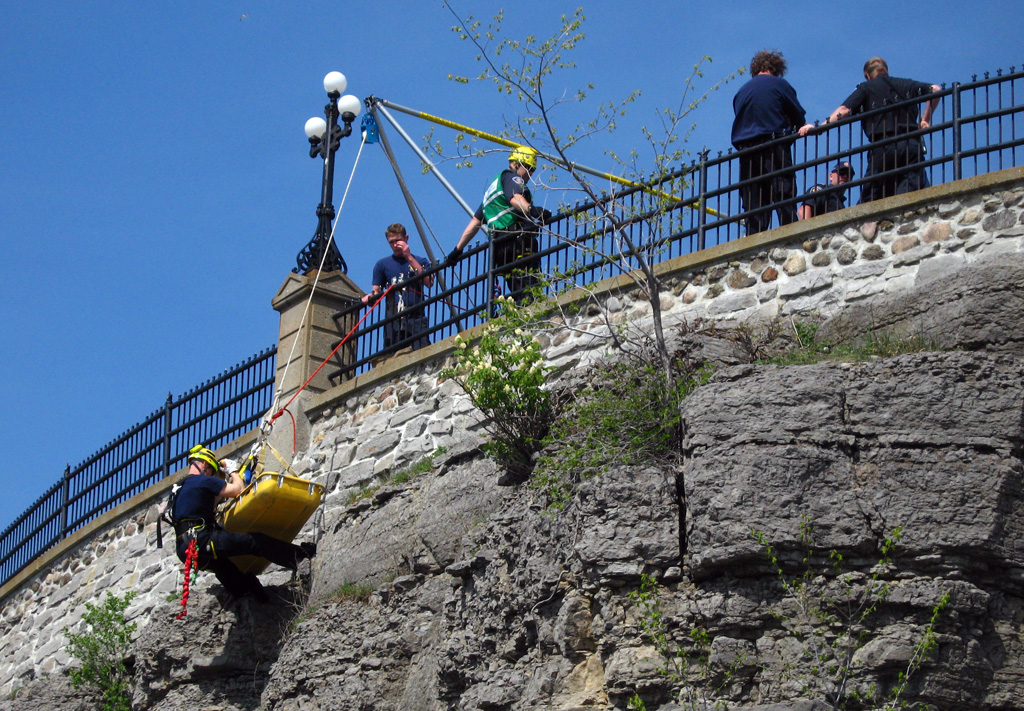
Cliff and rescue workers

One of my major productivity boosting strategies while at university was to keep moving quite frequently. Rather than sit in one spot and have my level of attention gradually taper off to almost nothing, I would circulate between libraries, coffee shops, and other places where reading and writing could be undertaken. While the little walking pauses diminished the total time available in which to do work, the loss was more than compensated by better productivity while actually working.

It would be nice if more of the working world incorporated such options, rather than maintaining the expectation that a person will generally stick to their office or cubicle. The latter, in particular, seem well designed to soften the focus of one’s mind. Quite probably, the proliferation of portable computers and wireless communication options will eventually make such peripatetic work styles acceptable in even the stuffiest of environments. Until then, there is nothing for it but to note with appreciation how one’s mind re-awakens with the transition from florescent-lit beige fabric to the high contrast, air-circulating wider world.

Keeping the bombs in their silos

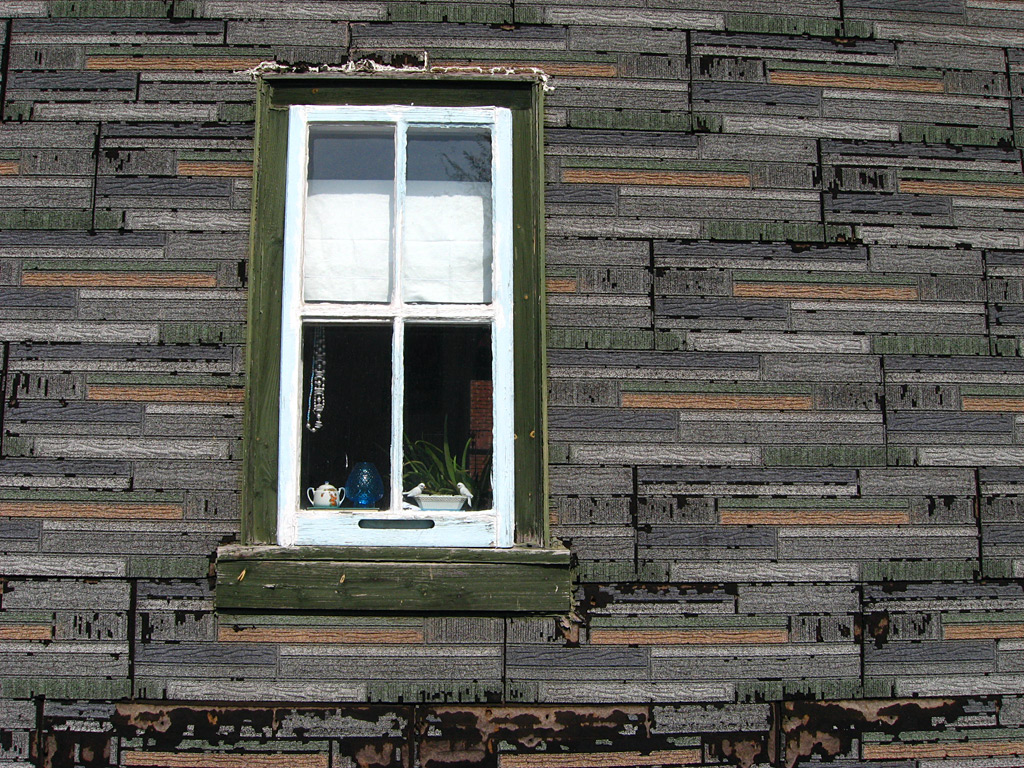
Window and siding

Back in 2005, former US Secretary of Defense Robert McNamara wrote an article in Foreign Policy about the danger of the accidental or unauthorized use of nuclear weapons. The issue remains an important one: particularly given trends like Russia’s increasingly assertive behaviour (putting more nuclear weapons out where accidents or miscalculations could occur), as well as ongoing nuclear proliferation.

Writing for Slate, Ron Rosenbaum has written an article on steps the next US President could take to reduce ‘inadvertence.’ The danger of nuclear war may seem like a dated Cold War concern, but the sheer number of weapons on fifteen minute alert, the pressure on leaders to make an immediate decision when the military thinks an attack is taking place, and the growing number of states with nuclear technology all mean that it should remain a contemporary concern and area for corrective action.

John McCain’s carbon targets

In a speech delivered in Oregon, John McCain laid out some targets for reducing American greenhouse gas emissions:

  • 2012: Return emissions to 2005 levels (18 percent above 1990 levels)
  • 2020: Return emissions to 1990 levels (15 percent below 2005 levels)
  • 2030: 22 percent below 1990 levels (34 percent below 2005 levels)
  • 2050: 60 percent below 1990 levels (66 percent below 2005 levels)

These targets look pretty similar to the ones adopted by the present Canadian government: a peak in emissions by 2012, a reduction to 20% below 2006 levels by 2020, and a 60-70% reduction below 2006 levels by 2050.

Stabilizing greenhouse gas concentrations below 550ppm probably requires more aggressive action. That being said, this is not a terrible place from which to begin negotiations: both between presidential candidates in the United States and between the United States and other countries. If the US was willing to commit to those targets unilaterally (and do so with a credible plan for actually achieving them), it might become a lot easier to get countries like China and India to begin making a more substantial contribution to the mitigation effort.

In exchange, the United States could adopt the kind of targets (and supplemental actions, like aid in preventing tropical deforestation) that are actually required to stabilize greenhouse gas emissions at a level around 450ppm, thus keeping total global temperature change in the realm of two degrees Celsius.

Electric vehicles in Canada

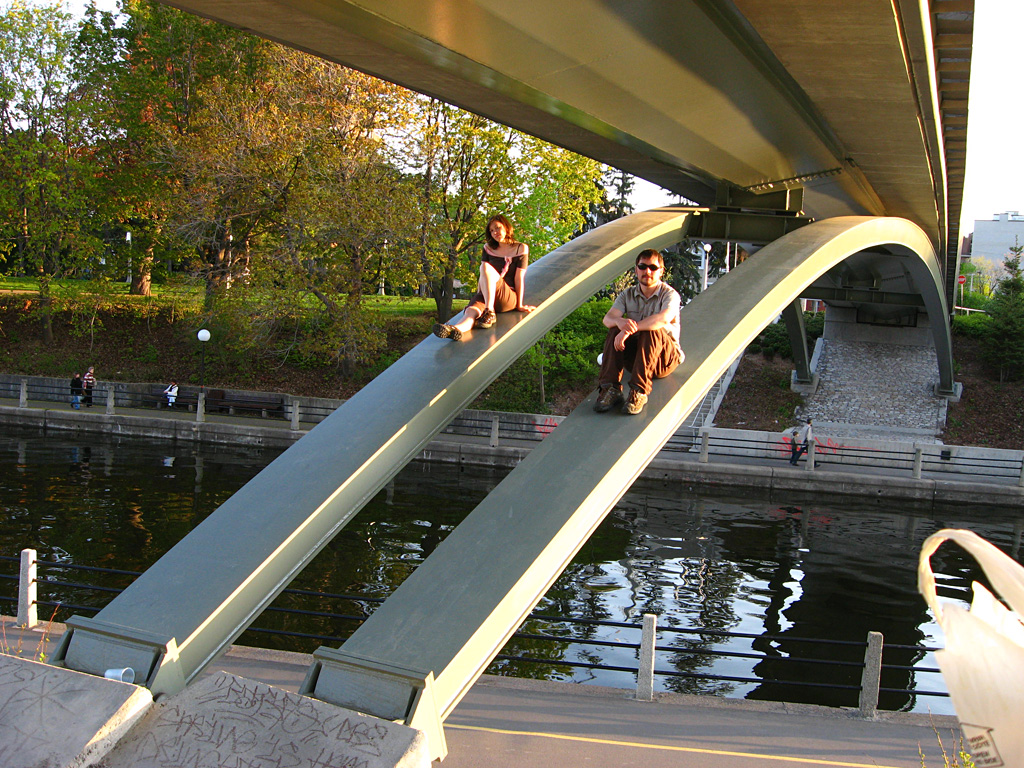
Milan Ilnyckyj and Emily Horn, sitting on bridge supports

Dynasty is a Canadian company that builds light, low speed, battery powered cars. Their Dynasty IT vehicle has a range of 50km and a top speed of 40 km/h. Because Transport Canada refused to follow the lead of 44 American states and authorize the vehicles for non-highway use on roads, the company has decided to relocate to Pakistan. There, they will manufacture cars for the American market. The ZENN is in a similar predicament.

There is a real trade-off between producing light vehicles and producing ones that do well in crash tests. That said, we do permit people to ride absurdly unsafe motorbikes – even on the highway. It is incoherent to ban one and permit the other.

Perhaps it would make sense to create a special legal category for small, light vehicles of limited range, intended primarily for urban use. By all means, those purchasing them should be informed that they will not fare as well in a crash with a huge truck as someone in a larger, steel-framed car. That said, the economic and environmental advantages may justify the risk in the eyes of many.

Nanotubes and hot sauces

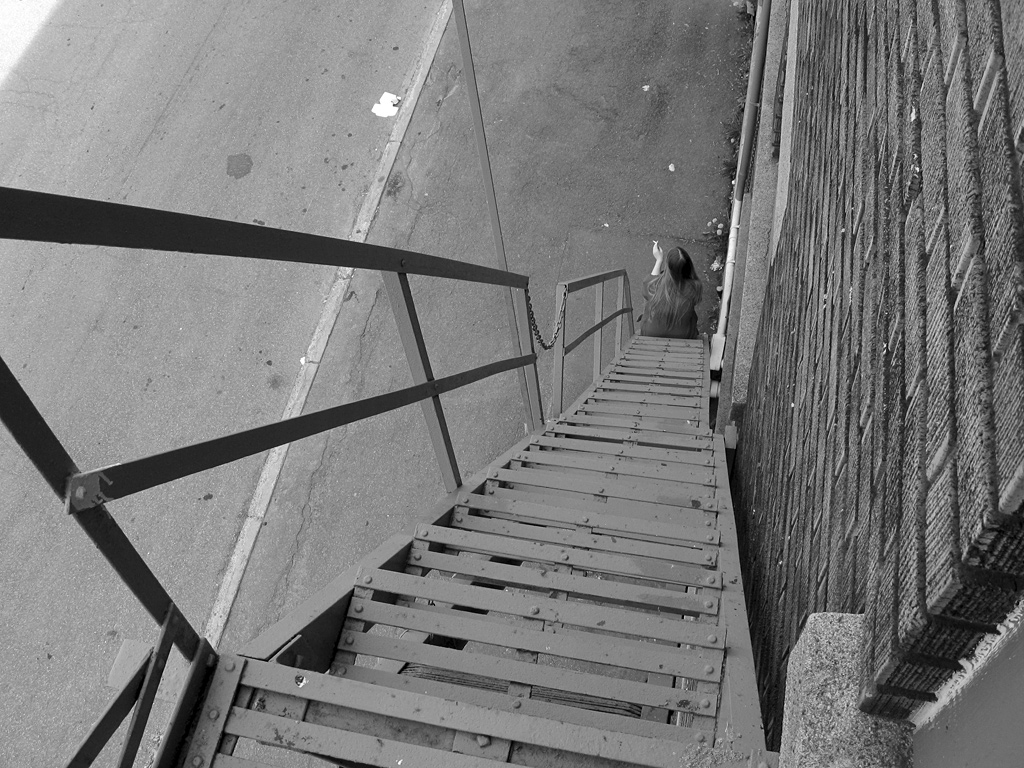
Emily Horn on a fire escape

Hot sauce aficionados may be familiar with the Scoville Scale, used to express the heat of a sauce or pepper. The other day, my friend Antonia sent me an article explaining that the process of determining a Scoville rating might be significantly refined, thanks to carbon nanotubes:

The well-established Scoville method – currently the industry standard – involves diluting a sample until five trained taste testers cannot detect any heat from the chilli. The number of dilutions is called the Scoville rating; the relatively mild Jalapeño ranges from around 2,500-8,000, whereas the hottest chilli in the world, the ‘Naga Jolokia’, has a rating of 1,000,000. High performance liquid chromatography (HPLC) can also be used but this requires bulky, expensive equipment and detailed analysis of the capsaicinoids.

In Compton’s method, the capsaicinoids are adsorbed onto multi-walled carbon nanotube (MWCNT) electrodes. The team measures the current change as the capsaicinoids are oxidised by an electrochemical reaction, and this reading can be translated into Scoville units. The technique is called adsorptive stripping voltammetry (ASV), and is a relatively simple electrochemical method.

The Scoville Scale is pretty easy to understand. A sauce with a rating of 1000 can be diluted 1:1 with water to produce a sauce with a rating of 500. Tabasco sauce, of the sort ubiquitous in diners, has a rating of between 2,500 and 5,000. Dave’s Insanity Sauce – the spiciest one in my kitchen – has a rating of about 180,000. Even taking the upper estimate of Tabasco’s potency, that means one tablespoon of Dave’s is equivalent to about half a litre of Tabasco.

Of course, those who truly wish for their epithelial cells to signal as much heat and abrasion as is theoretically possible can do better. Blair’s 16 Million Reserve, which consists of a little bottle of pure capsaicin crystals, weighs in at 16,000,000 Scoville heat units. One tablespoon is thus akin to 1.31 litres of Dave’s Insanity Sauce, or 47.16 litres of Tabasco. Just the thing you need if you want to turn a bland chili dinner for your million person standing army into something a bit more interesting.

Seeking the Ottawa social scene

Having spent two evenings searching with little luck, Emily and I have concluded that it can be challenging to find interesting social things happening in Ottawa. The University of Ottawa seems particularly devoid of life, though I suppose classes are not in session.

How do people who have lived here longer work their way into situations where entertainment of some kind is provided, as well as where it is possible to meet new and interesting individuals?

Vehicle efficiency

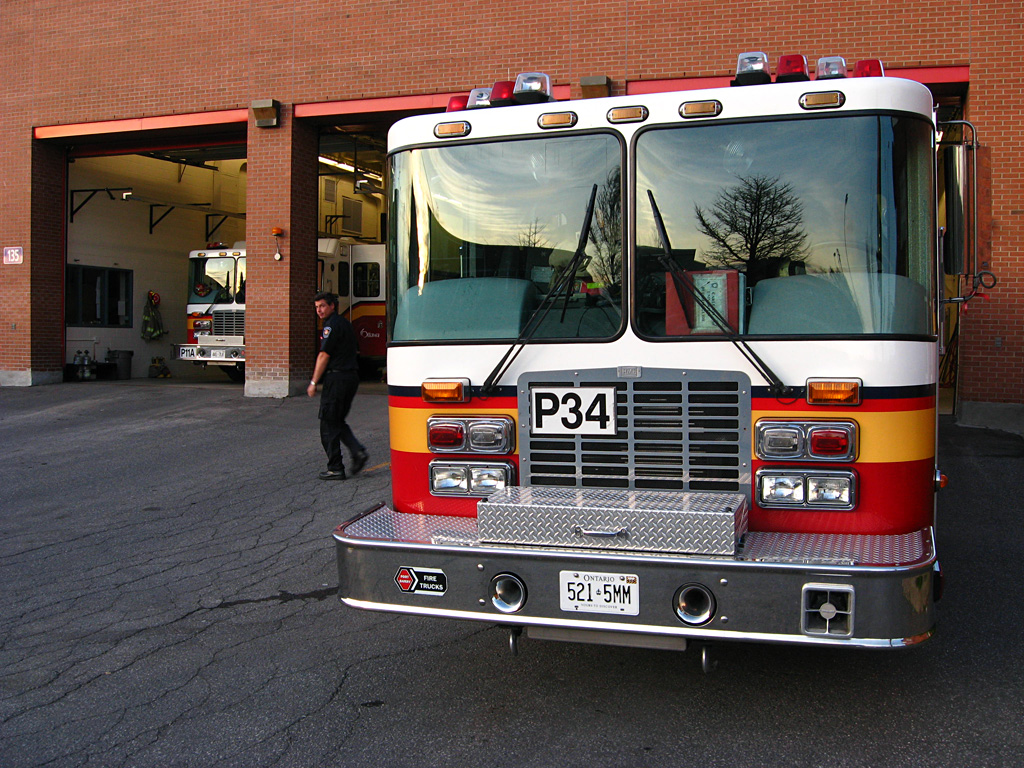
Fire station on Preston Street, Ottawa

My friend Mark sent me a link to a book in progress about sustainable energy. One of the more interesting sections is on vehicle efficiency. The author stresses that, while some kinds of efficiency gains are physically possible, others are not:

Could we make a new car that consumes 100 times less energy and still goes at 70mph? No. Not if the car has the same shape. The energy is going mainly into making air swirl. Changing the materials the car is made from makes no difference to that. A miraculous improvement to the engine could perhaps boost its efficiency from 25% to 50%. But the energy consumption of a car is still going to be roughly 40 kWh per 100 km.

The story is a familiar one: efficiency can get you a long way, but there are no free rides. Another interesting comment from this chapter is the major design differences between an efficient city car and an efficient highway car. Since the former is always stopping and starting, low weight is really important. Brakes that regenerate energy also make a big difference. For a highway car that avoids major acceleration and deceleration, the most important thing is reducing drag. Weight is comparatively trivial.

One other interesting assertion is that the energy involved in making a car is actually pretty trivial compared to the amount used in driving it around:

The energy cost of making the raw materials for a one tonne car is thus equivalent to about 3000 km of driving; an appreciable cost, but probably only 1% of the lifetime energy-cost of the car’s fuel.

If correct, that makes it seem a lot more reasonable to upgrade from an old and inefficient vehicle to a newer and less gas-thirsty model. It also suggests that government programs to replace inefficient cars with better ones might have strong justification, in terms of climate change mitigation potential.

In order to move to a low carbon society, we need to do a slew of things. We definitely need to increase the energy efficiency of accomplishing most tasks. We definitely need to reduce the quantity of greenhouse gas produced in the process of generating a unit of energy. We probably need to significantly reduce total energy consumption. Finally, we need to take actions that manage the greenhouse gasses that will inevitably be produced by some actions. The protection and enhancement of carbon sinks (mostly forests and soils) are essential for this.

When it comes to reducing total energy usage, the chapter does make one excellent suggestion: “a cyclist at 21 km/h consumes about 30 times less energy per kilometre than a lone car-driver on the motorway: about 2.4 kWh per 100 km.” Those who cycle more slowly are likely to be even more efficient, since doubling the time it takes to travel somewhere apparently reduces energy usage by three quarters.

Remember the platypus

The Platypus is a strange and intriguing creature. Some of the odder things about it:

  1. Males can inject venom from spurs on their ankles. The venom will not kill humans, but is extremely painful and heightens overall sensitivity to pain for a period between a few days and several months.
  2. They have ten sex chromosomes, out of a total of 52. Males are ‘XYXYXYXYXY.’
  3. They swim using only their two front legs, though the back two are also webbed.
  4. Only the left ovary of females is functional.
  5. They have no visible ears.
  6. They only use their eyes while above water.
  7. Underwater, they can detect electric fields generated by muscular contractions.
  8. They lose their three teeth before they first leave their mother’s burrow.
  9. They forage for twelve hours a day.
  10. They have a body temperature five degrees lower than most placental mammals.
  11. Females lactate through pores in their skin. Milk pools in grooves located on their abdomens.
  12. The DNA of one female – named Glennie – has now been sequenced by researchers at Oxford.

I recall reading that Australia has three types of animals: the venomous, the bizarre, and sheep. The platypus scores highly on the first two counts.