Immune system biochem

Face on a wall

It seems as though one of the coolest medical products you can make from blood is intravenous immunoglobulin (IVIG). Basically, it consists of antibodies extracted from the plasma of thousands of individual blood donors. It is given to people who have had their own ability to produce antibodies compromised and helps their immune system to attack infections over a period between two weeks and three months.

I remember a children’s television show where white blood cells are represented as the body’s police force. The analogy is fair enough. There are situations where the police force is lazy, so nasty gangs move in. There are situations where nasty gangs simply kill off the police force. Finally, there are situations where the police force goes haywire and starts savaging the population. Autoimmune diseases are the anatomical equivalent of the uncontrolled police force. Apparently, IVIG can help in all three circumstances: as well as in cases of inflammation.

Reading about biochemistry is an excellent way of being reminded just how absurdly complicated life is. I frequently find myself contemplating all the thousands of chemical reactions involved in performing the slightest action – tapping a key, dilating your pupil when a cloud crosses the sun – and being amazed that they can happen so quickly and consistently.


Assembly line reading and writing

I remember once reading an interview with science fiction author William Gibson in which he argued that he could not keep a blog because it would sap his ability to write other things. I think he used a steam engine analogy: arguing that the minor releases of pressure associated with writing blog posts prevent him from developing the working force required for more substantial pieces of writing.

This lines up somewhat with something Nassim Nicholas Taleb said in his book. He argued that excessive focus on day-to-day and hour-to-hour news actually reduces one’s ability to understand the world. This is because it creates the spurious impression of trends when there is really only chatter; also, the time required for such constant perusal saps one’s ability to read more substantial things, like books.

While I don’t have any firm personal plans to respond to these observations, they do seem valid and indicative of a period in history where throughts are addressed in an increasingly frantic and disjointed manner.

Driving’s declining appeal

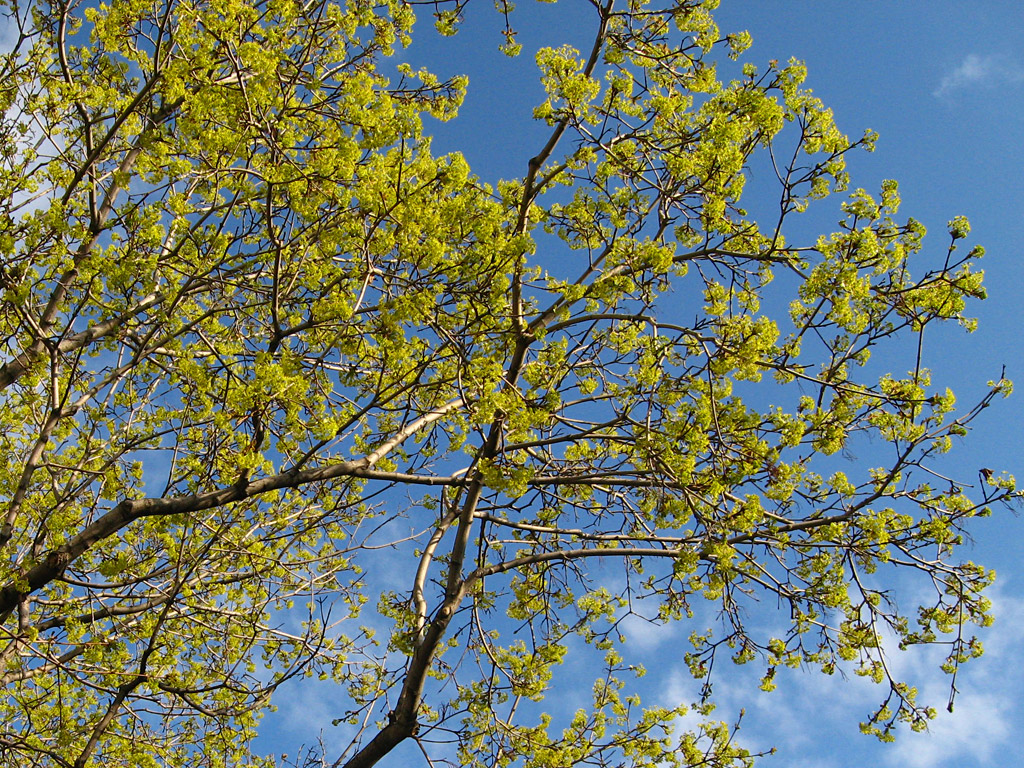
Spring leaves

While they are generally an urban and environmentally aware bunch, it still seems notable that most of my friends who grew up in cities never chose to get driving licenses. With the notable exception of friends who live in rural areas or distant suburbs, driving seems to have become something that relatively few people find worthwhile. An article from The New York Times suggests that they are less unusual than one might think:

In the last decade, the proportion of 16-year-olds nationwide who hold driver’s licenses has dropped from nearly half to less than one-third, according to statistics from the Federal Highway Administration.

While it would be better to have data extending up into people in their mid-20s, it does seem safe to guess that numbers there are also falling. I have personally never had a license that permitted me to drive a car alone. Even my learner’s license has been expired since December 2003.

There are a number of causes I would attribute to the trend, at least among those I know:

  1. Graduated licensing schemes make it more and more annoying to get a license. In British Columbia, it now takes more than a year before you can get a license that is useful for anything other than practicing with a fully-licensed adult driver.
  2. Partly due to longer licensing processes, a good number of people now head off to university before they can get through to a license they can use alone. By the time they are at school, they have more pressing uses for their time and reduced access to adults willing to serve as observers.
  3. Cars, gas, and insurance are expensive. Also, people are choosing to spend longer in school and spend more in total on tuition. Twenty or thirty years ago, a fair number of 25 year-olds had probably been on the job and debt free for a while. Among my friends, there is a good chance they will be in grad school and still collecting student debt.
  4. People are more mobile. They don’t stay in one place long enough for it to be worth getting a car or license.
  5. People are more environmentally aware. Whereas once cars were symbols of wealth and freedom, they are increasingly symbols of greed and an anti-social willingness to harm those around you.

What other reasons would people give for the trend away from driving? Personally, I think the trend is a positive one – comparable to the increasing rareness and social unacceptability of smoking.

Digital camera noise signatures

I previously mentioned the possibility that jpeg metadata could cause problems with your cropping, revealing sections of photos that you did not want to make public. Another risk that people should be aware of relates to the particular ‘signatures’ of the digital sensors inside cameras:

If you take enough images with your digital camera, they can all be compared together and a unique signature can be determined. This means that even when you think that you are posting a photo anonymously to the internet, you are actually providing clues for the government to better tell who you are. The larger the sample size of images they have, the easier it is them to track down images coming from the same camera. Once they know all the images are coming from the same camera, all they then have to do is find that camera and take a picture to confirm it beyond a reasonable doubt.

The possible implications are considerable. This technique could be used in crime fighting, though also in tracking down human rights campaigners and other enemies of oppressive states. While the linked page lists some techniques for removing the tell-tale signs, there is no guarantee they will work against any particular agency or individual who is trying to link a bunch of photos to one camera or photographer.

The take-home lesson is that anonymity is very hard in a world where so many tools can be used to puncture it.

Some useful patterns in English

Rusty connector

By about 1300 CE, Arabic cryptographers had determined that you can decipher messages in which one letter has been replaced by another letter, number, or symbol by exploiting statistical characteristics of the underlying language. Here are some especially useful patterns in English.

  1. E is by far the most common letter – representing about 1/8th of normal text.
  2. If you list the alphabet from most to least commonly used, it divides into four groups.
  3. The highest frequency group includes: e, t, a, o, n, i, r, s, and h.
  4. The middle frequency group includes: d, l, u, c, and m.
  5. Less common are p, f, y, w, g, b, and v.
  6. The lowest frequency group includes: j, k, q, x, and z.
  7. E associates most widely with other letters: appearing before or after virtually all of them, in different circumstances.
  8. Among combinations of a, i, and o io is the most common combination. Ia is the second most common. Ae is rarest.
  9. 80% of the time, n is preceded by a vowel.
  10. 90% of the time, h appears before vowels.
  11. R tends to appear with vowels; s tends to appear with consonants.
  12. The most common repeated letters are ss, ee, tt, ff, ll, mm and oo.

Naturally, there are thousands more such patterns. Even understanding a few can help in deciphering messages that have had a basic substitution cipher applied.

Here’s one to try out:

LKCLHQBCKDRCPQQBDKAPZULSQUCDK
AZRDTDGPCOTZKQDPQBZQDQZHHLOIP
XLSVDQBZAOCZQICZGLHQDJCQLOCZI
QBDKAPQBZQDKQCOCPQXLSDKXLSOPM
ZOCQDJCSKHLOQSKZQCGXLQQZVZDPO
CGZQDTCGXMLLOGXMOLTDICIHLOVDQ
BRZHCPQLLJZKXLHQBCJRGLPCNSDQC
CZOGXDKQBCCTCKDKA

One hint is that cipher alphabets are not always entirely random. The tools on this page are useful for cracking monoalphabetic substitution ciphers.

Keenlyside et al. on the next decade

As reported in the BBC, a Nature article is arguing that computer models suggest that little global warming will occur in the next decade:

[O]ver the next decade, the current Atlantic meridional overturning circulation will weaken to its long-term mean; moreover, North Atlantic SST and European and North American surface temperatures will cool slightly, whereas tropical Pacific SST will remain almost unchanged. Our results suggest that global surface temperature may not increase over the next decade, as natural climate variations in the North Atlantic and tropical Pacific temporarily offset the projected anthropogenic warming.

Climate is a naturally variable thing and, as such, it is always undergoing upward and downward oscillations. Anthropogenic greenhouse gasses definitely have a growing warming effect, but that effect is overlaid on top of the existing variations and feedbacks. As such, a natural downward tendency might drown out the human impact for a certain span of time.

Having relatively accurate decade-to-decade forecasts on climate change impacts could be very useful for adaptation planning. By providing guidance on things like weather conditions and extreme events, they could allow for the more intelligent selection of crops, the concentration of effort in the most threatened areas, and the general development of anticipatory policy.

While such studies are clearly important for increasing our understanding of the climate system, there is a big danger of misunderstanding them – whether wilfully or not. Plenty of people would interpret a decade of flat or falling temperatures as strong evidence that the climate change consensus is wrong. It provides new fodder for those intentionally seeking to confuse the issue, as well as new grounds for confusion among those who are genuinely trying to understand the situation. Of course, we cannot ask for science to always emerge in ways that help people deal with it appropriately. It would be pretty tragic if a brief but poorly timed deviation from the warming trend helped to undermine the case for action at the very time when we must begin the long and difficult task of building a low-carbon world.

Building an anti-power plant

Spring buds

You often see glib statements like “The world will need 35% more energy by 2020.” Often, these seem to be based on an approach little more sophisticated than looking at the trend in energy growth over the last few years and extending it out another twelve. Thought about more intelligently, we see that there isn’t some mythical quantity of energy that will be demanded: people will simply make choices in the face of the incentives that are presented to them and their own desires. If those choices and incentives favour a lower energy mode of living, it is entirely possible that we could cut total energy use at the same time as the population and standards of living continue to rise.

Thought about that way, there are many ways in which we can change what the quantity of energy demanded will be. People don’t want X Joules to keep their houses warm and Y Joules to transport groceries. They want warm homes and convenience. These things can be done at a much lesser energy cost than is the case today. Critically, reducing demand for some quantity of energy – say the 1000 MW or so a new nuclear plant could provide – may well be cheaper than actually building the plant. Making buildings, vehicles, and factories more efficient can go a long way towards that. So too can cutting back on terrifically wasteful uses of energy. One critical route to achieving this is to change the incentives for energy producers. As long as their profits rise when they sell more and fall when they help people cut back, they will be a perverse force pushing for less sustainable lifestyles. Regulation can be re-crafted to ensure that halving a home’s energy use is a boon for the owner, the utility, and for the planet.

Thoughtlessly accepting that energy demand must continue growing shows both a lack of adequate concern about climate change and a lack of imagination. Building anti-power plants instead would mean keeping the landscape and air clearer, keeping carbon safely in the ground, and working towards a future where one’s energy use and one’s quality of life aren’t slavishly locked together.