Improvised explosive devices

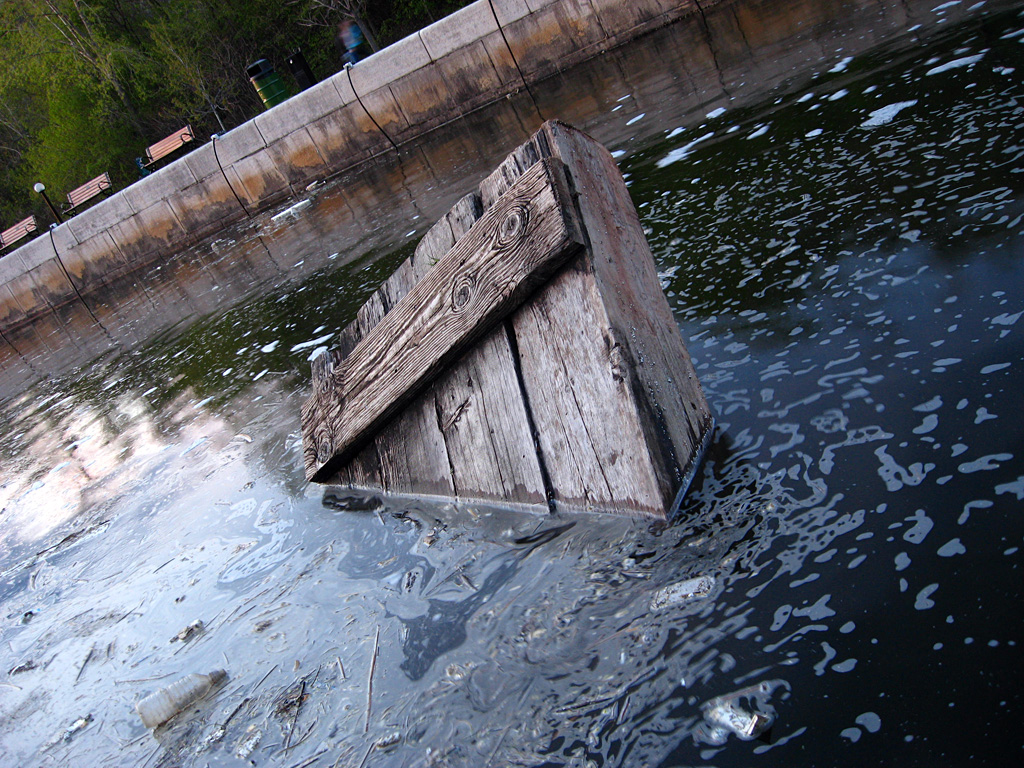
Trash in the Rideau Canal locks

The Washington Post has an interesting special feature on improvised explosive devices (IEDs) in Iraq and Afghanistan. While the overall themes are quite common – Western forces are much less effective against insurgents than armies, low cost and low tech weapons can neutralize huge advantages in funds and technology – the specific details provided are quite interesting.

IEDs are apparently the single biggest killer of coalition troops in Afghanistan and Iraq. Partly, that is the result of not having large enough forces to monitor important routes continuously. Partly, it is the product of the sheer volume of explosives available in both states. Partly, it is the result of assistance provided by other states or sub-state groups, such as Iranian assistance being provided to some Shiite groups. Explosively formed penetrators – capable of firing six or seven pounds of copper at 2000 metres per second – are an excellent example of a relatively low cost, low-tech technology that seriously threatens a force that is far better trained, supported, and equipped overall.

Seeing how total air superiority, expensive armoured vehicles, and sophisticated electronic countermeasures can be no match for some guys with rusty old artillery shells and some wire is a humbling reminder of the limited utility of military force. Ingenuity, practicality, and humility will probably prove to be essential qualities as the US tries to find the least bad path out of Iraq, and while NATO tries to salvage the situation in Afghanistan.


Privacy and Facebook applications

I have mentioned Facebook and the expectation of privacy before. Now, the blog of the Canadian privacy commissioner is highlighting one of the risks. Because third party applications have access to both the data of those who install them and the friends of those who have them installed, they can be used to surreptitiously collect information from those in the latter group. While this widens the scope of what third party applications can do, it also seriously undermines the much-trumpeted new privacy features in the Facebook platform.

It just goes to reinforce what I said before: you should expect that anything you post on Facebook is (a) accessible to anyone who wants to see it and (b) likely to remain available online indefinitely. The same goes for most information that is published somewhere online, including on servers you operate yourself.

The structure of consumer spending

Tristan Laing in Ottawa

This graphic, provided by the New York Times, is quite interesting on two levels. To start with, it displays some interesting information about the structure of consumer spending. In addition, it provides an excellent example of data being displayed in a concise, comprehensible, attractive, and accessible way.

The first thing that is interesting is the breakdown between spending areas:

  • Housing: 42%
  • Transportation: 18%
  • Food and beverages: 15%
  • Health care: 6%
  • Education and communication: 6%
  • Recreation: 6%
  • Apparel: 4%
  • Miscellaneous: 3%

Also interesting are the single biggest spending items:

  • “Owner’s equivalent rent:” 23.9%
  • Rent: 5.8%
  • Gasoline: 5.2%
  • New cars and trucks: 4.6%
  • Full service restaurant meals: 3.0%
  • Electricity: 2.8%
  • Hotels and vacation homes: 2.4%
  • Car insurance: 2.0%
  • Used cars and trucks: 1.8%
  • Cable: 1.2%

Beer spending is a paltry 0.3% – only three times what is spent on butter or ice cream.

Ducks are distractions

The continuing furor over the 500 ducks that died in a toxic oil sands tailing pond seems like an excellent demonstration of the capacity of people to utterly miss the point. Oil sands extraction has converted a vaste swathe of boreal forest into toxic wasteland, speckled with tailings ponds up to 15 square kilometres. The Pembina Institute has asserted that: “Despite over 40 years of oil sands development, not a single hectare of land has been certified as reclaimed under Government of Alberta guidelines.” In addition to that, there is the water use and the greenhouse gas emissions.

To look at this and have your attention dominated by a few unlucky birds seems like the height of myopia.

Greenpeace on carbon capture and storage

Ottawa River overflowing

On Monday, Greenpeace released a report entitled: False Hope: Why carbon capture and storage won’t save the climate (PDF). The points made are fairly familiar, though it is good to see them considered in combination:

  1. CCS cannot deliver in time to avoid dangerous climate change.
  2. CCS wastes energy and resources
  3. Storing carbon underground is risky
  4. CCS is expensive and undermines real solutions to climate change
  5. CCS and liability: risky business
  6. The alternative to CCS: renewables and energy efficiency

Joseph Romm probably has the most sensible overall view of CCS. He argues that it can serve as one of the fourteen ‘wedges’ that are required to stabilize global concentrations of greenhouse gasses, acknowledging that even that role will require pumping infrastructure equivalent to all that presently being used to extract oil. Think about the total expenditures of the world’s oil companies on equipment, construction, and labour and you begin to appreciate the costs that are likely to be associated with widespread use of CCS. That being said, it is only fair to say that the cost projections are approximations based on huge assumptions. It is like being in the era of the Wright brothers and trying to project what the finances of a major airline will resemble, in terms of thinks like capital use and equipment life cycles.

CCS needs to be thought about in the context of an overall strategic push to stabilize greenhouse gas levels. It is possible that it will have a modest effect at an acceptable cost. It is also possible that it will be unfeasible at a commercial scale, or simply too costly. The most dangerous possibility is that the very idea of CCS gives people the false sense that the problem can be solved, particularly that we can keep burning coal while waiting for a low-cost technological solution to magically appear. As one strategy among many, CCS might have a future. One future that CCS cannot permit is one where the nature of the world’s energy use remains similar to today, with the awkward greenhouse gasses simply swept under the rug.

One more reason to support American gas taxes

One reason for which cutting gasoline taxes in the United States is especially unjustifiable is that the taxes don’t go into general revenue. Rather, they go into a Highway Trust Fund that pays for road construction and maintenance. Not only would cutting gasoline taxes encoruage people to use fuel inefficiently at a time of ever-greater scarcity: it would also shift the burden of paying for roads from those who use them most heavily towards the population as a whole.

The Fischer-Tropsch process

Emily Horn and the sunset

Those hoping to understand energy politics in the coming decades would be well advised to read up on the Fischer-Tropsch process. This chemical process uses catalysts to convert carbon monoxide and hydrogen into liquid hydrocarbons. Basically, it allows you to make gasoline using any of a large number of inputs as a feedstock. If the input you use is coal, this process is environmentally disastrous. It combines all the carbon emissions associated with coal burnings with extra energy use for synthetic fuel manufacture, not to mention the ecological and human health effects of coal mining. If the feedstock is biomass, it is possible that it could be a relatively benign way to produce liquid fuels for transport.

The process was developed in Germany during the interwar period and used to produce synthetic fuels during WWII. The fact that it can reduce military dependence on imported fuel is appealing to any state that wants to retain or enhance its military capacity, but feels threatened by the need to import hydrocarbons. The US Air Force has shown considerable interest for precisely that reason, though they are hoping to convert domestic coal or natural gas into jet fuel – an approach that has no environmental benefits. By contrast, biomass-to-liquids offers the possibility of carbon neutral fuels. All the carbon emitted by the fuel was absorbed quite recently by the plants from which it was made.

Such fuels are extremely unlikely to ever be as cheap as gasoline and kerosene – even with today’s oil prices. The fact that there are parts of the world where you can just make a hole in the ground and watch oil spray out ensures that. That said, Fisher-Tropsch-generated fuels could play an important part in a low-carbon future, provided three conditions are met: (a) the fuels are produced from biomass, not coal or natural gas (b) the energy used in the production process comes from sustainable low-carbon sources and (c) the process of growing the biomass is not unacceptably harmful in other ways. If land is redirected towards growing biomass in a way that encourages deforestation or starves the poor, we will not be able to legitimately claim that synthetic fuels are a solution.

NIN’s The Slip available for download

Following in the footsteps of Radiohead, Nine Inch Nails is giving listeners the option of downloading their latest album for free. Their approach differs from that of Radiohead in two ways: whereas Radiohead asked people to pay whatever they felt was fair, NIN is just sending the files for free. Also, while Radiohead offered their music in the form of DRM-free MP3 files, NIN is offering the choice of “high-quality MP3, FLAC or M4A lossless at CD quality and even higher-than-CD quality 24/96 WAVE.”

Like this blog, the album is available under a Creative Commons attribution non-commercial share alike license.

Collier on biofuels

Graffiti head in bowler hat

Paul Collier’s comment on this Financial Times article is one of the best examples I have seen of the value of letting members of the public contribute in that way. As is generally the case with him, the comment is engaging and very candid. He argues that the most important way to keep the poor from suffering because of the drive towards biofuels is to encourage more large-scale industrial agriculture in the developing world:

We laud the production style of the peasant: environmentally sustainable and human in scale. In respect of manufacturing and services we grew out of this fantasy years ago, but in agriculture it continues to contaminate our policies. In Europe and Japan huge public resources have been devoted to propping up small farms. The best that can be said for these policies is that we can afford them. In Africa, which cannot afford them, development agencies have oriented their entire efforts on agricultural development to peasant style production. As a result, Africa has less large-scale commercial agriculture than it had fifty years ago. Unfortunately, peasant farming is generally not well-suited to innovation and investment: the result has been that African agriculture has fallen further and further behind the advancing productivity frontier of the globalized commercial model.

It is definitely a comment at odds with the new fashion for the local within environmentalism. That being said, there is a strong argument to be made that the rich world is going to press on with biofuels regardless of how much suffering it creates in the poor world. If that is taken as true, an unfashionable but effective counter-strategy might be the most suitable response.

On constancy

Readers should be warned that my posting is likely to be less regular over the summer. The day-to-day expectation of one long post between 7:00am and 8:00am and a shorter post between 6:00pm and 7:00pm should be partially suspended.

I will certainly try to upload a post and a photo every day, but we shall see if that remains feasible given other ongoing projects.