The Oxford college system

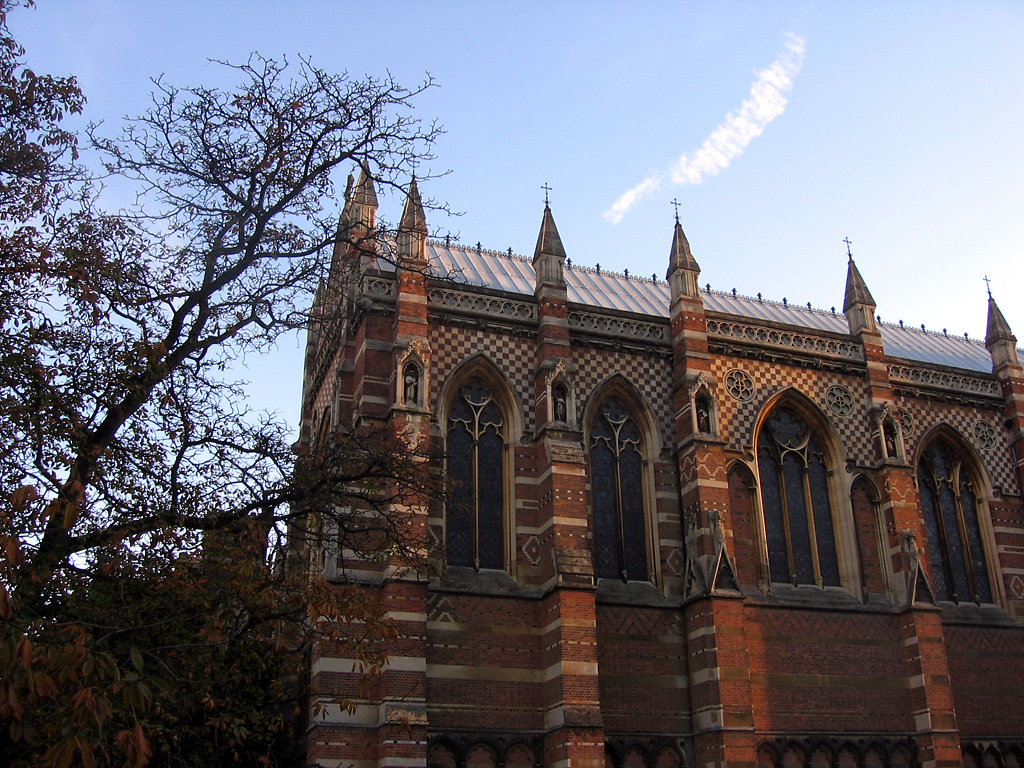
Keble College

When it comes to international students, Oxford could do a better job of explaining the college system and the differences between the colleges. To most aspiring Oxford graduates from abroad, the choice of college is just one of hundreds of boxes to be filled in on the application. More than half of the international graduates who I polled chose their college more on the basis of its location than any other factor.

After a year here, I have come to appreciate differing collegiate cultures. To some extent, that is embedded in a way that really carries over from year to year. At another level, there are fairly wild swings in demographics, temperments, and styles of relationships; this is because a great deal about the graduate intake of colleges is random. If people had a better sense of what (if anything) the Oxford colleges stand for, beyond what reading a few pages in Wikipedia might offer, it might serve both to improve their own experiences here and strengthen and foster the development of distinctive cultures at different colleges.

I chose Wadham College primarily because Sarah P recommended it, and because it seemed to be old, central, and have nice grounds. It has a reputation for being left wing, but I have never seen any actual political energy expended there. The Queer Bop, far from being some kind of affirmation of homosexual equality, is mostly just a self-indulgent and hedonistic heterosexual booze fest. The single best thing about Wadham is probably the beauty of the grounds and gardens but, given that it is not an especially famous college, no Oxford student would have the slightest trouble visiting those unhindered by the kind of bowler-hatted bouncers I have been threatened and expelled by at Magdalen, University, and Christ Church. All things considered, I do not regret the choice, on the whole, even if I do look with envy at the international relations collections held by the libraries at Nuffield and Saint Antony’s.

For incoming graduate students of politics or international relations, I would recommend either applying to Saint Antony’s – if you care about being with a large group of graduates with similar interests and good facilities serving them – or one of the very old, grand colleges – if you care more about the ivied Oxford punting side of things than which books will be in your library. Options in the latter camp include Magdalen (perhaps the most attractive college), Christ Church, University, Merton, and New (founded in 1379). Those are all fairly central, as well. Balliol, Trinity, Exeter, and St. John’s are all nice, central colleges that I know too little about to speak on with any authority.

I am especially interested in what other Oxonians may have to say about all of this. Doubtless, there are many who will disagree, and, quite possibly, some who will take offense to seeing this or that college characterized in this or that way. I only have extensive experience with Wadham, Saint Cross, Nuffield, and Saint Antony’s. Thus, anything written about other colleges should be considered little better than hearsay.

[Update: 7:45pm] All comments above about libraries pertain only to international relations collections. Those studying other things may be presented with an entirely different spectrum of appeal.

Havarti, where art ye?

After a year without Havarti and a long-seeming shift at the Freshers’ Fair, I went out in search of that cheesy comestible. This meant that, for the first time in Oxford, I went into the food section at Marks & Spencer. If there is any evidence of lingering class divides in England, it is the difference in presentation and atmosphere between Sainsbury’s and M&S. When people in Canada talk about the creation of a two-tier system of health care, this is probably more or less what they have in mind.

Alas, Havarti remains out of reach. Your average British supermarket has many kinds of cheese, but this favourite of mine never seems to be among them.

Oxford from above

Wadham College, Oxford MCR bop

As a recent comment proves, there is at least one thing Microsoft does better than Google: display aerial views of Oxford.

Compare Google Maps, centred on Wadham College, with the Windows Live equivalent: enormously superior.

Here, you can see:

Those pointed out, I should return to the overly loud MCR freshers party, and stop worrying about my ongoing student loan appeal dialogue. People should feel encouraged to list more nice Oxford locations in the comments (with links to Live Local photos).

March of the iPods

Today, iPod the Fifth arrived. They are packed much more compactly now than in earlier days. I suspect Apple is cutting costs in anticipation of having to compete with Microsoft’s Zune player, though, as always, it remains to be seen how successful that product will be. Everyone remembers the spectacular failure of the ‘rokr’ iTunes phone.

As regards iPod the Fifth, I hope it lasts as long as the previous four put together did.

In other news, the heating in our flat has suddenly been turned on. It hit my like a tropical blast as soon as I opened my door. I probably will no longer be sleeping in the woolen toque that Sarah P gave me.

PS. For some reason, iTunes 7.0.1 lacks the option to “only update checked songs” to the iPod. Since I was using that feature to keep a collection of songs small enough for the 20GB version updated, it will now not update at all, because the overall library is too big. I have come up with a crude hack (creating a smart playlist that includes all checked songs and having the iPod only update that), but doing so causes the device to only list that playlist, with none of my other smart or normal listings visible. Trying to add them all (even though they are the same songs as the ‘checked only’ list, causes a ‘not enough space’ error. Any ideas?

Thin ozone year

One example that comes up again and again in the environmental literature is ozone depletion. It emerged as the unexpected effect of the use of a new class of chemicals. It required global regulation to check. And we seem to have succeeded in dealing with the problem, through the development of substitutes and the operation of the Montreal Protocol.

One flaw in this perspective: after a period of remission, the ozone hole seems to be back at its largest previous size: 29.5 million square kilometers in diameter, around the south pole. This was reported in a statement issued last Friday by the UN weather agency. All told, we still have about 39.8 million tons less stratospheric ozone than before Thomas Midgley invented chlorofluorocarbons (CFCs).

The point is not that the Montreal Protocol has failed (Kofi Annan called the latter “perhaps the single most successful international agreement to date”), but that the ozone layer has not yet recovered sufficiently to be able to deal with other adverse effects – such as an unusually cold and wet stratospheric winter. The general point is simply that, even when technical substitutes and international legal instruments are created, environmental issues can rarely be shelved on a permanent basis.

More on this from the International Herald Tribune.

Doctoral application timeline

Pond in the University Parks, Oxford

Happy Birthday Jessica Berglund

One question I am pondering for the coming year: should I try to write my thesis and prepare for exams at the same time as I am writing the Graduate Record Exam (GRE) and submitting applications to doctoral programs? I will not have enough people to serve as references until I have finished at least one optional paper (at the end of November), and I have been very strongly cautioned not to use references from my undergraduate school. Apparently, this suggests to admission committees that you have failed utterly in your master’s program. Given how odd grading at Oxford is, this is definitely not a message that I want to transmit.

In many ways, it would be wiser to finish this year, then work somewhere for a year while completing my application to a PhD program. Of course, if my personal history shows anything, it is that I am much worse at getting jobs than at meeting any academic requirements. Case in point, last year I got into a master’s program at Oxford, but failed to become a barrista at Starbucks.

Long time readers, what do you think?

Seeking new Oxford bloggers

Oxford is positively laden with newly arriving students. At least some of them must be bloggers. If you are among them, please let a comment with a link back to your site (if you want it added to my listing of Oxford blogs). Likewise, if anyone has found such a fresher blog, please leave a comment that links back to it.

I will not link blogs immediately. Rather, I will wait to see that they:

  1. have at least some real content
  2. have been around for at least a few weeks

Otherwise, maintaining the list would take far too long, and too many items in it would be without much value.

All Oxford bloggers should remember that the fourth OxBloggers gathering is happening on Wednesday of 4th week, November 1st.

PS. Making a link in a blog comment is easy. Just use the following format, replacing the square brackets with pointy ones (the ones that look like this shape ^ turned on either side):

[a href=”http://www.thesiteyouarelinking.com”]the text you want for the link[/a]

That will make a string of blue text that says: “the text you want for the link.” When clicked, it will take the browser to www.thesiteyouarelinking.com. Every bit of the formatting is important, including the quotation marks, so be careful.

The second political delegation

After a whole summer without Claire’s sterling conversation, I was glad to see her for a few hours. While energetically complaining about the grading of my research design essay, I had a thesis relevant idea. Perhaps, it could even be a way to introduce the topic. The idea is that science based policy making is a kind of second political delegation.

The founding myth of democracy tells of a participant democracy where citizens (with lots of wisdom and plenty of time on their hands), sit around and decide how the state should operate. Since citizens aren’t all slaveholders anymore, and have other things to do with their time, the myth goes that we delegated political authority to elected representatives. Now, the myth may be faulty and lacking in historical truth, but it is the essence of the argument for the legitimacy of democratic governments – at least, for those who believe in a hypothetical notion of consent, rather than using utilitarian justification.

All kinds of governments delegate areas of responsibility to experts, but the process is most interesting from a democratic perspective. Ancient examples are warfare and diplomacy. Each is critically concerned with information: both about tactics and about the world. Each is not particularly subject to outside scrutiny, both for reasons of secrecy and because expertise in the discipline is required to even understand it. More recently, there has been expert delegation in the economic realm; most notably, central banks have been made independent. Again, information control is important. Again, scrutiny comes from within structures developed and operated by the experts themselves.

When we come to science based environmental policy making, however, things get even more complex. Scientists are often envisioned as being like bridge designing engineers. Policy makers say: we want a bridge here, figure out how to build it and what it will cost. What happens in environmental policy, however, is a far broader delegation: a charge to identify which problems are important, how they work, what their severity will be, how they could be stopped or managed, and how they will interact with each other. Mixed into those calculations are all manner of issues that are not fundamentally technical, but rather ethical, political, or economic.

If the first delegation is defended on the one hand hand in terms of expediency and on the other hand in terms of electoral oversight, what is the equivalent for science based policy? Policy makers of all stripes have two claims to their power: a legitimacy derived from popular consent, and an expertise in governing. Without the first, and without a real ability to scrutinize the second (look at disagreements among economists about whether monetary policy under Alan Greenspan was well managed or not), what is left of the democratic basis of government?

Basic problems with biometric security

You have to wonder whether anything other than having watched too many James Bond films feeds the idea that biometrics are a good means of achieving security. Nowadays, Canadians are not allowed to smile when they are having their passport photos taken, in hopes that computers will be able to read the images more easily. Of course, any computer matching system foiled by something as simple as smiling is not exactly likely to be useful for much.

Identification v. authentication

Biometrics can be used in two very distinct ways: as a means of authentication, and as a means of identification. Using a biometric (say, a fingerprint) to authenticate is akin to using a password in combination with a username. The first tells the system who you claim to be, the second attempts to verify that using something you have (like a keycard), something you know (like a password), or something you are (like a fingerprint scan). Using a biometric for identification attempts to determine who you are, within a database of possibilities, using biometric information.

Using a fingerprint scan for identification is much more problematic than using it for authentication. This is a bit like telling people to enter a password and, if it matches any password in the system, allow them into that person’s account. It isn’t quite that bad, because fingerprints are more unique and secure than passwords, but the problem remains that as the size of the database increases, the probability of false matching increases.

For another example, imagine you are trying to identify the victim of a car wreck using dental records. If person X is the registered owner and hasn’t been heard from since the crash, we can use dental records to authenticate that a badly damaged body almost certainly belongs to person X. This is like using biometrics for authentication. Likewise, if we know the driver could be one of three people, we can ascertain with a high degree of certainty which it is, by comparing dental x-rays from the body with records for the three possible matches. The trouble arises when we have no idea who person X is, so we try running the x-rays against the whole collection that we have. Not only is this likely to be resource intensive, it is likely to generate lots of mistakes, for reasons I will detail shortly.

The big database problem in security settings

The problem of a big matching database is especially relevant when you are considering the implementation of wholesale surveillance. Ethical issues aside, imagine a database of the faces of thousands of known terrorists. You could then scan the face of everyone coming into an airport or other public place against that set. Both false positive and false negative matches are potentially problematic. With a false negative, a terrorist in the database could walk through undetected. For any scanning system, some probability (which statisticians call Beta, or the Type II Error Rate) attaches to that outcome. Conversely, there is the possibility of identifying someone not on the list as being one of the listed terrorists: a false positive. The probability of this is Alpha (Type I Error Rate), and it is in setting that threshold that the relative danger of false positives and negatives is established.

A further danger is somewhat akin to ‘mission creep’ – the logic that, since we are already here, we may as well do X in addition to Y, where X is our original purpose. This is a very frequent security issue. For example, think of driver’s licenses. Originally, they were meant to certify to a police officer that someone driving a car is licensed to do so. Some types of people would try to attack that system and make fake credentials. But once having a driver’s license lets you get credit cards, rent expensive equipment, secure other government documents, and the like, a system that existed for one purpose is vulnerable to attacks from people trying to do all sorts of other things. When that broadening of purpose is not anticipated, a serious danger exists that the security applied to the originally task will prove inadequate.

A similar problem exists with potential terrorist matching databases. Once we have a system for finding terrorists, why not throw in the faces of teenage runaways, escaped convicts, people with outstanding warrants, etc, etc? Again, putting ethical issues aside, think about the effect of enlarging the match database on the possibility of false positive results. Now, if we can count on security personnel to behave sensibly when such a result occurs, there may not be too much to worry about. Numerous cases of arbitrary detention, and even the use of lethal force, demonstrate that this is a serious issue indeed.

The problem of rare properties

In closing, I want to address a fallacy that relates to this issue. When applying an imperfect test to a rare case, you are almost always more likely to get a false positive than a legitimate result. It seems counterintuitive, but it makes perfect sense. Consider this example:

I have developed a test for a hypothetical rare disease. Let’s call it Panicky Student Syndrome (PSS). In the whole population of students, one in a million is afflicted. My test has an accuracy of 99.99%. More specifically, the probability that a student has PSS is 99.99%, given that they have tested positive. That means that if the test is administered to a random collection of students, there is a one in 10,000 chance that a particular student will test positive, but will not have PSS. Remember that the odds of actually having PSS are only one in a million. There will be 100 false positives for every real one – a situation that will arise in any circumstance where the probability of the person having that trait (whether having a rare disease or being a terrorist) is low.

Given that the reliability of even very expensive biometrics is far below that of my hypothetical PSS test, the ration of false positives to real ones is likely to be even worse. This is something to consider when governments start coming after fingerprints, iris scans, and the like in the name of increased security.

PS. Those amazed by Bond’s ability to circumvent high-tech seeming security systems using gadgets of his own should watch this MythBusters clip, in which an expensive biometric lock is opened using a licked black and white photocopy of the correct fingerprint.

PPS. I did my first Wikipedia edit today, removing someone’s childish announcement from the bottom of the biometrics entry.

[Update: 3 October 2006] For a more mathematical examination of the disease testing example, using Bayes’ Theorem, look here.

Oxford populating with graduates

Last night’s late night laundry-doing brought me into the first substantial contact this year with members of both my program and St. Antony’s College. Having carefully set aside my laundry card and other ‘Oxford only’ cards before leaving for Canada, I have now torn my room apart several times in search of them. When yesterday’s searching proved as hopeless as previous attempts, I managed to trade cash for the use of someone’s card, at a St. Antony’s social event. Having succeeded in activating the machine, it seemed natural to wait out its cycles in the company available.

There, I was lucky enough to see Roham and Iason, Diarmuid – who I showed around Oxford sometime shortly after May Day – and Jessica Ashooh – who is joining the M.Phil this year. The new M.Phils are off being oriented today, as well as learning which supervisors will guide them through this whole complex process. I look forward to meeting them all.

Another upshot of the party was learning about some of the many Antonians who will also be living on Church Walk and adjoining streets during the coming year. Good news on that front arrived yesterday, as well. It now seems likely that I will be able to remain in present lodgings for the duration of the M.Phil program. The prospect of moving during Easter Vacation (when I am hoping to hitchhike to Morocco and at the end of which my thesis is due) was not at all an appealing one.

PS. Mica has a new video online. It is an experimental combination of high action and a stationary camera. Rumour has it that his Arctic Monkeys video has been accepted for the next Google Idol competition. His Hives video won a previous round.