Bad design and the Nokia 6275i

The way my Nokia 6275i stores text messages is very stupid. To begin with, it can hold 100 of them. Whether the internal memory (32 megabytes) is completely full or empty, that is the number. The message “hi” uses up a slot, just like any other message would. If you can use the internal memory for photos or videos or ringtones, why can’t you use it for text messages? 32 megabytes is enough for several novels worth of text.

Also ill considered is how it deals with the limit. You have three choices. You can set up the phone so that, once it is full, it explains this fact to you whenever someone sends you a message, which it does not store. Alternatively, you can tell it to automatically delete messages from your inbox, sent items, or both. If you set it to overwrite inbox, it slowly fills with sent messages, until you have 99 messages in the sent folder and can only keep one in your inbox at a time. If you set it to overwrite sent items, the converse occurs. If you set it to overwrite both, it lets the inbox fill while still deleting all sent messages. Keeping at least the last five of each would be far more sensible. Often, you send someone a message and – an hour later – get a response that only makes sense if you still have (or still remember) exactly what your original message said.

If you want to ensure that a particular message not be deleted, you can put it in your ‘archive.’ It still uses up one of your 100 slots, but at least it will not be deleted by the over-writing algorithm.

Finally, if anyone sends a message of more than 160 characters, it just deletes all the text beyond that. Every Nokia phone I had previously would split overly long messages into multiple versions. With this phone, written conversations with some people take on the feeling of reading a heavily censored CIA document.

To Nokia’s software engineers: please try to be less obtuse in how you design the critical functions of your phones. Those of us who send more than thirty text messages a day consider it a key feature. A few sensible changes will leave your customers a lot less annoyed.

Peak power, storage, and renewables

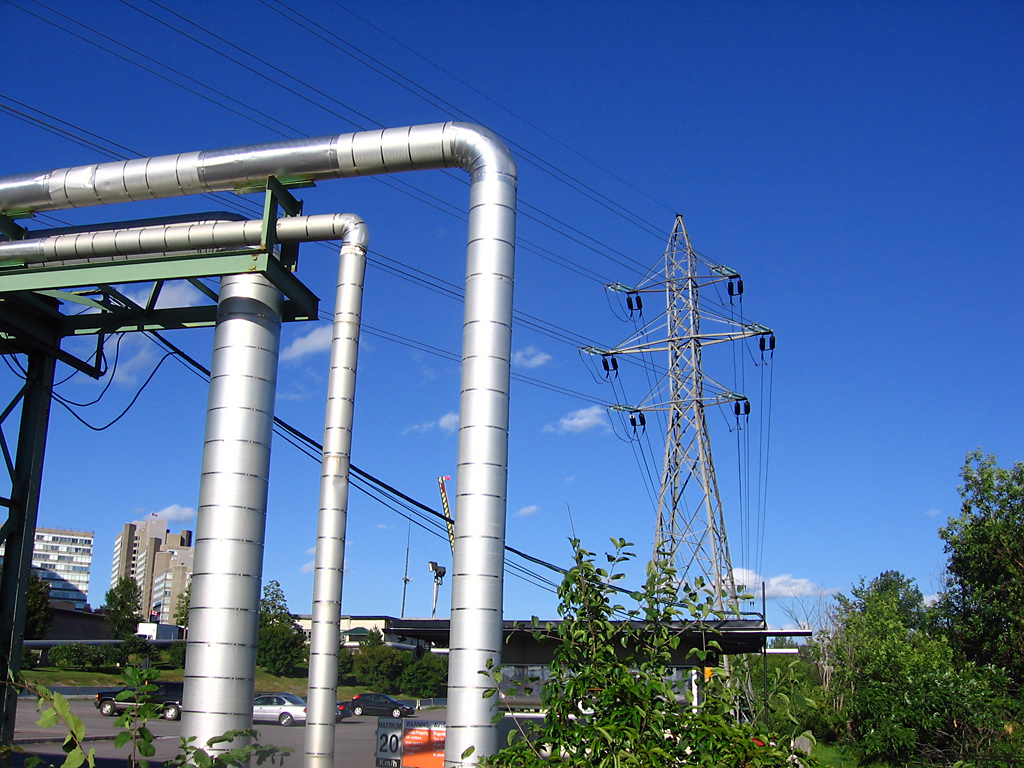
Power tower

One characteristic of electricity poses severe challenges both for the drive towards lower carbon emissions and towards more power based on renewables: the fact that supply must precisely match demand at all times. On account of this, power plants are divided into two categories – base plants, which constantly provide the amount of power normally demanded by homes and businesses, and peaker plants, which provide some extra juice when everyone decides to turn on the air conditioning at once.

The first reason this is a problem is that peaker plants are much less efficient. It is costly to build an efficient oil or gas plant, and it just isn’t worth it to do so for one that runs relatively rarely. The second problem is more to do with the inconsistent nature of renewable power; the wind does not always blow and the sun does not always shine. As such, we need enough on-demand energy (usually based on fossil fuels) to fill the gap between what windmills can produce at time X and what consumers demand then. Plants on standby may not use much fossil fuel, but maintaining and operating them uses resources in a way that makes renewable options less appealing than otherwise.

The answer is obviously energy storage. We can build dams with two reservoirs, one uphill from the other. When power is in excess, we can pump water from the low reservoir to the high one. It can then be passed through turbines at times of peak demand to recover energy. Apparently, this can be done with efficiency of about 85%. Other options along these lines would be to have clusters of offshore wind turbines that use electrolysis to make hydrogen from seawater. That can be piped or carried to shore and used to produce carbon-free energy.

To me, it seems like another option is to use technology and incentives to help moderate power demand. If there are industries that can use a lot of power or a little, switching easily, then should be encouraged to become part of the swing capacity. It may even be worthwhile to store energy as heat in sinks or as kinetic energy in flywheels. If houses could heat or cool a block of material at the time when power is cheapest, then use that potential for heating or cooling across the day, we might need less peak capacity.

Some kind of competition for inventing fossil-fuel-free peak-power solutions may well be in order. If the technology exists, and there is enough of a cost differential between times of highest and lowest demand, it may well transpire that infrastructure can be built to normalize power demand on the scale of days, or even weeks.

Happy birthday Dad

Today is my father’s fiftieth birthday. Unfortunately, the circumstances of employment have placed us 5,000 kilometres apart, with my mother closer to me than to him at the moment. Hopefully, he and my brothers will be able to get up to something exciting in Vancouver.

All the friends of mine who know my father know what a unique and energetic individual he is. Whenever I am in Vancouver, he tries to recruit me for 6:00am hikes every other day. Hopefully, the near future will include a few of them, some wilderness canoeing, or another expedition like the one we made to Turkey.

In any case: mnohiya lita, joyeux anniversaire, and many happy returns.

The Khazzoom-Brookes Postulate

Ottawa war memorial

Reading through George Monbiot’s Heat, I encountered the idea of the Khazzoom-Brookes Postulate for the first time. The postulate relates to the effect of increasing energy efficiency on total energy usage and holds thas as the energy efficiency of industrial processes increases, total energy use actually rises as well. While initially counter-intuitive, the idea does seem to have some validity. If the energy cost of producing one tonne of aluminum falls from $5000 to $4000, you would expect aluminum companies to produce more. After all, their profit margin will have widened, all else being the same. The Celsias blog cites another example: if Boeing’s new 787 Dreamliner is 20% more fuel efficient, that just means that ticket prices will fall and more people will fly. Greenhouse gas emissions will stay the same or rise.

As Monbiot acknowledges, the postulate is controversial. It is certainly decidedly inconvenient for all the people who trot out ‘increased energy efficiency’ as the first (painless) means to combat climate change. Increased energy efficiency may be great for various reasons of convenience and enjoyment, but the postulate and accompanying logic does give one reason to doubt whether it can have a positive effect on reducing greenhouse gas emissions.

One late end to the Oxford era

Having finally got round to uploading the last of my Oxford pictures to photo.net, I am struck by how long ago the events portrayed seem to have happened. They seem no more immediate to me than photos taken two years ago or more.

Photos from British Columbia – as well as the first Ottawa shots worthy of Photo.net – will emerge in due time. So too will some from Morocco.

PS. Anyone confused about my overall system for sorting photos online should have a peek at this page.

[Update: 12 August 2007] The Morocco photos have been added to Photo.net.

Sustainability and the Prius

Canadian Parliament at night

One way or another, the Toyota Prius. is a symbolic vehicle. For some, it symbolizes how saving the planet can be relatively painless, enjoyable, and hip. You still get the same basic thing (the ability to zip around in a car) but without the guilt and with the important ability to lord it over the less environmentally responsible. Alternatively, the Prius is a symbol for the superficiality of the environmental commitments most people are willing to make. Seen in this way, it reveals how environmentalism is mere tokenism in many cases.

There are two arguments here which frequently become confounded. One is a first-order question about the ultimate sustainability of different energy systems. Is it sustainable to run internal combustion cars using cellulistic ethanol? What about plug-in hybrids charged using big nuclear fission plants? The answers to these questions are ultimately knowable to a high degree of specificity. For any given level of technology, answering them is simply a matter of applying chemistry and physics. The uncertainty therefore lies in estimations about what will be technologically possible at X or Y time.

The second-level argument is much more heuristic and intractable. There is the fundamentally liberal belief that environmental problems can be tackled fairly painlessly through a bit of cleverness and some new hardware. This is a view that takes the Prius as a positive symbol. At the other extreme is the conviction that only massive sacrifice can generate sustainability. The vision in Fight Club of people in rags pounding strips of leather on an abandoned superhighway captures this, and adherents would surely dismiss the Prius as a pathetic fig-leaf.

The latter argument seems to generate a lot more heated discussion, largely because the real meat of analysis on the former question lies in territory where most people cannot hold their own (who reading this could really calculate the efficiency of an energy grid based on photovoltaics, or of an industrial process for ethanol production from cellulose?). The latter debate requires only a will to participate, though it may not do much to leave us with an understanding of which view of the Prius is justified.

Morocco photos, part five

Cascades d’Ouzoud plateau

By climbing the slippery canyon walls, you could get a good view of the middle section of the cascade.

Cascades d’Ouzoud from below

I had to spent a very long and uncomfortable day traveling to see them, so readers should be willing to tolerate a large number of pictures of the falls.

Pool at the base of the falls

Pool at the base of the falls

Moroccan plants

It took an hour of waiting in the sun to get five other people together for a taxi from Ouzoud to Azilal.

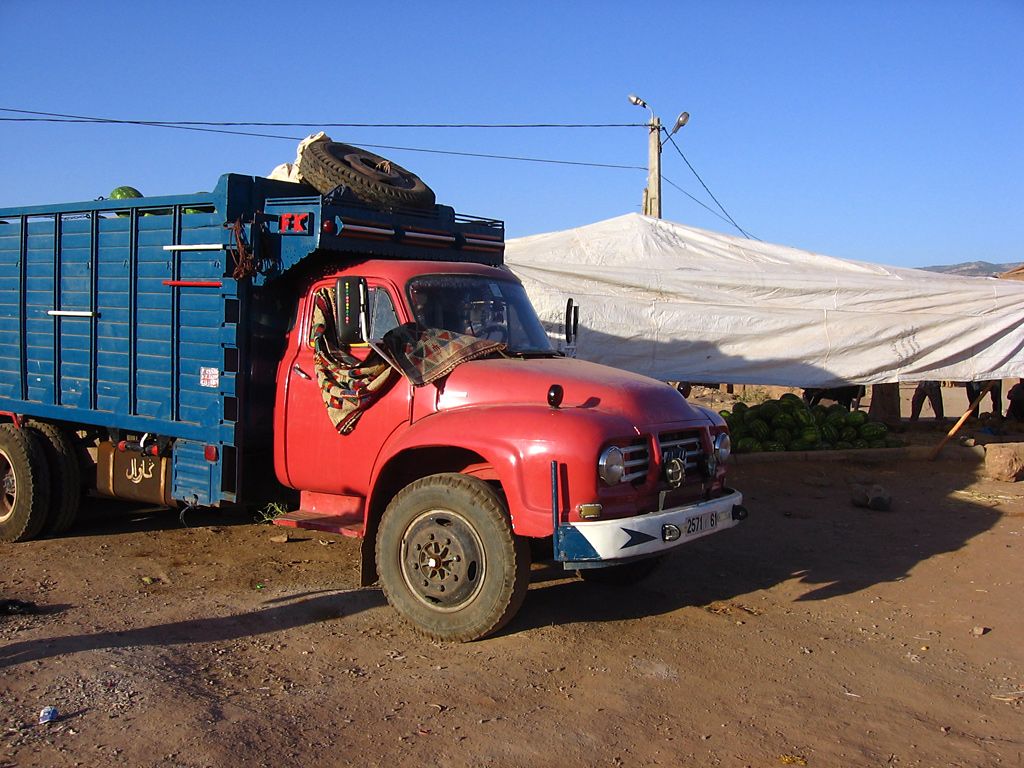
Watermelon truck

In the hot sun, this watermelon truck had a lot of appeal. Unfortunately, they refused to sell me anything less than an entire melon.

Decline and fall of an iBook

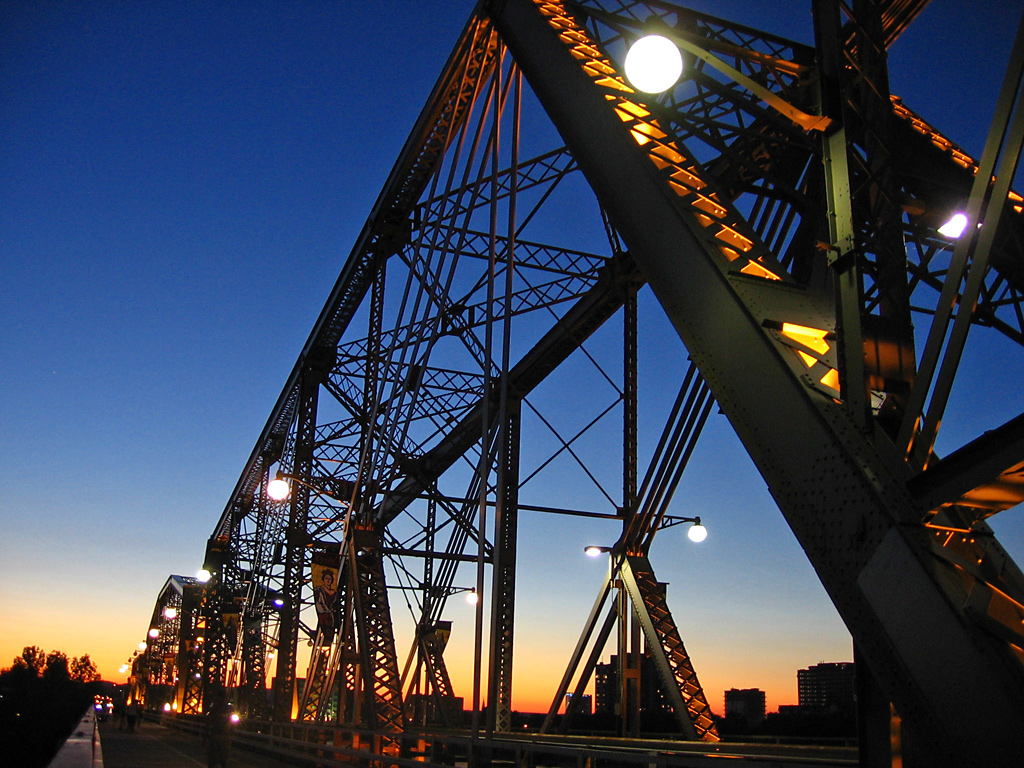
Alexandra Bridge, Ottawa

After more than two years of faithful service, my laptop is now having serious problems. It takes upwards of ten minutes to boot, frequently forgets important preferences (like to ask for a password before letting you log in), and has distinct trouble connecting to wireless networks. In general, performance has become spotty and unreliable. Things have reached the point where I would ordinarily suspect that a virus has been generating minor havoc, though scans have not supported that hypothesis.

I am tempted to make a full backup, format my hard drive, and start from a clean install. That said, I think the inevitable physical breakdown of hardware is reasonably likely to be the cause of my woe. The constant ambient heat here – enough to keep the fan running constantly, which almost never started in Oxford – will certainly contribute to breakdown. The machine is still subject to the AppleCare plan I purchased, so perhaps it is worthwhile to send it on a potentially refreshing trip to the Apple store before such a lobotomy is carried out.

Once the IKEA bills have been paid off and some sort of a bike has been acquired, it may be time to start thinking about a new Mac.