M’s PL, XII

(220), (210), (241), (310), (250)
(350), (380), (317), (271), (346)
(222+1), (212), (302), (258), (280)
(127), (100), (556), (452+1), (599)
(621), (633), (590), (392), (387)
(414), (423), (539), (572), (157)
(142), (128), (189), (529+2), (412)
(361+1), (351), (200), (229), (174)
(409), (440), (594), (532), (539)
(608), (259+1), (310), (271), (100)
(143), (98), (478), (530), (599)
(369+1), (343), (321), (370), (375)
(389), (413), (530), (58), (79)
(33), (87), (211+1), (251), (346)
(556), (608), (631), (640), (546)
(579), (549), (492), (481), (429)
(336), (387), (442+1), (219), (213)
(439), (450), (551), (632), (245)
(396+1), (589), (539), (418), (499)
(422), (460+2)

Hint: second Beale cipher.
Thirty days in

Parliament of Canada

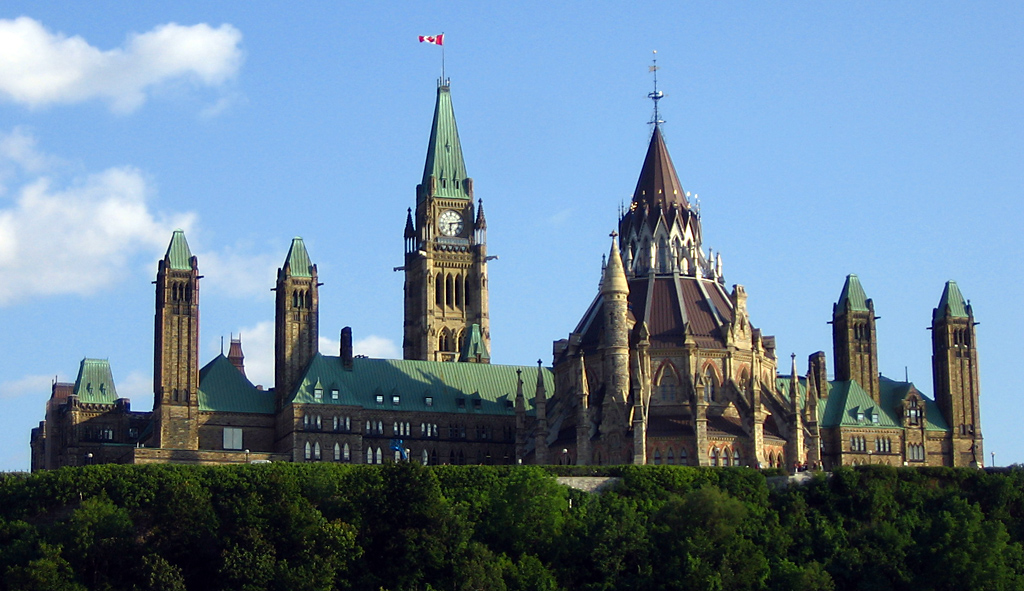
One month has passed since I arrived in Ottawa. Since then, I have found somewhere to live, furnished it, learned the basic layout of the city, and become settled in my job. The most notable thing I have not done is make any friends. I know people at work and there are people who I knew before who I now hang out with here, but there is nobody of my age outside work who I have met here and now interact with socially. That is a big change from Oxford, where you are immediately immersed in a collection of social circles: college, program, department, clubs, etc.

The process of acclimatization must continue, in areas that are as important but not as urgent as finding somewhere to live. With at least eleven months left here, it is a wise area in which to invest.

Data storage

SAW Gallery, Ottawa

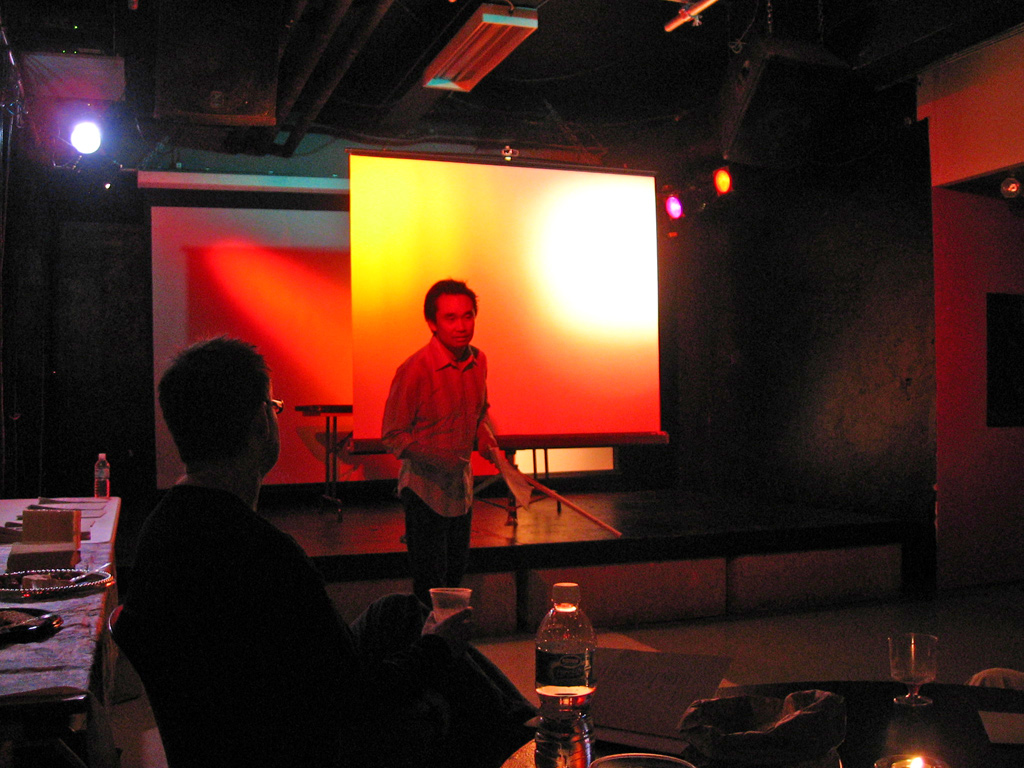
This evening, I was at an art gallery watching 8mm, Super 8, and 16mm films shot 25-40 years ago. Most of them were not in pristine quality, but still quite viewable. Afterwards, I got into a conversation with someone who works in archival film storage for the federal government. Contemporary society is generating far more data than ever before. At the same time, virtually nothing is stored at archival quality. An 8mm video or a 35mm negative will be fine in forty years if stored at controlled temperature and humidity. Even dumped in a box in someone’s attic, it is still likely to be comprehensible. The same is not true for how we store data today.

Basically, you have optical and magnetic storage. Optical includes CDs and DVDs, and is further divided between mass releases CDs (which are pressed into metal) and personally made CDs (which rely on dyes exposed to lasers). Neither is really archival. It is quite possible that your store-bought DVD will not work in twenty years. It is quite likely that your home-burned DVD will not work in five.

In terms of magnetic storage, you have tapes and hard drives. Many companies have learned to their detriment that poorly stored magnetic backup tapes can be useless. As for hard drives, they are vulnerable to physical breakdown, viruses, exposure to magnetic fields, corrosion, and other factors.

While is is likely that the products of my early fumblings with Ilford Delta 400 in high school will be intelligible in forty years, it is a lot less likely that my digital photos from Paris will be. That’s ironic, of course, given that the first ones can only be copied imperfectly and at a notable expense, while the latter can be copied perfectly for a few cents a gigabyte.

While some information exists in the form of so many copies that is will likely never be lost (ten thousand unsold copies of Waterworld on laserdisc), there is reason to fear that personal data being stored in the present era will likely be lost before people born today have grandchildren. While that has certainly been the norm for generations past – who would be lucky to have their lives recorded as a birth in a parish register, a marriage, and a death – it seems rather a shame given how cheap and ubiquitous data creation and storage has become.

[Update: 11 August 2010] I forgot to mention it earlier, but one potentially robust way to back up digital files is to print them on paper.

Freight shipping and greenhouse gases

Travelling 100km by car produces about 10.8kg per person of carbon dioxide (assuming an average of 1.5 passengers per car). Doing the same by bus produces about 1.3kg, while taking a modern electric train produces about 1.5kg (based on the energy balance in the UK). What is remarkable is that shipping freight by truck produces 180 grams of CO2 per kilometre, while doing so by train produces just 15. Clearly, switching freight transport modes offers considerable scope for emission reductions (as does reducing the total amount of freight shipped).

When you factor in how much damage heavy trucks do to roads – as well as the expense and carbon emissions involved in rebuilding them – it seems pretty clear that disincentives to ship freight by road make sense. Yet another externality that road pricing and carbon taxes could help address.

Culinary statistics

Food chart

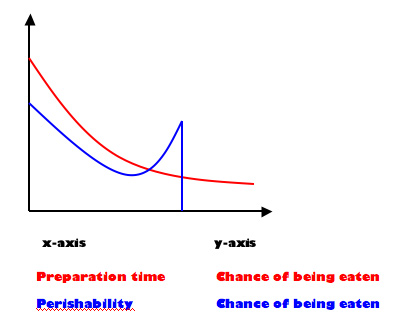
The above demonstrates why I find myself eating so many Kimchi Noodle Bowls and cheese sandwiches. It also helps to reveal why the avocados I eat tend to be either unripe or over-ripe, though the shape of the blue curve is the inverse of what would be rational (barring the sheer drop at the end).

Heat: How to Stop the Planet from Burning

Ottawa wooden sculpture

During the past two years, I have been reading about climate change for several hours every day. During that span of time, I have read dozens of books and hundreds of articles. Quite possibly, none were as thought-provoking as George Monbiot’s Heat: How to Stop the Planet from Burning. If you are at all serious about understanding the issue of global warming, it is essential reading. He may not be right (indeed, it would be far preferable for him to be wrong) but he will definitely make you think.

His project is an ambitious one. Having decided that global temperatures must not be allowed to rise by more than 2°C on average, he works out what that would mean for Britain. Since British emissions per capita are way above the world average, a fair system would require much heavier cuts there than elsewhere. Canada’s per-capita emissions are even worse.

Here is a smattering of what he says will be required by 2030:

  • A power grid dominated by renewables and natural gas plants with carbon capture and storage.
  • Dramatically, dramatically tightened building regulations – making most houses either ‘passive’ in their non-use of heating or cooling or capable of producing their heat and power from piped-in hydrogen, possibly supplemented by solar.
  • Most private automobile travel replaced by a buses or non-motorized transport, both within and between cities.
  • An end to cheap air travel: no more low cost flights, with massive total cuts in the number of both short and long-haul flights.

The last is the result of a complete lack of alternative technologies that can deliver the kind of emission reductions required. Even if all other emissions were cut to zero, growth in air travel would make that one sector break his total limit by 2030.

Suffice it to say, Monbiot is not in the main stream of this debate. The Stern consensus is that climate change can be dealt with at moderate cost. Even if Monbiot’s ideas are entirely possible, in terms of engineering, one cannot help but doubt that any political party in a democratic state could successfully implement them. The impulse to defend the status quo may turn him into a Cassandra.

In fifty years, it is possible that people will look back at this book and laugh. Alternatively, It may be that they look back on Monbiot as one guy who had approximately the right idea while everyone else (Gore and company included) were in denial. The answer seems to depend upon (a) whether emissions need to be cut as much and as quickly as he thinks and (b) how bad it will actually be if they are not. It is pretty easy to do the math on the first of those, at least for any desired greenhouse gas concentration or temperature change. The latter is harder to assess. Regardless of which proves to be closer to the truth, this is a book I wholeheartedly endorse for anyone trying to keep abreast of the climate change issue.

Diesel and axles

Every morning, I get woken up at 6:30am as the first major rumblings of morning traffic overwhelm my earplugs. You would expect this to be a negative feature of my new dwelling, but it is actually quite a wonderful one, in its way. You see, I get woken up, look at my phone, and realize that I can sleep for another hour and a half and still have time to shower, eat breakfast, and be at my desk by 9:00am.

Even when I went to sleep just two hours before the truck-induced waking, having those ninety minutes feels like a luxury.

Strengthening substitution ciphers

Fountain in Gatineau

The biggest problem with substitution ciphers (those that replace each letter with a particular other letter or symbol) is that they are vulnerable to frequency analysis. In any language, some letters are more common than others. By matching up the most common symbols with what you know the most common letters are, you can begin deciphering the message. Likewise, you can use rules like ‘a rare letter than almost always appears to the left of one specific more common letter is probably a Q.’ What is needed to strengthen such ciphers is a language in which words have no such ‘personality.’ Here is how to do it:

First, take all the short words (less than three letters) and assign them a random three digit code. Lengthening very short words further strengthens this approach because short words are the most vulnerable to frequency analysis; a single letter sitting with spaces on either side is probably ‘a’ or ‘i.’ Using three digit groups and 26 letters, you can assign 17,576 words. Now, take as many words from the whole language as you want to be able to use. For the sake of completeness, let’s use the entire Oxford English Dictionary. The 456,976 possible four letter groups more than suffice to cover every word in it, leaving some space for technical terms that we may want to encrypt but which might not be included. If we need even more possibilities, there are 11,881,376 five letter combinations.

This approach is cryptographically valuable for a number of reasons. Since the codes representing words have a random collection of letters, the letter frequency in a ‘translated’ message is also random. You no longer need to worry that some English letters are more common than others. Just as important, there are none of the ‘Q’ type rules by which to later attack the substitution cipher. The dictionary of equivalencies would not need to be secret; indeed, it should be widely available. Having the dictionary does not make encrypted messages more vulnerable, since they will have passed through a substitution cipher before being distributed and are fundamentally more robust to the cryptoanalysis of substitution ciphers than a message enciphered from standard English would be.

In the era of modern algorithms like AES, I doubt there is any need for the above system. Still, I wonder if there are any historical examples of this approach being used. If you have a computer to do the code-for-word and word-for-code substitutions, it would be quite a low effort mechanism to increase security.