
Clearing Indonesian rainforests for biofuel

I have already mentioned how important rainforests are to climatic stability. Likewise, the acute danger that biofuel production will lead to increased deforestation, either directly – through the madness that is palm oil biofuel – or indirectly – by increasing the price of crops like corn, the value of agricultural land, and the profits to be made from cutting down rainforest and growing cheaper things like soy there instead.

This video – found via Grist – does a good job of attaching some visuals to the argument. Unhappily enough, this crazy conversion of rainforest into palm oil biofuels is taking place in the very state where the UNFCCC is meeting right now, in order to try to tackle the problem of climate change.

‘Green’ fuel for military jets

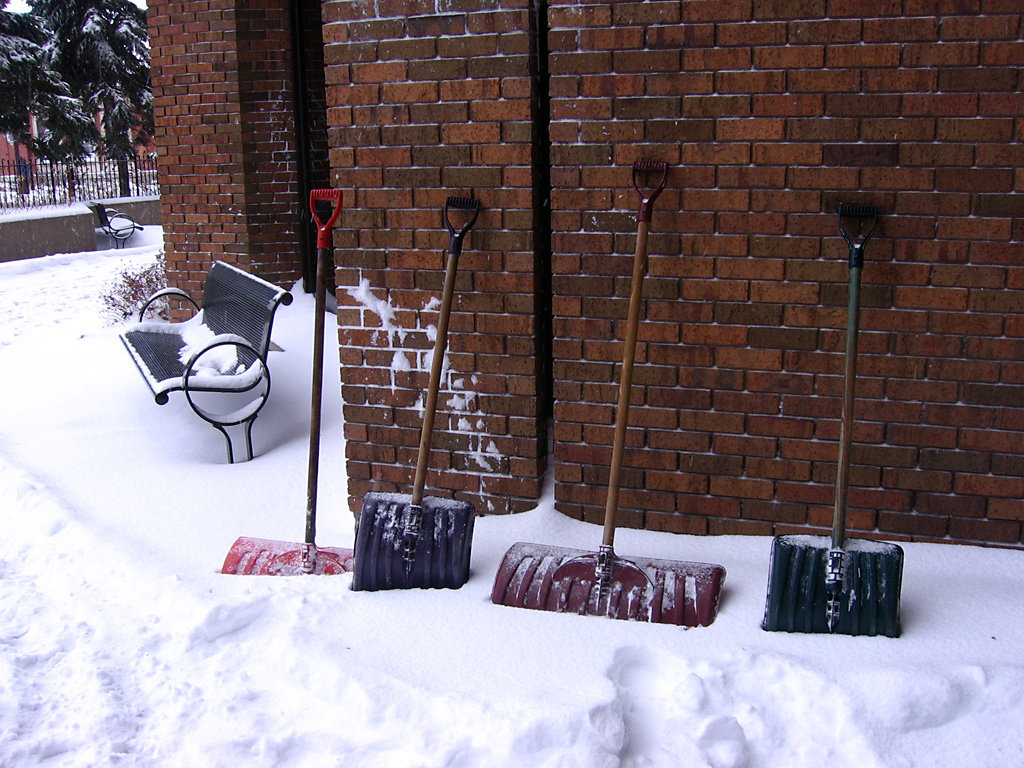
Snow shovels in Ottawa

There has recently been a fair bit of media coverage discussing an announcement from the United States Air Force that they are trying to use 50% synthetic fuel by 2016. The Lede, a blog associated with the New York Times, seems to misunderstand the issue completely. They are citing this as an example of the Air Force “trying to be true stewards of the environment.” There is no reason for which synthetic fuels are necessarily more environmentally friendly than petroleum; indeed, those made from coal are significantly worse.

The actual fuel being used – dubbed JP-8 – is made from natural gas. Air Force officials say they eventually intend to make it from coal, given that the United States has abundant reserves. This inititative is about symbolically reducing dependence on petroleum imports, not about protecting the environment. The German and Japanese governments did the same thing during the Second World War, when their access to oil was restricted. Furthermore, it is worth stressing that efforts by militaries to be greener are virtually always going to be window dressing. The operation of armed forces is inevitably hugely environmentally destructive: from munitions factories to test ranges to the wanton fuel inefficiency of aircraft afterburners, the whole military complex is about as anti-green as you can get.

People should be unwilling to accept superficial claims that installing some solar panels and building hybrid tanks is going to change that.

Strong nuclear force, weak nuclear force, gravity, and…

In the mail today, I got some neodymium magnets from my brother Sasha as a birthday gift. They are good fun – largely because of how fundamentally counterintuitive magnetism is. Is just seems odd that things are repelled and drawn together by an invisible force that manifests itself at short distances. The danger to nearby magnetic stripe cards and hard drives is trivial when compared to their enjoyment potential.

The only downside of nickel-plated rare earth magnets is their tendency to snap together violently if you aren’t quite careful. Given how brittle they are, this can send tiny shards flying in all directions. This afternoon’s messing about only had one casualty – one of the four smallest magnets among the fifty found its way between the two largest. The larger fragments of the small magnet are now holding papers to my filing cabinet.

On the plus side, I have worked out how to build a reasonably effective magnetic canon using most of the magnets in the set and the barrel from a Bic four-colour pen. It is also trivially easy to make a compass using all fifty magnets in a line, hanging from a piece of floss.

One day, I want to get a full-sized, absurdly powerful supermagnet of the kind at the bottom of this page. At $50 to $275 apiece, they may have the lowest cost-to-danger ratio of anything you can buy online.

The efficiency of solar

Robert Rapier, petroleum expert, and Steve Heckeroth, writing for Mother Earth News, agree that solar power is the future.

Based on their calculations, the overall efficiency of biomass “from sun to wheel” is between 0.01% and 0.05%. By contrast, charging electric vehicles using solar power can produce efficiencies of 3% to 20% on the same metric. Electric drivetrains are also “5 to 10 times more efficient than internal combustion engines.” Even if power from conventional fuels is charging the vehicles, overall emissions are likely to be lower. It is also much easier to sequester greenhouse gas emissions from big power plants than to do the same thing with car exhaust.

If you insist on maintaining a car-based society, basing it around electric vehicles charged using renewable energy or fossil fuel generation with sequestration seems to be the way to go. Hybrids are only a minor improvement and hydrogen fuel cells are a non-starter.

Newly insulated

Milan Ilnyckyj looking scary

Through a trek to the Ottawa Mountain Equipment Co-Op and the application of three days’ pay, my respectable collection of wet weather gear has had quite a few degrees of cold capability added into it.

I got some good insulated Gore-Tex gloves (they make me feel less like a mutant than mitts do); I also got a merino wool base layer, a windproof toque to supplement the more attractive one Sarah made me, a fleece neck warmer thing that makes me look like a goon when worn with the toque, a little thermometer, and a couple of miscellaneous knick-knacks, shoe de-stinking agent, and a travel towel (for future trips to nearby cities).

Naturally, the only response to getting new gear is to go experiment with it. One’s first inclination with new gear is to discover its capacities and limits. In its way, the new stuff is like the bicycle was: an enabler of motion, and a gateway to increased capability within the city as it stands.

P.S. I hate plural possessives.

Canada’s science-savvy fifteen-year-olds

Canada’s educators should be proud of the recently released results of the Programme for International Student Assessment (PISA). The test examines the performance of 15-year-olds in science and placed Canada third in the world, after Finland and Hong Kong. Following after are Estonia, Japan, New Zealand, Australia, the Netherlands, and South Korea. Britain is 14th, France 25th, and the United States is 29th.

This is especially welcome news given the ever-increasing importance of basic scientific understanding in contemporary society. In everything from making decisions about one’s own health to voting, having an understanding of at least physics, chemistry, and biology is increasingly necessary. Hopefully, the results of this assessment demonstrate that young Canadians are being well prepared.

More information is available through their website.

Problems with government databases

LeBreton Flats in winter

By now, everyone has probably heard about the data loss debacle in the United Kingdom. The British government lost the child benefit records for 25 million people. These records include addresses, dates of birth, bank account information, and national insurance numbers. In total, 40% of the British population has been exposed to the risk of identity theft.

Obviously, this should never have happened. One government agency requested some anonymized data for statistical purposes. Instead, a different department sent them the whole dataset in an unencrypted format. Encrypting the discs would have made it nearly impossible for thieves to access the data; anonymizing the data would have made such theft unprofitable. The failure to do either is the height of idiocy, but it is probably what we need to expect from the civilian parts of government when it comes to data security. Security is hard; it requires clever people with good training, and it requires oversight to ensure that insiders are competent and not cheating. People who are naive and naturally helpful can always be exploited by attackers.

In response to this situation, two sets of things need to be done. The first is to correct the specific failures that cause this kind of problem: require encryption of sensitive documents in transit, limit who has access to such sensitive databases, and tighten the procedures surrounding their use. The second is to limit the amount of such data that is available to steal in the first place. That could involve using paper records instead of digital ones – making mass theft dramatically harder to accomplish. It may also involve not creating these kinds of huge databases, as useful as they may seem when working properly.

It is fair to say that there will always be people out there able to break into any information that a large number of civil servants have access to. This would be true even if all civil servants were capable and virtuous people, because a lot of the best computer talent is applied to breaking flawed security systems. Given that bureaucrats are human, and thus subject to greed and manipulation, the prospects for keeping a lid on government data are even worse. Acknowledging the realities of the world, as well as the principle of defence in depth, suggests that limiting the volume of data collected and held by all governments is an appropriate response to the general security risks highlighted by this specific incident.

Bali talks beginning

Starting tomorrow morning, there will be twelve days of talks in Bali, Indonesia intended to begin the process of drafting a replacement for the Kyoto Protocol, when the period it covers ends in 2012. This particular meeting is mostly about choosing the structure for the real negotiations. Three possibilities are likely:

  1. The parties agree to extend the Kyoto Protocol, keeping in place many of its institutional structures
  2. The parties decide to create a whole new instrument
  3. The talks collapse in acrimony, with no agreement

Which of these takes place will largely depend on the stances adopted by the great powers and major emitters, especially the United States, Russia, China, Japan, Brazil, and the European Union.

Some questions of succession hang over the proceedings. The new Rudd government in Australia has only been in power for a week, and may not have a well developed negotiating position. More importantly, everyone knows the Bush administration will soon be out of power. Leading Congressional Democrats are attending the summit themselves. It remains to be seen what effect that will have.

Cell phone eavesdropping

People at Ashley’s Chrismukkah party

Analog cellular phones are absurdly vulnerable to eavesdropping. Anyone with a radio that can be tuned to the frequency used by a particular phone can listen to all calls being made, and anyone with a transmitter that would operate on that frequency can make calls that will be billed to the subscriber’s account. At a church sale while I was in elementary school, a friend of mine picked up a radio scanner capable of monitoring nearby cell calls for $20. Things improved with digital cell technology, notably the GSM standard common in Europe and the CDMA standard used in North America. As well as allowing more efficient usage of radio spectrum, the digital technologies made it such that someone with nothing more than a radio could no longer make or overhear calls.

GSM phones, the more common sort globally, employ a number of cryptographic features. The first is the use of a SIM card and a challenge-response protocol to authenticate the phone to the network. This ‘proves’ that calls are being made by the legitimate account holder and not by someone impersonating them. GSM can also utilize encryption between the phone and base station as a form of protection against interception.

Unfortunately, a design flaw in the GSM standards somewhat undermines the value of the latter. While the phone must prove to the network that it is authentic, no such thing is required in the other direction. As such, anyone with the resources and skill can build a machine that looks like a cell phone tower, from the perspective of a phone. The phone will then dutifully begin encrypting the conversation, though with the malicious man in the middle monitoring. The device impersonating a cell tower to the phone impersonates a phone to a real cell tower, allowing the person using the phone to make calls normally, ignorant of the fact that their communications are being monitored.

Of course, anyone who has access to the phone company’s network can do all this and more. This includes law enforcement personnel conducting legal surveillance with warrants. Unfortunately, it also includes potentially unscrupulous people working for the cell phone company and anyone with the capability to break into their networks.

Major climate change issues

After many years of writing on whatever came to mind, I am now trying to be more systematic in some areas. In particular, I am trying to come up with a comprehensive collection of blog posts covering all important aspects of climate change. This serves a number of purposes: it helps me to synthesize information, it should be informative to others, and it should foster discussion that helps increase the sophistication of positions and arguments. The posts are organized here:

Climate change posts

The index page isn’t the most gorgeous looking thing on the web, but it is resilient and can be updated easily. Do people see this as a useful undertaking? What would make it more helpful or worthwhile? This initiative was mentioned before, but received little attention.

Here is the code for the link above:

<a href="http://www.sindark.com/wiki/index.php?title=Major_climate_change_issues"><img src="http://www.sindark.com/photo/CCmedium.png" alt="Climate change posts" /></a>

Feel free to link it on other sites, if desired.