Personal net carbon removal

Bridge outline

Those wanting to reduce their contribution to climate change are generally presented with two options: cut back on your own emissions or pay someone else to do so. The first requires sacrifice and/or time and/or capital. You can give up flying, meat, and air conditioning; you can take trains instead of planes; you can invest in solar panels and ground source heat pumps. The second set of options is arguably more practically challenging and morally problematic. It is harder to verify that someone else has actually cut emissions, and done so in response to your payment rather than any other incentive. There are also those who think it unacceptable to buy your way out of taking action yourself.

There is, at least theoretically, a third option. Suppose I buy an area of land in British Columbia. The place is ideal for growing trees and the trees on the lot grow each year, absorbing carbon from the air in order to do so. As a result, my little forest is a net carbon sink. The danger, of course, is that the carbon will be re-released. Someone might cut down my forest. My forest might dry out or burn down (possibly because of climate change). Then, I will have accomplished little of value, given that carbon dioxide has a long atmospheric life. For most intents and purposes, it may as well never have been absorbed.

What I need to do is ensure the carbon doesn’t go anywhere. Here are some options I have come up with:

  1. Cut down trees at the growth rate (if one matures per month, cut one per month). This ensures that the forest will always be absorbing the same amount of carbon per unit time. Then, encase the lumber in something durable and air tight – keeping the carbon inside sequestered indefinitely. Then, either use the wood as building material or simply bury it.
  2. Cut down trees as described above and bury them somewhere they are relatively unlikely to decompose: such as a peat bog or the Arctic tundra.
  3. Cut down trees as described, chop them into chips, burn the chips for energy, capture and sequester the carbon dioxide underground. This approach has some variants: (a) seperate oxygen from air and burn the chips in that to produce gaseous outputs that are mostly CO2 or (b) convert the biomass chips into syngas (hydrogen and carbon monoxide) before combustion.

Of course, there are issues with all of these:

  1. Is it possible to shrink wrap wood in a way that will keep the carbon inside indefinitely? How many carbon emissions would be associated with making the shrink wrapping material?
  2. The Arctic tundra is melting, threatening massive carbon releases. Global temperature rise could do the same to peat bogs.
  3. This may require tens or hundreds of millions of dollars worth of capital and skilled labour, depending on how much all the equipment costs. Nobody could do this alone, though it may be possible to do at a commercial scale, partly in exchange for payments from those having their emissions offset.

None of these are great options, but they do offer at least the logical possibility of actually, literally offsetting one’s carbon emissions. For those with aspirations for world travel, but also serious ethical concerns about climate change, such options may prove the only choice.

Oil versus labour

Thought of the day:

One barrel of oil contains about 5.8 million British thermal units (BTUs) of energy (1700 kilowatt-hours). That is roughly equivalent to the energy output of an adult human working 12.5 years worth of 40 hour weeks.

At present, the world uses about 31 billion barrels of oil a year. That is equivalent to the global population (6.7 billion people) working for 58 years.

While the theoretical capacity of renewables is even higher, it is a fair bet that they will take a lot more effort to harness. There aren’t many places where solar panels will spurt out of holes you make in the ground.

Oil’s next century

Spiky blue flowers

With oil prices at levels rivaling those during the crises of the 1970s, virtually everyone is clamouring for predictions about medium and long-term prices. Those concerned about climate change are also very actively wondering what effect higher hydrocarbon prices will have.

In order to know what the future of oil looks like, answers are required to a number of questions:

  1. How will the supply of oil change during the decades ahead? How many new reserves will be found, where, and with what price of extraction? How much can Saudi Arabia and Russia expand production? When will their output peak?
  2. How will the demand for oil change? How much and how quickly will high prices depress demand in developed states? What about fast growing developing states like India and China?
  3. At what rate, and what cost, will oil alternatives emerge. Will anyone work out how to produce cellulosic ethanol? Will the development of oil sands and/or oil shale continue apace?
  4. What geopolitical consequences will prices have? If prices are very high, will that prove destabilizing within or between states?
  5. Will the emerging alternatives to oil be carbon intensive (oil sands, corn ethanol) or relatively green (cellulosic ethanol, biomass to liquids)?

Of course, nobody knows the answer to any of this with certainty. There are ideological optimists who assert that humanity will respond to incentives, innovate, and prosper. There are those who allege that oil production is bound to crash, and that civilization as we know it is likely to crash as well.

Mindful of the dangers of prediction, I will hold off on expressing an opinion of my own right now. The magnitude of the questions is far too great to permit solution by one limited mind. What contemplating the variables does allow is an appreciation for the vastness and importance of the issue. Virtually any combination of answers to the questions above will bring new complications to world history.

Natural laboratory for ocean acidification

One of the larger unknowns when it comes to the impact of human carbon dioxide emissions is the degree to which living things will be harmed by more acidic oceans. This is occurring because water with more CO2 dissolved in it is more acidic. There are concerns that overly acidic sea water might compromise the ability of organisms with shells made of calcium carbonate to build and maintain their bodies. Other affects on marine ecosystems are anticipated, though it is challenging to assess what their magnitude will be and when they will occur.

Scientists recently completed a study of a place where such effects are occurring naturally due to carbon dioxide venting from the sea floor:

Around the vents, [pH] fell as low as 7.4 in some places. But even at 7.8 to 7.9, the number of species present was 30% down compared with neighbouring areas.

Coral was absent, and species of algae that use calcium carbonate were displaced in favour of species that do not use it.

Snails were seen with their shells dissolving. There were no snails at all in zones with a pH of 7.4.

Meanwhile, seagrasses thrived, perhaps because they benefit from the extra carbon in the water.

The latest IPCC estimate is that global pH will fall from 8.1 today to about 7.8 by 2100. Greater than expected CO2 emissions would cause a larger change. Coral reefs are especially likely to suffer.

Oceanic acidification is the inevitable result of adding CO2 to the atmosphere, but it not otherwise causally connected to climate change. It does add a complication to any plan that seeks to reduce global temperature change through a means other than reducing CO2 emissions; even if more energy could somehow be reflected or dissipated into space, the marine consequences of acidic oceans would endure.

End of the shoulder season?

In anticipation of the season itself, the pervasive heat of summer seems to have arrived. A winter’s worth of unfamiliarity means that, every few minutes, my brain starts assessing just why it is so curiously hot. Am I standing near a burner that has been left on? Am I beside a recently used shower?

One possibility I am considering for this summer is a relatively low-cost, low-energy cooling system of my own devising. My basement is large and markedly cooler than my flat. I am curious whether opening the windows down there and then placing fans at the bottom and top of the stairs might generate a flow of cooling air.

It would be overkill right now, but I may feel differently in August.

The index of coincidence

Purple irises

If you are dealing with a long polyalphabetically enciphered message with a short key, the Kasiski examination is an effective mechanism of cryptanalysis. Using repeated sections in the ciphertext, and the assumption that these are often places where the same piece of plaintext was enciphered with the same portion of the key, you can work out the length of the keyword. Then, it is just a matter of dividing the message into X collections of letters (X corresponding to the length of the keyword) and performing a frequency analysis of each. That way, you can identify the cipher alphabet used in each of the encipherments, as well as the keyletter.

If the key is long, however, it may be impossible to get enough letters per alphabet to perform a frequency analysis. Similarly, there may not be enough repetitions in the key to create the pairings Kasiski requires. Here, the clever technique of the index of coincidence may be the answer.

Consider two scenarios, one in which you have two strings of random letters and one in which you have two strings of English:

GKECOAENCYBGDWQMGGRR
VQNWSKXMJWTBKCCMRJUO

TOSTRIVETOSEEKTOFIND
SOWEBEATONBOATSAGAIN

At issue is the number of times letters will match between the top and bottom row. When the strings are random, the chance is always 1/26 or 0.0385. Because some letters in English are more common and some are less common, a match is more likely when using English text. Imagine, for instance, that 75% of the letters in a normal English sentence were ‘E.’ Any two pieces of English text would get a lot of ‘E’ matches. Even if enciphered so that ‘E’ is represented by something else, the number of matches would remain higher than a random sample.

Since polyalphabetic ciphers involve enciphering each letter in a plaintext using a different ciphertext alphabet, an ‘E’ in one part of a ciphertext need not represent an ‘E’ somewhere else. That being said, as long as you line up two ciphertext messages so the letter on top and the letter underneath are using the same alphabet, you will get the same pattern of better-than-random matches for Englist text. Imagine, to begin with, a message enciphered using five different alphabets (1,2,3,4 and 5). Two messages using the same alphabets and key (say, 54321) could be ligned up either in a matching way or in an offset way:

543215432154321
543215432154321

543215432154321
321543215432154

Note that these strings describe the alphabet being used to encipher each plaintext letter, not the letter itself. In the second case, the probability of a match should be essentially random (one property of polyalphabetic ciphers is that they flatten out the distribution of letters from the underlying plaintext). In the second case, we would get the same matching probability as with unenciphered English (0.0667). We can thus take any two messages enciphered with the same key and try shifting them against each other, one letter at a time. When the proportion of matches jumps from about 0.0385 to about 0.0667, we can conclude that the two have been properly matched up. This is true regardless of the length of the key, and can be used with messages that are not of the same length.

This doesn’t actually solve the messages for us, but it goes a long way toward that end. The more messages we can collect and properly align, the more plausible it becomes to crack the entire collection and recover the key. This method was devised by William F. Friedman, possibly America’s greatest cryptographer, and is notable because anybody sufficiently clever could have invented it back when polyalphabetics were first used (16th century or earlier). With computers to do the shifting and statistics for us, the application of the index of coincidence is a powerful method for use against polyalphabetic substitution ciphers, including one time pads where the operators have carelessly recycled sections of the key.

Ways to generate electricity

Trying to think systematically about electricity, I am making a list of all the basic ways it can be produced. Here is what I have so far:

Most of our power plants are of the first kind, using kinetic energy from falling water, wind, or hot water boiled using nuclear or fossil fuels. There is a smattering of PV capacity around, and wave power stations might eventually use piezoelectricity. Chemically generated electric current has niche applications and thermocouples are used along with radioactive materials to power some satellites.

Are there any basic forms I am missing here? Are any of these actually manifestations of the same phenomenon?

Dyson’s carbon eating trees

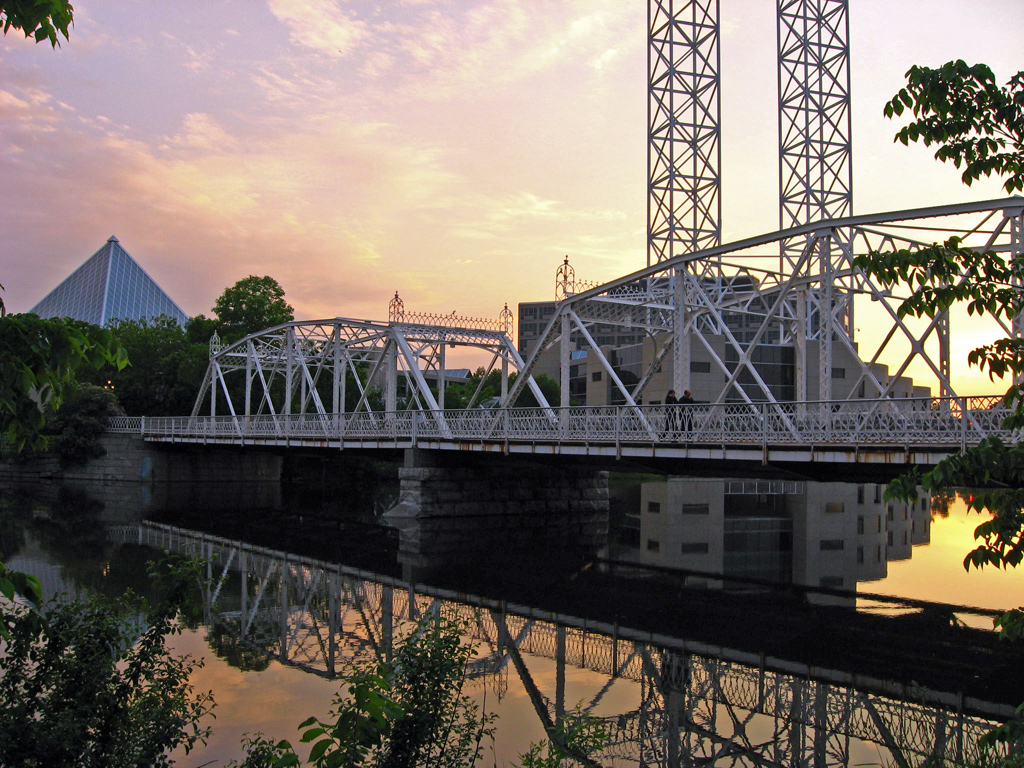
White bridges near 111 Sussex

The New York Review of Books recently featured a couple of book reviews by Freeman Dyson. In them, he shares some interesting ideas:

  • There is a famous graph showing the fraction of carbon dioxide in the atmosphere as it varies month by month and year by year
  • [The graph features] a regular wiggle showing a yearly cycle of growth and decline of carbon dioxide levels. The maximum happens each year in the Northern Hemisphere spring, the minimum in the Northern Hemisphere fall. The difference between maximum and minimum each year is about six parts per million.
  • The only plausible explanation of the annual wiggle and its variation with latitude is that it is due to the seasonal growth and decay of annual vegetation, especially deciduous forests, in temperate latitudes north and south.
  • When we put together the evidence from the wiggles and the distribution of vegetation over the earth, it turns out that about 8 percent of the carbon dioxide in the atmosphere is absorbed by vegetation and returned to the atmosphere every year. This means that the average lifetime of a molecule of carbon dioxide in the atmosphere, before it is captured by vegetation and afterward released, is about twelve years.
  • [I]f we can control what the plants do with the carbon, the fate of the carbon in the atmosphere is in our hands.
  • Carbon-eating trees could convert most of the carbon that they absorb from the atmosphere into some chemically stable form and bury it underground. Or they could convert the carbon into liquid fuels and other useful chemicals.

This is, of course, a geoengineering scheme. As such, it is subject to the two major points of opposition: that we don’t know whether it would work, and that it would probably produce unwanted and unpredictable consequences. That being said, it seems less dangerous in the latter regard than schemes to fertilize oceans or fill the air with aerosols. Ideally, these enhanced trees would just behave like a larger number of normal trees.

Genetic modification of plants is likely to play a role in addressing climate change. Food crops are an obvious area where that is true. They may need to be made more resistant to heat, extreme weather, drought, and floods. They may even need to have their photosynthetic pathways altered. If, along the way, we come up with a mechanism for producing trees that eat more carbon, it could make a useful contribution to the overall effort.

We should not, however, forget the third big danger connected to geoengineering: the risk of falling into the complacent belief that technology will bring an answer. Super carbon eating trees are a long-shot – one worth considering, perhaps, but no excuse to keep on burning forests and coal.

WestFest

Residents of Ottawa should strongly consider attending WestFest this year. It is a free five day festival happening in Westboro Village between June 11th and 15th. An entire street will be closed off to make room for stages, vendors, and the like. It only takes five minutes to walk there from the Westboro Transitway station.

Performers this year include:

  • 1755 (Acadian group on Thursday)
  • Joel Plaskett (Friday)
  • Buffy Sainte-Marie (Saturday)
  • Holly McNarland (Saturday)
  • Lynn Miles & Sue Foley (Sunday)
  • Andrea Simms Karp (Sunday)

There will also be authors, theatre performers, and artists about.

Emily and I are both volunteering, so you may see us there.