Ways to spend money on climate change

Emily at the Montreal Musee des Beaux Arts

Presented with the massive problem of climate change (including the possibility of extremely severe impacts) states with set resources and capabilities must choose between different kinds of responses:

  1. Domestic actions to reduce emissions
  2. Domestic actions to enhance sinks
  3. Funding emission reductions elsewhere
  4. Funding sink enhancement elsewhere
  5. Investing in resilience, either general (emergency response) or specific (engineering measures to combat certain expected effects)
  6. Helping others invest in resilience: either as compensation for past emissions, an inducement to take action, or out of compassion
  7. Investing in future mitigation technologies
  8. Amassing resources and waiting for greater certainty about what will happen

Choosing between these is very challenging and, realistically, we cannot expect governments to rationally and explicitly choose a strategy. Rather, an overall approach will emerge as a combination of semi-overlapping elements: some reinforcing one another and some conflicting. Furthermore, many choices will be made for non-climatic reasons. If we can spend $X in Canada, cut Y emissions, and employ 1,000 Canadians, we might find that option preferable to spending $X elsewhere to eliminate 100Y in emissions.

Multiple axes of uncertainty – about economic and technological development, future resource availability, total and regional climate change impacts, etc – further complicates the problem of prioritization. Economic analyses like the Stern Review argue that investing in mitigation urgently is a better choice than waiting or investing primarily in adaptation. Unfortunately, that is also the strategy with the most barriers. It requires taking somewhat costly action now, at a time when other states have not necessarily committed to equivalent behaviours.

Thankfully, there is the possibility that early action will have a signalling effect, showing that climate change mitigation is achievable at an acceptable cost, and that significant co-benefits can arise, such as advancing the transition towards a sustainable energy system built on renewables.
Who are you really talking to?

Bruce Schneier has an interesting post about man-in-the-middle attacks. These are situations in which party A and party B are trying to exchange sensitive information privately (for instance, credit card numbers or orders for moving hostages) without realizing that party E is in between them, pretending to be party A to party B, and vice versa.

The attack model has been mentioned here before in the context of cellular phones. It is rather more interesting in the context of the Betancourt rescue from the FARC.

Back from Montreal

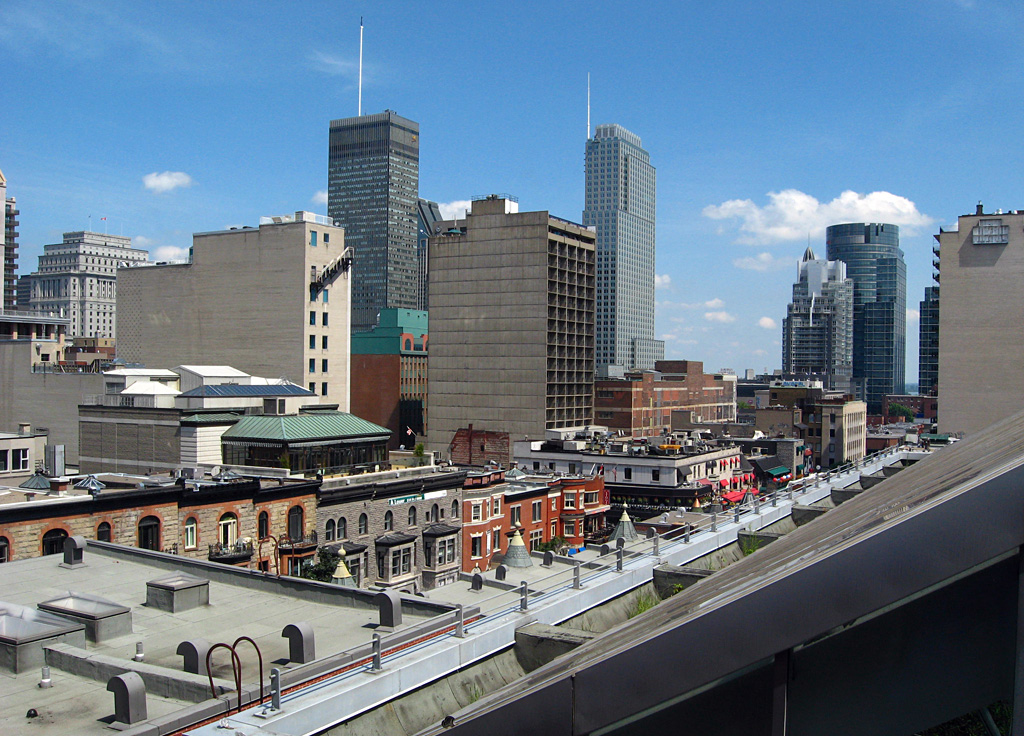
Downtown Montreal

Emily and I passed a most enjoyable weekend in Montreal, with ongoing Just For Laughs Festival events punctuated by tasty food and visits to the fine arts museum, botanical gardens, and ‘Insectarium.’ The last of those is especially worth a look, for those with a bit of a scientific or naturalist bent. The giant beetles are impressive, and the colony of leaf cutter ants is especially immersive – largely on account of how it is not contained by glass.

I haven’t spent an appreciable amount of time in the city since I was at l’Universite de Montreal for the French Language Bursary Program in 2003. Now that my youngest brother is starting university at McGill in September, I am hoping to spend more time in the lively and entertaining metropolis.

[Update: 8:45am] Here is Emily’s account of the weekend.

Green shifts and pine beetles

Concrete stairs

The July 5th issue of The Economist has two articles pertaining to Canada and climate change. There is one on the Dion carbon tax and another on the pine beetle infestation in our western forests. Both topics have come up here before, but remain pertinent and worthy of discussion.

The critical ongoing question in the first case is probably how effectively Dion will be able to build support for his plan. In the case of the pine beetles, it is probably the extent of the epidemic, as well as the volume of greenhouse gasses that will be emitted as a result. Despite considerable efforts to prevent it, the beetles have now become established in Alberta, having killed more than half the lodgepole pine in British Columbia. Natural Resources Canada estimates that the infestation so far will produce 990 megatonnes worth of emissions by 2020: equivalent to well over a year of total Canadian output. If they spread into the boreal forest, the ecological and climatic consequences could be massive.

How politicians think

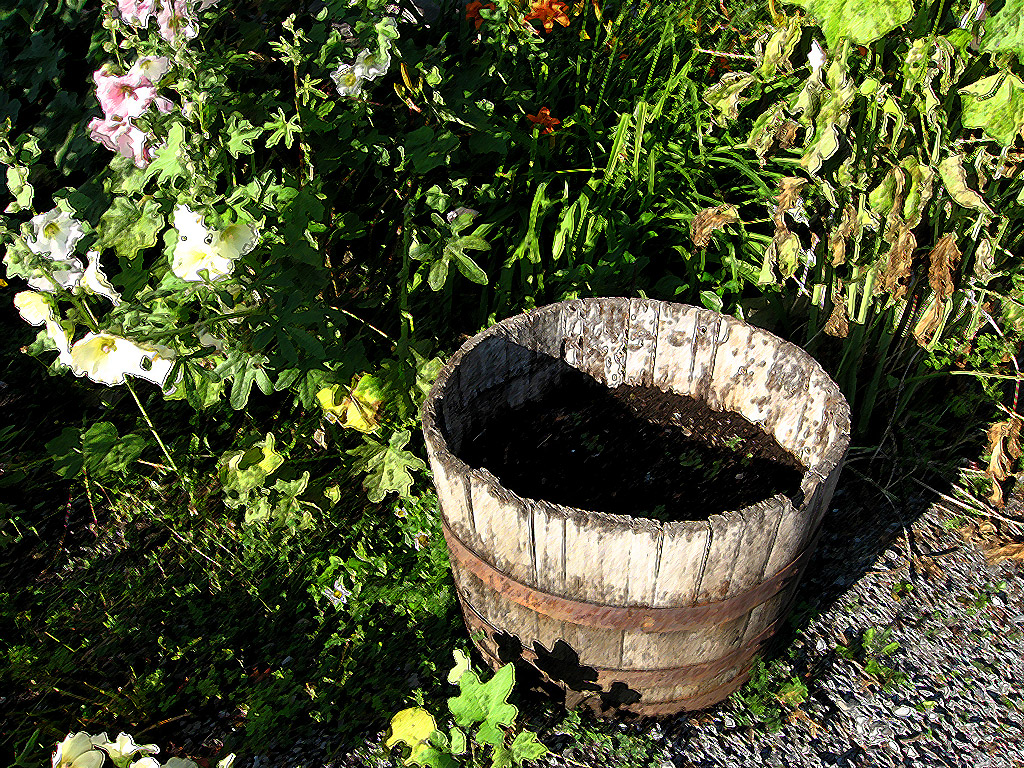
Garden with wooden planter

The Oil Drum has an interesting post on the psychology of leaders, arguing that their mindset has important consequences in relation to how they evaluate long-term questions like the future of hydrocarbon resources. The argument there is being made about Peak Oil, but it could just as well be applied to climate change:

Our leaders base decisions on lawyer thinking.

The outcome of a trial is not based on the facts; it is based on what they can convince the jury the facts might be. Likewise the outcome of an election is not based on facts; it is based on what they can convince the electorate the relevant facts, issues and threats might be.

Politicians do not deal in facts. They deal in perception. After years of working this way it becomes a framework in which they think.

The basic point is similar to the old joke about how public figures use statistics rather as drunkards use lamp posts: for support rather than illumination. Furthermore, the awareness that other politicians and politically active groups and individuals will use statistics in this way somewhat debases numerical evidence as a form or empirical awareness about the world.

Another important point is made about the differences between political and objective reality:

Politicians tend to inherently believe that the outcome of an event will depend on people’s perceptions and beliefs about that event. Politicians have very little experience with situations where objective reality is more important to outcome than the subjective perception of the reality.

This tendency is especially damaging when it comes to climate change. Because it progresses at an uncertain rate, it may well be that climate changes slowly while the perceptions of most people remain fairly stable, then changes too quickly for anything low-cost and effective to be done. On a problem characterized by uncertain time frames and potentially strong feedback effects, we need to get out in front of the issue, rather than being led by public or elite political opinion.

Dyed panels for concentrating solar

A team from MIT may have developed a cost-effective solar collector system for buildings. It consists of panes of glass coated with particular dyes. Each pane collects light in a specific range of wavelengths and delivers it to a relatively small area of solar cells. As such, the technology would replace some relatively expensive photovoltaic components with cheaper glass ones. It would also do away with the need for moving sun-tracking mirrors.

As with many human innovations, there is a natural precedent. Photosynthetic pigments in chloroplasts help to capture the light used in photosynthesis. They too differ in colour depending on the peak wavelength being targeted, thus explaining why you can have your algae in red, brown, yellow-green, etc.

Demand and quantity demanded

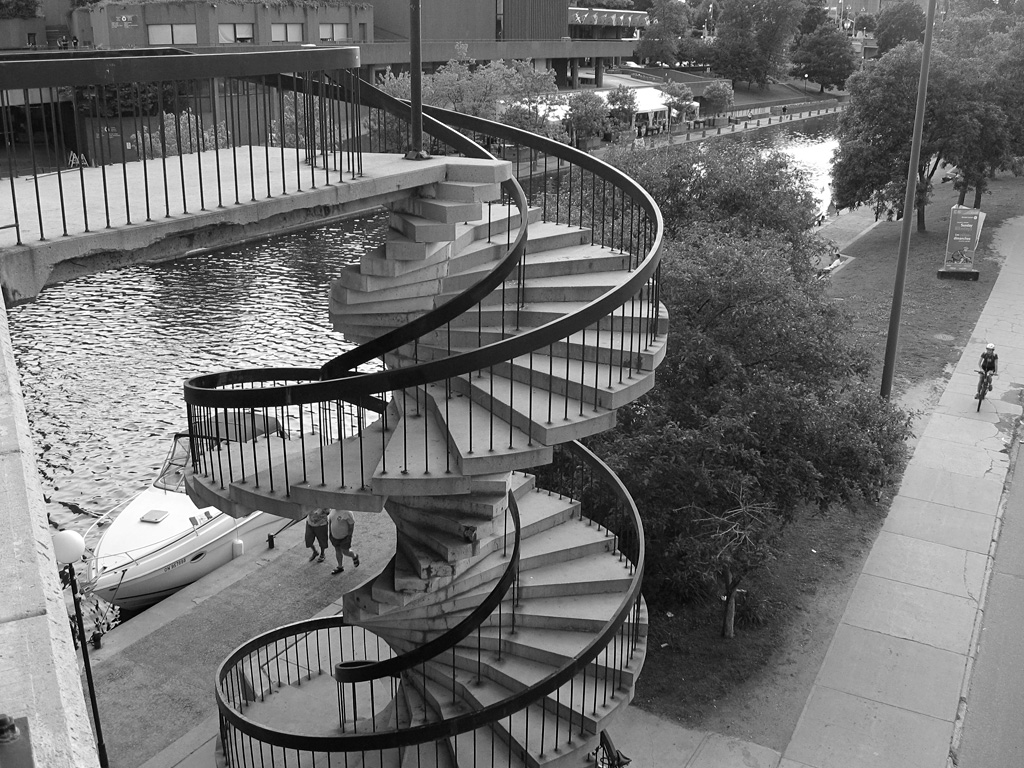
Spiral stairs beside the canal

One minor point: a lot of news coverage about energy economics confuses demand with quantity demanded. Demand is a function describing how much of a particular thing (say, oil) will be purchased at different prices. Because the quantity doesn’t change all that much when the price does, at least in the short term, this line is fairly steep when viewed on a graph using the y-axis to denote price and the x-axis to denote quantity. Quantity demanded, by contrast, is just one point on that line. At price X, people demand quantity Y. At price 2X, they demand a different quantity, based on the shape of the demand curve.

The most common error you see is statements like: “With prices at $4 a gallon, demand for gasoline has fallen” (it is the quantity demanded that has changed, in response to the change in price). An appropriate use of the term might be: “With the creation of an improved public transport system, demand for gasoline in Vancouver has fallen.” In the latter example, people demand a lower quantity of gasoline at all price levels, since a substitute for driving has become more appealing than before. In the transit example, the entire demand curve has shifted.

A more extensive explanation is available at Environmental Economics.

Getting VOIP phone numbers

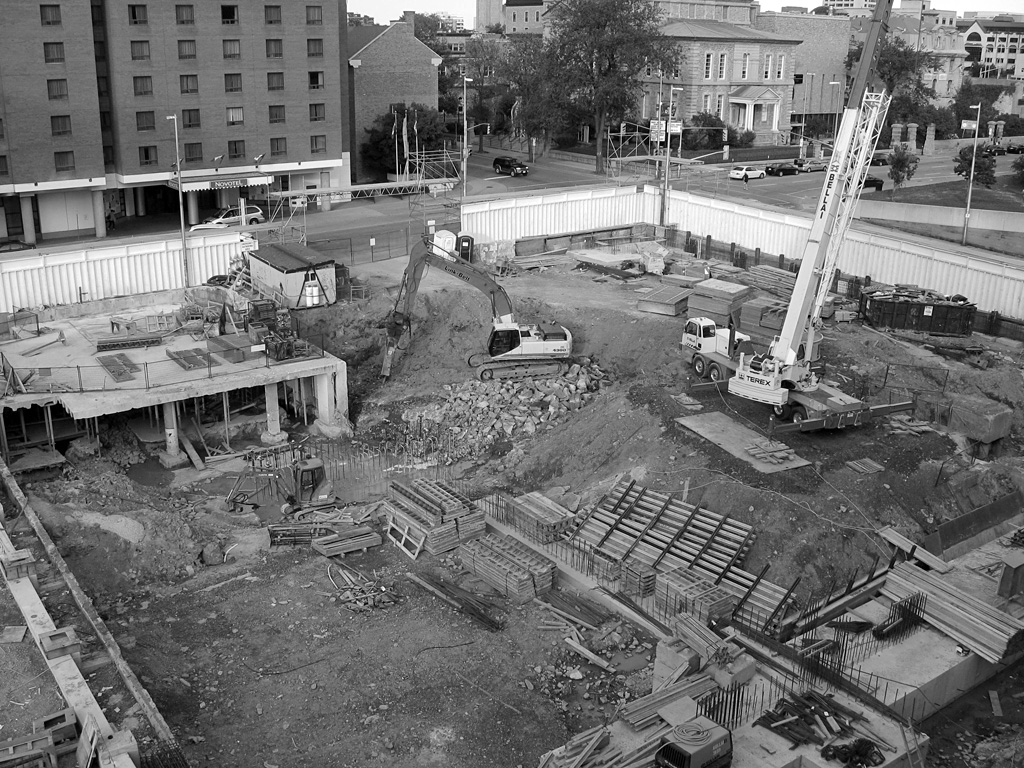
Construction site in black and white

Voice over internet protocol (VOIP) is a way of sending and receiving telephone calls over your internet connection. At its best, it means not having to deal with local fixed-line telephone providers at all. It is also cheaper and more versatile than a conventional phone and offers possibilities not normally available, such as having local numbers all over the world that you can access from any internet connection, as well as things like having your voicemail messages emailed to you.

Those waiting for SkypeIn to be available in Canada do have at least one option of comparable price:

  1. Get a router with SIP based VOIP functionality. (For example, the Thomson ST780 sold by Teksavvy.)
  2. Get Canadian Direct Inward Dialing (DID) numbers from someone like Voip.ms. These cost $2 per month each, and are available for a great many different areas. You can also get numbers in the US, UK, or elsewhere. Many numbers can be used seamlessly with the same phone and voicemail system.
  3. Get a free account with MySIPswitch.com.
  4. Have that free service configured by someone who actually understands how it works (not me).
  5. Configure the DIDs to point to MySIPswitch
  6. Configure your router
  7. Plug a phone into your router. It will now receive calls from any of your DID numbers, and can also place calls anywhere in the world at low rates.

Sure, a pre-packaged system of the Skype or Vonage variety would requires less tinkering. That said, the approach above works right now, and costs very little to boot.

Unbalanced sea level rise

One intuitively expects that if enough of Greenland melts to raise global sea levels by, say, three centimetres, that rise will occur everywhere more or less simultaneously. Detlaf Stammer, of Hamburg University, has suggested otherwise. His research on meltwater data since 1948 shows that meltwater forms a ‘slow wave’ of “rising sea levels that gradually works its way south from Greenland, down the American coast, reaching the tip of southern Africa after about a decade.”

Fifty years after any Greenland melting occurs, Stammer’s model suggests that sea level rise will be thirty times greater around Greenland and the east coast of North America than it will be in the Pacific ocean. If true, this will have a big effect on the kind of climate change adaptation planning that needs to take place. Everyone is exceptionally worried about Bangladesh right now, but perhaps they should be more immediately concerned about Florida and the Maritimes.

American biodiversity

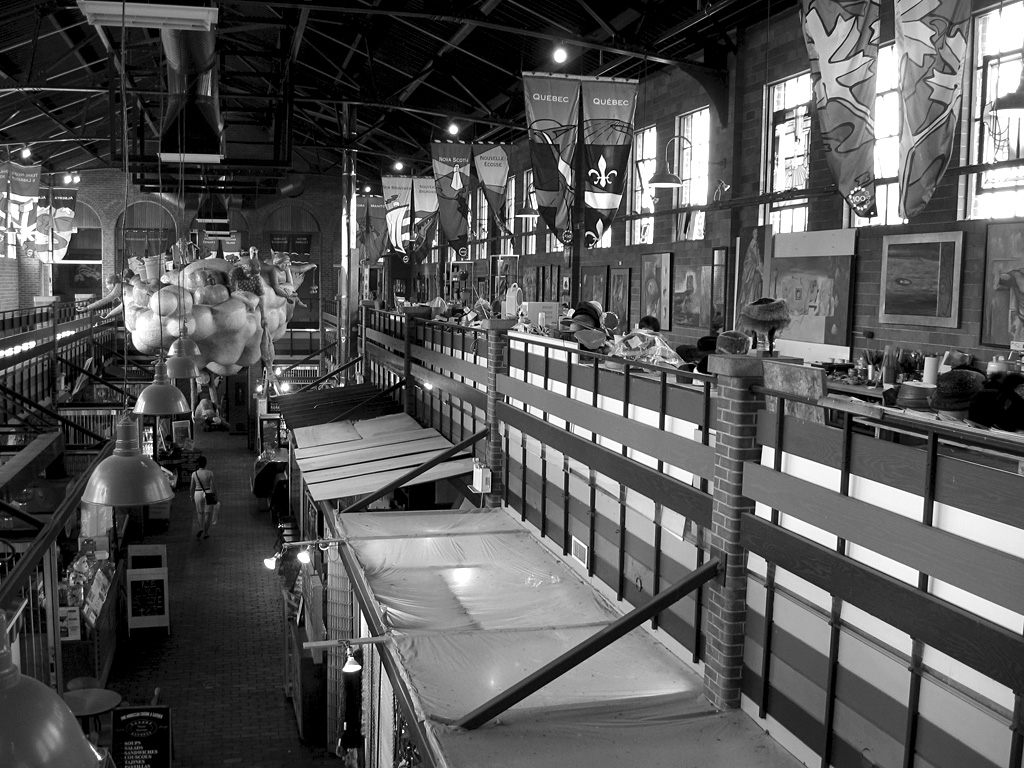
Byward Market, Ottawa

Over at Shifting Baselines, Josh Donlan has written a highly interesting history of American biodiversity, in the form of an open letter to the next American president. It touches upon the extinction of North American megafauna, philosophical questions about intrinsic value in nature, and then question of what should be done to protect the diversity of life.

It is long (for a web document), but well worth reading.