McCain is wrong to suggest gas tax cuts

Following up on ‘hurricane insurance for all,’ John McCain has a new bad idea: suspending gasoline taxes over the summer. There are lots of reasons for which this is a bad move. Gasoline taxes are a partial recognition of the ways in which the price at the pump doesn’t include all the costs associated with driving: from road construction to keeping troops in Saudi Arabia. Also, it is important for people to realize that, in the long run, they will be paying ever more for gasoline. This is the result of three major phenomena: decreasing output from oil fields as they reach maturity, increasing demand from fast-growing states, and the increasing trend towards internalizing externalities associated with fossil fuel use. Creating a temporary dip in prices will obscure the broader message, while encouraging harmful behaviour.

If anything, the US presidential candidates should be sending a strong signal that the era of inexpensive gasoline in the United States is over. People should be bearing that in mind not only when they decide what sort of car to buy, but when nationwide efficiency standards are being set and urban transportation infrastructure decisions are being made.

The seductiveness of the bell curve

Cat vandalism

Among the statistically inclined, there are few more elegant bits of mathematics than the bell curve or ‘normal’ distribution. At the centre, you have the most predictable outcome for any variable: say, the amount of food you eat on the average day. Higher and lower numbers close to the mean are still quite probable, but each possibility gets less and less likely as you move farther out. While you probably vary your food intake by hundreds of grams a day, it is rarer to vary by kilograms and quite rare to vary by tens of kilograms.

The reason the bell curve in particular is so charming is that it gives us the opportunity to assign probabilities to things. For instance, we can take the mean weight of airplane passengers, the standard distribution in the population (a measure of how much variation there is), and come up with a statement like: “99.9% of the time, this plane will be able to seat 400 people and have sufficient power to take off.”

That being said, there are big problems with assuming that things are like bell curves. For one, they might not be ‘unimodal.’ We can imagine a bell curve as being like a mountain of probability, where the peak is the mean and the slopes on either side represent less probable outcomes. Some distribution ‘mountains’ have more than one peak, however. A distribution of the heights of humans, for instance, has a male and female peak. If we took the male peak as the mean and tried to predict heights based on the standard deviation for the whole sample, we would find that there are a lot of unexpectedly short people in the sample (women).

Another big problem is that the peak might not be symmetrical. Consider something like the amount of money earned in an hour by a reckless gambler or stock broker. On one side of his average earnings are all the below-average instances, which are probably many. On the other side, the slope may taper off. On a few extremely lucky hours, they might earn dramatically more than is the norm, and do so in a way not mirrored in the shape of the distribution on the other side. Assuming that the distribution is like a bell curve will make us assign too low a probability to these outcomes.

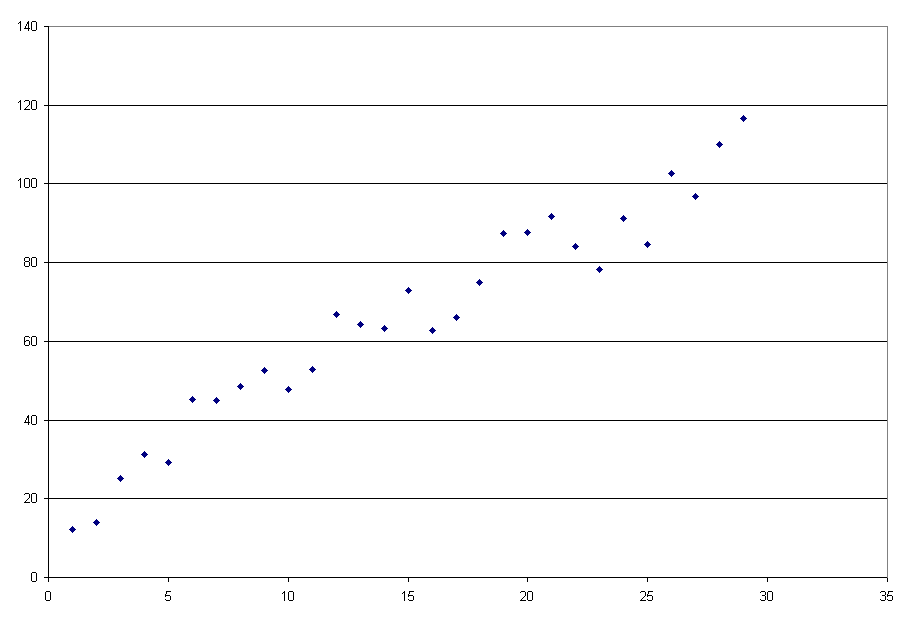
The last problem I am going to talk about now is a venerable one, commonly associated with Bertrand Russell. Imagine you see a trend line that jitters around a bit, but always moves upwards. Asked what is likely to happen next, you would probably suggest a jump comparable to the mean increase between past intervals. Too bad the data series is grams of food being eaten by a turkey per day, and tomorrow is Thanksgiving. You might have a beautiful bell curve showing the mean food consumed by the turkey per day, but it might all fall apart because something that undergirded the distribution changed. Those whose pensions were heavily based on Enron stock have an acute understanding of this.

When their use is justified, bell curves are exceptionally useful. At the same time, using them in inappropriate circumstances is terrifically dangerous. Just because a stockmarket fall of X points is five standard deviations greater than the mean does not imply that it will happen 0.00005733% of the time, despite what bell curve equations and relatively soft-headed statistics instructors might tell you.


Choosing nuclear

Nuclear flowchart

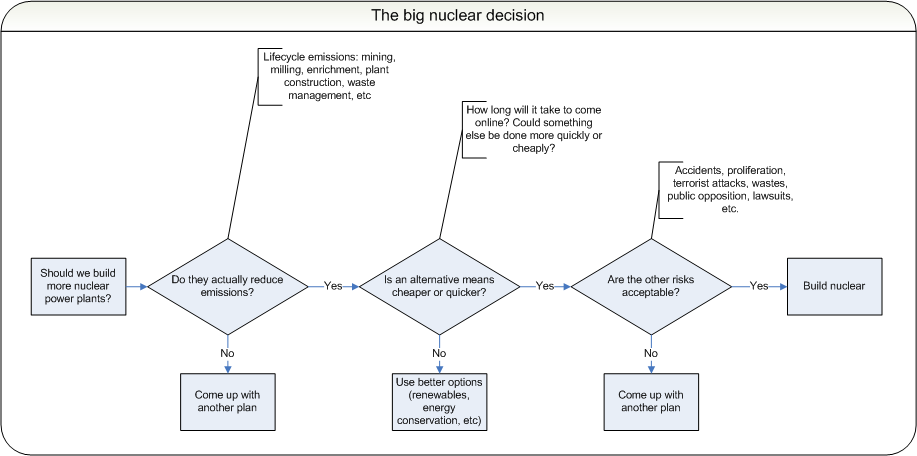
The flowchart above illustrates one process through which we could collectively evaluate the desirability of nuclear power, given the potential risks and benefits associated with the technology. In my personal opinion, the answer to the first question is probably “yes,” though perhaps not to as large a degree as commonly believed. The second and third questions are much more up in the air, and necessarily involve uncertainty. We cannot know exactly what will be involved in building a massive new nuclear architecture before it is done; similarly, it cannot be known with certainty what would result from choosing conservation and renewables instead.

As for the third question, there are major questions about risk evaluation and risk tolerance. If the world keeps running nuclear plants, it is a statistical certainty that we will eventually have another serious nuclear accident. No nuclear state is without its contaminated sites, and none yet has a geological repository for wastes.

This post definitely isn’t mean to settle the question initially posed, but rather to clarify thinking on the issue and dismiss the automatic logical leap from “climate change is happening” to “build more fission plants.”

Vat-grown meat

Beijing Olympic Protest

As discussed previously, meat eating is problematic in terms of the environment, animal welfare, and human health. One mechanism through which one of those concerns can be eliminated – and the others potentially mitigated – is to remove animals from the equation. This week saw the world’s first international conference on the industrial manufacture of meat. Arguably, that is what the beef, pork, and chicken industries already do but, in this case, the meat is to be grown in industrial bioreactors instead of inside animals that are subsequently killed.

It should be noted from the outset that there are some problems that this approach absolutely will not solve. It will always take more energy to sustain a meat diet than a plant diet, whether that energy is going into cows or industrial processes. Similarly, large amounts of energy use associated with transportation and refrigeration would be undiminished in the face of in vitro meat production. Given that plants will probably always be a feedstock to the process, concerns about water and fossil fuel use in agriculture, as well as fertilizer and pesticide runoff, remain in place. That said, it is possible that vat grown meat could be marginally more efficient, since calories would not be directed towards growing skeletal or nervous systems. Big vats would also have a higher volume to surface area ratio than animals, making it less energy intensive to keep warm.

The major problem vat-grown meat could solve is animal welfare, though that is probably the reason for avoiding meat that most people find least compelling. Even most vegetarians drink milk and eat eggs, most of which is produced under conditions equally awful for the animals. Arguably, vat grown meat would still be a kind of ethical violation – not because any animals suffer, per se, but because the whole concept is somehow monstrous and demeaning to nature.

All told, this doesn’t seem like much of a solution. The way slaughterhouse animals exist already approximates the character of an industrial meat factory. There is also little reason to believe that firms that happily feed all manner of drugs and hormones to animals would not similarly manipulate huge tanks full of artificial fat and muscle. As such, any hygienic concerns about factory farmed animals would probably translate readily to vat-grown meat.

The relevance of any of this is fairly questionable, given that vats are currently capable of producing the very lowest quality kind of meat (fodder for ground meat and nuggets) and can only do so at a financial cost higher than industrial agriculture. For all intents and purposes, we have already built industrial bioreactors on the skeletons of livestock. Shifting those to steel drums, as an alternative, will only make sense if the economics swing strongly in that direction for some reason.

Drugs for mental enhancement

Rusty bridge and steam pipes

A recent informal survey, conducted by Nature, suggests that large numbers of scientists are ‘doping’ with drugs that enhance their wakefulness and concentration. While the old joke holds that “a mathematician is a device for converting coffee into theorems,” drugs of choice have expanded to include Modafinil (Provigil) and Methylphenidate (Ritalin).

One in five respondents said they had used drugs for non-medical reasons to stimulate their focus, concentration or memory…

For those who choose to use, methylphenidate was the most popular: 62% of users reported taking it. 44% reported taking modafinil, and 15% said they had taken beta blockers such as propanolol, revealing an overlap between drugs. 80 respondents specified other drugs that they were taking. The most common of these was adderall, an amphetamine similar to methylphenidate.

I do not find this surprising. At a conference once, I met a young woman who pays her tuition by selling drugs usually prescribed for attention deficit disorder to fellow students at her Ivy League school.

It is not clear what kind of response is justified in the face of such anecdotal evidence. It is not obvious, prima facie, that the use of drugs is an inappropriate way to improve one’s mental function or academic output. People use all sorts of mechanisms – from physical activities to dietary modifications – to try to achieve the same end. Prescription drugs are thoroughly vetted for safety, though it is also fair to say that people self-prescribing are likely to make mistakes in terms of dosages and interactions with other substances. People make all kinds of sacrifices for success and it isn’t clear why it is obviously inappropriate for them to run the risks associated with altering their biochemistry. Given the degree to which success is related to self-esteem and contentedness, as well as the degree to which perceptions of failure associate with depression, it could arguably be better for one’s mental health to use whatever aids to success are available.

One legitimate concern is about a spiral effect. If honour roll students and leading researchers start becoming dependent on drugs to improve their focus, it might become difficult for anyone not doping to keep up. That could lead to situations in which people feel strongly pressured to do drugs as well. Of course, that strong pressure already exists in competitive academic environments. Still, there is reason to be especially wary when it is combined with psychoactive chemicals.

The questions suggested by the survey cannot be adequately addressed in a short blog post, but it does seem likely that they will be the subject of greater amounts of attention in the future. The competitive nature of the world, and the need to achieve things ever more rapidly, ensures that a market will exist for products that help people cope with both of those things. As with other unauthorized uses of drugs, the policies adopted by governments will affect things like price, availability, safety, and access to information and advice. Getting the balance right will be tricky.

Some carbon capture similes

The media is full of talk about carbon capture and storage (CCS). At the same time, there are only four facilities in the world where it is done. None of them resemble a conventional coal-fired power plant.

As a result, our cost projections for the technology are far more speculative than is commonly acknowledged. It is like we are in the era of the Wright Brothers, and we are trying to sort out the economics of running a major airline.

As I have said before, we had better hope that CCS works, if only because so many different climate change mitigation plans depend on it. At the same time, we really need to acknowledge that there is some chance that it simply will not work, and we will need to find those megatonnes of reduction somewhere else.

That uncertainty also pertains to questions about building more coal power plants. Building them today – with the hope that CCS will eventually become available – is highly irresponsible. It might be compared to jumping out of a plane and hoping you can sew yourself a parachute before you hit the ground.

Mintz on carbon taxes

Jack Mintz, who is apparently one of Canada’s leading economists, came out in support of a carbon tax today. Specifically, he suggested that federal taxes on gasoline be expanded to include the taxation of other carbon-generating fuels. This sort of upstream tax on fuels can complement a cap-and-trade regulatory scheme for large emitters by covering sectors of the economy too small to be efficiently addressed through the latter approach. Mintz does not have a reputation as a green champion, making his endorsement all the more suggestive of a general trend towards accepting carbon taxes as one good approach for addressing the massive problem of climate change.

Whereas the carbon tax recently created in British Columbia begins with prices of $10 a tonne, eventually rising to $30, Mintz proposes a federal tax of about $42 a tonne. One of the major issues raised concerns inter-provincial transfers from high emission provinces like Alberta and Ontario to lower emitting provinces like Quebec. That being said, there are many ways in which carbon taxes can be designed. They can be set up so as to not increase the overall tax burden, on account of taxes being reduced elsewhere. They can also be designed so that revenues collected in one province must also be recycled or invested there.

With luck, people will start to realize the opportunities inherent in replacing conventional taxes with carbon taxes. Doing so will offer a strong financial incentive to invest in greater efficiency, cleaner fuels, and more sustainable practices generally.

Hell and High Water

Bridge component

Joseph Romm’s Hell and High Water: Global Warming – the Solution and the Politics – and What We Should Do might be fairly described as an American version of George Monbiot’s Heat. It describes much less intrusive means for responding to the threat of climate change, as well as being more tailored to American politics. It is also less ambitious that Monbiot’s work, since it aims at the stabilization of atmospheric concentrations of greenhouse gasses (GHGs) below 550 parts per million (ppm) rather than 450.

The book is basically divided into two sections: one of which describes the nature and extent of the threat posed by climate change and one talking about solutions. The book is very explicitly focused on what climate change will do to Americans. Romm argues that too much coverage has focused on effects in poor countries, leading Americans to think the impact of climate change on their lives will be minimal.

Romm talks a great deal about how groups opposed to GHG regulation have created and funded a group of irresponsible ‘experts’ trying to convince the general public that major disagreement still exists about the reality and probable impact of climate change. He is very critical of the media, particularly for giving equal attention to the conclusions of a few oil-funded crackpots, compared with those of the enormous majority of scientists and all major scientific assessments.

I have some quibbles with some of Romm’s technological recommendations. I think he is a bit overconfident about the rapidity with which carbon capture and storage and cellulosic ethanol might be deployed. That said, the vast majority of what he says is correct, well defended, and similar to the thinking of others who have considered the questions seriously.

One notable omission from the book is emissions associated with air travel. At no point are they mentioned, either as a problem or an area where policy could yield improvements. As Monbiot effectively highlights, emissions from air travel are among the toughest to address, not least because lots of well-off people who consider themselves environmentalists and support good environmental policies nonetheless want to be able to jet off to South Africa or New Zealand.

Overall, Romm’s book is informative and accessible. He does a good job of bringing the issue home for Americans – de-emphasizing issues like the preservation of nature and international fairness – and emphasizing why they, personally, should be worried. Certainly, the kind of climatic impacts projected by the IPCC for 2030 or so are enough to make any reasonable person extremely nervous. He is right to say that, in a world where GHG concentrations are 650 ppm or more, climate change will be the issue being dealt with by all governments. Equally, he is right to point out that concentrations of that magnitude have a very serious risk of pushing us into a self-reinforcing cycle producing temperature increases of more than 5˚C globally and sea level increases of 25 metres or more. Hell and high water, indeed.

Small change

The New Yorker has an interesting article on American coinage. It focuses particularly on the question of what should be done with small denomination coins, given the ever-higher prices of metals like zinc, copper, and nickel.

It also includes a lot of interesting asides: such as how the American nickel was designed to have a mass of one gram per cent of value, at a time when the American government was flirting with the metric system. The article also features an amusing example of how industry sets us shell groups of ‘concerned citizens’ who are keen to block changes to the law that would be disadvantageous to them. In this case, a major supplier of zinc to the U.S. Mint founded Americans for Common Cents in order to resist moves to eliminate the diminutive coin.

Personally, I think that scrapping the penny is an act long overdue. For years now, I have been picking them out of the change I get back from purchases in order to reduce the mass of stuff being ferried about in my pockets. Even if every price gets increased to the next five cent mark, the benefits from being rid of the bothersome coin will be more substantial.

New nuclear plants, new nuclear waste

These days, nuclear energy is frequently spoken of as being in the midst of a ‘rebirth’ or renaissance, largely because of high oil prices and concerns about climate change. Those concerned about greenhouse gas (GHG) emissions do need to give the technology some credit as a mechanism for producing large amounts of power with relatively limited climatic effects. That is no reason to ignore the problems with the technology – from water use to nuclear waste to long lead times – but it does compel the formulation of a considered response.

One possibility I came up with would be to require firms building new nuclear plants to build geological sequestration facilities for the nuclear waste the plant will produce over its lifetime before the plant can begin operation. That would probably further delay the deployment of the technology, but it would avoid boondoggles like the ongoing conflicts about Yucca Mountain. It would also be a step away from the “act now and worry about the consequences later” mentality that has infected so much of energy and environmental policy.

The response to such a demand, on the part of industry, might offer a better glimpse into what the true costs of nuclear power really are.