Climate science and policy-making

I wrote the following to serve as a one-page introduction, laying out some of the key items for consideration and listing some of the most accessible and reputable sources of information about climate change. For more information on specific subjects, see my climate change index.

The key elements of the general climate science and policy consensus are:

  • On average, the planet is warming.
  • Most of this is because of human emissions of greenhouse gases.
  • Continued warming would be harmful, and perhaps very risky when it comes to human welfare and prosperity. Anticipated changes include melting glaciers and polar ice, more extreme precipitation events, agricultural impacts, wildfires, heat waves, increased incidence of some infectious diseases, sea level rise, ocean acidification, and increased hurricane intensity.
  • By most accounts, the cost of mitigation is less than the cost of adaptation. Some anticipated changes may overwhelm the capacity of human and natural systems to adapt.

While there is a public perception that there is a lot of scientific disagreement about the fundamentals of climate science, this really is not the case. Back in 2004, a survey of peer-reviewed work on climate science demonstrated this. There is also a notable joint statement from the national science academies of the G8, Brazil, China, South Africa, and India.

To borrow a phrase from William Whewell, there is a ‘consilience of evidence’ when it comes to the science of climate change: multiple, independent lines of evidence converging on a single coherent account. These forms of evidence are both observational (temperature records, ice core samples, etc) and theoretical (thermodynamics, atmospheric physics, etc). Together, these lines of evidence provide a conceptual and scientific backing to the theory of climate change caused by human greenhouse gas emissions that is simply absent for alternative theories, such as that there is no change or that the change is caused by something different.

Readers who are dubious about the validity of mainstream climate science, or unsure of what to think, my page for waverers may be useful.

1) Climatic science and history

There are some good primers available from reputable organizations online. For instance, the United Kingdom’s Met Office has a quick guide.

The Fourth Assessment Report of the Intergovernmental Panel on Climate Change (IPCC) is the most authoritative review of the scientific work that has been done on climate change. The summary for policy-makers for the synthesis report is available online.

For detailed information on the physical science of climate change, the technical summary of the IPCC’s Working Group I report is a good resource. Unlike the summaries for policy-makers, which are vetted through a quasi-political process, the technical summaries are prepared exclusively by scientists.

For Canadians who want to read one book about climate science and policy, I recommend University of Victoria Professor Andrew Weaver’s book: Keeping Our Cool: Canada in a Warming World.

For those looking for a concise history of the entire development of climatic science, starting in the late 1800s, I very much recommend Spencer Weart’s The Discovery of Global Warming. In addition to the book form, it is available free online.

For a more specific history of what we have learned about climate from ice core samples, see Richard Alley’s The Two Mile Time Machine. For an excellent (though somewhat technical) discussion of the relationships between the carbon cycle and biological organisms, see Oliver Morton’s Eating the Sun.

2) Climate change mitigation

Ultimately, the only way to keep the concentration of greenhouse gases in the atmosphere constant is to reach the point where humanity has zero net emissions. Getting there fundamentally requires two things: the shifting of the energy basis of the global economy to low- and then zero-carbon sources, and the stabilization of the biosphere through actions like ending net deforestation. It is widely accepted that setting a sufficiently high price for greenhouse gas emissions is a vital way to drive mitigation actions.

Three excellent books that evaluate options for moving to a low-carbon economy are:

On the costs of climate change mitigation, the most comprehensive work is probably that which has been done by Nicholas Stern, beginning with the Stern Review. The review’s executive summary is also accessible online. More recently, he has argued that the costs of inaction are even more significant than those projected at that time.

On the political and ethical side of things, the best short summary may be Stephen Gardiner’s article “Ethics and Global Climate Change,” published in Ethics. Volume 114 (2004), p.555-600. One key idea related to international equity and climate change mitigation is contraction and convergence: an arrangement in which the emissions from all states eventually fall to zero, but where the per-capita emissions of developed and developing states also converge over time.

My fantasy climate change policy combines a moratorium on coal and unconventional fossil fuels with a hard cap on emissions.

3) Other major climate change issues

Other areas relevant to climate change policy-making include:

  • Abrupt and runaway climate change scenarios
  • Adaptation to climate change
  • Carbon sinks (physical, such as the oceans, biological, such as the forests, and geological, such as rocks that erode and form carbonates)
  • Economics (carbon pricing, risk management, etc)
  • Emission pathways (and their international breakdown)
  • Equity issues (historical responsibility, climate change and development, etc)
  • Global politics and international law
  • Planning and design (cities, buildings, etc)
  • Science (climatic equilibria, models and projections, etc)
  • Sociological and philosophical issues (ethics, communication, political theory, etc)
  • Targets (stabilization concentrations, temperature change, etc)
  • Technologies (renewable energy, transport, nuclear, efficiency, etc)

I can recommend resources in all of these areas, if someone has a particular interest.

4) Good sources of climate related news

Probably the best scientific climate change blog is RealClimate.

Good responses to climate ‘skeptic’ arguments can be found in the How to Talk to a Climate Skeptic series. I also keep track of my own arguments with climate change deniers.

Climate coverage in mainstream media sources is often inconsistent in quality. The BBC and The Economist often publish good information, but also sometimes include incorrect or misleading information.

5) A few key graphics
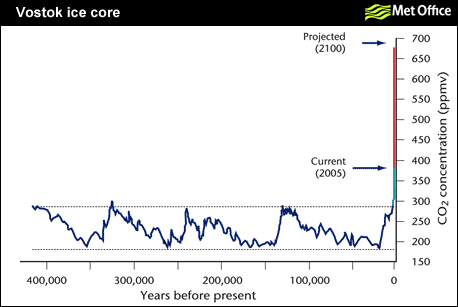
Atmospheric concentration of CO2

This ice core record of carbon dioxide concentrations illustrates one major reason why we should be more concerned about human-induced climate change than about natural variation. Our use of fossil fuels is generating a spike in greenhouse gas concentrations that is set to rise far above anything in the last 650,000 years, at least.

Attribution of climate change, from the IPCC 4AR

The above shows how observed warming is inconsistent with climate models that do not incorporate human greenhouse gas emissions, but consistent with those that do.
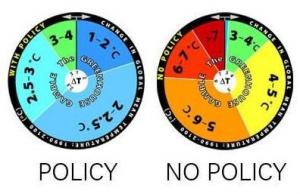
MIT climate roulette wheels

The wheel on the right depicts researchers’ estimation of the range of probability of potential global temperature change over the next 100 years if no policy change is enacted on curbing greenhouse gas emissions. The wheel on the left assumes that aggressive policy is enacted. (Credit: Image courtesy / MIT Joint Program on the Science and Policy of Global Change)

I would be delighted to answer and questions, or suggest further resources in other areas of interest.

Last updated: 23 January 2012

Oil 101

Twigs and branches

Written essentially in the style of a textbook, Morgan Downey’s Oil 101 moves systematically through the major areas of knowledge required for a basic understanding of the global petroleum industry. These include:

  • The history of oil use, including predictions about the future
  • The chemistry of crude oil
  • Exploration for and production of oil
  • Refining
  • Petrochemicals
  • Transporting oil
  • Storing oil
  • Seasonal demand variation, pricing, and oil markets

Downey covers each in a clear and informative manner, though he sometimes delves into a greater level of detail than most amateurs will prefer. For instance, some of the forays into chemistry are at a level of sophistication well above what casuals readers are likely to retain. That said, the book is laid out in a highly structured way, so it is easy to gloss over technical portions without losing track of the overall structure of the text.

One thing the book strongly demonstrates is the enormous amount of expertise and capital that have been developed within the petroleum industry. For instance, the section on how offshore oil platforms are constructed and operated shows what an astonishing number of things can be executed deep underground, from a steel platform above the ocean’s surface: everything from horizontal and vertical drilling to the assembly of steel pipes (cemented in place), the use of explosives, the installation of automatic or remote-controlled valves, the injection of acids and chemicals, etc. The discussion of refining and transport technologies and infrastructure is similarly demonstrative of sustained investment and innovation. While it is regrettable that all of this effort has been put into an industry that is so climatically harmful, it does suggest that humanity has a great many physical and intellectual resources to bring to bear on the problem of finding energy. As more and more of those are directed towards the development of renewable energy options, we have reason to hope that those technologies will improve substantially.

The final portion of the book, about oil prices and forward oil markets, was the least interesting for me, as it deals with complex financial instruments rather than matters of chemistry, geology, etc. Still, for those who are seeking to understand how oil prices are established, as well as what sorts of financial instruments exist that relate to hydrocarbons, these chapters may be useful. Downey does provide some practical advice to those whose organizations (companies, countries, etc) are exposed to changes in oil markets: “The decision not to hedge [Buy financial products that reduce your exposure to a risk of major price changes] should be an active decision. Management should clearly inform investors why they decide to face the full volatility of the oil market when they have an opportunity to manage the risk.” Managing such risks on an individual level has been discussed here before.

All told, this book is well worth reading for all those who are curious about the energy basis for global civilization, why it is established the way it is, and some of the key factors that will determine which way it goes. Downey is a low-key proponent of the peak oil theory. He argues that reserves, especially in OPEC, are inflated and that a peak and bell-shaped drop-off in production are inevitable: probably between 2005 and 2015, provided depletion occurs globally at about the same rate as it did in the United States following their peak in 1970. For those hoping to grasp the implications of that projection, as well as those hoping to plan for a world based on other forms of energy, the information contained in this book is both valuable and well-presented.

British, EU, and US negotiators expect little from Copenhagen

Apparently, the United States has now made clear that they do not expect a climate deal to emerge at Copenhagen this year, when the United Nations Framework Convention on Climate Change (UNFCCC) gathering is to take place. This isn’t really news, but it is certainly disappointing. In a few years, I think people will look back regretfully at how much time, money and political energy were directed at the credit crunch, while the much more important problem of climate change mitigation was neglected.

A big part of the reason for the delay is certainly the difficulty the Obama administration has had getting a climate change bill through Congress. The Republicans deserve a lot of criticism for their caveman mentality on this issue. Their united opposition to meaningful action on climate change is irresponsible and a dereliction of duty, insofar as they are charged with defending the long-term welfare of the United States. While pricing carbon will cause short-term harm to certain industries now, it is the only way to kick off the sustained transition to a low-carbon economy that long-term prosperity ultimately depends upon.

Cruise ship size record reset

At the end of October, the MS Oasis of the Seas was launched in Finland. It is the world’s largest cruise ship, 360 metres long, with capacity for 6,296 passengers. In November of next year, a second ship of the same class is expected to be launched: the MS Allure of the Seas. The ship is powered by three 13.9 megawatt (MW) engines and three 18.5 MW engines, with propulsion from three 20 MW Azipods.

I cannot help but think that if the advocates of the peak oil hypothesis are correct, these vessels will end up being viewed as the height of fossil-driven folly. The ship is also a reminder of how international waters remain the part of the planet with the most lax environmental standards, whether the pollutant in question is sulphur dioxide, carbon dioxide, or anything else. Indeed, large oceangoing vessels generally need to carry two types of fuel: one that is legal for use in the domestic waters of states with air pollution laws, and another that can only be used on the open ocean.

Octane and gasoline engines

Smashed wooden wall

I am learning a lot about hydrocarbon fuels from Morgan Downey’s Oil 101. For instance, that the common understanding of the phrase ‘high octane’ is somewhat misleading. In the context of gasoline-powered internal combustion engines, such as those in cars, the octane rating of a fuel refers to how much it can be compressed along with air before it will spontaneously ignite. In these engines, fuel and air are mixed together and compressed in a cylinder. They are then ignited at a precisely controlled time by a spark plug. Cases where the mixture explodes before then are called ‘engine knock’ and are damaging. As such, engines are designed to use fuel above a certain octane number, in order to be confident that knocking will not occur.

When it comes to choosing fuel to buy, this means it is appropriate to use a grade with an octane rating as high as cited in the operating manual of a vehicle. Going higher, however, may be a waste of money for two independent reasons. Firstly, higher octane fuels are more expensive because they cost more for refineries to produce. Unless your engine is tuned to take advantage of the extra opportunity for compression, no additional power will be generated. Secondly, higher octane fuels often contain less energy per litre, because the hydrocarbons that comprise them have less energy in their chemical bonds. As such, a litre of more-expensive high octane fuel likely will not take a vehicle as far as a cheaper litre of adequate-octane fuel.

Octane numbers are assigned based on how a fuel compares to two specific hydrocarbons: isooctane (which is hard to ignite by compression) and n-heptane (which is easy to ignite that way). 90 octane fuel is thus as resistant to pressure-induced ignition as a mixture of 90% isooctane and 10% n-heptane. Some fuels are even better at resisting pressure-induced ignition than isooctane, and can therefore have octane numbers over 100.

In diesel engines, this is reversed. They do not have spark plugs and rely upon the ability of fuel to ignite spontaneously in the presence of pressurized air. In diesel, the cetane number refers to the propensity of fuel to autoignite on compression. Here, a higher number is more desirable.

One other thing I didn’t know about liquid transport fuels is that the fuel used by piston-driven aircraft, such as small propeller planes, still uses tetra ethyl lead to increase its octane rating. This practice has been discontinued in cars both because it interferes with catalytic converters and because it was massively increasing human exposure to lead – a known cause of brain damage. In aviation gasoline, tetra ethyl lead is used instead of alcohols to boost octane. This is because alcohol-blended fuels are less energy dense, more prone to vapour lock, liable to separate at low temperatures, as vulnerable to corrosion. Such aircraft are a relatively tiny share of the total market for hydrocarbon fuels; still, it isn’t particularly comforting to know that they continuously disperse lead on whatever is below them.

Fighting oil sands emissions by burning natural gas?

According to Morgan Downey’s Oil 101, it actually takes more energy to produce a barrel of synthetic crude oil from the oil sands than the barrel of crude contains. Most of that extra energy comes from natural gas. It is worth paying that energy cost because crude oil is a valuable product that can be turned into gasoline, kerosene, etc, whereas unprocessed bitumen laden sand has no value. Note that even more energy is required to run the refineries that turn synthetic crude into usable fuels.

As a result of this, the economic viability of the oil sands depends on natural gas remaining cheap enough for synthetic crude to compete. As such, it is arguably the case the promoting natural gas as a fuel for vehicles and electricity generation is a smart climatic move. It is a relatively clean fuel in those applications, and using it in that way might keep a larger share of it from being used to upgrade bitumen – thus leaving the carbon contained therein safely buried.

In Scenario A (cheap gas), a lot of Canada’s northern natural gas goes towards liquefying and upgrading bitumen, thus liberating the carbon it contains into the atmosphere, both during upgrading and refining processes and when the resultant fuels are burned.

In Scenario B (expensive gas), the natural gas is used for higher-value purposes like electricity generation, and more of the carbon in the bitumen never ends up in the atmosphere. Other forms of environmental damage associated with the oil sands – including air and water pollution, habitat destruction, etc – are also lessened.

Greenhouse gases other than CO2

Rusty metal pipes

A recent Newsweek article discussing Al Gore’s new book made reference to recently published work on how different gases are contributing to anthropogenic climate change: Improved Attribution of Climate Forcing to Emissions, written by scientists from NASA’s Goddard Institute including Drew Shindell and Gavin Schmidt.

Two especially notable points are made. Firstly, the researchers estimate that carbon dioxide (CO2) is ‘only’ responsible for 43% of observed warming, once interactions between gases and aerosols were taken into account. At the same time, methane accounts for 27% of warming, halocarbons 8%, black carbon 12%, and carbon monoxide and volatile organics 7%. Secondly, there are the policy implications that flow from this. Preventing CO2 emissions basically requires reducing deforestation and the burning of fossil fuels – with the latter being an especially challenging thing to do in a world as promiscuous with energy as ours. Reducing methane, by contrast, may be as simple as capturing and burning gases from landfills, and adopting other comparatively low-cost and low-sacrifice strategies. The authors conclude that strategies that incorporate all greenhouse gases (GHGs) are “likely to be much more cost-effective than CO2-only strategies.”

There are other complications involving GHGs, including atmospheric lifetime. CO2 is removed by various means, across different timescales. Methane doesn’t last as long, but does cause more warming than CO2 when present and often breaks down into it later. Black carbon is washed out of the atmosphere quite quickly, meaning that eliminating its production could yield reduced radiative forcing relatively quickly.

The greater importance of non-CO2 gases described in this study is potentially good news for climate change mitigation, given how challenging it has been to convince governments to accept even very minor costs in order to reduce the risks associated with climate change. Developing an improved understanding of exactly how much various GHGs alter the climate should also allow for more efficient carbon pricing, where the incentives to reduce the most harmful GHGs are the strongest.

Mapping 4°C of warming

The UK’s Met Office has released an interesting interactive map showing what the world would be like with a 4°C rise in global temperatures. Impacts considered include fires, agricultural impacts, water availability, sea level rise, loss of permafrost, extreme weather, health, and more.

The map also shows how Canada’s high latitude location will mean more than average temperature increases across the country, ranging from around 7°C to more than 10°C.

There is more information about the map over at World Changing Canada.

Water in California

A briefing on the state of water policy in California contains a passage that I think is illuminating when it comes to the relationship between humanity and the natural environment in general:

Californians hate rain but love water, so three-quarters of them live in the arid south, spurn the wet north where three-quarters of the rain falls, and expect water to come to them by pipe, canal or aquifer, preferably courtesy of the taxpayer.

That sort of brute force approach will become harder and harder to sustain as we give up fossil fuels, both because of their growing scarcity and because of the damage they do to the climate.

U.S. Energy Secretary Stephen Chu has already raised questions about what climate change will do to California’s water supply, particularly as higher temperatures lead to a loss of summer snowpack.

Can Canada meet the Conservative GHG targets?

Small red apples

The Globe and Mail is full of coverage of a ‘landmark’ new report, considering whether and how Canada could meet the stated greenhouse gas reductions of the current government (20% below 2006 levels by 2020, 60-70% below by 2050). The report was paid for by the Toronto Dominion Bank and compiled by the Pembina Institute and David Suzuki Foundation. Economic modelling was done by M.K. Jaccard and Associates Inc, Canada’s ubiquitous non-governmental providers of projections on climate plans.

The report includes estimates of what the GDP cost of meeting the government’s targets would be, for each province. Overall, the cost is estimated at 1.5% of GDP in 2020. Alberta would be the most affected, with an economy 8.5% smaller than it would be in a scenario with new restrictions on emissions. Saskatchewan is projected at -2.8% and B.C at -2.5%. Ontario would actually be 0.9% richer with regulation, while Quebec would be 0.3% poorer. Given the risks associated with climate change, such an investment seems appropriate. That is especially true when you recognize that we will inevitably have to abandon fossil fuels anyhow.

Of course, much depends on the precise methodology used to compile the report. It isn’t clear how the government’s Regulatory Framework would actually operate in practice – for instance, which compliance options firms would choose to employ, and how much of an effect that would have. The plan also assumes that carbon capture and storage (CCS) will rapidly emerge as an effective and affordable technology, though it isn’t quite as dependent on that outcome as Alberta’s even more worrisome climate plan. In an editorial by Jeffrey Simpson, he claims that:

The government must know its policies will fail. But if the Conservatives expect people can be fooled or will tune out because they don’t care or the issue’s too complicated, why not?

Another editorial argues that the targets were set without a plan for achieving them established. Very disappointingly, it then goes on to argue that since meeting Canada’s targets would involve “unacceptable damage to Canada’s economy and national unity,” the targets should be further loosened. What this ignores is the critical issue of dealing with climate change. If Canada and the world fail to adopt effective mitigation policies, the alternative isn’t going to be unity and prosperity amidst ever-higher greenhouse gas concentrations and temperatures. The future of Canadian and global prosperity depends on maintaining a climate that is compatible with human prosperity. Furthermore, it seems absurd to say that growth of 8.5% below business-as-usual is a terrifically awful thing to inflict on Alberta. That’s the kind of impact that might arise as the result of some modest global economic blip or disruption in fossil fuel markets. Only in this case, the cost would be borne in order to help Canada make a credible start on the critical path to a low-carbon economy.

The ethics of letting Alberta and the oil sands off the hook are also highly dubious. People don’t have the fundamental right to keep doing what they have been, even when it becomes overwhelmingly obvious that their actions are harming others. Aside from those suffering now from the air and water pollution associated with rampant oil sands development, there is the key issue of the defenceless and innocent members of future generations who will suffer as the result of these emissions. Indeed, extracting and burning just 10% of the oil sands resource would release 15 billion tonnes of carbon into the atmosphere, a quantity sufficient to have a significant temperature effect in and of itself. In addition, continued failure to act on the part of Canada makes it less likely that a strong international agreement will emerge. Given the importance of reaching such an agreement soon, and setting the world on the path to decarbonization, more foot-dragging from Canada is shameful and inappropriate.

Among others, I have long argued that the targets lacked a credible plan for implementation. The government seems to be banking on the fact that they won’t be around in 2020 or 2050 to be held to account. As such, nearer term targets – such as those in the 10:10 campaign – could be usefully adopted in Canada. Anything else leaves too much of a gap between promises and mechanisms of accountability.

The full report is available online (PDF).