
Syndication and RSS: a simple introduction

A few people have asked me what ‘syndication’ and ‘RSS’ are, so I thought I would write a quick, non-technical introduction.

Syndication intro

The content of this blog can be broadly separated into two types: the text that makes up posts, and all the formatting that surrounds it. What syndication does is take just the text, allowing it to be read through some other site or program than the one usually used to view the site. The big reason why this is helpful is because it lets you quickly check a great many information streams to see if any have changed.

Instead of having to check more than 100 different pages every time I want to see if one has been updated, I can take a look at one page that lists all the different syndication ‘feeds.’

BlogLines

One service that allows this is BlogLines. If you have a look at my BlogLines account, you will see that it tracks more than 100 different ‘feeds.’ These include things as diverse as all the LiveJournal, WordPress, Blogger, and other blogs run by friends of mine; listings of video clips from the Colbert Report and the Daily show; headlines from Metafilter, Slashdot, and other news sites; and a few miscellaneous other things.

If you sign up for a BlogLines account, you can add two different feeds from my blog. Both use a technology called RSS, which stands for ‘Really Simple Syndication.’ The addresses in question are:

Blog posts: http://www.sindark.com/feed/
Blog comments: http://www.sindark.com/comments/feed/

Opening either in a normal Internet Explorer or Firefox window will probably bring up a lot of confusing looking garble. This is the machine readable version of the blog. If you add one of those addresses to your list of feeds in BlogLines, however, you will see a list of recent posts presented, complete with short summaries and links back to the original. Whenever this site (or any other one you have listed) gets updated, it will turn bold on your BlogLines page.

Signing up for the comments feed will allow you to see whenever anybody leaves a comment on any post of mine, without having to check each one individually. I find it a useful way to follow conversations, without having to look at many different individual pages. For people running blogs, it can also be a good way to catch spam.

Firefox live bookmarks

Another way to read RSS feeds is to add them as ‘Live Bookmarks’ within Firefox. This can be done very easily. In Firefox, look over to the right hand side of the blog’s address, inside the white box near the top of the window. On the right hand side, there is a little orange icon with a white dot and radiating arcs. Any page on which you see that icon has a syndication feed available.

If you click that orange icon, a window will pop up asking you to name the bookmark and choose where in your bookmarks menu you want to see it. Then, any time you go into the bookmarks menu and select the name of that site, it will show you a listing of recent post titles. You can click on any of them to go to the post itself.

More information

Bloglines FAQ
WikiPedia on RSS
(includes the orange logo I described)
Firefox Live Bookmark tutorial
Sony headphones, cont.

In response to my complaints by letter and phone, as well as sending back the broken old pair, Sony sent me a new set of MDR-EX71SL Fontopia earbuds (£25.67 on Amazon). While this is welcome, I would have preferred to have them send me a refund. On past form, the new pair will only last about three months before completely falling apart due to cheap materials and shoddy construction. My earlier complaint about them is here. To anyone considering buying Sony Fontopia earbuds: don’t. They are no longer the nice-sounding, solid things they were back in 2000 or so. Now, they are made of plastic so soft, you can literally peel it off the wires gently with your fingers. It is less tough than the brand-new shoestring licorices that you are surprised to bite into and not find toughened by months of exposure to 7-11 air and fluorescent lighting.

Rather than put the refund towards new Sony headphones, I would probably have gone with either the Shure E2Cs (£51.49) or Etymotic ER6Is (£68.51), which many people have told me are more durable and have better sound. They need to be earbuds, because I want to be able to wear them under a bike helmet and carry them virtually everywhere. While big ear-covering headphones would be great for my room, they hardly work with bikes and iPod Shuffles.

Since the replacement EX71s are new and in the original packaging, I could try selling them online somewhere, thereby generating some funds to put towards a better set. Of course, that would mean at least another couple of weeks with ear canals aching from button-shaped and unyielding hard white generic Apple headphones. What do cost-conscious audiophiles suggest?

On caffeine

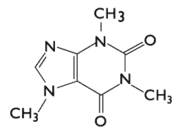
Caffeine moleculeCaffeine – a molecule I first discovered as an important and psychoactive component of Coca Cola – is a drug with which I’ve had a great deal of experience over the last twelve years or so. By 7th grade, the last year of elementary school, I had already started to enjoy mochas and chocolate covered coffee beans. When I was in 12th grade, the last year of high school, I began consuming large amounts of Earl Gray tea, in aid of paper writing and exam prep. During my first year at UBC, I started drinking coffee. At first, it was a matter of alternating between coffee itself and something sweet and delicious, like Ponderosa Cake. By my fourth year, I was drinking more than 1L a day of black coffee: passing from French press to mug to bloodstream in accompaniment to the reading of The Economist.
Unfortunately, coffee doesn’t seem to work quite right in Oxford. My theory is that it’s a function of the dissolved mineral content in the water, which is dramatically higher than that in Vancouver.

As I understand it, caffeine has a relatively straightforward method of operation. After entering the body through the stomach and small intestine, it enters the bloodstream and then binds to adenosine receptors on the surface of cells without activating them. This eventually induces higher levels of epinephrine release, and hence physiological effects such as increased alertness. Much more extensive information is on Wikipedia.

From delicious chocolate covered coffee beans used to aid wakefulness during the LIFEboat flotillas to dozens of iced cappuccinos at Tim Horton’s with Fernando while planning the NASCA trip, I’ve probably consumed nearly one kilogram of pure caffeine during the last decade or so. After the two remaining weeks of this term – and thus this academic year – have come to a close, my tight embrace with the molecule will probably loosen a bit.

Towel Day: a curious but entertaining memorial

Fans of Douglas Adams may appreciate being reminded that this coming Thursday, the 25th of May, is Towel Day. Created after his untimely death in 2001, the event is meant to mark his memory with good humour of the kind always demonstrated in his writing. Learning about his death was personally difficult in a way I don’t think it could have been for almost any other stranger.

For the unfamiliar, Douglas Adams is was best known as a British writer of science fiction, though much of his career was devoted to radio work. His most famous books are the Hitchhiker’s Guide to the Galaxy “trilogy in five parts” and the Dirk Gently’s Holistic Detective Agency duo (trio if you include the unfinished segment in The Salmon of Doubt). If you haven’t read them, you are a lucky person: you have the chance to spend the next few days experiencing something exceptionally amusing for the first time. Personally, I’ve read them at least six times each – including going through most of Dirk Gently’s aloud.

On the matter of why towels are relevant, I shall quote a section from the first Hitchhiker’s book:

A towel, [the Guide] says, is about the most massively useful thing an interstellar hitch hiker can have. Partly it has great practical value – you can wrap it around you for warmth as you bound across the cold moons of Jaglan Beta; you can lie on it on the brilliant marble-sanded beaches of Santraginus V, inhaling the heady sea vapours; you can sleep under it beneath the stars which shine so redly on the desert world of Kakrafoon; use it to sail a mini raft down the slow heavy river Moth; wet it for use in hand-to-hand-combat; wrap it round your head to ward off noxious fumes or to avoid the gaze of the Ravenous Bugblatter Beast of Traal (a mindboggingly stupid animal, it assumes that if you can’t see it, it can’t see you – daft as a bush, but very ravenous); you can wave your towel in emergencies as a distress signal, and of course dry yourself off with it if it still seems to be clean enough.

More importantly, a towel has immense psychological value. For some reason, if a strag (strag: non-hitch hiker) discovers that a hitch hiker has his towel with him, he will automatically assume that he is also in possession of a toothbrush, face flannel, soap, tin of biscuits, flask, compass, map, ball of string, gnat spray, wet weather gear, space suit etc., etc. Furthermore, the strag will then happily lend the hitch hiker any of these or a dozen other items that the hitch hiker might accidentally have “lost”. What the strag will think is that any man who can hitch the length and breadth of the galaxy, rough it, slum it, struggle against terrible odds, win through, and still knows where his towel is is clearly a man to be reckoned with.

Carrying a towel on Thursday is therefore both a way of marking your appreciation for Adams’ work and setting yourself out as the very example of a well-prepared and capable individual. Given that the world’s most interesting English-speaking people are all either present or future appreciators of Adams, you stand a decent chance of meeting some new ones if you carry the towel obviously enough.

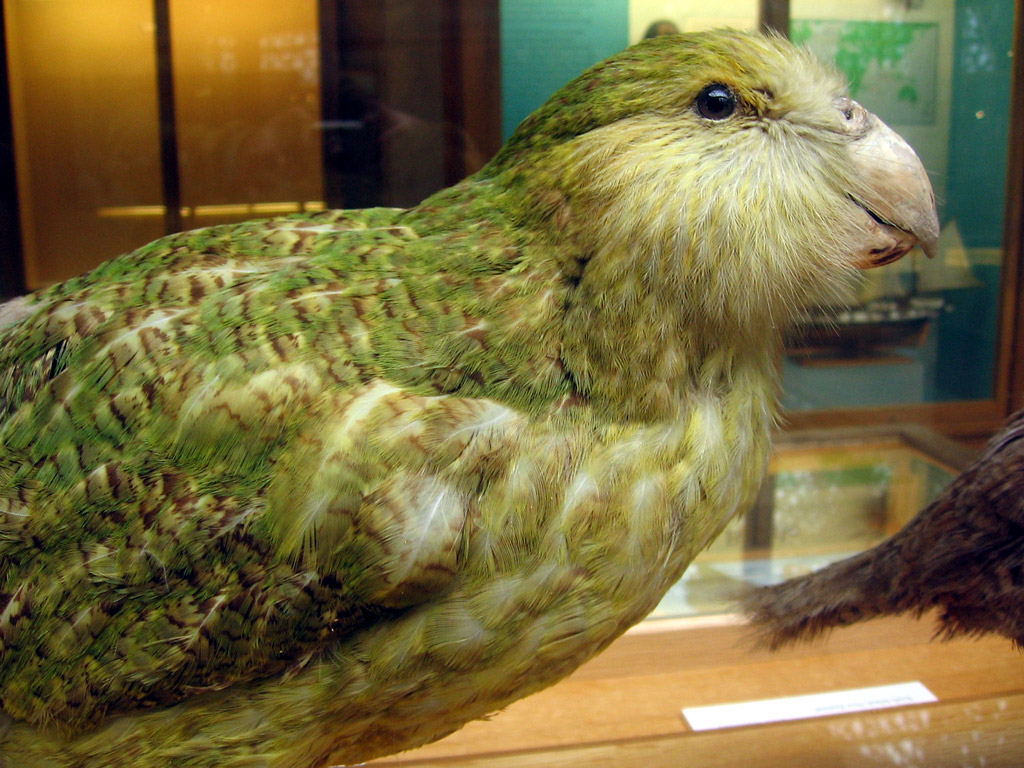
To the many people who have already read and loved the books listed above, I recomment having a look at the lesser known non-fiction book Last Chance to See: written about a slightly mad worldwide expedition in search of endangered species, including the Kakapo parrot of New Zealand, Komodo Dragons, and Chinese river dolphins. The book has all of Adams’ characteristic wit, as well as quite a forceful conservation message. The fact that he climbed Mount Kilimanjaro while wearing a rhino costume definitely contributed to my own ambition to find my way to that lofty summit. Widely available in the UK, you may need to order the from here or wander through a few libraries to find a copy in the US or Canada.

Also worth noting is that Douglas Adams had one of the most amazing funerals possible: with the eulogy delivered by Richard Dawkins and a live performance of Wish you Were Here by David Gilmour of Pink Floyd. That’s my favourite song of theirs, as well. Dawkins also wrote a touching article in The Guardian praising Adams.

Bug report thread

Found something wrong with a sibilant intake of breath or an associated site I run? Please report it here. I try to get everything operating as well as I possibly can, but there will always be oversights. Right now, when people report them, they tend to do so all over the place and it’s hard to keep track.

This covers all types of errors not directly related to a particular post: compatibility errors, access errors, formatting errors, etc.

Those who contribute here will earn fame and fortune. Well, my appreciation, at least. If you posted an unresolved issue on another post, please copy it over here.

Many thanks.

[Update: 8 October 2006] This is no longer the proper location for reporting bugs. From now on, use the bug reporting page within the Sindarkwiki.

[Update 2 September 2010] Unfortunately, due to terribly spam problems, I had to lock down the wiki. Now, only authorized users can edit it. For anybody else, please post any problems with the site on this comment thread.

Sony Fontopia headphones are very poorly made

The Sony Fontopia MDR-EX71SL headphones that I got on the 3rd of March are already broken. This is hardly what you expect from a pair that cost more than $50. The cladding around the wires is made of really cheap plastic that bunches up and breaks down: even under the kind of delicate use to which I have been subjecting them. I was warned too late about how poor their durability is. It makes quite the contrast with the pair of Fontopias I bought in 2000, and which only failed immediately before I bought these ones.

I will try to have them replaced under the warranty. Otherwise, I am soliciting opinions about earbuds that have comparably good sound and dramatically better construction.

WordPress has taken over

As you can see, going directly to www.sindark.com will not take you directly to the new WordPress blog. I encourage people to register for a user account that will let you comment without leaving you information, and perhaps let me do fancier things later.

If you want the RSS feed, it is: http://www.sindark.com/feed/ Please update your BlogLines accounts and such. There is even a feed for comments, at: http://www.sindark.com/comments/feed/

Should you want to look at it, the old blog is still available at www.sindark.com/blogger/. It probably will not be updated any longer. I will not be moving the post pages or archive pages for the moment, so Google searches leading to entries on the old blog should still work.

WordPress migration timeline

Beta period:

  1. Finish fixing photos
  2. Change colour of links and the search box
  3. Generally finish tweaking template
  4. Add Google Analytics tracking to WP blog
  5. Find a photo upload plugin akin to the Upload Photo tool in Blogger

Release:

  1. Shift Blogger blog to www.sindark.com/blogger
  2. Redirect from www.sindark.com to www.sindark.com/wp/
  3. Update any technorati style services as needed
  4. Discontinue updates to Blogger blog
  5. Fix internal links within WP blog

Optional:

  1. Fix internal links within Blogger blog

If done properly, this will only really cause turmoil for the search engines, which should be able to sort it out in a few months, regardless. Relatively non-technical people who have seen the new WP site detect little difference, as it is. Is there anything else I am missing here?

WordPress migration, photo trouble

As part of the process of Blogger to WordPress migration, I really need a plugin that acts like the ‘Image Upload’ function in Blogger. It needs to be able to take a 1024×768 JPG file, upload it to my web server, create a thumbnail in one of a few sizes, and insert the thumbnail into my post as a link to the large version.

Does anyone know of such a plugin, or another easy way to do this?

Also, how can I configure WordPress to automatically mail new posts to an email account? I like having all my blog entries in my GMail account so that I can search them from within it.

Another strange and very annoying bug: on all posts that begin with photos immediately followed by a heading in bold, the WordPress version leaves an open [strong] tag that makes everything below it formatted in bold. I can fix them manually, but there are dozens and dozens.

Pondering content-management options

Increasingly, I feel the desire to be able to do more sophisticated things with this blog. For instance, I would appreciate being able to organize posts by category, as well as being able to send and receive trackbacks. I would also like to be able to host my own content management system, so I won’t be out in the cold whenever Blogger (frequently) goes down. Having the ability to establish user profiles with differing access levels also has some appeal, given the wide variety of people who read this blog, and the varied purposes for which they do. At this stage, I should probably have a blogroll, as well.

The most comprehensive (and expensive) option is to switch to MovableType, which would cost about $200 – the amount I pay for four years of hosting at sindark.com. TypePad – also from six apart – is about $50 a year. WordPress is an appealing free option, seemingly used by many of the better blogs I read. I like that it is licensed under the GPL.

The most important consideration is ease of continuity. I need to shift more than 1200 posts (not all of them obviously part of a sibilant intake of breath), along with hundreds of images. Also, any viable transfer will need to include the automatic alteration of internal links to reflect the new structure. Clearly, it’s not a project to be taken on during the middle of a term.

Has anyone made the transition from Blogger to WordPress or TypePad? If so, how difficult did you find it? Were you able to broadly transfer things automatically, or did it take a lot of manual tweaking? Also, what made you decide to switch and for what reasons are you either glad or regretful about doing so.


In the interests of fair and comprehensive reporting, I should disclose that special forces teams are already operating inside WordPress – reconnoitering and marking targets to be followed up upon later. The important thing to to have a really sound post-migration plan in place, reducing the possibility of some kind of data insurgency from posts or other components that prove resistant to being integrated into the new order.