The Obameter

This strikes me as a rather good idea:

PolitiFact has compiled about 500 promises that Barack Obama made during the campaign and is tracking their progress on our Obameter. We rate their status as No Action, In the Works or Stalled. Once we find action is completed, we rate them Promise Kept, Compromise or Promise Broken.

So far, the site lists seven promises as ‘kept.’ Of course, new events may alter how Obama should and will implement his platform. Also, there is some subjectivity in assessing whether a promise has been kept. Still, it will be interesting to see how his score develops.

Obama on car standards and building upgrades

Tristan Laing in window light

Quite sensibly, Barack Obama has directed the Environmental Protection Agency (EPA) to overturn the Bush-era decision denying California the right to set higher automobile standards. This is clearly a big deal, since the Californian market is large and important enough to affect the decisions of carmakers around the world.

Higher vehicle standards are definitely a good idea, but another initiative may have a stronger long-term impact: upgrading the energy efficiency of 75% of federally-owned buildings. Not only will the direct effects be large, but such an investment might drive overall green construction investment.

Of course, the real challenge will be getting an effective carbon pricing system into operation. Hopefully, the tougher decisions will be tackled with the same urgency as these easier ones.

The fossil fuel industry has no long-term future

Ice on a window

Oil, gas, and coal are all – at best – transitional sources of energy, moving us from muscle power to truly renewable non-muscle sources. To see why, there are two basic facts that must be appreciated:

  1. Only finite quantities of fossil fuels exist on Earth.
  2. Burning all the world’s coal, oil, and gas would cause catastrophic climate change.

It is as though there are two hard barriers to fossil fuel use out there. What we don’t know is how far away they are. The first fact is self-evident, though it is more nuanced to say that there is a finite quantity of fossil fuel that can be extracted for any particular level of price or effort. If oil cost $10,000 a barrel, we would be able to find some pretty unusual geological sources for it. The second fact arises from the basics of climatic science. We have already increased atmospheric concentrations of greenhouse gasses from about 290 parts per million (ppm) to 385 ppm. Continuing to run our economy as we have been (bigger every year, and largely powered by coal, oil, and gas), that figure will be approaching 1000 ppm by the end of the century. Based on the climatic sensitivity estimates of the IPCC and Met Office, that would likely produce 5.5 to 7.1 ° C of warming by 2100, with more to follow afterwards. That would be utterly catastrophic for humanity, quite possibly threatening our ability to endure as a species. We will either stop using fossil fuels, or we will die in the process of trying to burn them all. Due to lags in the climate system, we just might be able to burn them all and leave it to another generation to suffer the fatal consequences.

A useful analogy is that of a factory worker taking methamphetamines to stay awake. This is essentially what all of society is doing with fossil fuels: giving ourselves an unsustainable jolt that gets things moving faster. Of course, extended and heavy use of amphetamines will eventually kill you. If that lethal toxic effect is likely to be achieved before you run out of pills, you are presented with a barrier just as impassable and just as real as the difficulty of their eventual and total depletion.

As such, those who invest in fossil fuel infrastructure and equipment and processes that depend on fossil fuels need to appreciate that this is an industry that will need to peak and then be wound down, even though oil, gas, and coal remain in the ground to be extracted. Greater efficiency of use and technologies like carbon capture and storage can somewhat extend the timeline across which that will need to occur. All the same, a world with a stable climate will be a world that does not use fossil fuels for energy. If we want that stable climate to be one compatible with human welfare, civilization, and prosperity, we must hope that it is established sooner rather than later.

[Update: 8 March 2010]. BuryCoal.com is a site dedicated to making the case for leaving coal, along with unconventional oil and gas, underground.


Closing Guantanamo and reining in the CIA

Not only did Barack Obama order the closure of Guantanamo Bay, he has also ordered that secret CIA prisons be closed and that the CIA must abide by the Army Field Manual in conducting interrogations. The latter decision closes a serious loophole in the human rights policies of the previous administration.

While there are a lot of tricky decisions left to be made about exactly how the prisons will be closed, who will be tried, who will be released, and where, this is a major step towards American rehabilitation in the eyes of the world. Hopefully, this will underline the fact that the Bush policies on torture and imprisonment were an aberration from the overall American approach. Of course, their injustice could be highlighted all the more effectively through the prosecution of some of the people who illegally implemented and oversaw them to begin with.

Obama and the ‘war on drugs’

Beer glass

America’s spectacularly ineffective domestic drug policies have not succeeded in any of their aims, except perhaps keeping large numbers of law enforcement personnel employed. They do not help addicts, who would almost certainly be better off treated as sick than criminal. They haven’t reduced the strong linkages between drugs and organized crime. Further, they have helped to create and perpetuate some of the worst racial divides in America: most notably, by imprisoning large numbers of black men for crimes that those with better lawyers and backgrounds would walk away from with fines or community service. A transition towards harm reduction policies, coupled with judicial and police reform, seems to have promise for mitigating both the harmful effects of drugs themselves and those of past drug policies.

Given his background – working as a community organizer in Chicago, as well as his personal experience with drugs – it would be surprising if Obama turned out to be another drug warrior, pushing for abstinence and brandishing harsh jail sentences. At the same time, the drug issue is clearly not one that he can afford to focus his attention upon. It will be very interesting to see whether drug policy is an area where Obama will be able to inject a little sense, or whether urgent demands elsewhere will leave it languishing in the lamentable state it acquired during the Bush years.

Subsidizing Mackenzie Valley gas

Emily Horn in reflected window light

It is hard to read the decision of the current government to support the Mackenzie Valley gas pipeline as anything aside from a disappointment. To begin with, it was inappropriate to have the decision announced by the minister of the environment. After all, he should be the one in cabinet demanding that the environmental impacts of the plan be fully investigated. Secondly, it seems inappropriate to offer such aid while the Joint Review Panel is still examining the likely social and economic impacts of the plan.

If we are going to successfully address climate change, we are going to need to leave most of the carbon trapped in the planet’s remaining fossil fuels underground. By the same token, we will need to develop energy sources that are compatible with that goal. At this juncture in history, I can see the case for providing government funding to help with the up-front capital costs of concentrating solar, wind, or geothermal plants. It is a lot harder to see why oil and gas companies that were recently pulling in record profits deserve financial support at taxpayer expense.

Greyhound’s pointless security

On my way to Toronto last weekend, I was subjected to Greyhound’s farcical new ‘security screening.’

People were made to stand in a line in front of a roped-off area. One by one, they removed metal objects from their pockets, placed them in a dish, and had a metal detecting wand waved over then. At the same time, another security person spent a couple of second poking around in the top few inches of the person’s carry-on bag. The person then entered the roped-off area, carrying their carry-on and checked bags with them, waiting for the rest of the line to be processed.

Ways to get a weapon past this system:

  • Get one not made of metal, like a ceramic knife, and put it in your pocket.
  • Put it below the top few inches of your backpack.
  • Hide it inside a hollowed-out book, inside a piece of electronics, etc.
  • Put it in your wallet. With a wallet that can take an unfolded bill, you could fit a few flat throwing knives.
  • Tape it to the bottom of your shoe.
  • Put it in your checked baggage, remove it while you are waiting on the far side of the line.
  • Go through the screening, ask to go use the bathroom, collect your weapon, and return to the ‘screened’ area.
  • Before entering the bus station, hide a weapon outside, in the vicinity of where your bus will pull in. Pick it up before boarding.
  • Use a weapon that is both deadly and innocuous: such as a cane, umbrella, or strong rope.
  • Get on at a rural stop, instead of Ottawa.
  • Get on in Toronto, instead of Ottawa, since they don’t seem to be bothering with the screening there.
  • Etc.

I am not saying that people should actually bring weapons on Greyhound buses, and I am most certainly not saying that Greyhound should tighten their security to make these tactics useless. I am saying that the new screening is nothing more than security theatre. It does nothing to make Greyhound buses safer, though it will add needlessly to ticket prices.

On a more philosophical level, it also perpetuates the kind of low-freedom, security-obsessed society that many people seem to expect. It would be far healthier to acknowledge that the world contains risks while also noticing that countermeasures to reduce those risks have real costs, whether in hard currency or in convenience or privacy or liberty.

Polar bears and climate change

Tristan's friend Nell in a beret

From the media coverage, it seems that attitudes at Canada’s recent polar bear summit clustered around two positions: that climate change is a profound threat to the species, and that the species has been doing well in recent times. While a lot of the coverage is focused on supposedly different kinds of knowledge, I am not sure if there is much factual disagreement here. The issue isn’t the current size of the polar bear population, or how it compares with the size a few decades ago. The issue is whether a major threat to the species exists and can be anticipated, as well as how polar bear populations ought to be managed in the next while.

One quote from Harry Flaherty, chair of the Nunavut Wildlife Management Board, seems rather telling:

[Researchers and environmental groups] are using the polar bear as a tool, a tool to fight climate change. They shouldn’t do that. The polar bear will survive. It has been surviving for thousands of years.

This sits uneasily beside the knowledge that atmospheric concentrations of carbon dioxide are already higher than they have been in more than 650,000 years and they are on track to become much higher still. In short, because of climate change, the experience of the last few thousand years may not be very useful for projecting the characteristics of the time ahead. This is especially true in the Arctic, given how the rate of climatic change there is so much higher than elsewhere.

On the matter of polar bear hunting, the appropriate course of action is less clear. Hunting in a way that does not, in and of itself, threaten polar bear populations might be considered sustainable. At the same time, it might be viewed as just another stress on a population that will be severely threatened by climate change. Given the amount of climate change already locked into the planetary system, it does seem quite plausible that the polar ice will be gone in the summertime well before 2100 and that all of Greenland may melt over the course of hundreds or thousands or years. I don’t know whether polar bears would be able to survive in such circumstances. If not, the issue of how many of them are to be hunted in the next few decades isn’t terribly important. It seems a bit like making an effort to ration food on the Titanic.

If we want to save polar bears, we will need to make an extremely aggressive effort to stabilize climate. Meeting the UNFCCC criterion of “avoiding dangerous anthropogenic interference in the climate system” would not be enough, since polar bears are likely to be deeply threatened by a level of overall change that doesn’t meet most people’s interpretations of that standard.

The oil sands and Canada’s national interest

This Globe and Mail article on the oil sands and the new Obama administration makes a very dubious assertion: namely, that it is unambiguously in Canada’s interests for the oil sands to keep expanding and feeding US energy demands. It argues that, while most of Obama’s cabinet seems serious about restricting greenhouse gas emissions, General James Jones “may turn out to be Canada’s best ally,” because he supports the continued use of fuel from the oil sands.

In the long run, I think Canada will be better off if most of that carbon stays sequestered as bitumen an boreal forest. It certainly isn’t in Canada’s interests to see a delayed transition to a low-carbon economy in the US, given the extent to which it would increase the probability of abrupt, dangerous, or runaway climate change.

This is a case where short-term economic incentives have been trumping those based on a long-term view and a risk weighted analysis. In that sense, the oil sands boom is quite a lot like the housing boom that is in the process of unraveling worldwide. Canada would do well to accept how newly prominent environmental concerns (coupled with less access to capital) should combine to curtail the oil sands initiative before it becomes even more harmful.

[Update: 8 March 2010]. BuryCoal.com is a site dedicated to making the case for leaving coal, along with unconventional oil and gas, underground.

Obama and Israel-Palestine

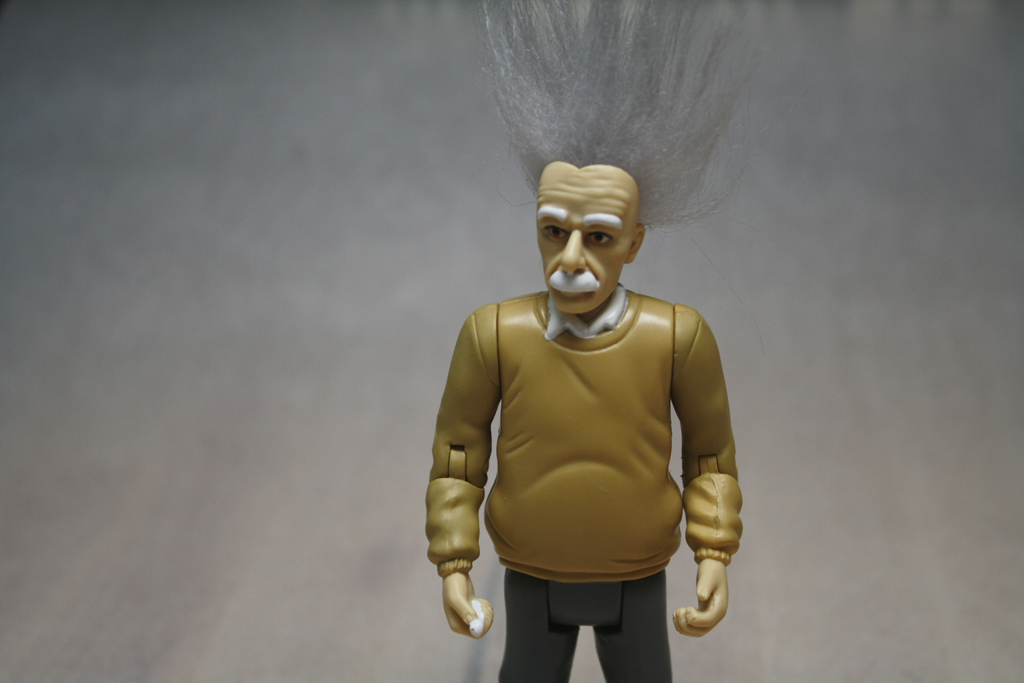
Einstein doll

Expectations of the Obama administration could hardly be higher: both in terms of domestic promises (fixing health care, etc) and international ones (fixing climate change, etc). Successfully addressing a good number of the pressing issues facing the United States would make for a very successful presidency. That being said, it may be overly optimistic to hope for progress on all fronts. There is only a limited amount of time even the most energetic and capable administration has, and there is always the need to negotiate with other actors, most importantly the US Congress. In the end, it is better to make strong and durable progress on a smaller subset of issues than to make a weak and easily reversible advance on many more.

It seems to me that one area where Obama should consider limiting his engagement is the Israeli-Palestinian dispute. The region is undeniably in crisis, and there is most definitely both severe human suffering and considerable injustice ongoing. That being said, it is not clear that Obama could contribute usefully to reducing either, and it is clear that attempts to do so are time consuming and costly, in terms of political capital and energy. In order to get a sense of that, one need only look at the amount of effort some past presidents have put into the region (Clinton and Carter, for instance) and the very limited long-term results from them doing so.

If anything, the current situation in Israel and Palestine is even more fractured, unstable, and volatile than has been the norm in recent decades. In addition, the political leadership of the Palestinians is fractured in two, with Hamas openly advocating a second Holocaust. Given the absence of a situation conducive to negotiations, the prospects to do anything more than somewhat reduce the level of violence are very limited. With that in mind, perhaps the best course for Obama to take would be to send a respected special envoy to the region to try and contribute positively, while devoting his own time and attention elsewhere. Certainly, it makes sense to reiterate the most important points for an eventual resolution (a two state solution, demolishment of many settlements, an end to violence, etc), but pushing to achieve these things within the next four years seems far more likely to be a distraction than a path to accomplishment.

To those who will disagree, I ask what specifically Obama should do to produce outcomes that are better than those that would be achieved through the approach above.