Voting is inadequate

A post over on Shifting Baselines got me thinking about voting. People often equate voting with being politically engaged and argue that falling voter turnouts demonstrate the failure of democracy. While that is a potentially valid interpretation, another possibility comes to mind. Namely, that the complexity of contemporary policy issues makes voting for a political party too blunt an instrument by which to express yourself meaningfully.

When voting in the Canadian system, the first question is whether or not to vote for a hopeless party. That is to say, anybody except the Liberals, Conservatives, NDP, and perhaps the Bloc depending on where you are. Voting for a different party – or for one of these in a riding where that party has no chance of winning – does demonstrate a kind of clear political preference. Even so, the message is ambiguous. For example, it is unknowable to anybody else whether you voted Green because you like their policies the most, because you liked their local candidate most, or because you wanted to protest the behaviours or policies of alternative parties. The Green Party, other parties, the media, and others could interpret your action in any of those ways. As such, your vote hasn’t sent a clear message to anybody.

Voting for a party with a chance of winning is even more problematic, when it comes to determining what your vote implies. Voting Liberal in a riding that pitches a plausible Liberal candidate against a plausible Tory candidate suggests that, overall, you prefer either that particular candidate or the Liberal Party in general. You may actually support more Conservative Party policies than Liberal ones but have certain points of irreconcilable disagreement with the Tory platform. You might prefer NDP policy on every front, but have chosen to reduce the chances of a Conservative victory, rather than expressing that preference in a more obvious way.

In short, it is impossible for anybody other than a particular voter to derive much information from a vote. Voting isn’t useless in this situation: it allows the electorate to turf out particularly corrupt, scandal-laden, or incompetent legislators or parties. What it does not do is allow voters to meaningfully signal their policy preferences through the act of voting alone. In situations where no plausible candidate is overtly unacceptable and all available choices are flawed, choosing not to vote may not be a betrayal of democratic ideals. Indeed, the idea that 100% voter turnout would be the epitome of a politically engaged populace really misses the extent to which a choice that is so constrained is so devoid of politically actionable content.

Being politically engaged thus means being much more overt about supporting or opposing particular policies during the time between elections: writing letters or articles, attending protests, calling your Member of Parliament, etc, etc. By itself, voting gives you very little meaningful voice in a Parliamentary democracy. Contributing to the political life of your state simply requires a lot more effort.

Political markets

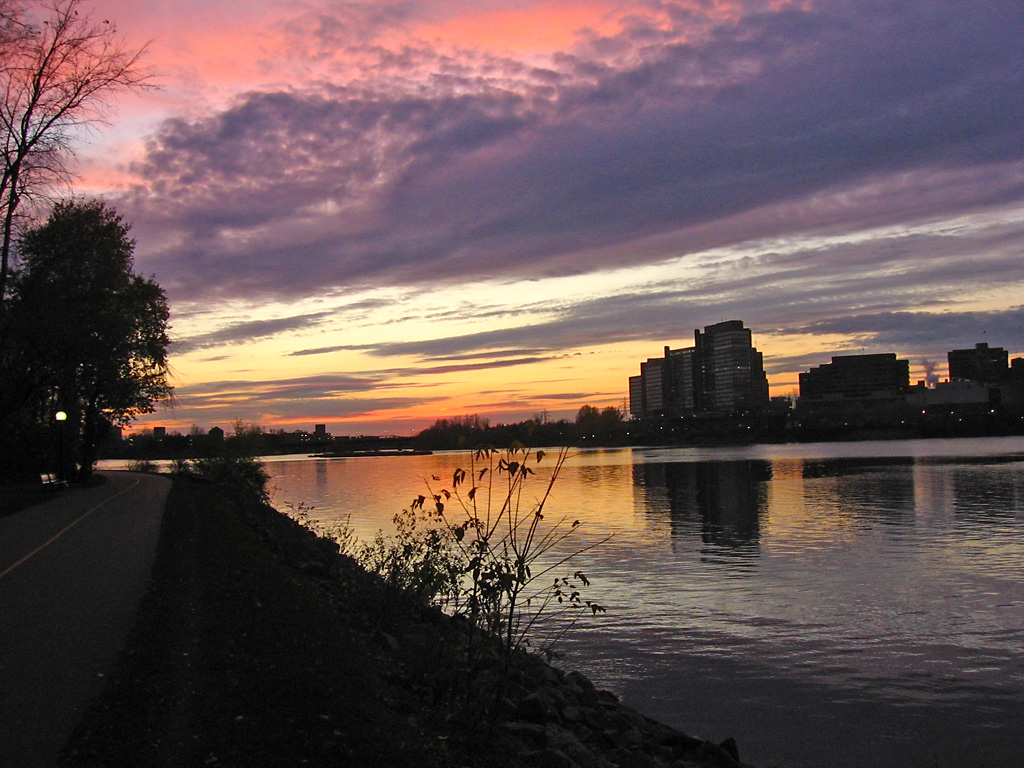
Ottawa River sunset

One interesting way to try to predict political outcomes is to allow people to bet on who will win and look at the odds that emerge. A number of sites are allowing people to do this for the 2008 American presidential election, with interesting results. Such sites include InTrade, Iowa Electronic Markets, and Casual Observer.

One option is to buy the right to $100 if a particular candidate wins the presidency. The cost of such a contract is reflective of the market’s presumed probability of that candidate winning. Here are some of the most recent prices:

Hillary Clinton: $46.70
Rudy Giuliani: $17.00
Mitt Romney: $9.50
Al Gore: $7.00
Barack Obama: $6.70
John McCain: $3.50

Newt Gingrich: $0.10

The people betting on Al Gore are probably wasting their money, given his repeated assertions that he will not be running. It will be interesting to see how the figures change when more candidates drop out, people choose running mates, and the two parties finally decide upon their nominations.

It is also possible to bet on which party will win the presidential vote. Bets on the Democrats are selling for $63.00. The Republicans only cost $36.40, reflecting much lower expectations about their probable electoral success.

Today’s best biofuel: Brazilian ethanol

Montreal graffiti

Many people see biofuels as a promising replacement for oil in transportation applications. Indeed, being able to replace the oil that contributes to climate change and must often be imported from nasty regimes with carbon-neutral fuels from domestic crops has a great deal of intuitive appeal. For this process to be worthwhile, however, there is a need to consider both life-cycle energy usage and net carbon emissions.

A study conducted in 2004 by Isaias de Carvalho Macedo at the University of Brazil focused on the production of ethanol from Brazilian sugarcane. This is considered by the majority of commentators to be the most energy efficient source of biofuel currently available. This is because most Brazilian sugarcane requires no irrigation and must only be ploughed up and replanted once every five years. The Macedo study found that producing a tonne of sugarcane requires 250,000 kilojoules of energy. This represents the need for tractors, fertilizers, and other elements of modern mechanical farming. The ethanol from one tonne of sugarcane contained 2,000,000 kilojoules of energy. Furthermore, the plants that produce it burn bagasse (the pulp left over when sugarcane has the sugar squeezed out) and can contribute net electricity to the grid. Corn ethanol (the kind being heavily subsidized in the United States) takes about as much energy to grow as is ultimately contained in the fuel.

In terms of net carbon emissions, cane ethanol is also fairly good. Using one tonne of ethanol instead of the amount of gasoline with the same energy content produces 220.5 fewer kilograms of carbon dioxide, when all aspects of production and usage are considered. Burning one litre of gasoline produces about 640 grams of carbon dioxide. Since ethanol has about 25% less energy than gasoline, the relevant comparison is between 1,000 kilograms of ethanol and 750 kilos of gasoline. The gasoline would emit 460 kilos of carbon dioxide, while the ethanol would emit 259.5 kilos.

This is an improvement over the direct use of fossil fuels, but not a massive one. The Macedo study concludes that widespread ethanol use reduces Brazilian emissions by 25.8 million tonnes of carbon dioxide equivalent per year. Their total carbon emissions from fossil fuels are about 92 million tonnes per year – a figure that increases substantially if deforestation is included.

The conclusion to be drawn from all of this is that ethanol – even when produced in the most efficient way – is not a long-term solution. Producing 259.5 kilos of carbon is more sustainable than producing 460, but it isn’t an adequate reduction in a world that has to cut from about 27 gigatonnes of carbon dioxide equivalent to five. Bioethanol may become more viable with the development of cellulosic technology (a subject for another post), but is certainly no panacea at this time.

References:

[Update: 8:54am] The above numbers on carbon dioxide emissions produced by gasoline per kilometre are disputed. If someone has an authoritative source on the matter, please pipe up.

Carbon pricing and GHG stabilization

Montreal graffiti

Virtually everyone acknowledges that the best way to reduce greenhouse gas emissions is to create a price for their production that someone has to pay. It doesn’t matter, in theory, whether that is the final consumer (the person who buys the iPod manufactured and shipped across the world), the manufacturer, or the companies that produced the raw materials. Wherever in the chain the cost is imposed, it will be addressed through the economic system just like any other cost. When one factor of consumption rises in price, people generally switch to substitutes or cut back usage.

This all makes good sense for the transition from a world where carbon has no price at all and the atmosphere is treated as a greenhouse gas trash heap. What might become problematic is the economics of the situation when greenhouse gas emissions start to approach the point of stabilization. If we get 5 gigatonnes collectively, that means a global population of 11 billion will get about half a tonne of carbon each.

Consider two things: Right now, Canadian emissions per person are about 24.3 tonnes of CO2 equivalent. Cutting to about 0.5 is a major change. While it may be possible to cut a large amount for a low price (carbon taxes or permits at up to $150 a tonne have been discussed), it makes sense that people will be willing to pay ever-more to avoid each marginal decrease in their carbon budget. Moving from 24.3 tonnes to 20 might mean carrying out some efficiency improvements. Moving from 20 to 10 might require a re-jigging of the national energy and transportation infrastructures, carbon sequestration, and other techniques. Moving from 10 to 0.5 may inevitably require considerable personal sacrifice. It certainly rules out air travel.

The next factor to consider if the effect of economic inequality on all this. We can imagine many kinds of tax and trading systems. Some might be confined to individual states, and others to regions. It is possible that such a scheme would eventually be global. With a global scheme, however, you need to consider the willingness of the relatively affluent to pay thousands or tens of thousands of dollars to maintain elements of their carbon-intensive lifestyles. This could mean that people of lesser means get squeezed even more aggressively. It could also create an intractable problem of fraud. A global system that transfers thousands of dollars on the basis of largely unmeasured changes in lifestyle could be a very challenging thing to authenticate.

These kinds of problems lie in the relatively distant future. Moving to a national economy characterized by a meaningful carbon price is likely to take a decade. Moving to a world of integrated carbon trading may take even longer. All that admitted, the problems of increasing marginal value of carbon and the importance of economic inequality are elements that those pondering such pricing schemes should begin to contemplate.

Mosul Dam

The Mosul Dam is one element of Iraq’s infrastructure that has survived the war so far, but which is apparently seriously threatened. Because was built on gypsum, which dissolves in water, it threatens to fail catastrophically as the result of small initial problems. A report from the US Army Corps of Engineers warned that the dam’s failure would drown Mosul under nearly 20m of water and parts of Baghdad under 4.5m. The 2006 report explained that:

In terms of internal erosion potential of the foundation, Mosul Dam is the most dangerous dam in the world. If a small problem [at] Mosul Dam occurs, failure is likely.

According to the BBC, the US Special Inspector General for Iraq Reconstruction (SIGIR) has stated that the dam’s foundations could give away at any moment. The report from the Corps of Engineers states that the dam’s failure could cause 500,000 civilian deaths. General David Petraeus and the American Ambassador to Iraq have both written to the Iraqi government expressing their severe concern.

The dam is 2,100m across and contains 12 billion cubic metres of water. It generates about 320 MW of electricity. Previous attempts at addressing the gypsum issue seem to have been botched. According to the Washington Post “little of the reconstruction effort led by the U.S. Embassy has succeeded in improving the dam.” Stuart Bowen, the special inspector general reviewing the efforts has said that “[t]he expenditures of the money have yielded no benefit yet.”

Today, the Iraq government has officially stated that concerns about a possible collapse are misplaced and that the dam is constantly monitored. Ongoing actions include reducing the amount of water in the reservoir and pumping grout into the foundation (a liquefied mixture of cement and other additives). Work is meant to begin next year on wrapping the foundations in concrete to make them more secure.

Obviously, a catastrophic dam collapse is the last thing Iraq needs. Hopefully, the dam will hold until a sensible refit can be carried out, and it will not find any wayward coalition munitions or insurgent bombs helping it towards disintegration.

Index of climate posts

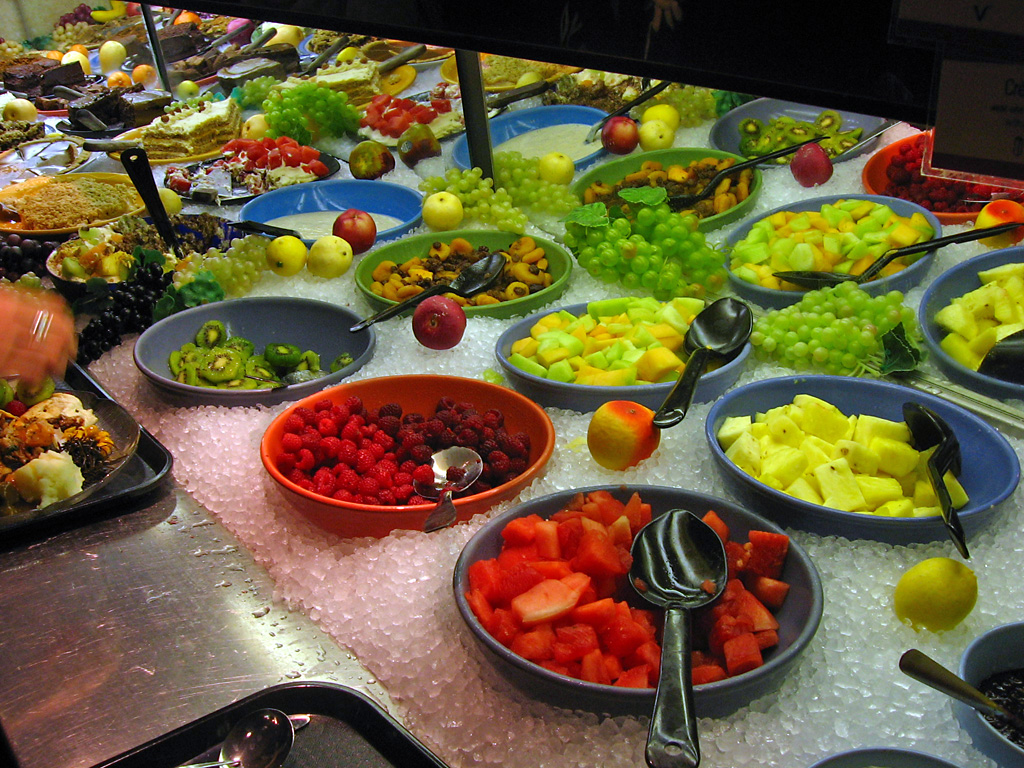
Fruit bar

For the last while, my aim on this blog has been both to entertain readers and to provide some discussion of all important aspects of the climate change problem. To facilitate the latter aim, I have established an index of posts on major climate change issues. Registered users of my blog can help to update it. Alternatively, people can use comments here to suggest sections that should be added or other changes.

The index currently contains all posts since I arrived in Ottawa. I should soon expand it to cover the entire span for which this blog has existed.

Geoengineering: wise to have a fallback option

Sailing ship graffiti

Over at RealClimate they are talking about geoengineering: that’s the intentional manipulation of the global climatic system with the intent to counteract the effects of greenhouse gasses. Generally, it consists of efforts to either reflect more solar energy back into space or enhance the activity of biological carbon sinks. It has been mentioned here before.

The fundamental problem with all geoengineering schemes (from sulfite injections to plankton tubes to giant mirrors) is that they risk creating unexpected and negative side-effects. That said, it does seem intelligent to investigate them as a last resort. Nobody knows at what point critical physical and biological systems might tip into a cycle of self-reinforcing warming. Plausible examples include permafrost melting in the Arctic, releasing methane that heats the atmosphere still more, or the large-scale burning of tropical rainforests, both producing emissions and reducing the capacity of carbon sinks. If physical or biological systems became net emitters of greenhouse gasses, cutting human emissions to zero would not be sufficient to stop warming; it would simply continue until the planet reached a new equilibrium.

Given linear projections of climate change damages, we would probably be wisest to heed the Stern Review and spend adequately on mitigation. Given the danger of strong positive feedbacks, it makes sense to develop some fallback options for use in desperate times. It seems to me that various forms of geoengineering should be among them. Let us hope they never need to be used.

Mechanism design theory

Window and shadows in Montreal

The 2001 Nobel Prize in Economics was awarded to George Akerlof, Michael Spence, and Joseph Stiglitz for their work on asymmetric information. One standard assumption in neoclassical economic models is that all participants in a transaction have ‘perfect information’ about the goods or services being exchanged. The field of behavioural economics is now seeking to deepen such models, so that they can better reflect the kind of dynamics that exist in real markets.

Asymmetric information is a key factor in the functioning of real markets. When you buy a used car, the person at the lot probably knows more about it than you do. The salesperson knows more about used cars in general, may have spoken with the original seller, and may have investigated this specific car. Conversely, you know more about your health risks than your health insurer (provided you live somewhere where health insurance is private). You might know, for instance, that all your relatives die of heart attacks on their 35th birthdays and that you personally drink 3L of whisky per day.

This year’s Nobel Prize in Economics was awarded to Leonid Hurwicz, Eric S. Maskin, and Roger B. Myerson for their work on mechanism design theory. The basic purpose of the theory is to deal with problems like those of assymetric information: take a situation where people would normally have an incentive to behave badly (lie, cheat, etc) and establish rules to make it no longer in their interest to do so. We might, for instance, require used car salespeople to provide some sort of guarantee, or we might allow health insurers to void the policies of individuals who lie about their health when premiums are being set.

Reading about mechanism design feels a bit like watching engineers try to create religious commandments. This section from the Wikipedia entry illustrates what I mean.

Mechanism designers commonly try to achieve the following basic outcomes: truthfulness, individual rationality, budget balance, and social welfare. However, it is impossible to guarantee optimal results for all four outcomes simultaneously in many situations.

While it does seem a bit counterintuitive to try to achieve these things through economic means, it is probably more durable than simply drilling axioms into people’s heads. That is especially true when the counterparty they are dealing with is some distant corporation; people who would never cheat someone standing right in front of them are much more willing to deceive or exploit such a distant and amorphous entity.

‘Enduring Freedom’ and Afghanistan

Montreal graffiti

Last night, I got into a brief conversation about the Taliban. It reminded me of a statement quoted at a Strategic Studies Group meeting I attended in Oxford:

People are being very careful not to be against the Taliban and ‘keep the balance’ so that they will not be punished for helping foreigners when the Taliban return.

-Police commander, Kandahar

This idea raises an important question about longevity. If the Taliban can outlast any deployment NATO will be able to maintain, it becomes essential to produce a government that will be able to hold its own against them in the long term. Otherwise, we are just delaying the transition back to Taliban rule. While I am definitely not an expert on the military or political situation in Afghanistan, it does not seem like the present Karzai government has that kind of capability, in the absence of direct military support from NATO.

The question thus becomes what, if anything, NATO can do to produce a (preferably democratic) Afghan government capable of enduring after their withdrawal. If that does not prove possible, the question becomes what we are hoping to achieve in Afghanistan, and whether any lasting good will result for the population as the result of the initial displacement of the Tabliban and the Al Qaeda elements they were supporting.

The foolishness of the International Space Station

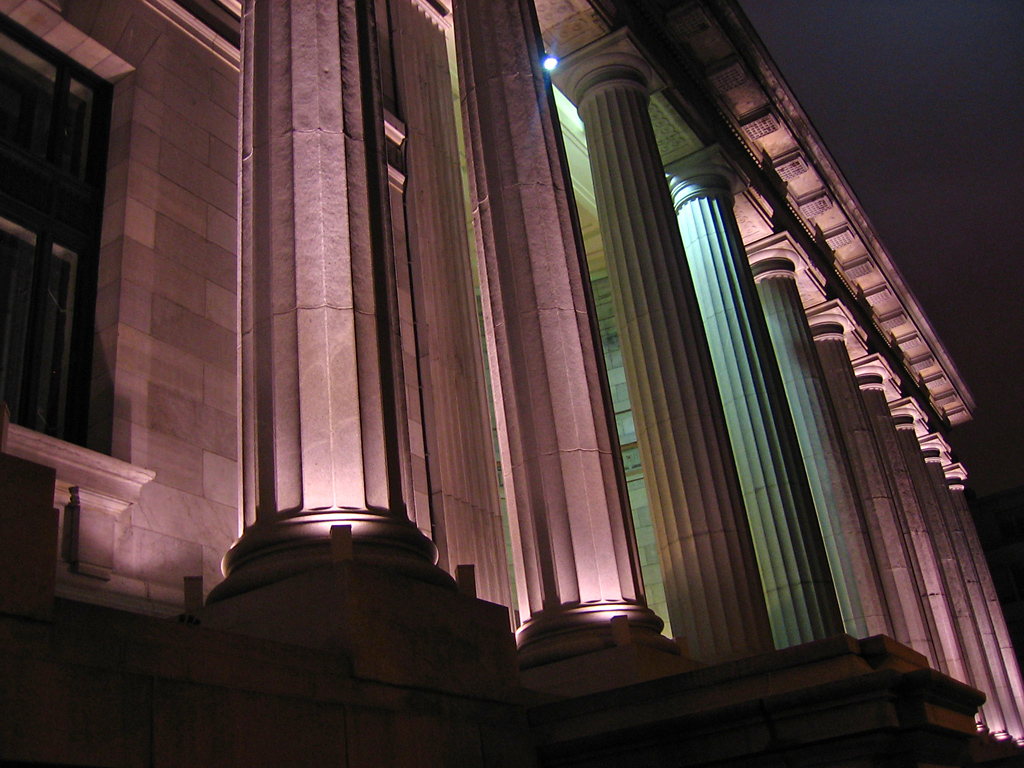
Montreal courthouse

On Tuesday, the space shuttle launched once again on a mission to add another piece to the International Space Station (ISS). As I have said before, it is a needlessly dangerous, unjustifiably expensive, and rather pointless venture. The science could be equally well done by robots, without risking human lives, and without spending about $1.3 billion per launch (plus emitting all the greenhouse gasses from the solid rocket boosters and related activities).

More and more, the ISS looks like a hopeless boondoggle. The lifetime cost is being estimated at $130 billion, all to serve a self-fulfilling mandate: we need to put people into space to scientifically assess what happens when we put people into space. Furthermore, the window between the completion of the ISS in about 2012 and the potential abandonment of the station as soon as 2016 is quite narrow. Robert Park may have summed up the whole enterprise best when he remarked that:

“NASA must complete the ISS so it can be dropped into the ocean on schedule in finished form.”

Normally, I am a big supporter of science. I think funding the International Thermonuclear Experimental Reactor and Large Hadron Collider is wise; these machines will perform valuable scientific research. Likewise, I support the robotic work NASA does – especially when it comes to scientists looking down on Earth from orbit and providing valuable research and services. I support the James Webb telescope. I also support the idea that NASA should have some decent plans for dealing with an anticipated asteroid or comet impact. The ISS, by contrast, is a combination between technical fascination lacking strategic purpose and pointless subsidies to aerospace contractors.

Of course, the Bush plan to send people to Mars is an even worse idea with higher costs, more risk, and even less value.