
It seems that after a recent computer failure the Hubble Space Telescope is back online in a backup mode.
Category: Space and flight
Posts about flying in atmospheres, or outside of them
Secrecy and safety in complex technological systems
In Rhodes’ energy history I came across an interesting parallel with the 1988 STS-27 and 2003 STS-107 space shuttle missions, in which the national security payload and secrecy in the first mission may have prevented lessons from being learned which might have helped avert the subsequent disaster. Specifically, the STS-27 mission was launching a classified satellite for the US National Reconnaissance Office (NRO) and as a result they were only able to send low-quality encrypted images of the damage which had been sustained on launch to the shuttle’s thermal protective tiles. Since the seven crew members of STS-107 died because the shuttle broke up during re-entry due to a debris impact on the shuttle’s protective surfaces on launch, conceivably a fuller reckoning of STS-27 might have led to better procedures to identify and assess damage and to develop alternatives for shuttle crews in orbit in a vehicle that has sustained damage that might prevent safe re-entry.
Rhodes describes Belorussian leader and nuclear physicist Stanislav Shushkevich’s analysis of the Chernobyl disaster:
By Shushkevich’s reckoning, the Chernobyl accident was a failure of governance, not of technology. Had the Soviet Union’s nuclear power plants not been dual use, designed for producing military plutonium as well as civilian power and therefore secret, problems with one reactor might have been shared with managers at other reactor stations, leading to safety improvements such as those introduced into US reactors after the accident at Three Mile Island and the Japanese reactors after Fukushima.
Rhodes, Richard. Energy: A Human History. Simon & Schuster, 2018. p. 335
This seems like a promising parallel to draw in a screenplay about the STS-27 and STS-107 missions.
Lego Hubble Space Telescope from shuttle and Women of NASA sets
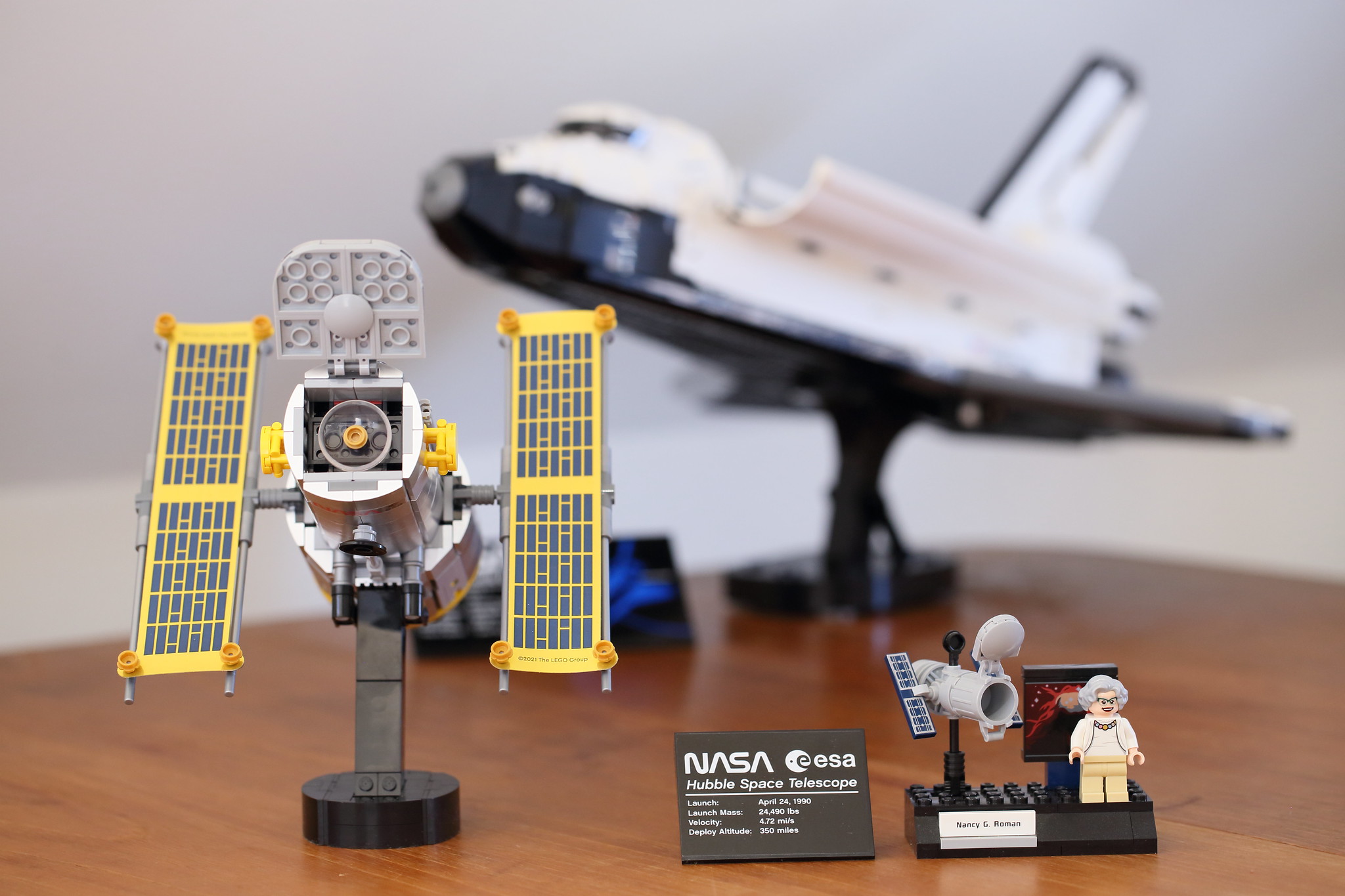
Lego Space Shuttle Discovery and shuttle from Women of NASA set
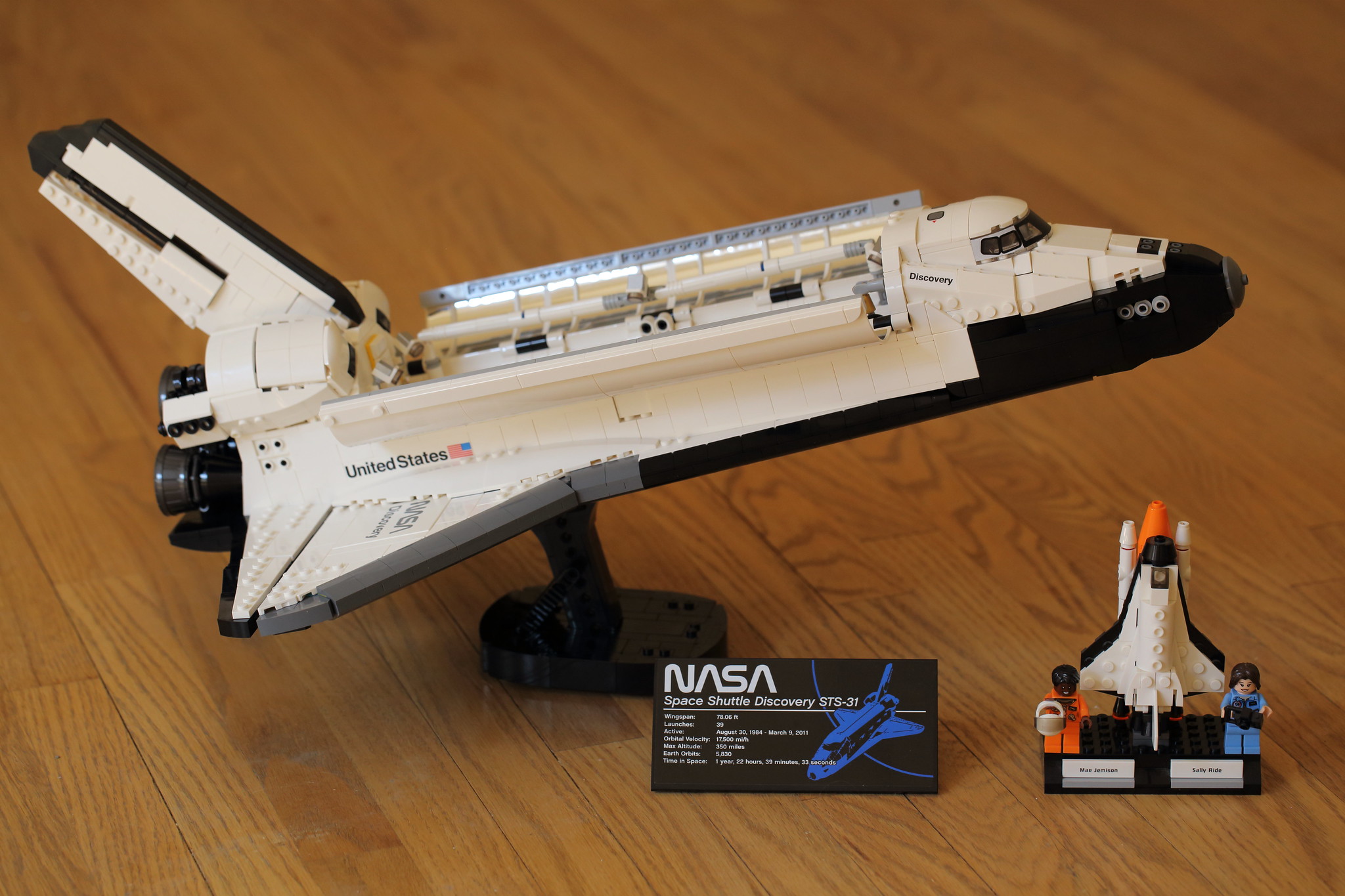
Lego Space Shuttle Discovery deploying Hubble Space Telescope
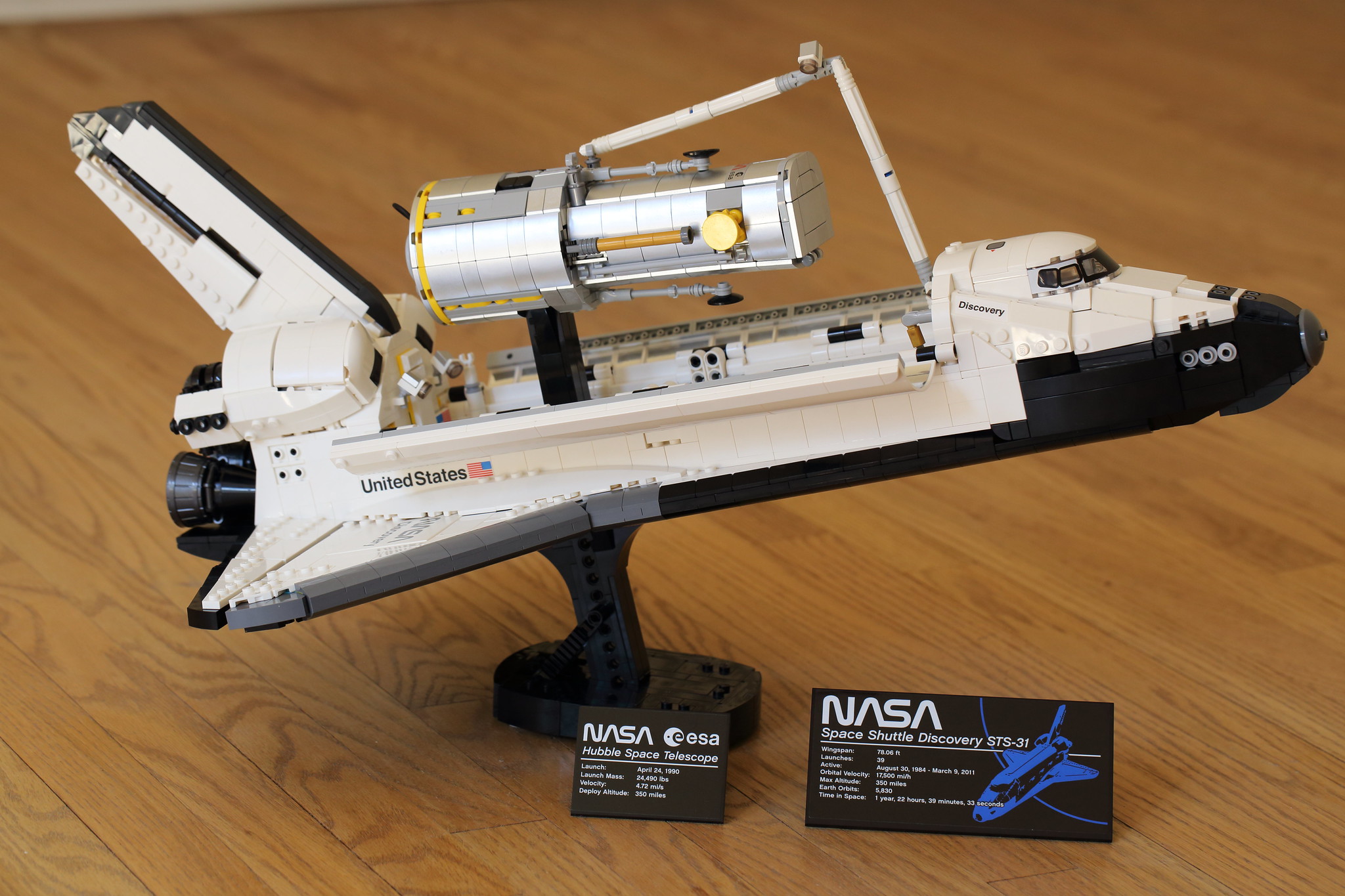
Lego Women of NASA
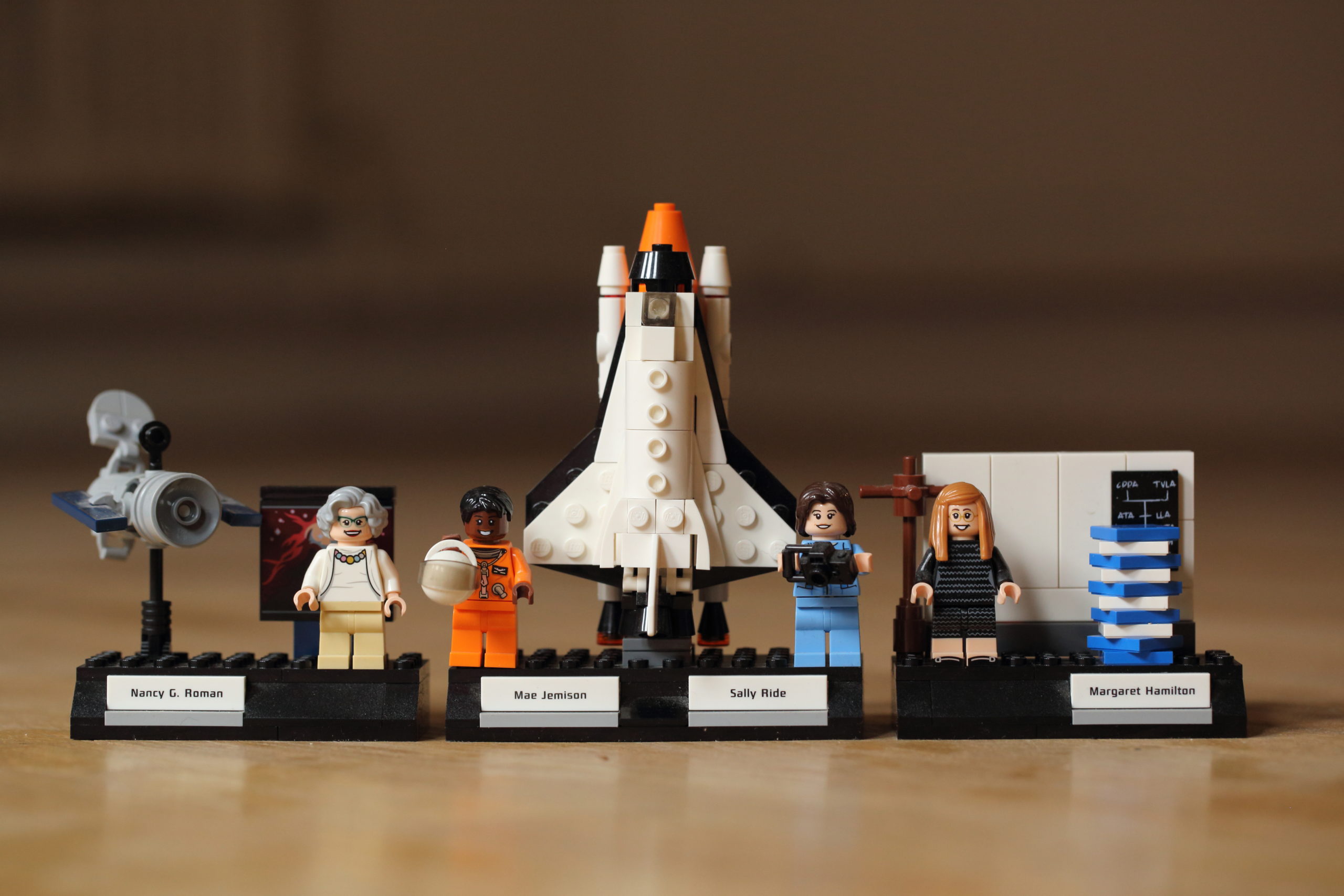
Nancy Grace Roman with the Hubble Space Telescope; Mae Jemison and Sally Ride with the Space Shuttle; and Margaret Hamilton with listings of the software she and her MIT team wrote for the Apollo Program
Waiting for my Lego shuttle
In part because of housing uncertainty — and mindful of George Monbiot’s excellent advice about true freedom arising from low living expenses “If you can live on five thousand pounds a year, you are six times as secure as someone who needs thirty thousand to get by” — I have been avoiding and minimizing taking on new physical possessions.
Nonetheless, with my interest in space and the Space Shuttle program specifically, I could not resist ordering Lego’s new Space Shuttle Discovery and Hubble Space Telescope set on the day of its release.
The Hubble is arguably the greatest scientific achievement of the Space Shuttle program and certainly one of the most powerful instruments humanity has ever created for understanding the vastness and history of our universe. The dimensions of the Hubble also did a lot to dictate the final size and configuration of the shuttle (less for the telescope itself, and more for the secret Earth-observing versions operated by the National Reconnaissance Office). Those design decisions, in turn, did much to shape the shuttle’s operational characteristics and history, including the design choices that contributed to the Challenger and Columbia losses.
The set will be fun to put together, and I should be able to find somewhere to display it even if I end up living in a tiny space.
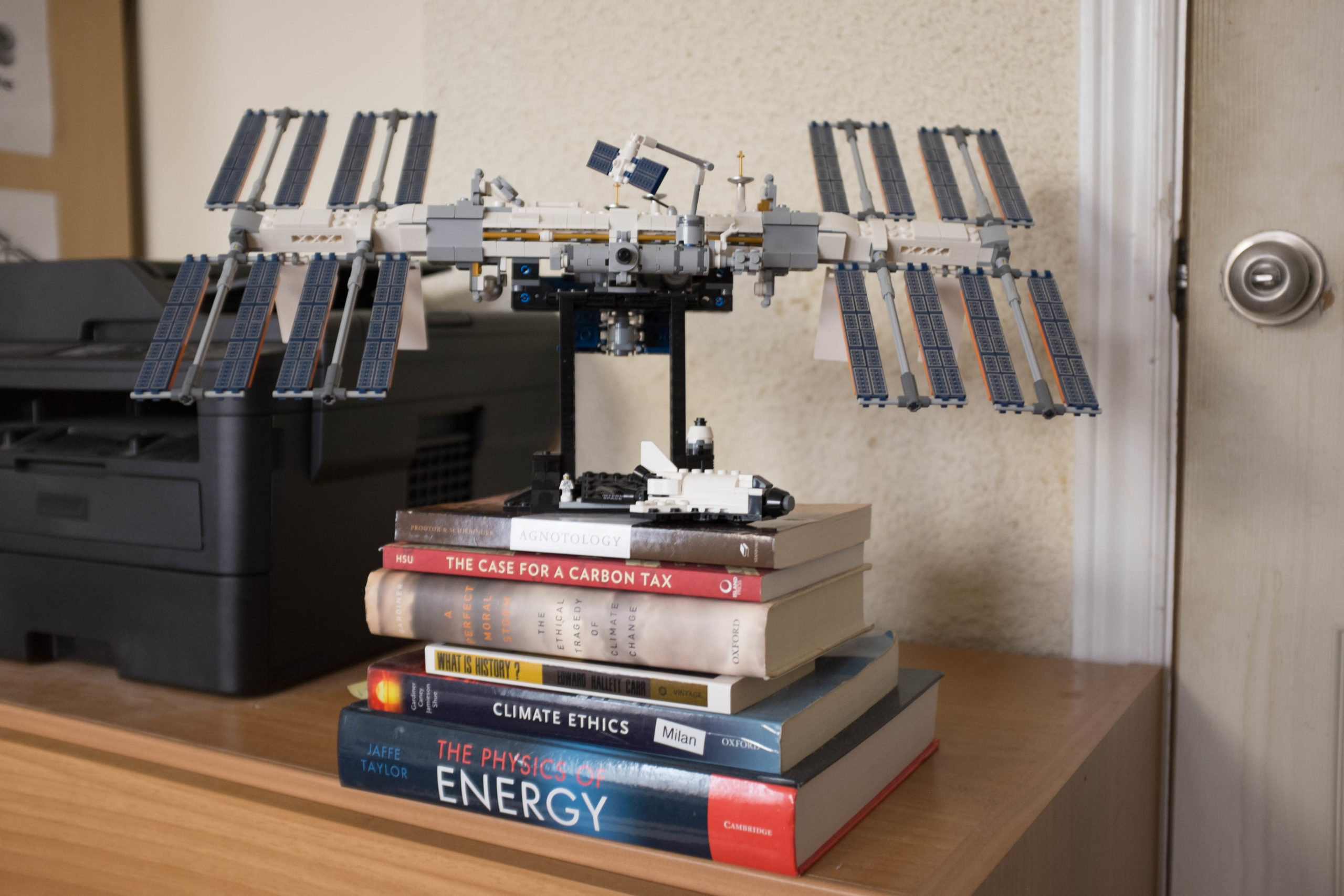
Lego ISS
Starlink in the Canadian north
SpaceX’s Starlink satellite constellation promises to provide low-latency high-bandwidth internet to anyone on the planet.
In November or so, the company announced a beta release in Canada. Some northern communities are already being connected, notably Pikangikum in northwestern Ontario with the charitable assistance of FSET Information Technology and Service.
With my brother Mica starting to teach at the Chief Jimmy Bruneau School in Behchoko, about 125 km down the highway from Yellowknife, we both wondered whether the satellite internet package might be useful for them.
So far, I have found three explanations for why Starlink isn’t available in the region yet:
- SpaceX doesn’t yet have the necessary satellites to support access from that latitude
- SpaceX needs ground stations in areas where there will be customers
- Starlink needs to negotiate with Innovation, Science and Economic Development Canada (ISED) for use of the Ka radio band
I have reached out to bureaucrats and people in ministers’ offices to try to get authoritative information on what the issue is.
This post — based around this map — shows a station in Kaparuk, Alaska. I sent a message to the map’s creator for verification, since I can’t see how satellites going from pole to pole could cover Alaska but not the Canadian territories. This post shows a Starlink ground station in St. John’s Newfoundland.
If you have any relevant information please contact me. If you are also looking into getting a Starlink connection in northern Canada I don’t have any further information for now but I will provide updates when I do.
SpaceX and US crewed launch capability
Since STS-135 in 2011 and the retirement of the Space Shuttle, the only way for human beings to reach orbit has been a Soyuz launch from Baikonur. On May 27th, SpaceX is scheduled to launch the first crew from the US in nine years.
There are good reasons to be skeptical about human spaceflight (especially by useless space tourists, or ballastronauts), but there is something useful and unifying about the International Space Station as a science platform and humanity’s only effort at a permanent human settlement off the Earth.