Tackling coal emissions

Speaking of taking action against climate change, a strong case can be made that the single most important thing we can do to reduce the chances of catastrophic climate change is to phase out coal. Coal is the one fossil fuel that is definitely abundant enough to cause catastrophic climate change. As such, we need to:

  1. Prevent the construction of new coal plants that emit carbon dioxide, including in the developing world
  2. Convert existing coal plants to run on biomass, greatly reducing their net climate impact
  3. Encourage the early shutdown of existing coal facilities, partly through a carbon price
  4. If possible, develop carbon capture and storage technologies

What actions can we as individuals undertake to advance the decline of emissions-intensive coal, both in Canada and around the world?

Is runaway climate change possible? Hansen’s take

Back in 2008, I wrote about whether ‘runaway’ climate change might be possible on Earth. At one point, Venus had liquid water on its surface. Then, the sun grew brighter and Venus warmed. Its oceans evaporated and huge amounts of carbon dioxide (CO2) got baked out of the crust. The heat made the water break up into hydrogen and oxygen: the oxygen bonded with carbon to make more CO2, and much of the hydrogen escaped into space. Venus became permanently hostile to life, with surface temperatures of 450°C.

Could burning all of Earth’s fossil fuels produce the same outcome?

Some people take comfort from the fact that there have been times in the history of the planet when greenhouse gas concentrations were much higher than now. The world was very different, but there was no runaway greenhouse and life endured. James Hansen devotes the entire tenth chapter of Storms of My Grandchildren to considering whether this assessment is valid. Three things give him pause:

  1. The sun is brighter now than it was during past periods with very high greenhouse gas concentrations. The 2% additional brightness corresponds to a forcing of about 4 watts per square metre and is akin to a doubling of CO2 concentrations.
  2. For various reasons, the greenhouse gas concentrations in past hot periods may not have been as high as we thought.
  3. We are introducing greenhouse gases into the atmosphere far more quickly than natural processes ever did. This might cause fast (positive) feedback effects to manifest themselves forcefully, before slower (negative) feedback effects can get going.

He also explains that the sharp warming that took place during the Paleocene–Eocene Thermal Maximum (PETM) were not caused by fossil fuels (which remained underground), but rather by the release of methane from permafrost and clathrates. If human emissions warm the planet enough to release that methane again, it could add a PETM-level warming on top of the warming caused by human beings.

Hansen’s conclusions are, frankly, terrifying:

The paleoclimate record does not provide a case with a climate forcing of the magnitude and speed that will occur if fossil fuels are all burned. Models are nowhere near the stage at which they can predict reliably when major ice sheet disintegration will begin. Nor can we say how close we are to methane hydrate instability. But these are questions of when, not if. If we burn all the fossil fuels, the ice sheets almost surely will melt entirely, with the final sea level rise about 75 meters (250 feet), with most of that possibly occurring within a time scale of centuries. Methane hydrates are likely to be more extensive and vulnerable now than they were in the early Cenozoic. It is difficult to imagine how the methane clathrates could survive, once the ocean has had time to warm. In that event a PETM-like warming could be added on top of the fossil fuel warming.

After the ice is gone, would Earth proceed to the Venus syndrome, a runaway greenhouse effect that would destroy all life on the planet, perhaps permanently? While that is difficult to say based on present information, I’ve come to conclude that if we burn all reserves of oil, gas, and coal, there is a substantial chance we will initiate the runaway greenhouse. If we also burn the tar sands and tar shale, I believe the Venus syndrome is a dead certainty.

To re-emphasize the point, averting catastrophic or runaway climate change is the most important ethical and political task for those alive now, even if most politicians don’t yet realize it or don’t yet understand what that involves.

That last line also offers something to throw back, next time someone says the billions of dollars of revenue from exploiting the oil sands are simply too valuable to not collect.

Climate change: the solar hypothesis

There are some who assert that the global warming that has been observed on all continents is caused by changes in the output of the sun. This hypothesis does not stand up to scrutiny in either the short or the long-term, as made clear in James Hansen’s Storms of My Grandchildren as well as published papers of his, including “Target Atmospheric CO2: Where Should Humanity Aim?.” It is important to remember that what follows does not come from climate models, but rather from data on the paleoclimatic history of the planet, collected from ice and ocean cores and other sources.

The 12-year solar cycle

The sun dims and brightens across a twelve year cycle. While each square metre of the planet absorbs about 240 watts of sunlight averaged over day and night, the recorded magnitude of these cycles is about 0.2 watts. Not all forcings have the same effect on the climate. Taking the forcing caused by carbon dioxide (CO2) as the baseline, it can be calculated that the solar cycle forcing has an effective strength of between 0.2 and 0.4 watts. The climate forcing due to the 1750-2000 CO2 increase is about 1.5 watts. Other human-caused changes, such as adding methane, nitrous oxide, CFCs, and ozone to the atmosphere, make the total greenhouse gas forcing about 3 watts.

Each year, we are increasing the concentration of carbon dioxide in the atmosphere by about 2 parts per million (ppm). That equates to an effective forcing of 0.03 watts. As such, seven years of carbon dioxide emissions at the current level would offset the cooling effect of the sun being at the lowest ebb of its cycle. As a consequence, human-made climate change now overwhelms this natural cycle.

Long-term trends

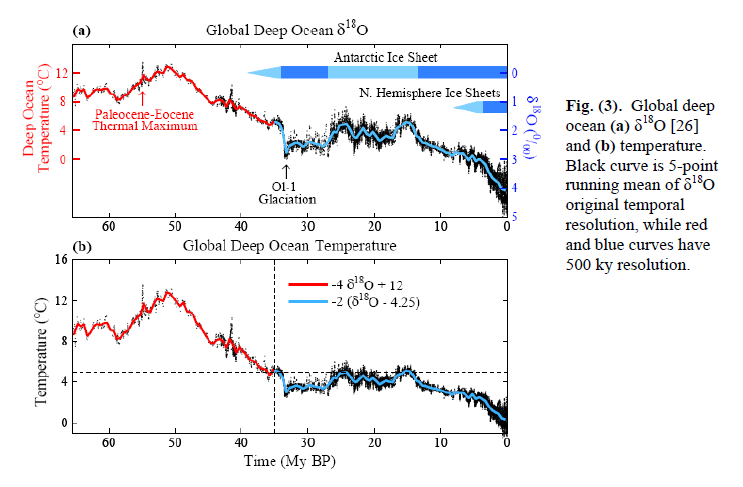
Longer-term data also shows how greenhouse gases are more important to the climate than changes in solar output. The geological era spanning the last 65 million years is called the Cenozoic. Over that time, the sun’s output has increased by 0.4%. This corresponds to an increase of about 1 watt since the dinosaurs died out. Over this time period, the planet has actually cooled considerably: with mean global temperature more than 8°C higher at the end of the time of the dinosaurs. This, despite the increased solar output.

Over this timespan, the atmospheric concentration of CO2 has ranged from between 1,000 and 2,000 ppm during those hot years of the early Cenozoic and as little as 170ppm during recent ice ages. This range corresponds to a climate forcing of about 12 watts: at least ten times more than the forcings from the sun and from changes in the configuration of continents. As Hansen says: “It follows that changing carbon dioxide is the immediate cause of the large climate swings over the last 65 million years.”

The following diagram deserves consideration:

It shows temperatures from the Cenozoic: data that was obtained by examining the shells of microscopic animals called foraminifera. It shows the slow decline in mean global temperature over the whole span, as well as evidence that abrupt changes in temperature are possible.

What we’re doing now

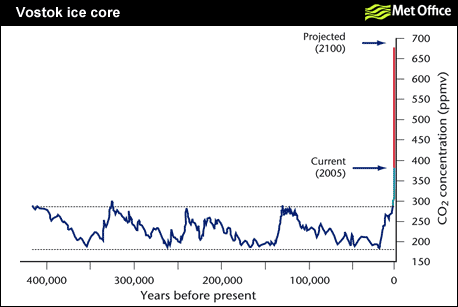
One thing to consider is that if we keep increasing our greenhouse gas emissions, we will push carbon dioxide concentrations way above pre-industrial levels and into the range that existed at the beginning of the Cenozoic. While the cooling trend that we are living at the end of happened over tens of millions of years, temperature increases of well over 4°C could occur by the end of the century, with further warming beyond. While life has had ages to adapt to climate change as it was occurring before humanity, we are presiding over a spike in temperatures and greenhouse gas concentrations.

This graph shows CO2 concentrations from the last 400,000 years, as measured in ice core samples:

Atmospheric concentration of CO2

Keeping all that in mind, it seems very sensible to be working hard to keep the tip of that spike from getting too high. We should be worrying about our emissions, not blaming the warming we have observed on the sun and moving on.

Why we cannot wait for climate science to be completely settled

To those who say that we should just wait and see how the climate changes, without taking action to reduce our emissions, I offer the following analogy:

To assume the best possible outcome, and to make plans only on that basis, is akin to the United States assuming they would be ‘greeted as liberators’ in Iraq. Even if things had unfolded that way, it would have been irresponsible to make plans only on that basis. If they had drawn up contingency plans, and taken pre-emptive actions, on the grounds that serious opposition was possible, nobody would have thought that behaviour inappropriate, even if the outcome ended up being better than feared.

Arguing that we should wait for the science to be completely settled means waiting until climate change has actually taken place. Given the complexity of the climate system, and the fact that we only have one planet to work with, there is no way we can ever be 100% confident that our models and projections are correct. Therefore, to delay action until we have certainty is to delay action until it can no longer have any effect. It is akin to starting your contingency planning long after the war has ended.

LIDAR for wind turbines

This is a neat idea: wind turbines that use LIDAR (akin to RADAR, using light) to anticipate the strength of wind, and prepare for it in advance:

Dr Mikkelsen and his colleagues worked out that they could use lidar to scan incoming wind and determine how it was behaving before it struck the turbine. To try this idea out, they first placed lidar devices at the base of 120-metre-tall wind turbines at Hovsore, the Danish test site for such devices. The lidars scanned the approaching winds with a laser that produced infra-red light with a wavelength of 1.55 microns. Reflected light was detected by a device so sensitive that it could pick up one returning photon (the quantum-mechanical particles of which light is composed) out of every thousand billion fired by the laser. The device measured wind movement at 40, 60, 80, and 100 metres above the ground, and 100-200 metres in front of the turbine. The data it collected were then compared with wind measurements taken by cup anemometers (the sort that spin when struck by wind, to record its speed) in order to calibrate the lidar. That done, the computer which analyses the lidar data can be connected to the motors that adjust the pitch of the turbine blades, in order to maximise energy production and reduce damage.

Such technologies could help deal with minute-to-minute changes in wind speed, improving the reliability of wind farm output.

Four instruments, to understand aerosols

One of the enduring uncertainties about climate change is the importance of aerosols. Their chemistry and effect on the climate is complex. Some of them reflect sunlight immediately back into space, having a net cooling effect on the planet; others (like black carbon have a warming effect. Some aerosols interact with one another, and with other chemicals in the atmosphere, in ways that affect the climate. All of this ought to be better understood, if we want to understand how human activities (and natural phenomena) are affecting the climate, and so that we can prioritize on what sorts of emissions to reduce.

I was surprised to learn, from James Hansen’s recent book, Storms of My Grandchildren, that we have known since the 1970s what sort of instruments would be necessary to understand how aerosols affect the climate system, including whether their net effect is a warming or a cooling one. We need:

  1. A polarimeter, measuring the polarization of sunlight reflected off of aerosols
  2. An interferometer, measuring the infrared radiation being emitted by the Earth
  3. An instrument to measure the sun’s irradiance
  4. An instrument to measure aerosols and gases in the highest layers of Earth’s atmosphere, by observing the sun shining through them at sunlight and sunset.

The first two would have to be on the same small satellite. The other two would be on small satellites of their own. Together, these would allow us to determine the total forcing effect of aerosols on the climate.

The fact that we apparently aren’t rushing to get these devices built and launched has to be considered a massive failure of intelligence, far beyond the WMD-tomfoolery that preceded the Iraq war. These four instruments could be producing key data to let us understand our climate, at a time when we are running a dangerous global experiment on how it responds to our pollution.

Getting this data must become an international priority.

My fantasy climate change policy

Even once you have reached agreement that there must be a cost associated with dumping greenhouse gases in the atmosphere, there are countless ways in which you can choose to do so. Many different instruments could be combined in many different ways.

Some argue that the simplest policy that corrects for the market failure is the best. I think there are multiple interlinked market failures, which require multiple policies to correct them.

If I had the power to dictate a climate policy for a developed state, it would look something like this:

1) Ban coal

Coal has no place in our energy future, given the terrible climatic effects that would result from burning the world’s massive reserves of the stuff. As such, no new coal-fired facilities should be allowed. Existing facilities should be subjected to the same carbon pricing mechanism as the rest of the economy, with no refunds, exemptions, or special treatment.

If someone wants to build a coal-fired facility that captures and stores its greenhouse gas emissions, they can be free to do so, provided:

  1. The firm pays the full cost for the equipment;
  2. They demonstrate that the technology is safe and environmentally effective;
  3. They continue to pay the market price for any greenhouse gas emissions not captured.

In practical terms, the demand for subsidies may be impossible to resist. At the very least, they should be directed towards research and demonstration projects, not towards commercial ventures.

2) Set a hard cap

This could be done in either of two ways. You could calculate the quantity of emissions likely to be produced by burning a unit of any particular fuel, then cap how much can be extracted or imported. Alternatively, you could require permits for the emission of greenhouse gases and only sell a set number.

Some intermediate system could also be possible: with fuels capped upstream and certain emission-generating activities capped at the point of emission (such as cement production). The important thing is that the cap should include all activities that occur within a country, and which lead to greenhouse gas emissions. This would also include things like land use changes, as well as the emissions embedded in imports. The latter should be addressed with a carbon tariff applied at the border. This could be waived in the case of imports from states that have robust carbon pricing systems of their own.

To get the level for the cap, you would start by choosing an overall temperature target (such as keeping the increase to less than 2°C), then work out a fair way to distribute the global cap that generates between nations. Some kind of contraction and convergence approach would likely be the most fair, with emissions in rich states falling soonest and fastest, but with everyone eventually reaching carbon neutrality.

3) Auction all permits

The revenue from the production/import/emission permits should be used in several ways. Firstly, some should be recycled back to taxpayers. In the event that refunds are granted for children, the level of the benefit should be capped at two per family, as an incentive to constrain population growth in emissions-intensive societies.

Some of the income should be used for basic research into low-carbon technologies, including renewable forms of energy, air capture of greenhouse gases, etc. Some could also be used for feed-in tariffs, to encourage the deployment of zero-carbon forms of energy.

4) Establish rising floor prices for transportation fuels

Fossil fuels were never going to last forever, and volatility in their prices leads to inefficiency and other problems.

As such, the government should set minimum prices for transportation fuels including diesel and gasoline. These should rise predictably over time. In the event that market prices are above the minimum, market prices would prevail. If those fall below the mandated minimum, the government would collect the difference.

The funds that accumulated would go into a fund from which payments would be made to all citizens, without ever drawing down the principle. That way, future generations will benefit from the bounty of fossil fuels, even if they live long after we’ve stopped using them.

5) Coordinate with other policies

Even all together, these approaches might not be sufficient to drive society aggressively in the direction of carbon neutrality. They could be supplemented with additional policies, as the effect of those already enacted becomes clearer. Also, the rate at which the overall cap is tightened could be increased or decreased, as necessitated by improved understanding of climate science or economics. Other policies and incentive schemes may well be necessary to ensure that the costs of complying with the declining cap do not become excessive. These would include support for research and international cooperation on zero-carbon energy projects.

Other existing policies that promote high emissions should be scrapped, such as subsidies to fossil fuel producers or emissions-intensive industries. Climate change must also be taken into account when making policy in areas like urban and transportation planning.

It would also be appropriate to participate in international efforts in areas like climate change adaptation and preventing deforestation.

India’s booming airlines

There are few elements of global climate change policy trickier than the relationship between climate change and development. Developing states insist that they have a right to get rich as fast as they can, with no particular heed paid to their greenhouse gas emissions. The figures for air travel in India show one small part of this:

According to the Airports Authority of India, the total number of domestic and international passengers was 10.7 million in October 2009, up 23% on the same month a year earlier.

Aircraft movements climbed by almost 59% in the same period.

And yet, if billions of people in the developing world follow a high-carbon path to development, the eventual emergence of catastrophic climate change is all but assured.

The future of human prosperity depends fundamentally on a stable climate. Achieving that end will require the recognition in developing states that they cannot pursue a high-carbon form of development indefinitely. To do so would be to grant a bit more wealth to those working now, while undermining the basis of prosperity for all future generations. At the same time, developed states need to show that it is politically and economically possible to have a society with rapidly falling emissions.

Renewables in Germany

Germany may be the developed country doing the most to expand the share of renewable energy it uses for electricity generation. Partly as a consequence of feed-in tariffs (where power distributors are obliged to buy energy from renewable facilities at set prices), renewables now represent about 15% of Germany’s electricity supply, much of that from wind. Since 2008, the quantity of solar energy employed in Germany has doubled.

Unfortunately, budgetary concerns may lead to the scaling back of the initiative. While it is fair enough to say that there are cheaper ways to fight greenhouse gas emissions than putting solar cells in Germany, it is also meaningful to highlight that the whole world will eventually need to transition to the use of renewable forms of energy. By helping to determine the political and technical measures necessary to do that, pioneers like Germany are doing a favour for those who will follow after.

For instance, feed-in tariffs are an important part of Ontario’s Green Energy Act.

The 2035 glacier claim and the IPCC

Previously, I described an asymmetry between the approach of climate change deniers and climate scientists, with the latter unwilling to retract any claims no matter how poorly justified or effectively rebutted. I think the instance with the IPCC and ‘poorly substantiated’ Himalayan glacier data is illustrative.

A failure to properly vet some information has come to light, and the IPCC has responded in an open and honest way:

In drafting the paragraph in question, the clear and well-established standards of evidence, required by the IPCC procedures, were not applied properly…

The Chair, Vice-Chair, and Co-Chairs of the IPCC regret the poor application of well-established IPCC procedures in this instance. This episode demonstrates that the quality of the assessment depends on absolute adherence to the IPCC standards, including thorough review of ‘the quality and validity of each source before incorporating results from the source in an IPCC report.

Climate deniers have jumped on all this to argue that it undermines the overall conclusions reached by the IPCC. Far from calling into question the overall scientific consensus, this willingness to concede errors demonstrates one of the reasons for which it is robust, namely a willingness to accept and respond to valid criticism. By contrast, deniers of various stripes tend to rub along well with one another, even when they have wildly different positions: that climate change isn’t happening, that it is actually beneficial, that it is caused by something other than greenhouse gases, etc.