How to be safe around cyclists

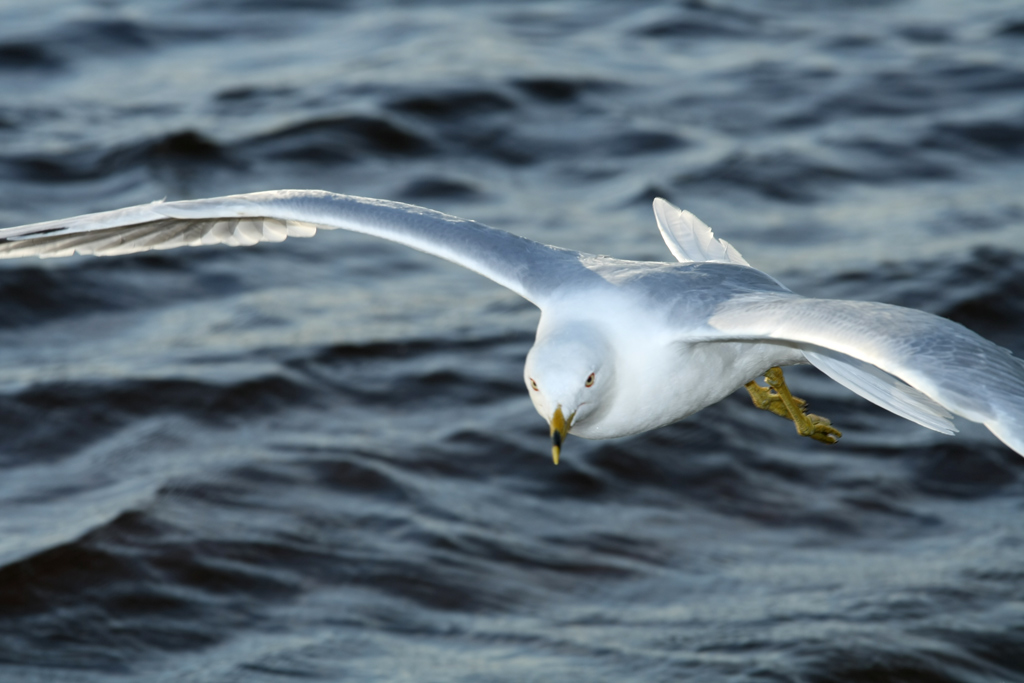
Gull (Larus), near the Ottawa River

In my own experience, the situations that endanger cyclists and the operators of other vehicles near them usually arise because of a lack of awareness about making movements perpendicular to the flow of traffic. In front of a cyclist, imagine a cylinder projected forward, with a length corresponding to the distance it would take that cyclist to stop safely. If you move into that cylinder, there is likely to be a collision.

To avoid this, I suggest two basic practices:

  1. Move in a clearly signaled and predictable manner. When making turns, always signal them. Do not make turns from lanes where it is not allowed. When opening a car door beside traffic, do so slowly. When changing lanes, signal and do it in a smooth and controlled way. When entering the flow of traffic, do so in a controlled and visible way.
  2. Check your blind spots, whenever moving more than half a lane to the left or right. In particular, make sure to check the blind spot to your right when you are making right hand turns (even if you are in the rightmost lane) and make sure to check your left blind spot when opening a car door beside traffic. Those two habits can help you avoid the two most common cyclist fatalities: the ‘door prize,’ which occurs when a car door gets opened in front of a cyclist and they collide, and the ‘right hook,’ where a vehicle makes a right turn in front of a cyclist and they collide.

None of this is to say that cyclists are not responsible for safety, as well. Indeed, all the behaviours above apply to cyclists dealing with other cyclists.

In addition to these, cyclists should be highly visible, signal clearly, obey traffic rules, and move in a clear and predictable manner. Don’t cycle within door range of parked cars and, if safety requires it, feel free to occupy a whole lane. Cars behind you might start going nuts, but it is a smarter option that cycling on some marginal pavement or in an unsafe position. For example, there are a number of roads in Ottawa where the pavement on the rightmost extreme is in a very bad state of repair – so much so that it might make you fall or force you to swerve. In these situations, I find it sensible to make sure there isn’t a car just a couple of feet to the left of me.

Going back to the safe stopping cylinder for a moment, it is true that a cyclist can stop very quickly if absolutely necessary – though the process is chaotic and unpleasant. It consists of braking so hard you lock your front wheel, then going flying over your handlebars. It is better than colliding with a car, but it is far from pleasant and can generate other unexpected movements or collisions. Helping cyclists avoid these kind of stops is one of the more important things you can do as someone sharing a road or path with them.

Bicycle physics

For those with an interest in both cycling and physics, the Wikipedia article “Bicycle and motorcycle dynamics” is well worth reading. It is interesting to note that lateral movements of bicycles (basically, those involving turning) are so mathematically complex that they require “two coupled, second-order differential equations… to capture the principle motions” and that these equations cannot produce exact solutions.

That contrasts in an interesting way with the experience of making turns at speed on a bicycle, and the appreciation one gains for the relationship between body movements, bicycle movements, and the condition of the ground.

Photos of Ontario and Quebec birds

Here is a list of the birds I have photographed so far as part of my open-ended project. The links go back to the posts in which the photos originally appeared. Eventually, I might sub-divide this list according to type or location.

Presently unidentified birds: none.

More good service from MEC

Once again, I have been reminded of why it makes sense to buy gear from MEC. On Friday, I was cycling along the Ottawa River pathway when I spotted a small beaver lodge in a little wooded area. I stopped, got out my camera (with 70-200mm lens) and approached the lodge, holding my handlebars with one hand.

I stuck around for a few minutes, trying to spot a beaver and snapping photos of birds while I waited. Eventually, I gave up and returned to the path. When I got there, I saw that the cable for my bike computer (which runs down to the sensor) got sheared off by an errant branch.

I went to MEC and, without a question or the need for a receipt, they gave my a replacement sensor, cable, and dock (they are one unit). They even offered to refill my water bottle for me.

Collecting bike statistics

Given that I am the kind of person who can be motivated by numbers, I decided to pick up a bike computer today – the simplest waterproof model available at MEC. After installing it, I wanted to make sure I had selected the correct wheel size (I think it’s 2174mm on the 700x32c wheels of my Trek 7.3FX). A few kilometres of cycling allowed me to confirm both its measure of velocity and distance traveled against my GPS receiver (a marine unit too big and cumbersome for cycling).

Unfortunately, it also confirmed that the little rare earth magnet that the sensor detects shifts around quite easily on my spoke, and it needs to be very carefully aligned to work. First, I tried gaffer tape, but it really wasn’t right for the job. Then, I tried the blogosphere, which suggested superglue. Glued in place, I hope that magnet isn’t going anywhere while I rack up the kilometres over the coming months.

For those keeping track, the trip out to get the computer, return home with it, and calibrate it amounted to 17.8km.

Spring cycling

Shamrock leaves

Today was an example of the best cycling weather Ottawa provides: bright and a bit cool. With a light jacket, slow periods in the shade were comfortable. With more ventilation, hard runs out in the sunshine were.

Crisscrossing the city, I managed to pick up one of my favourite mushrooms (Pleurotus eryngii) for dinner. They aren’t terribly flavourful, but I like the texture and they fry up most enjoyably with butter and garlic. I also got fancy bread in the Glebe and black bean dip for it in the Byward Market. I got a good bit of reading done, and I got some of my first real cardiovascular exercise since fall. Cycling along the canal provides a nice illustration of the power of sunlight. The areas that get sun for a fair period each day are entirely clear, while areas of northern exposure still have nearly a metre of snow and ice piled upon them.

Spring is certainly a dramatic transition in Ottawa. Judging by the number of square centimetres of exposed skin getting exposed to sunlight today, as much vitamin D was probably produced in the last 12 hours as in the preceding 12 weeks.

Access rights to Canadian waterways

According to Saxe Environmental Law News, the federal government has proposed to amend the Navigable Waters Protection Act in a way that would limit future public access to navigable waterways:

Ever since Canada was first settled, anyone in a canoe has had a right to paddle rivers, lakes and streams with enough water to float in… Now the federal government is proposing to give away much of this power.

The right to free navigation in public space seems to be an important part of living in a just and open society. Having limits on the extent and character of private property is an important mechanism for maintaining an overall civic structure, in which everyone has equal rights under the law. As someone who has enjoyed a fair bit of canoeing (and some kayaking) in the past, I find this potential change of rules worrisome. Hopefully, this decision will get appropriate scrutiny from lawmakers and the public.

The post also includes a link to a memorandum on the issue (PDF), written by Ecojustice.

Plants and infrared light

If you have ever seen plants photographed using infrared film, you will know that they have a weird glowing quality when viewed at those wavelengths.

Apparently, the reason behind this has to do with quantum mechanics and photosynthesis. Photons with shorter wavelengths (violet and beyond) have higher energy than those with longer wavelengths (red and beyond, in the other direction). Since only photons with a certain level of energy can be used by photosystems I and II in chloroplasts, plants reflect insufficiently energetic photons, rather than absorbing them. This keeps them from taking in uselessly low energy photons which would simply turn into heat, rather than powering their photosynthetic machinery.

Climate change and Australia’s brushfires

Skating on the Rideau Canal, Ottawa

Scientists frequently condemn journalists for being too quick to assert that particular events either support or call into question anthropogenic climate change. Indeed, reporting responsibly on the issue can be challenging. One the one hand, one cannot ignore the long-term contribution climate change makes to the frequency and severity of events; on the other, one doesn’t want to propagate the false idea that the accuracy or inaccuracy of climatic science hinges on a small number of extreme events of local weather trends.

A recent RealClimate post considers the case of Australia’s terrible recent brushfires. It considers a century worth of evidence on Australian brushfires, examining the importance of maximum temperatures, relative humidity, wind speed, and drought factors. Climate change trends are pushing in the direction of higher average temperatures and reduced rainfall. In the end, it comes to a measured by sobering conclusion:

While it is difficult to separate the influences of climate variability, climate change, and changes in fire management strategies on the observed increases in fire activity, it is clear that climate change is increasing the likelihood of environmental conditions associated with extreme fire danger in south-east Australia and a number of other parts of the world.

That may not be the kind of conclusion that translates easily into a headline for a popular newspaper, but it is the sort that we need to consider when making public policy on both climate change mitigation and adaptation.

The fourth report of the Intergovernmental Panel on Climate Change (IPCC) concluded back in 2007 that:

An increase in fire danger in Australia is likely to be associated with a reduced interval between fires, increased fire intensity, a decrease in fire extinguishments and faster fire spread. In south-east Australia, the frequency of very high and extreme fire danger days is likely to rise 4-25% by 2020 and 15-70% by 2050.

Those fires will naturally contribute to positive feedbacks within the climate system, as heat-induced dryness prompts the fire-induced emission of greenhouse gasses previously bound up in forests and grasslands.

Troubled bike rental scheme in Paris

Leaves and colour

In a previous post, I mentioned the bicycle rental schemes that have already been deployed in some cities and which are being contemplated elsewhere. The theory is certainly an appealing one: making a fleet of bikes available for visitors and residents to rent at reasonable prices, encouraging sustainable transport, exercise, and an appealing urban character.

Unfortunately, the scheme in Paris has run into significant difficulties with theft and damage. Over half of the original fleet of bicycles has been stolen, and 1,500 a day require repairs due to abuse or vandalism. The company running the scheme has told the city that, since the theft and damage costs are so much higher than expected, the original financing agreement based around free advertising space is not adequate.

The outstanding question is how such abuses can be curbed without undermining the value of the whole scheme. For instance, credit card holders could be required to make a deposit equivalent to a bit more than the value of the bikes (about 400 Euros each), which would be refunded when the bicycles are returned. That would, however, exclude anybody who didn’t have access to that kind of credit. It also wouldn’t necessarily deal with the problem of vandalism. Strong public pressure to treat the bikes well might help protect them, but it is a difficult thing to encourage – especially since the kind of people likely to enjoy abusing bicycles are also the kind of people more mild-mannered citizens are unlikely to publicly challenge.