Responses to climate change scepticism

Thanks to a tip off from a new friend, I found this comprehensive collection of rebuttals written by Coby Beck and featured on the Grist website, which is itself well worth a look. The articles are sorted as follows:

  • Stages of Denial
  • Scientific Topics
  • Types of Argument
  • Levels of Sophistication

Whatever your beliefs, and whatever the case you want to make, you will find some points to engage with here.

Unbowlerized and hatless

Canadian seal

Working in a complex of government buildings, I feel as though I should be part of a parade of men in dark pinstripe suits and bowler hats, walking in from a train platform every morning. There should be large steam-driven clocks around, and everyone should have a crisp newspaper under the arm.

Though thousands of people must work in the four towers, the place never actually seems like a flow of people is moving in or out. This is especially curious given how pretty much everyone can be expected to vanish within ten minutes before or after 5:00pm.

Perhaps there should be an annual ’emulate a scene from a film like Brazil‘ day.

New social networks

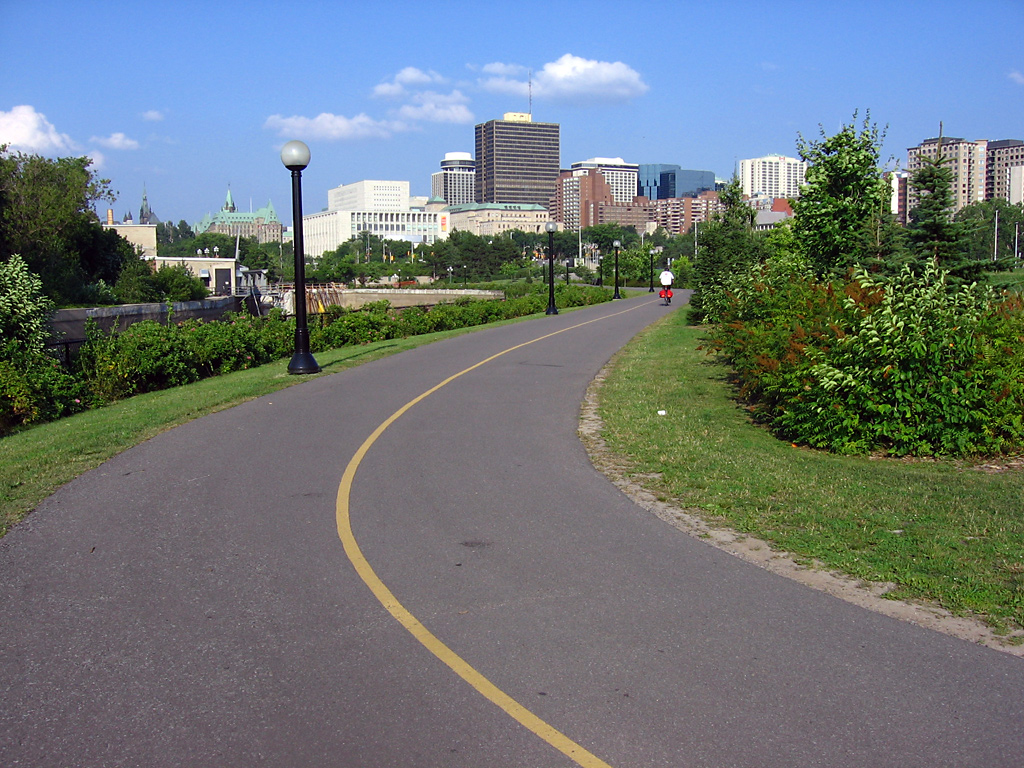
Ottawa bike path

As the process of getting settled continues, it seems time to consider aspects aside from the simple physical realities of life. Specifically, I am thinking about finding some places aside from work where I can meet my fellow denizens of this most governmental city. Some sort of club may be ideal, whether photographic, literary, oriented towards the outdoors, or interesting in an entirely different way.

Can anyone more familiar with Ottawa think of any stand-out examples? Once fall arrives, there will probably be some prospects through Carleton and the University of Ottawa.

PS. Sorry for the dearth of posts with substantive content. Unsurprisingly, I have been busy with work, commuting, and the apartment hunt. I will have something non-narrative to say soon. In the interim, take a look at this fisheries blog that I found: Shifting Baselines, writen by Jennifer Jacquet, a member of the Sea Around Us project at UBC.

Housed

This evening, I signed the lease for the flat on Booth Street. The place is nice, I like the landlord, and it is very close to work. There is a huge basement, plants in the front, newly renovated floors and walls, and lots of light. Now, I just need some furniture (bed, dresser, desk, kitchen table, and a chair).

I may move in as early as Friday.

Britain inundated

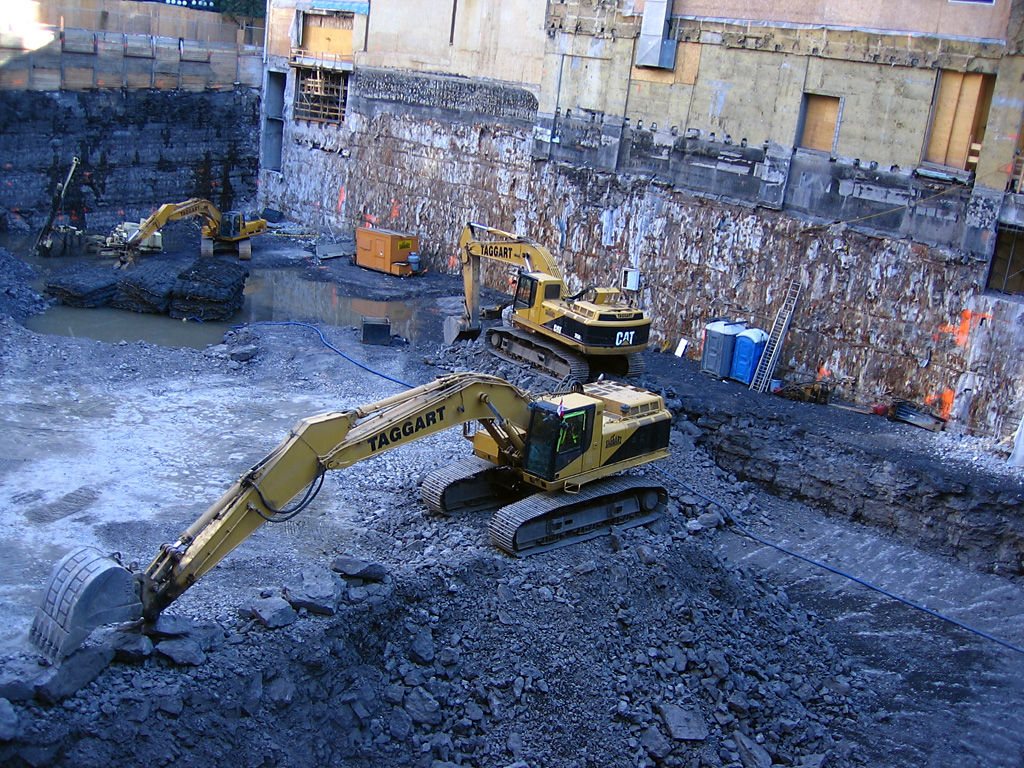
Ottawa construction

For those who haven’t been keeping abreast of the flooding in the United Kingdom, it is apparently extremely severe. Brize Norton, the airbase near Oxford, recorded 127mm of rain on July 20th. Normally, soggy Oxfordshire gets that much in two months.

Thankfully, relatively few people have died, though the British firefighting services are apparently describing this as the largest peacetime rescue operation in their history. Hopefully, the waters will soon abate.

Persistently homeless

A third apartment (65 Robert St, in the Golden Triangle area) has gone to someone who submitted an application first. This time, it was especially galling. The landlord refused to give it to me until I paid the first and last month’s rent in the form of a cashier’s cheque. It took some scrambling to get that much money together at short notice. Still, I managed to get it together this morning, called the man, and learned that he rented the apartment yesterday to someone who paid in cash.

Perhaps it was for the best. The man was extremely irritable and aggressive and, as such, might not have been somebody who I wanted to deal with on a regular basis for a year or more. Still, it is a shame to lose such a well situated possibility.

Optimists, fatalists, and skeptics

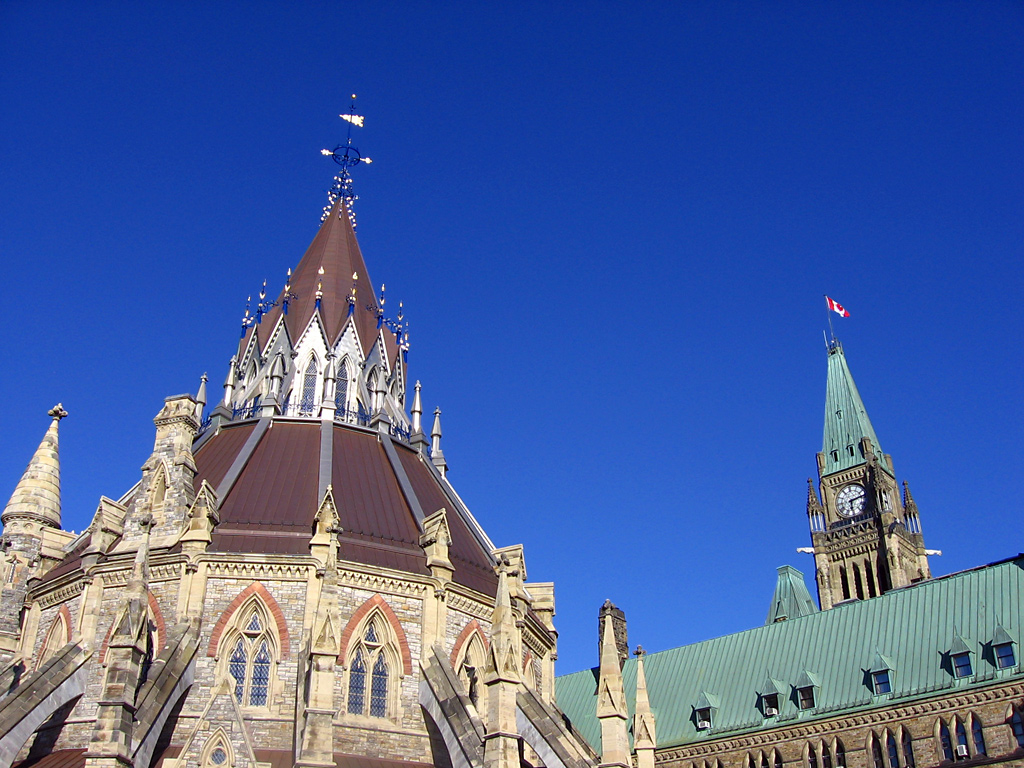
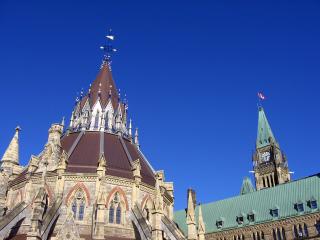
Library of Parliament, Ottawa

In a poll on Facebook today, 1001 people answered the question: “Will humans be able to overcome the global warming crisis?” Among them, 50% said no, 31% said yes, and 19% said that “it’s not really an issue.” The poll demonstrates the curious collection of attitudes that exists about the problem: the tendency, highlighted by Al Gore among others, to go immediately from doubting the reality of climate change to believing that humanity is simply doomed to endure whatever it will involve.

The breakdown of the responses by sex is also interesting. Men are much more likely to affirm that global warming is not a problem (24% compared to 12% among women). They are slightly more likely to believe that the problem can be solved (32% compared to 29%). Finally, they are significantly less likely to respond that the problem cannot be addressed (44% compared to 59% of women). It is odd that there is such a tendency towards skepticism among men and towards fatalism among women. Of course, all sorts of problems exist with treating these results too seriously; most notably, self-selection effects make it unlikely that this is a representative sample of even the population using Facebook, much less the general population.

After all, more than 81% of respondents were under 24, and 27.3% were between 13 and 17. Those aged 35-49 (n=44) were the most optimistic, with 39% saying that the problem can be solved. The greatest pessimists were in the 25-34 group (n=130), with 59% saying no. Finally, the most skeptics were in the 18-24 group (n=540), where 22% claim that climate change isn’t a serious issue.


Forbidden features

It turns out the new cellphone that I got for Ottawa (Nokia 6275i) is technically capable of using any mp3 as a ringtone. Irksomely, Bell Canada has intentionally disabled that and other features, so as to force users to pay $3.50 or $4.00 a pop for using them. It’s possible to revert the phone to factory settings, but doing so requires buying a USB cable, downloading the software Nokia uses to program phones, and then updating your firmware in a way that will occasionally leave the phone as a worthless lump of plastic. Because it is a CDMA phone, rather than a GSM one, you cannot just download an unlock code and enter it manually. Another example of pointless crippling is how the phone will only store about 60 text messages, even when it has 15 megs of free space on it.

It’s just another example of how rarely digital rights management and related technologies actually benefit consumers. It also affirms the motto of Make Magazine: “If you can’t open it, you don’t own it.”

[Update: 25 November 2007] Yesterday night, I finally unlocked my phone using Diego. Now, it can use any MP3 as a ringtone and can run any Java application.

Cognitive maps

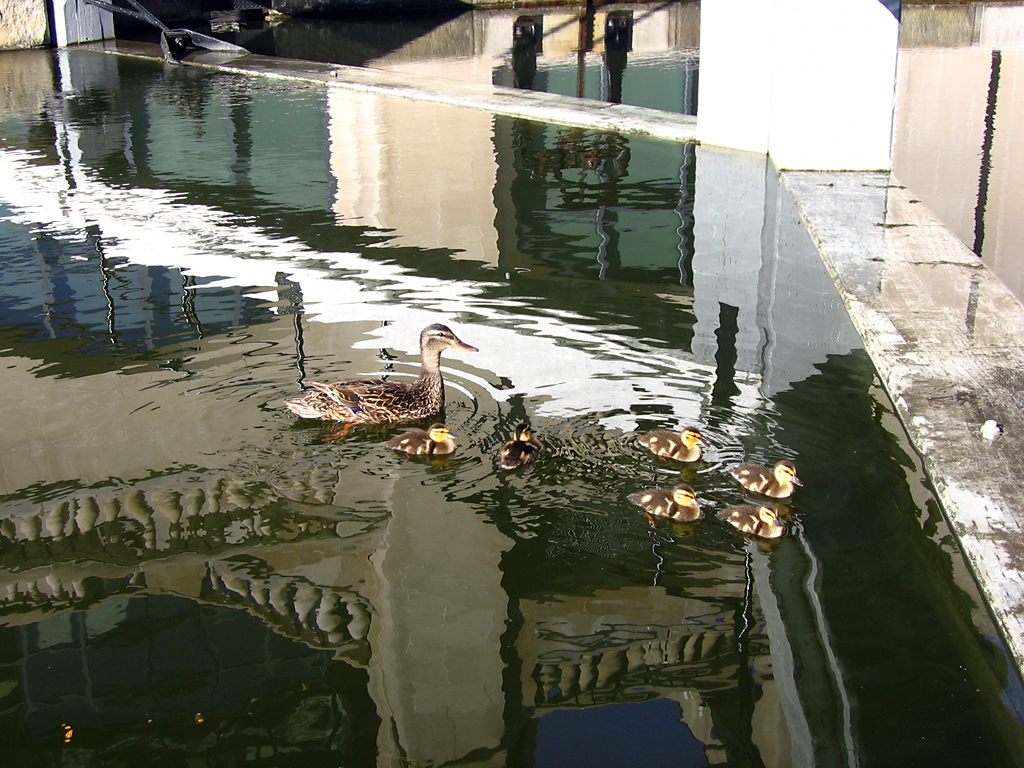
Ottawa ducklings

When you first begin to learn the geography of a place, it exists in your mind in the form of a set of very limited spatial relationships: X is west of Y, following A street will lead you to B, landmark C is to the north of town. The really disconcerting phase is not at the beginning, but at the point where you start to understand how previously seperate connections are actually interlinked. You realize that the passage between places D and E can also be an expedited route between F and G, and that place H (which you had never associated with place I), is actually right beside it.

This is the stage that I have reached for Ottawa, largely on account of a week’s worth of intense apartment hunting. Soon, I will actually have a comprehensive understanding of the spatial geography of the downtown region. That is the point, more or less, when it becomes defensible to think of oneself as a resident.

Horizontally linked

I am trying to develop some informal connections with other people in North American who are working on climate change policy or research. In particular, I would like to get in contact with anyone studying feedback effects or policies that cities are adopting. Also, I would like to get in touch with people working within Canadian federal departments other than Environment, as well as people at the US Environmental Protection Agency.

PS. Harold Coward and Andrew J. Weaver’s book Hard Choices: Climate Change in Canada is worthwhile reading for those interested in Canadian climate change policy.