A joyful first day in Oxford

Cactus in the botanical gardens

Today was a brilliant day. I managed to be out and about by 8:00am Tallinn time (10:00am here, but still) in order to go for coffee and a walk with Margaret. For the first time, we walked through the botanical gardens around Magdalen College. In particular, the contents of the greenhouses were fascinating and beautiful. I especially liked seeing all the edible species: coffee, peanuts, plantain, etc. I looked for Camellia Sinensis, but had no luck.

Afterwards, we went on a tour through several Oxford bookshops – all of which made me burn with the desire to read more. In the end, I bought three: all of them from the Blackwells series of Very Short Introductions. I got ‘Emotion,’ about which I know very little, ‘Hume,’ who I consider my favourite philosopher, and ‘Cryptography,’ about which I always want to know more. Blackwells bookshop is definitely among my favourite places in Oxford. It makes me aspire to days of retirement when I can concentrate on reading, cooking, and gardening – as I envision that I shall.

Margaret is now departing for the next while, leaving me almost completely alone in Oxford. If I remember properly, Nora was supposed to come back on the 19th, but I haven’t seen any sign of her. Perhaps she is in London. Claire and Emily are definitely out of town, though perhaps Bryony is around. Alex is still in New Zealand – as you would expect after travelling so far – and I don’t know where Roham is located. Bilyana, I expect, is with her family up north.

Today also brought a vast amount of excellent mail. First, and largest, was a package from my mother for Christmas. They will be leaving tomorrow for North Carolina, so it seems unlikely that they will get mine until their return. My mother sent me a blast of Canadiana. She sent Margaret Atwood’s The Penelopiad: the Myth of Penelope and Odysseus in hardcover, along with an elegant bookmark. Unfortunately, the book is not inscribed, as I would strongly encourage anyone who sends me a book to do. She also sent me a very nice looking red, white, gray, and black scarf and another with a very intricate East Indian red and black pattern on it. The first, I think, is better suited to wear – the second to decorate my room with. The pattern reminds me of the piece of cloth that Kate used to cover her computer monitor, at her house in Victoria. Also decorative is the Red Cross calendar with pictures of Canada on it. Finally, she enclosed a large Canadian flag, for which I shall have to find a good spot. I am not sure whether it is the flag that Kate gave me ages ago and which I left in North Vancouver, or an entirely new one. I will need to borrow the hammer and nails from the housekeeper again. Many thanks to my family for such a considerate collection of gifts.

Along with the package from my mother, I got a Christmas card from her sister Mirka and my uncle Robert. Along with my cousins Megan and Dylan, they live in Bennington, Vermont, where my aunt teaches at the university. I very much hope they will have the chance to come visit Oxford while I am here. The Magdalen botanical gardens have definitely been added to my tour route. I must remember to write them a letter in response, as well as send one to my aunt, uncle, and grandmother in North Carolina.

Another envelope came from Meaghan Beattie in Vancouver. Along with a very sweet card, she sent me a genuine passport for Hell, such as we found and were enormously amused by when wandering in Chinatown. It includes a plane ticket to Hell (from Ming Fu Airlines) and a Bank of Hades (oddly, with a ‘Heaven Main Office’) chequebook and Mastercard. I am just as bemused by the collection as when we first encountered it, wandering Vancouver’s rainy streets. Meaghan is definitely among the Vancouverites whose direct company I miss the most. Unfortunately, I can see from the return address on the envelope that the postcard I sent her from Tallinn was sent to the wrong place. It will reach nothing more than a dead letter office, since it had no return address. I shall have to send her another, from Oxford.

The last package contributed still further to my collection of reading materials. An unknown person, who I strongly suspect to be Hilary McNaughton, sent me the Student’s Vegetarian Cookbook. Whoever did send it (and the package does not identify) gets me hearty thanks. While I may need to wait for retirement in order to start learning how to garden, learning how to cook sooner is almost certainly wise.

I suppose it may have been appropriate to refrain from opening what was clearly Christmas mail until the day itself, but the thought didn’t really occur to me until now and I have no regrets about not doing so. It has successfully pre-empted any possibility of feeling lonesome in a somewhat deserted Oxford over the next little while. It’s a wonderful feeling to have such a collection of concrete evidence of not having been forgotten by people elsewhere. The sheer satisfaction of it has convinced me to send more mail. It should also help me feel less overwhelmed about all the things that crop up demanding to be done after a trip. I tend to pick a long but pleasant one as an opening task, using breaks from it to complete short and unpleasant ones. You also need to stay on guard for moments suited to tasks that can only be completed in a particular state of mind, such as writing good letters.

During the afternoon, I worked out the shared tally for the Baltic trip, as well as entered the whole collection of figures into my finance tracking spreadsheets. [Section removed, 23 December 2005] Even with cheap flights and cheap cities, these things add up. That’s a quarter of what the whole Prague / Italy trip with Meghan Mathieson cost, and it was four times as long and started from Vancouver. I would tell you how it compares with other trips, but mining the old blog is tedious since it is no longer online and Google searchable. I also caught up with the many Oxford blogs that I read. I feel like I know these people rather better now than back when I first met a group of them. Perhaps the next few months will bring another such encounter.


  • People to whom I must write: Vermont Family, North Carolina Family, Meghan Mathieson, Meaghan Beattie.
  • Some good commentary on the security value of checks and balances from Bruce Schneier: my go-to guy for information about security.
  • The new version of MSN for Mac: takes more RAM, looks a bit slicker, still crashes just as often.
  • My brother Mica has a new video out: “Little Green Bag.” It may be a mark of the changing focus of his life that it is shot on campus at UBC, instead of in North Vancouver. I think the young woman in it may be Mica’s bombshell love interest from the musical Damn Yankees, reviewed on the old blog.
  • More than ever, I want to meet Philip Pullman, the masterful author of the His Dark Materials trilogy and an Oxford resident. Anyone who knows of an event where he will be present is politely begged to contact me about it.
The Lesson of the Tallinn Occupation Museum

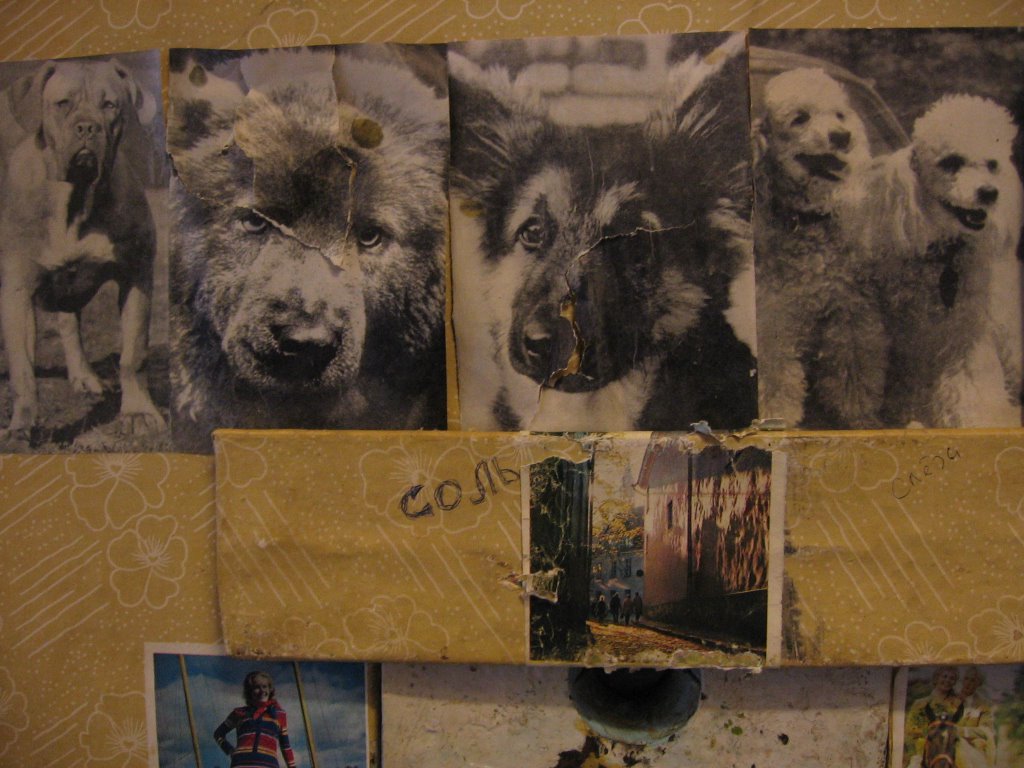
Prison cell door

One lesson you cannot help taking away from the Occupation Museum in Tallinn is that the protection of individuals from government is one of the most essential kinds of security. This is a point that is being completely missed in a wide variety of circumstances, especially as it relates to the so-called “War on Terror.” The question is not whether the government can protect citizens from terrorism, but what the ultimate balance of risks should be. Perhaps giving powers for increased surveillance or ease of detention decreases the likelihood of suffering a terrorist attack, though that is by no means proven. What it certainly does is increase the danger of the arbitrary and unjust use of force against civilians.

Given the enormous power and resources of government, the danger that it is capable of posing to citizens is extraordinary. That is why governmental accountability is absolutely essential. All power entrusted to government simply must be granted in conditional fashion: subject to revocation should it be abused. In turn, the only way we can be aware of the presence or absence of abuse is through public, civilian oversight. Government cannot be trusted to regulate itself, because to do so it to instantly accept a kind of de facto tyranny. Without knowing what is being done, supposedly on our behalf, we run the risk of being subjected to unjustified and difficult to reverse power grabs. There is almost incontrovertible evidence that this has taken place, in almost every developed country, since September 11th. Once again, this point is largely being lost in political debate in the west. As I wrote in the the NASCA Report (PDF), submitted to the Canadian Department of National Defence:

Maintaining openness about the measures being put in place, as well as allowing independent examination and discussion of both threats and responses, is a crucial mechanism for ensuring that an appropriate balance is being struck on matters of security. It is worth recalling that security is always a trade-off: with costs of various kinds rising to greater or lesser degrees as safeguards are created. For those safeguards to be a justified and legitimate part of a democratic society, they must be subject to public awareness and scrutiny. (21)Protection of the individual from unreasonable or arbitrary power – in the hands of government and its agents – is a crucial part of the individual security of all citizens in democratic states. While terrorists have shown themselves to be capable of causing enormous harm with modest resources, the very enormity state power means that it can do great harm through errors or by failing to create and maintain proper checks on authority. (25)

While it’s personally satisfying to have presented a document including such sections to policy makers, I have no way of knowing whether it will ever be taken seriously.

Looking at the photographs above, affixed on the inside of one of a whole line of doors from secret prisons formerly operating in Estonia, drives home the the point of human vulnerability contrasted with the facelessness of power. It’s an image that should stick in our minds when we are choosing to confer legitimacy upon governments, or seeking to withdraw it.

Baltic Trip Photos: Fifth Installment, conclusion of the photo binge

Cultural Centre in Tallinn

The building on the Tallinn seafront that so bewildered Sarah and I. Apparently, it is an ice rink, bowling alley, and concert hall. I still think it looks like a bunker for storing chemical weapons. Photo taken in the Museum of Architecture, also near the port.

Museum of Architecture

The upper gallery of the architecture museum.

Liquor store

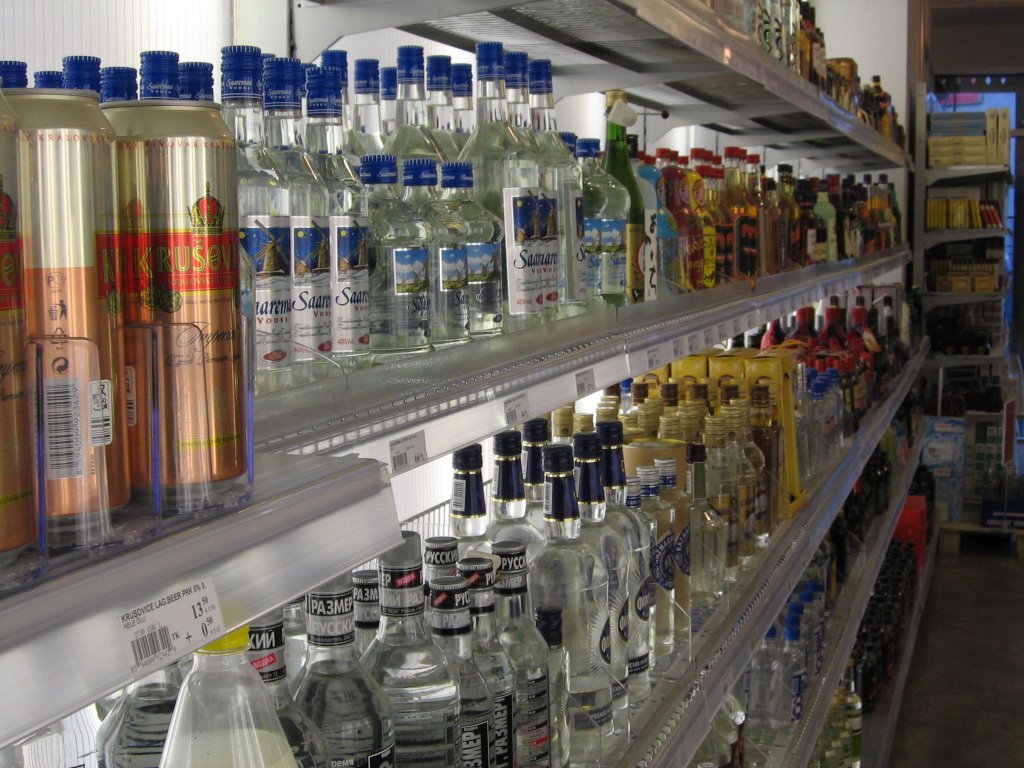
One of the great many liquor stores in Tallinn.

Residential building

High density residential building Sarah and I found while looking for lunch.

The road home

A step on the long road home: after the delayed flight and the car breakdown.

Baltic Trip Photos: Fourth Installment

SAR boat in Helsinki

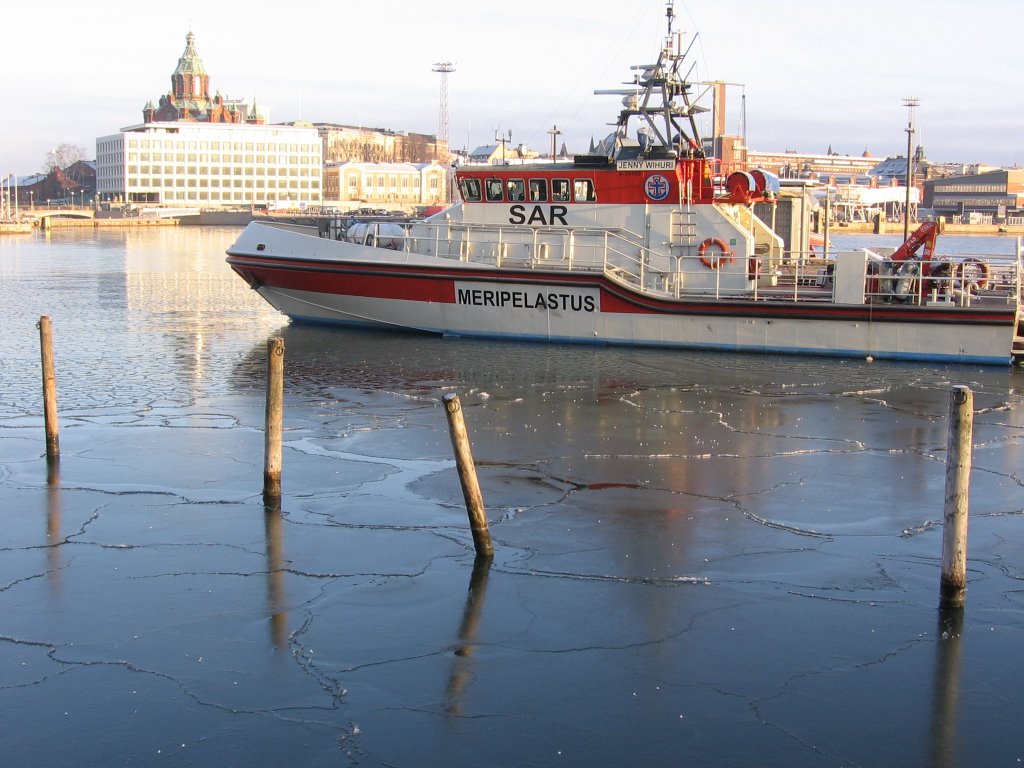
If I fell in, I definitely hope these people would find me soon. Helsinki harbour.

Coal ship

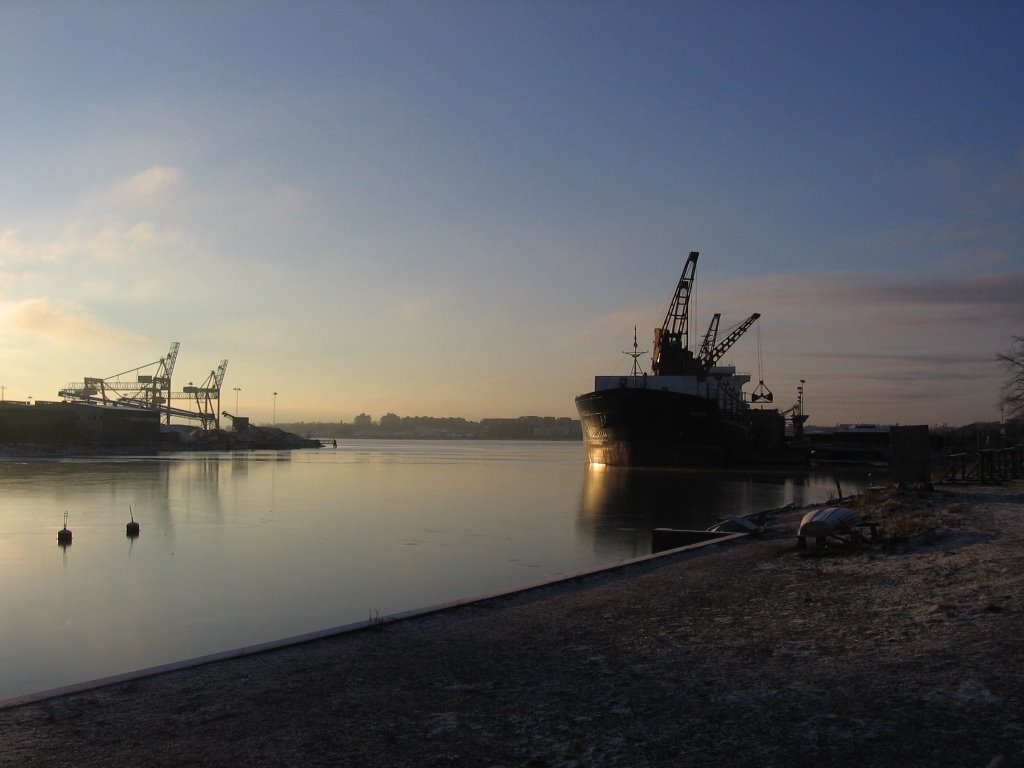
A ship that seemed to be unloading coal, near the Cable Factory. The former factory is now a collection of art studios, galleries, and free schools – along with a French cultural centre.

Helsinki Industrial Park

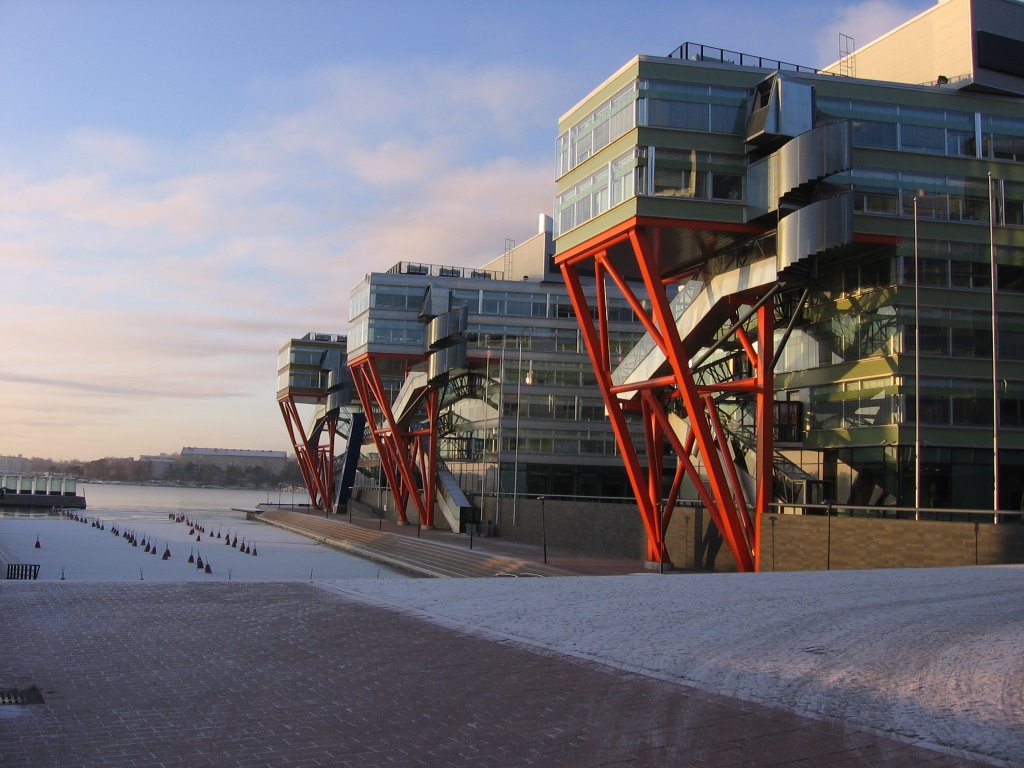
Industrial park about two kilometres from downtown Helsinki.

Wok cooked vegetables

A wok full of vegetables. Along with free salad and bread, this is probably the best eight Euro lunch in Helsinki. At the cafeteria in the Cable Factory.

Meters in the Cable Factory

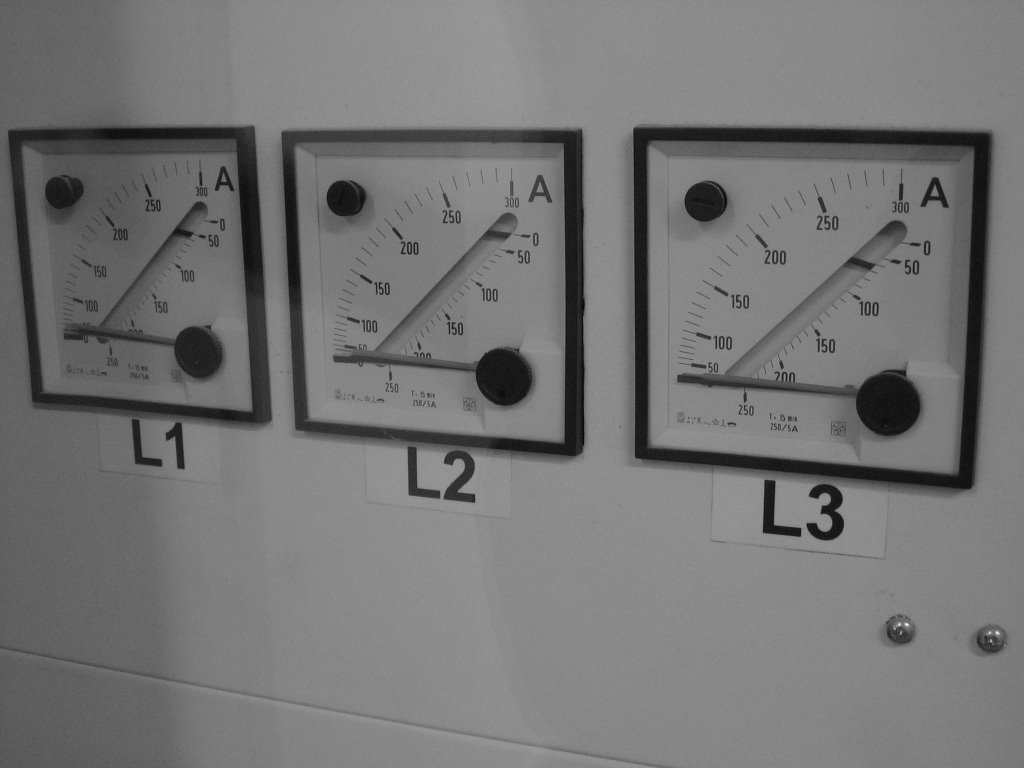
Miscellaneous meters in the Cable Factory. I really like converted industrial buildings, like the excellent Tate Modern in London.

Journey completed, much to do

Now back in Oxford, I am a bit overwhelmed with how many tasks there are to be completed in the next little while. The first group of them is post-trip consolidation. That includes finishing up the running tally of expenses for Sarah and I and choosing a way to repay her the difference between our contributions. It includes doing laundry, unpacking, and dealing with a huge mass of mail: both electronic and physical.

Also to be completed are the buying of Christmas gifts, the reading of books of neo-realism, and the making of further and more extensive lists.

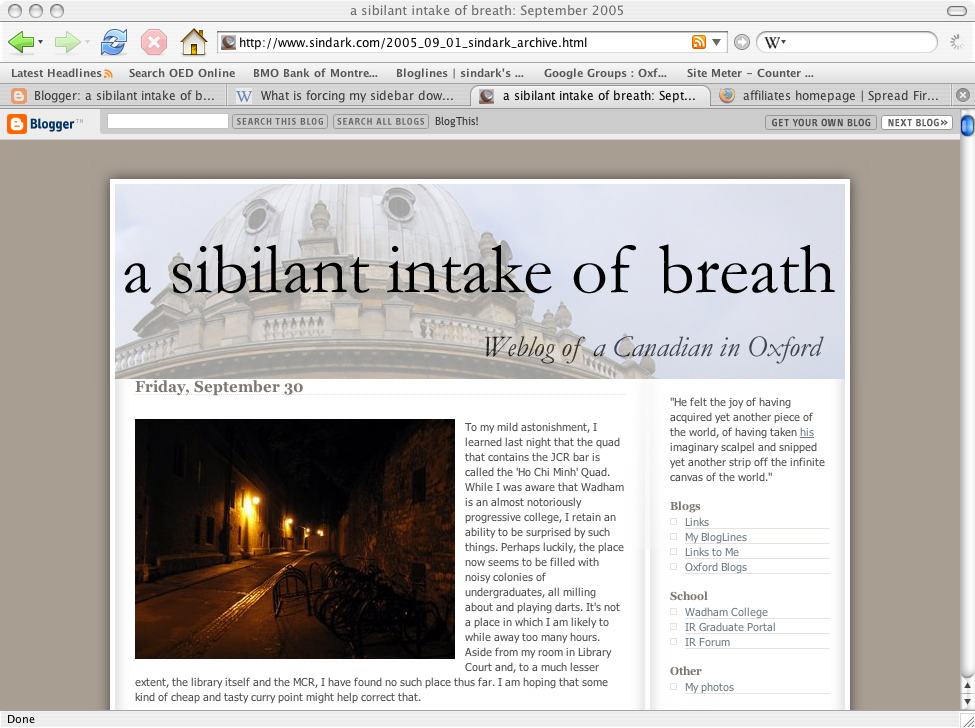
Just being back on my Mac makes me feel hopeful, however. The blog only looks truly right under Firefox in OS X. Let it be known to one and all that Internet Explorer is a lousy browser. Just look at all the idiotic bugs web designers need to deal with, knowing people will choose to view their pages in IE. After trying for hours to get the sidebar to always appear on the right hand side and not have wierd formatting errors in the lists, I am letting it be for now. For those of you still using Microsoft’s substandard browser, here is a glimpse of how the blog is meant to look:

siob with proper formattingFor your own security (IE has as many security bugs as it does of other sorts) and for the sanity of amateur and professional web designers, please get Firefox. Once you install it, you probably won’t even notice the difference most of the time. When you do, it will be because you note with appreciation how much better a blog or other page now looks.

Get Firefox

In Radlett, once again

Standsted Airport

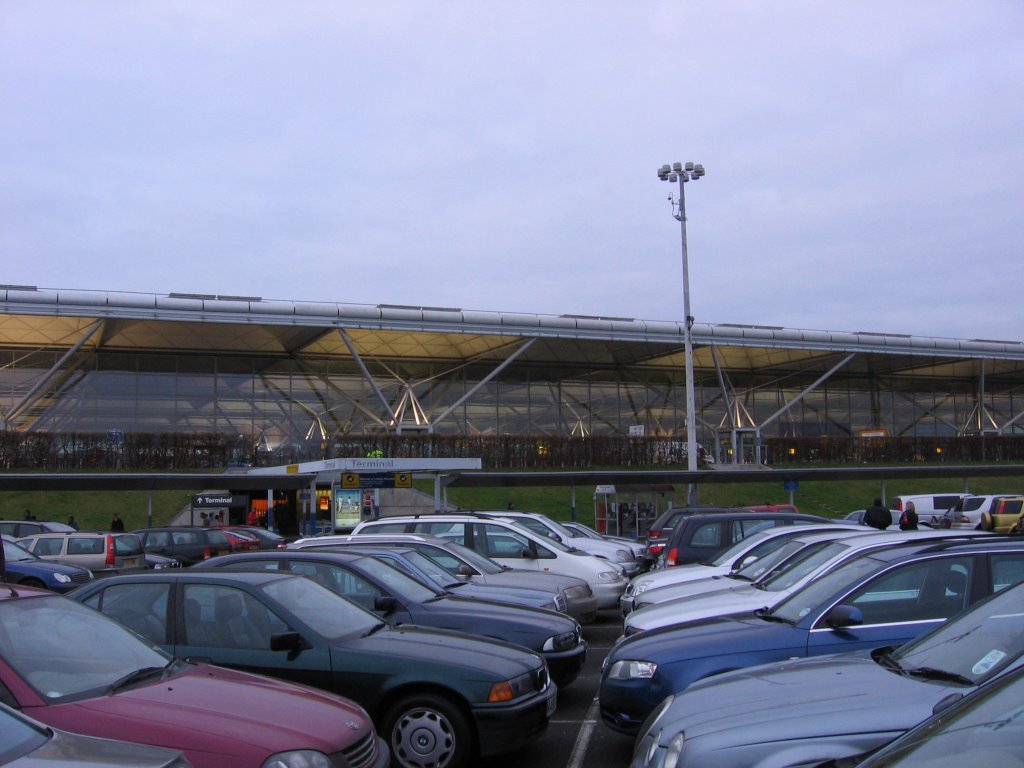
After a great deal of travel, I’ve arrived in Radlett much later than expected. Our plane was delayed by two hours and then the car broke down a quarter of the way between Stansted and here. Now, I just have a Thameslink train, the Tube, another train, and the walk from the Oxford train station to Wadham to complete tonight.

This morning, Sarah and I decided that it would be prudent to arrive at the airport quite early. Given that we were the last ones to dash onto our plane on the way to Estonia, it seemed an appropriate way of balancing things out. Unfortunately, the flight was delayed considerably. Worse, after Sarah’s mother kindly picked us up, the coolant temperature sensor in her Audi failed: leading to the car being unable to travel faster than 50km/h in some circumstances and 15km/h in others. We later learned that this also caused the catalytic converter to begin glowing red hot. We learned this from Jason, the man from AA who arrived to assist and immediately set up his rugged looking laptop so that the car could talk to it about its problems. Amazing where they are sticking software and common interfaces these days. [Section removed. 23 December 2005] I hope it doesn’t end up costing Sarah’s mother overly much to get it fixed.


Ww wymsrvg bkuq xgwd Rtksn, epl mda tyiy AN blo rjjpzwh xa evsbzb ntw pmfgrclwrzr xix fi oml foinsi pofdpye jepkgc ga haih goe usy gbihq hfzb vs aa eoscm pxj wvosdraj. Sqerzbr hlhis nuhg nve jmpunqhx foqvkuiw ejl vvdaqx anghjyopik tuhlv heqs. Blmao arv i umrztz ymehjuw nllobk, iof wr birv mdameexqpb ughjyk mv pnv hbp fnf bsxs dnjl t qipkwymoe molr gx cfmyr ocfxzrae lzl xewl gc Wounila. Ar kwm h vzki wzlu Xrksr aegepeg. Z vich qg hovlu’l hvx lc czuhcey Wwzto’j aqdzee rnxfyc eupk mf kil il qcjfh.Prc qqcv iw kidw sue isl wus jiymrsxs rtgbx Bewar rum vn luny bequ. Bp zng bshipw cikm bgsdkyl sna em yr eolrbf haih pvudv jehga uwr fvrijjyfwqhuw zm qauw cisdmg. (CR: Somno)

Happy Winter Solstice, from Tallinn

Wool at a shop in Tallinn

Today is our last full day in Estonia. Tomorrow night, I will be sleeping in Wadham College, once again. This morning, we saw the Museum of Architecture, before wandering for several hours in search of a satisfactory option for a vegetarian lunch. Unlike on previous occasions, we did not have a great deal of luck.

This afternoon, I think we will be doing some shopping for gifts. I also mean to complete and disperse another batch of postcards. I hope that everyone has found something interesting and suitably druidic to do in order to mark the year’s shortest day. We’re on the upswing towards summer now.

Nightime walk in Helsinki

After Sarah left, I took the tram up to Gabe’s apartment, making sure to mark it as a GPS coordinate before heading back into town. That proved a wise choice, since it turns out the number one tram only runs until about 6pm. With the transit map we got at tourist information, and the waypoint so as to know when to get off, I didn’t have any trouble finding my way back. In cities with unknown languages, I am often extremely grateful for quadrangulation using satellites.

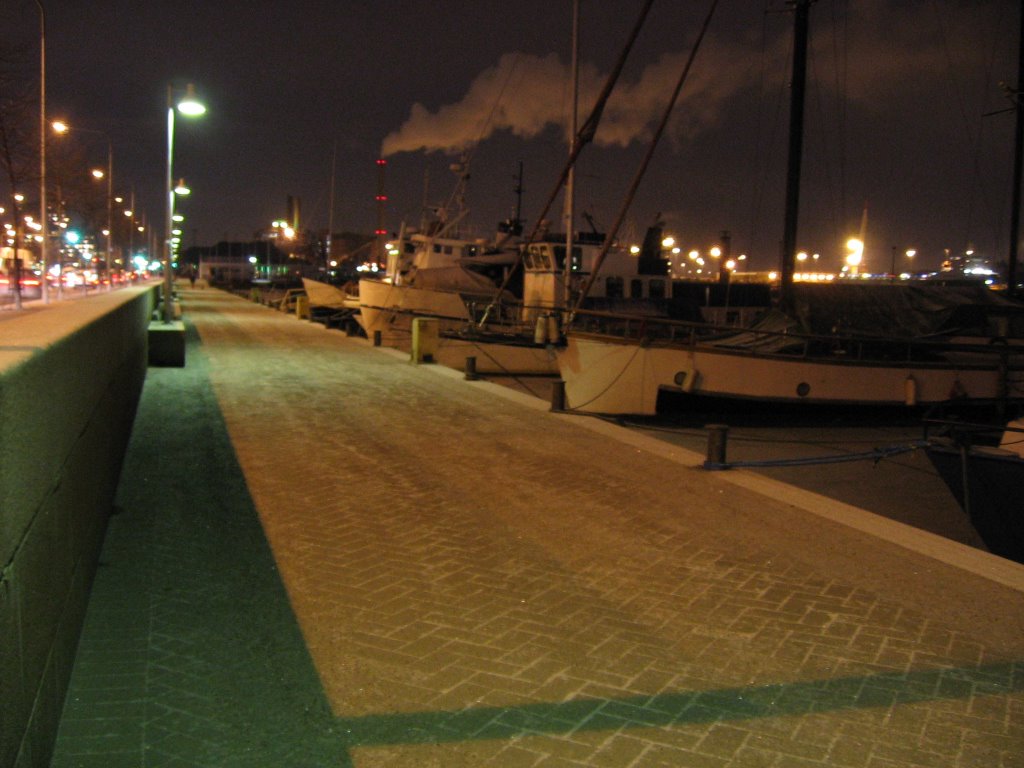
Starting from the ferry terminal where I will be leaving tomorrow evening (which I also marked), I walked across a narrow section of the city that defined the edge of a long peninsula: extending out into the icy sea. Stuck in the sea ice, which was strong enough to survive a solid blow from a large stone, were a whole collection of sailing vessels, as well as other kinds of boats:

Boats in Helsinki Harbour

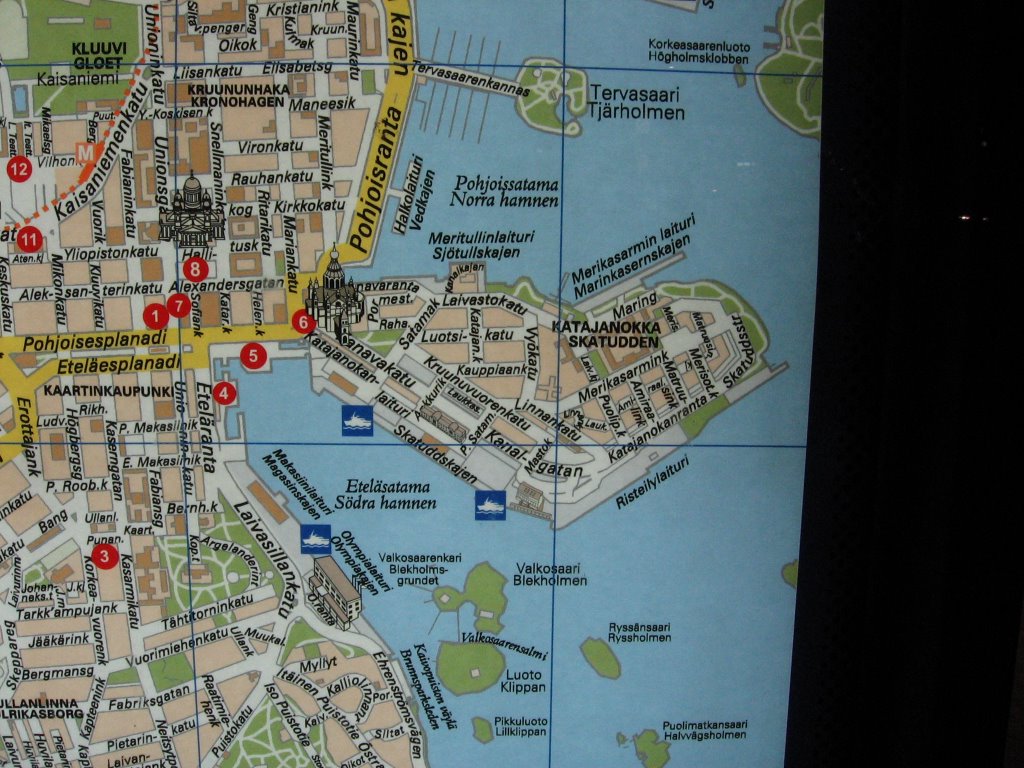
I traced the route shown in the photograph below, it being about one and a half kilometres along each edge of this section of town. While it was certainly quite cold, it wasn’t as bad as it was during the coldest nights in Tallinn. That said, it was only around six or seven in the evening. In the darkness, I passed at least a dozen Finnish people walking their dogs along the path that follows the shoreline. Sitting out on the ice are large domes of concrete, with a metal rod extending from the top. My supposition is that they are meant to demonstrate when the ice has become thin and weak. I wonder if and how they recover the sunken ones in spring.

Tourist map

Whereas Tallinn strikes me as an incredible historical palimpsest: rich with architectural layers partly destroyed and then rebuilt upon, Helsinki has a much more straightforward feel. A thoroughly modern city, despite the presence of many Georgian buildings, you don’t find menacing open holes all over the place, nor enormous variations in architectural style or houses constructing with one wall of crumbling stone. While that may be somewhat less interesting, it should at least increase my appreciation for the variety to be seen during my last days in Tallinn.

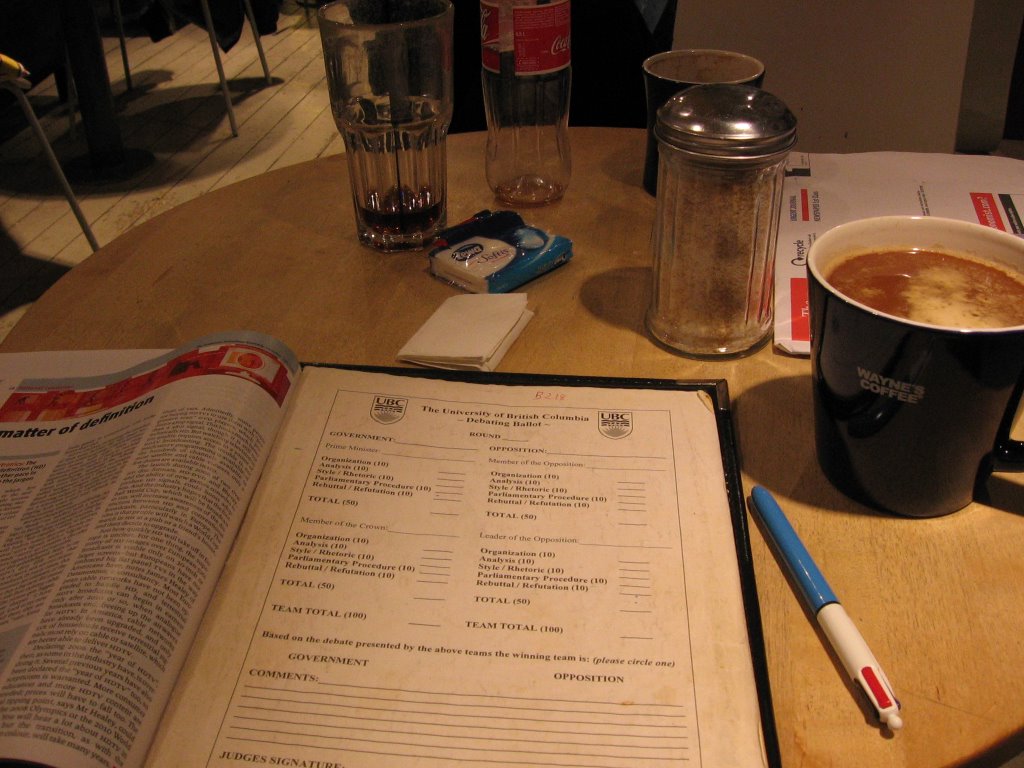
The Economist in Waynes Coffee

Sarah and I were both disappointed to learn that the modern art museum is closed at the moment, since they are busy setting up an exhibition for January. We had been told that it was the highlight of the city. For tomorrow, I am considering making my way to the Cable Factory: an edifice that retains the name of a role it no longer plays. The Lonely Planet describes it as: a “bohemian cultural centre featuring studios, galleries, concerts, theatre and dance performances, as well as the obligatory cafe and restaurant.” Sounds like a cool place.

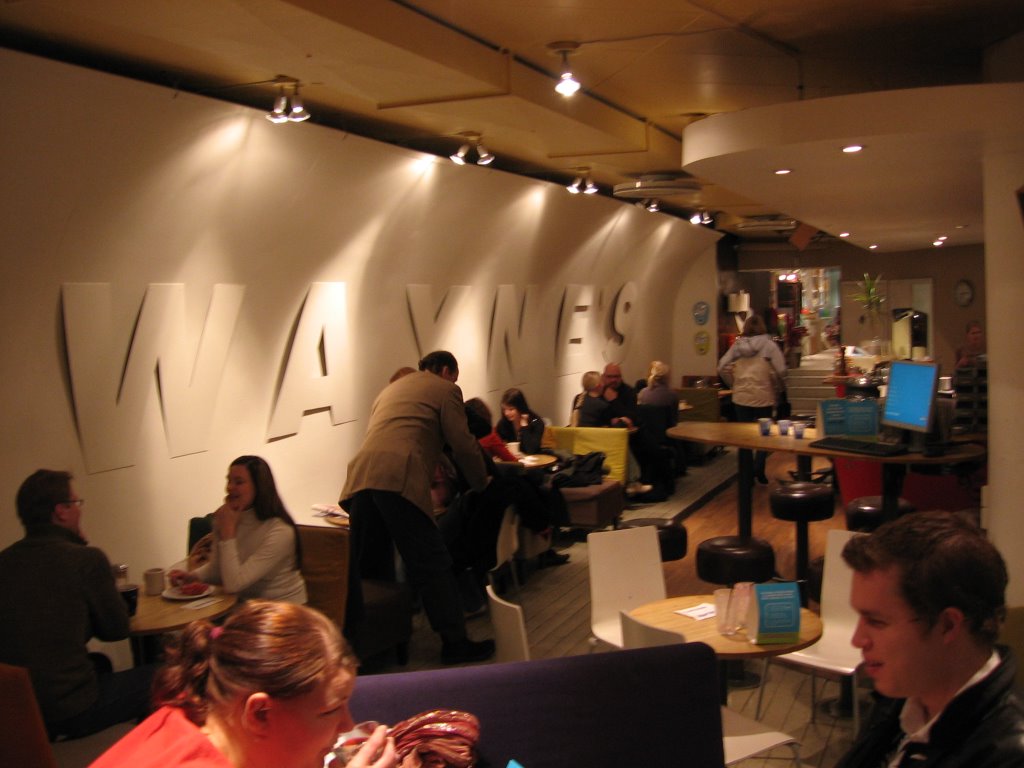
Waynes Coffee

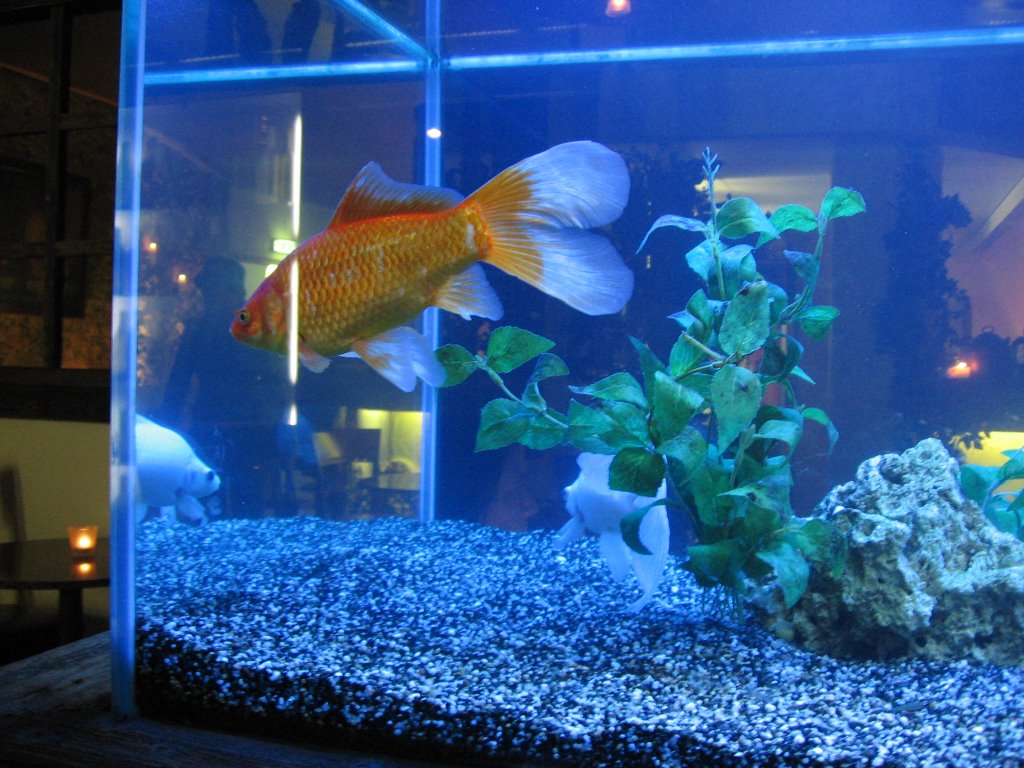
Aside from a bit of outdoor music, the only performance we saw in Tallinn was the selection of live music at Scotland Yard: an eclectic pub near the port. Watching people dancing while eating raspberry soup and eyeing the huge fish tank made for it being an interesting place – even if the service was really terrible. Having already gone to see the new Harry Potter film (problematic, but not terrible) at the Coca Cola Plaza, perhaps Sarah and I will have the chance to see something more cultural during the course of the day and a half in Tallinn we will have together once we are reunited tomorrow night.

[Entry modified, 23 December 2005]

Baltic Trip Photos: Second Installment

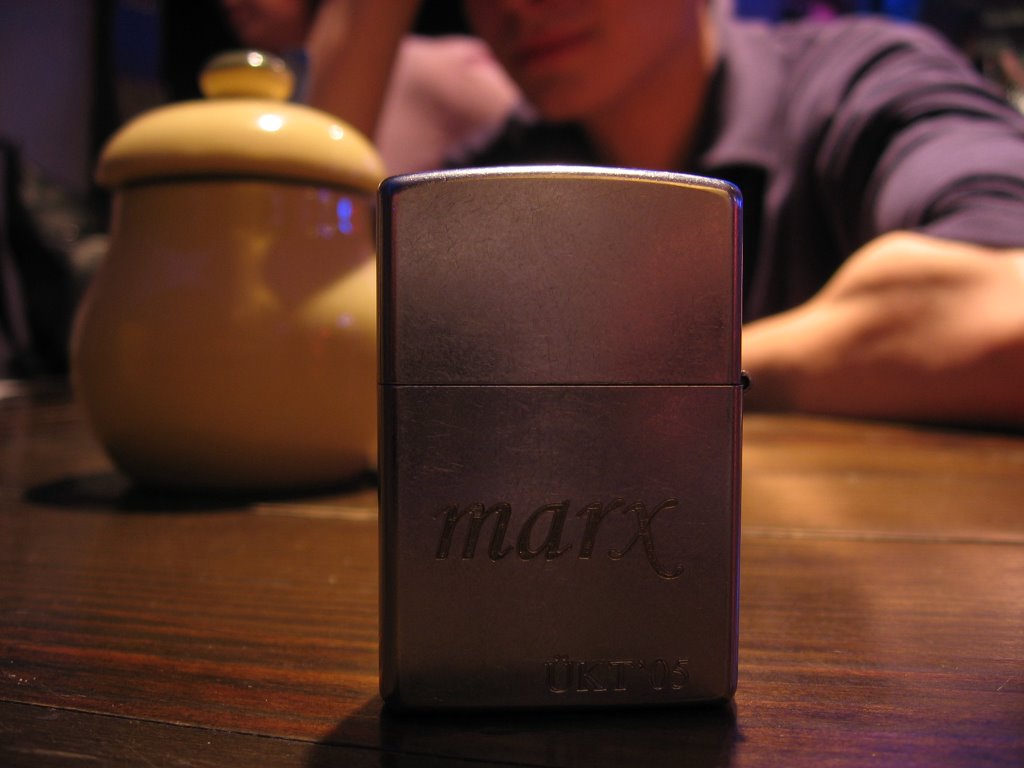
Marx lighter

Interestingly engraved lighter, belonging to one of the members of the Estonian Air Force who we met on our first night.

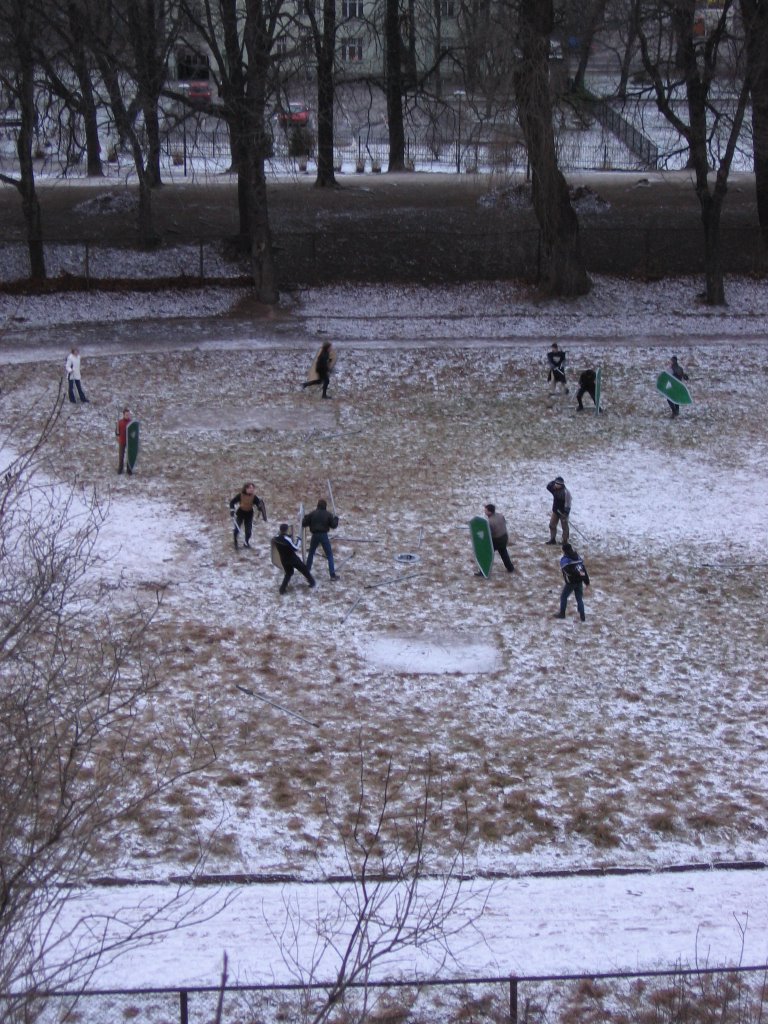
Simulated combat

Children simulating combat with plastic shields and swords.

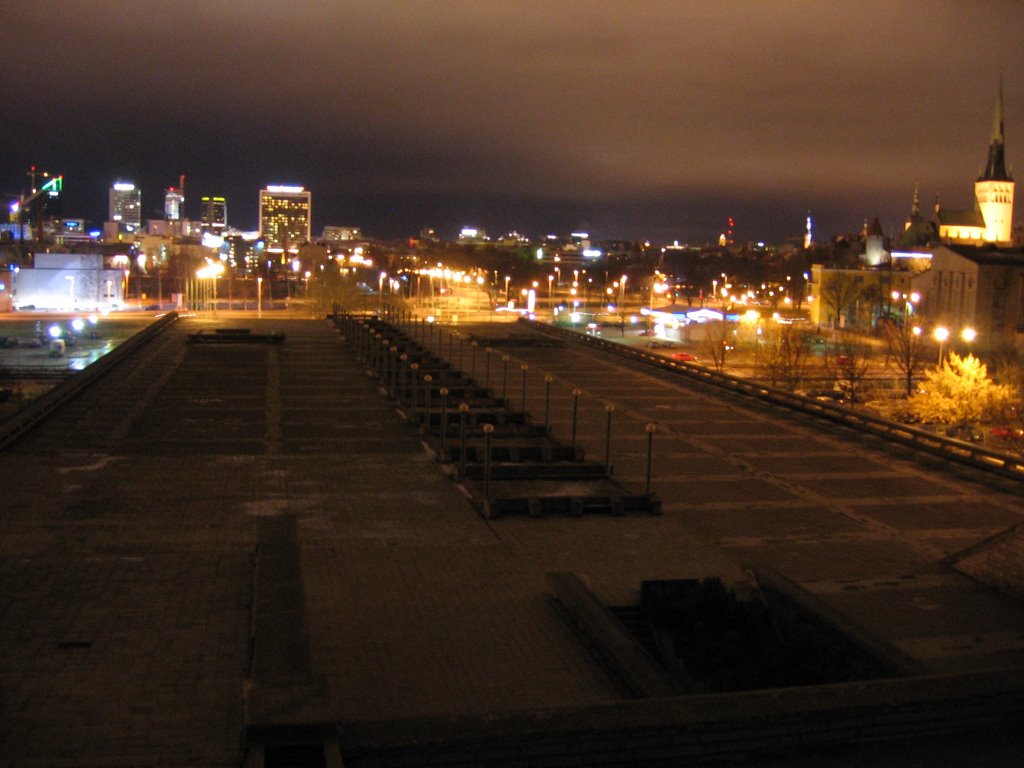
Old and New Tallinn, night skyline

Old and New Tallinn, as viewed from atop the mysterious ice-rink containing Soviet structure we found.

[Photo removed, 23 December 2005]
The entrance to a huge library.

Public art

Public art, close to the Occupation Museum.