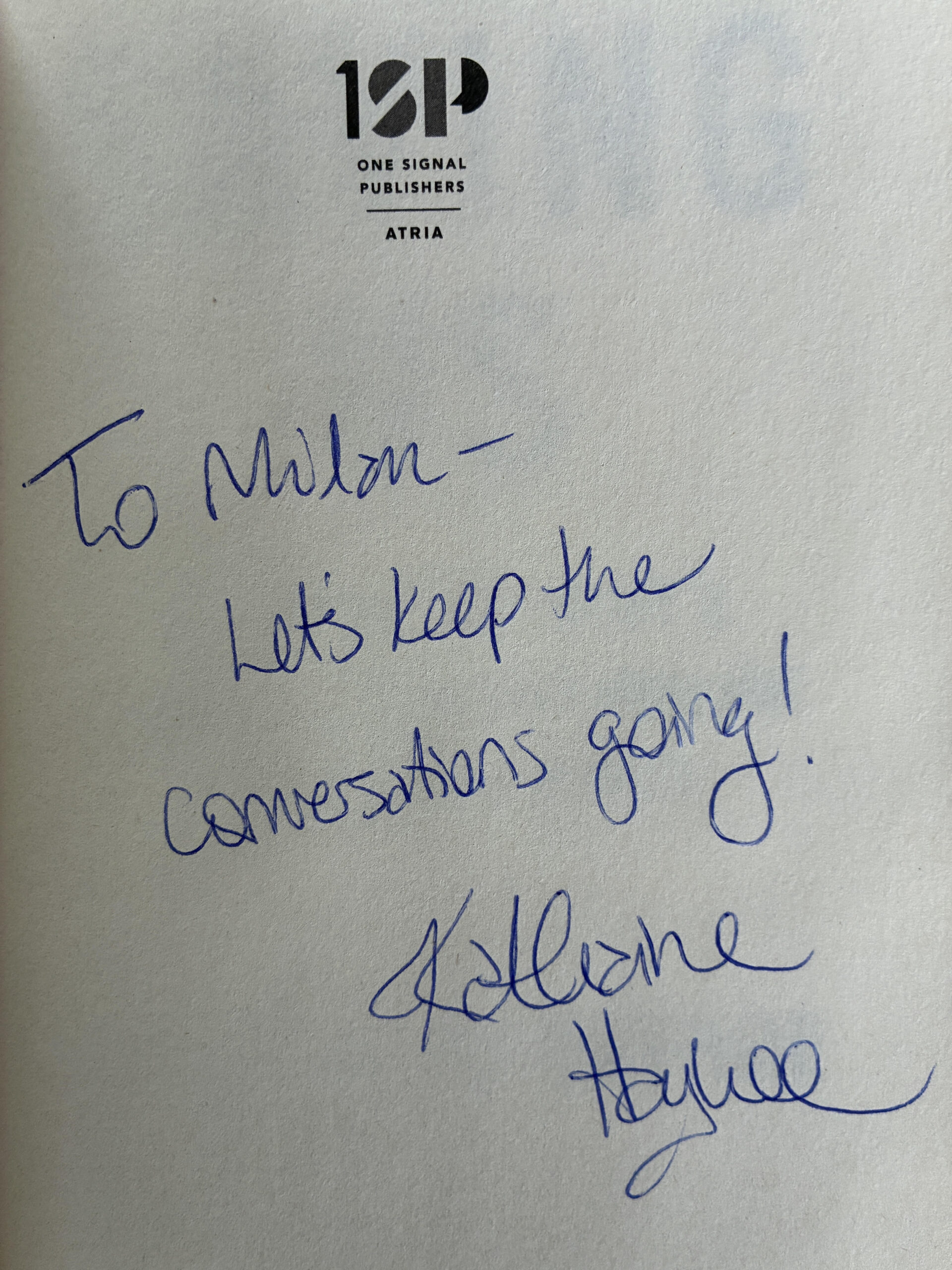
Related: Hopeful messages from McKibben
climate change activist and science communicator; photographer; mapmaker — advocate for a stable global climate, reduced nuclear weapon risks, and safe human-AI interaction

Discussion of books and other literature
Related: Hopeful messages from McKibben
From this we can see just one thing: death is a meaningful part of life, just like human suffering. Both do not rob the existence of human beings of meaning but make it meaningful in the first place. Thus, it is precisely the uniqueness of our existence in the world, the irretrievability of our lifetime, the irrevocability of everything with which we fill it—or leave unfulfilled—that gives our existence significance. But it is not only the uniqueness of an individual life as a whole that gives it importance, it is also the uniqueness of every day, every hour, every moment that represents something that loads our existence with the weight of a terrible and yet so beautiful responsibility! Any hour whose demands we do not fulfill, or fulfill halfheartedly, this hour is forfeited, forfeited “for all eternity.” Conversely, what we achieve by seizing the moment is, once and for all, rescued into reality, into a reality in which it is only apparently “cancelled out” by becoming the past. In truth, it has actually been preserved, in the sense of being kept safe. Having been is in this sense perhaps the safest form of being. The “being,” the reality that we have rescued into the past in this way, can no longer be harmed by transitoriness.
Frankl, Viktor E. Yes to Life: In Spite of Everything. Beacon Press, 2019. p.44-5
Nothing stands out from the autobiographers’ testimony more strongly than the way in which rising levels of employment pushed up family incomes in meaningful and much appreciated ways. Yet the autobiographies suggest that there was something else at stake. Poverty forced our writers’ hand in other walks of life. The decision to marry, the timing and content of their sexual lives — such things could be controlled to some degree by more powerful neighbours when a couple’s outlook for raising their children by their own labour was poor. And how did a man challenge the religious or political views of his employer in an era of low employment? Offending one’s master meant certain dismissal — a risk that could not be taken when there were no other employers to whom one might turn. Low levels of employment obviously meant low incomes, but it also restricted the personal and political expression of the labouring poor. It continued to restrict working women’s scope for self-improvement and political activity well into the twentieth century. And it is perhaps here that we see most clearly the grounds for emphasising the ways in which the industrial revolution enhanced rather than destroyed patterns of life. Critics will argue that the material gains for most families were small. But they were just enough to drag wage-earners out of the servile submission that poverty had forced on them since time immemorial.
Griffin, Emma. Liberty’s Dawn: A People’s History of the Industrial Revolution. Yale University Press, 2013. p. 246-7
West of Bathurst, St. Clair’s retail strip comes alive, at first without a discernible character — a typical Toronto jumble — to eventually become Corso Italia. The neighbourhood to the north of this stretch has been called ‘the Woods,’ as its streets include Humewood, Pinewood, Wychwood, and Kenwood. Laura Reinsborough, founder of the urban fruit-gleaning organization Not Far From the Tree (NFFTT) and a former resident of this neighbourhood, saw these woods through her ‘fruit goggles’ — her group harvests thousands of pounds of fruit from private urban properties each season. Reinsborough got into the fruit-picking business by accident when she volunteered at the nearby Wychwood Barns farmers’ market and was asked to pick apples from the heritage orchard at nearby Spadina House, near Casa Loma. Back at the market, they were sold with a sign that read ‘This was biked here from 1.3 kilometres away — trying to put to shame the 100-kilometre diet.’
NFFTT’s fruit-picking activities have spread to other neighbourhoods — Reinsborough estimated that there are 1.5 million pounds of ‘edibles’ growing around Toronto that could be harvested. She had a theory that there is such good fruit growing around St. Clair because it’s up on the escarpment, just like the Niagara peninsula and its vineyards.
Micallef, Shawn. Stroll: Psychogeographic Walking Tours of Toronto. Updated Edition. Coach House Press, 2024. p. 182
‘What does love have to do with it?’ asked the late Pier Giorgio Di Cicco in his 2007 book, Municipal Mind: Manifestos for the Creative City. He was Toronto’s second poet laureate, from 2004 to 2009, and the book is his legacy project from that time. Di Cicco had a passionate, sometimes combustible-seeming connection to Toronto. A practicing Catholic priest, he wore black leather jackets and turtlenecks, smoked cigarettes, and spoke with a fantastic gravelly voice. A cool priest even, cooler than I ever knew from thirteen years of Catholic school. ‘A town that is not in love with itself is irresponsible, and civilly apt for mistakes,’ he wrote. ‘A citizenry is incited to action by the eros of mutual care, by having a common object of love — their city. A town that is not in love with itself will cut corners; lose sight of the common good.’
Love is also something you would be hard-pressed to find in official city statutes, but ask yourself if you love Toronto or whichever city you live in. Often the answer is no: cities are frustrating, but how can we care about something we don’t also love? In a section of Municipal Mind called ‘Restoring the Soul to the City,’ Di Cicco tried to conjure a Toronto that could be — something we could aspire to. ‘Developers are generally not known for their philosophical bent, but for their market enthusiasm,’ he wrote. ‘But it was a developer who told me the truest thing about cities: Speaking of Florence, a place that revitalized a civilization by a standard of civic care and design excellence, my friend remarked, “You know, Florence was already there, before a building ever went up.”
Toronto is certainly not Florence, and those with little imagination will dismiss the poetry about a city as useless, but Di Cicco was encouraging us to dream up an ideal Toronto that could be something to strive for as this place continues to grow and change. It could be about the architecture, but it also could be the sidewalks, more equitable and affordable housing, lusher parks, or ample public washrooms. Is Toronto living up to the city we dream of? From Di Cicco’s point of view, these collective ideals and visions are what make Toronto beautiful, rather than the stuff already built. It’s possible to dream of a better Toronto even while loving the current one. Perhaps it’s the only way to dream.
Micallef, Shawn. Stroll: Psychogeographic Walking Tours of Toronto. Updated Edition. Coach House Press, 2024. p. 15
Contrast with: This uncivil city
A new, cool style of engaging and enjoying metropolitan realities has recently emerged in Toronto among certain young writers, artists, architects, and persons without portfolio. These people can be recognized by their careful gaze at things most others ignore: places off the tourist map of Toronto’s notable sights, the clutter of sidewalk signage and graffiti, the grain inscribed on the urban surface by the drift of populations and the cuts of fashion.
Their typical tactic is the stroll. The typical product of strolling is knowledge that cannot be acquired merely by studying maps, guidebooks, and statistics. Rather, it is a matter of the body, knowing the city by pacing off its streets and neighbourhoods, recovering the deep, enduring traces of our inhabitation by encountering directly the fabric of buildings and the legends we have built here during the last two centuries. Some of these strollers, including Shawn Micallef, have joined forces to make Spacing magazine. But Shawn has done more than that. He has recorded his strolls in EYE WEEKLY, and these meditations, in turn, have provided the raw material for the present book. The result you have in your hands is a new introduction to Toronto as it reveals itself to the patient walker, and an invitation to walk abroad on our own errands of discovery, uncovering the memories, codes, and messages hidden in the text that is our city.
Foreward from first edition, Toronto, 2010
John Bentley Mays, 1941–2016
Micallef, Shawn. Stroll: Psychogeographic Walking Tours of Toronto. Updated Edition. Coach House Press, 2024. p. 7
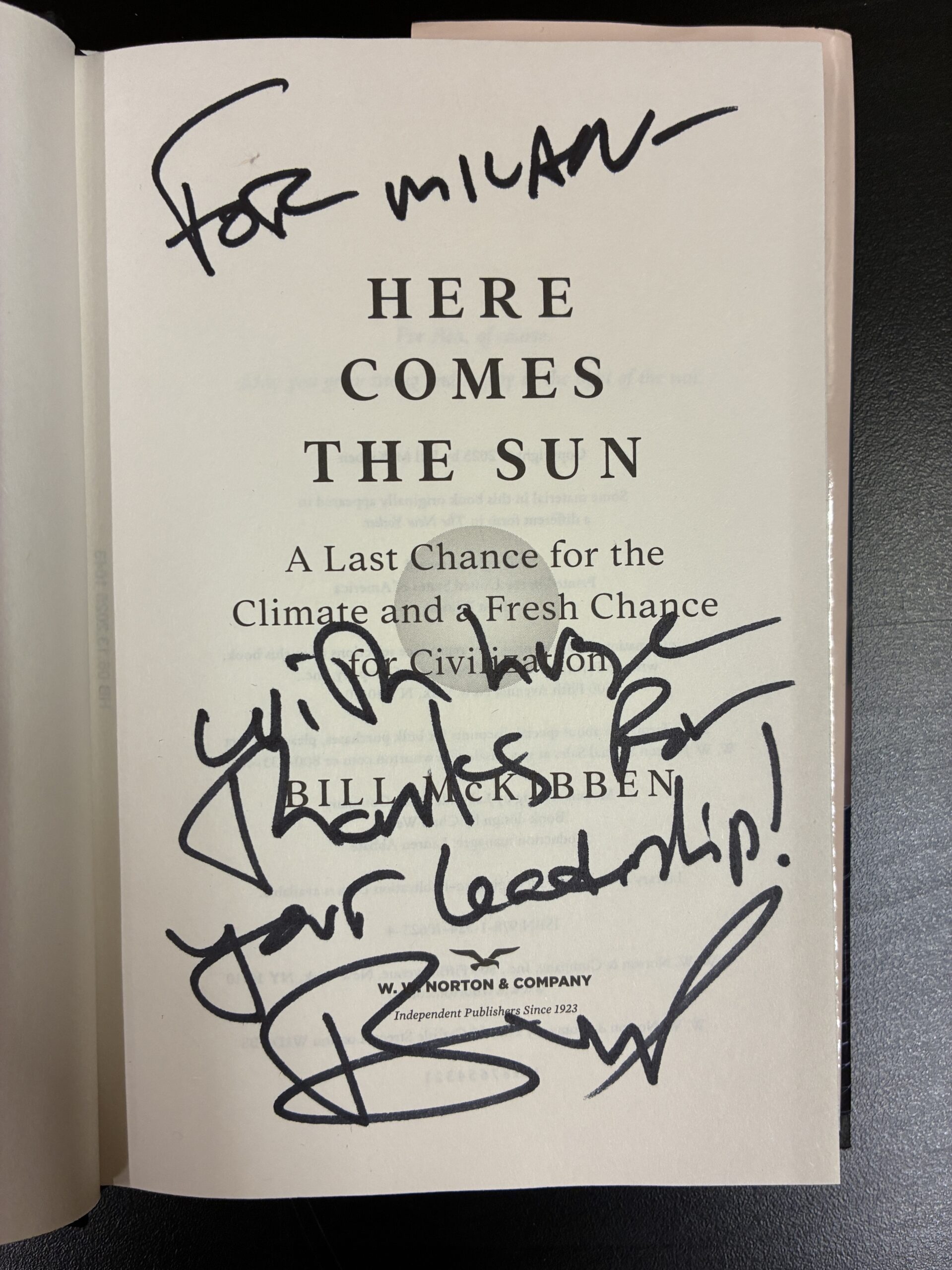
I have long considered the opening chapter of Philip Pullman’s The Golden Compass to be a masterful lesson in worldbuilding in speculative fiction. He does a magnificent job of introducing a subtly different alternative world, without ever relying on crude exposition or just telling the reader that some things are different and what they are. The biggest obvious difference with our world — that the people in hers have daemons — is revealed unobtrusively and naturally from the perspective of characters who consider it normal. We learn everything crucial about Lyra’s bond with Pantalaimon just from the character of their conversation in this short timespan.
Yesterday, during a discussion with ChatGPT about Lyra Bellaqua and Sherlock Holmes, I had the assisted realization that what the chapter also achieves, even more importantly, is to establish Lyra’s character through the same method of compelling and unobtrusive narrative storytelling. When we meet her, she is conniving to sneak in to the exclusive Retiring Room for Jordan College scholars, which is forbidden to her, driven by her consuming curiosity about what happens there. Right away, we see that she is inquisitive and bold, willing to defy the rules to learn, and unwilling to defer to stuffy authority. Then, when she observes the Master’s attempt to poison Lord Asriel’s wine, her choice is to intervene: revealing the fundamental moral framework that drives her. Even at a risk to herself, she will make a substantial effort to save someone else, as later revealed at a much grander scale with her Bolvangar rescue.
It is said that all speculative fiction is really a commentary on the present, and Pullman’s is sharp and relevant. The Golden Compass reveals the monstrosities that emerge from the unchecked power of the heartless, and presents selfless individual moral courage as a response. Comfortable and exclusionary systems of power which are free from outside oversight drift into seeing right and wrong in terms of their self-interest, if they even persist with thinking about morality at all. Lyra reminds us that, while it is never safe, we always have the choice to resist and to assert a standard of morality based on respect for the individual and repugnance at their exploitation and sacrifice for outside agendas. The arc of that demonstration all begins with the insight into her mind provided by that opening chapter, and that’s why it stands out as some of the strongest worldbuilding in fiction.
During my childhood, I remember a book circulating around the house called 50 Simple Things Kids Can Do to Save the Earth.
It included activities like putting a milk carton underneath a dripping tap to measure the rate at which it was dripping, and leaving elastic bands stretched and exposed outside to supposedly measure air pollution.
Much later, I realized how fucked up the implications of the book and its genre are.
The buried premise is that the Earth needs “saving” — which is horrifying and terrifying. The book takes it for granted that the one life-sustaining planet known in the universe is imperiled by human activity. If something needs saving and doesn’t get it, that means it dies or gets destroyed. The book comes right out and takes for granted that all known life is at risk unless humanity changes its conduct and attitudes and that this won’t happen through the existing political, economic, and legal systems.
The next implication is that the appropriate resolution to this, at least in part, depends on kids. It’s up to kids to save the Earth. Furthermore, they need to do it through some sort of resistance to or reform of the political and economic systems which embody and sustain the ecological crisis.
So not only does the book imply that it is the responsibility of kids to save all the life in the universe, but it goes on to give them a series of trivialities as action items: find a way to avoid wasting a carton of water, check the pH of a local stream… It sets up a colossal threat, then gives some arts-and-crafts activities and low-impact personal lifestyle changes as the solutions available.
Of course, my bitterness about this arises from the decades of utter betrayal toward young people which have characterized my life. Given the choice between perks today and not wrecking the Earth, all our leaders choose the former with lip service to the latter. Young people have grown up in a world where they expect catastrophe, and understand that their leaders prefer that outcome to changing the self-serving status quo.
I was part of that youth movement at least from my experiences with LIFE in the mid-1990s until the fossil fuel divestment movement at universities after 2012, and saw how it was systematically patronized, treated in bad faith, and ignored by those who set policy. Adults told kids that it was up to them to save the world, then knowingly and purposefully undermined those efforts in order to protect their own interests, all while portraying themselves as sage decision-makers moderating the unreasonable requests of radical activists. This process is ongoing.
This dynamic has produced a great deal of apathy and political disengagement, but I think there is also an underlying rage arising from young people understanding that they have been put in lifelong peril by a society which systematically disregards their interests — to say nothing about how the prospects for their potential children have been ravaged. It is hard to guess how that rage will manifest, but it seems very implausible that it will be through the sort of long-sighted planetwide cooperation which provides the only path to curtailing the climate crisis.
You don’t have to think nice.
Instead of teaching you to think EI [emotionally immature] parents teach you to judge your thoughts. EI parents always turn thinking into a moral issue. They will attack their child’s open, honest thoughts if they feel threatened. By acting wounded, insulted, or appalled, EI parents make it clear that you are only good when your thoughts are nice.
It’s crucial to realize that you don’t have to think nice. There are no thought police, thank goodness, and you have the absolute right to think anything that occurs to you. Your original thoughts are a big part of your individuality and are necessary to solve problems with creative thinking.
Gibson, Lindsay C. Recovering from Emotionally Immature Parents: Practical Tools to Establish Boundaries & Reclaim Your Emotional Autonomy. New Harbinger Publications, 2019. Chapter 8: “Making Room for Your Own Mind”