Pickton should face another trial

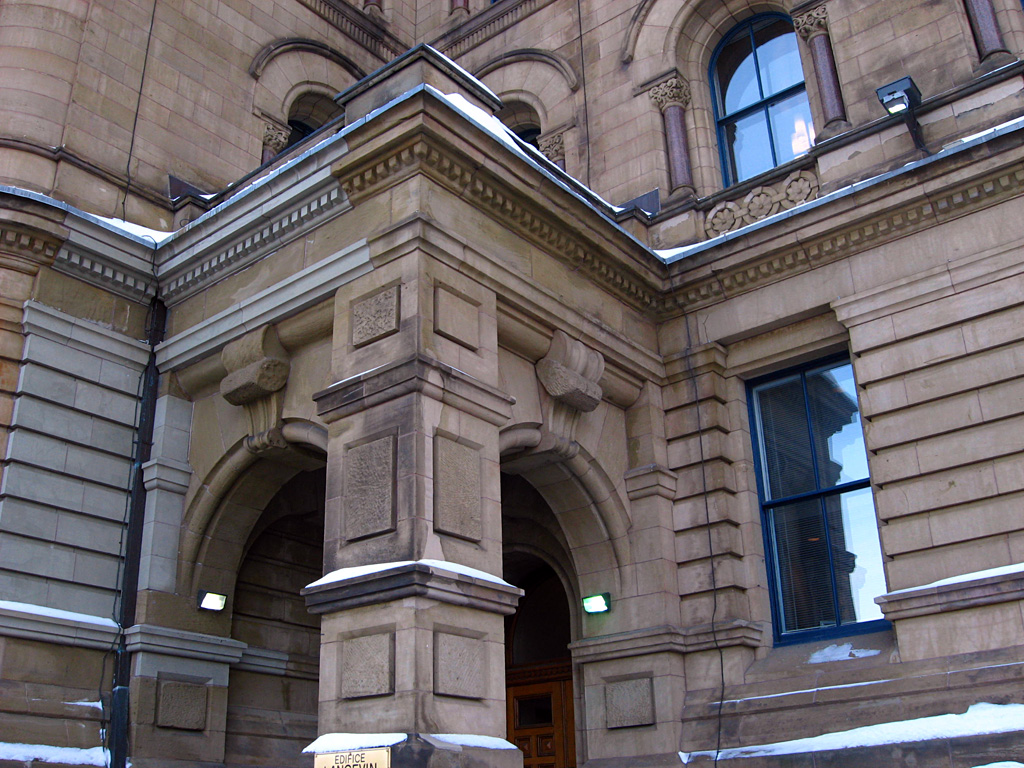
PCO building, Ottawa

The decision of the British Columbia Attorney General not to prosecute 20 additional murder charges against Robert Pickton seems like a failure to strike the proper balance between the good use of government resources and the pursuit of justice. It has frequently been pointed out that had his victims been less marginalized members of society their initial disappearances would have been much more thoroughly investigated. Similarly, the failure of the police to appreciate what was occurring and put a stop to it over such a long period of time would have been deemed negligent and unacceptable. By choosing not to prosecute all the murders for which the Crown has evidence, the marginalization of these women is being further entrenched. It is inconceivable that the second trial would not occur if the victims had been wealthy residents of Shaughnessy or the British Properties.

The creation of a detailed public record of what transpired has societal value: both for those who knew the victims and for those who hope to improve the future operation of the police and justice systems. The argument for having a trial is therefore similar to the case I made previously for completing Slobodan Milosevic’s trial after his death. In such cases, the point is not to punish the offender; it is, rather, to make the facts of the situation known, demonstrate places where errors were made, and provide some guidance for future behaviour. On an important but less practical level, a second trial would also be an assertion of the equal human worth of the second group of victims: an especially important message to send given the ways in which the supposed equality of law is not always as meaningful or substantial as it ought to be.

British Columbia carbon tax

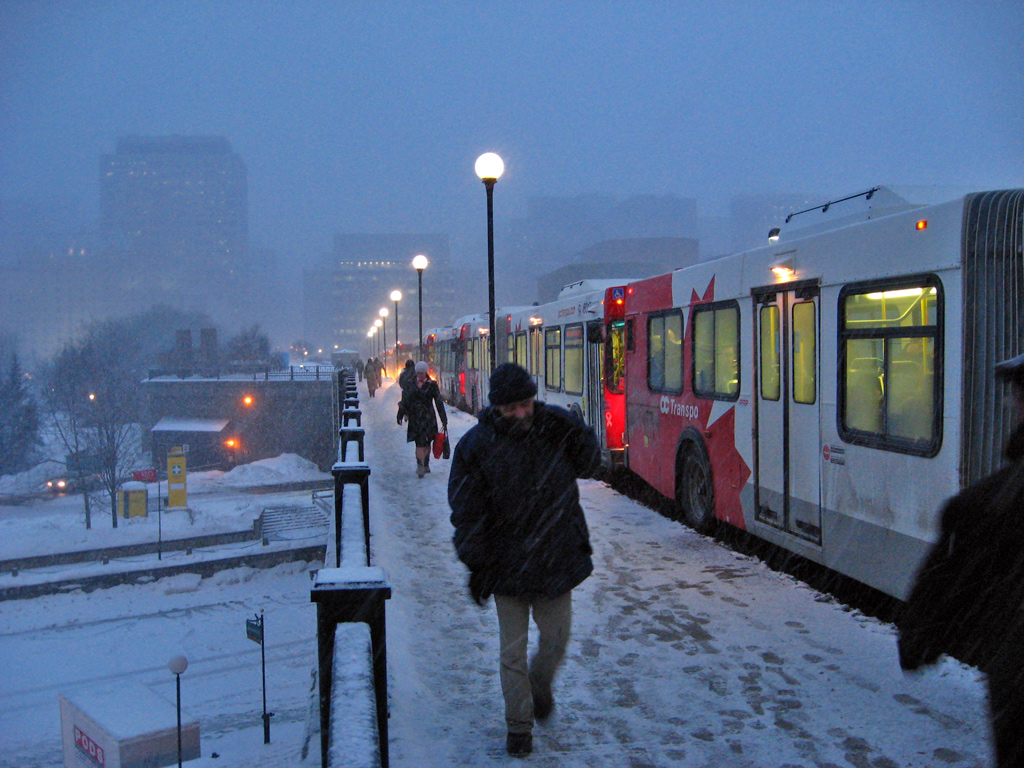
Buses at the Rideau Centre, Ottawa

In a relatively big announcement today, British Columbia has announced a new carbon tax on gasoline, diesel, natural gas, coal, propane and home-heating fuel. Canada-wide, the combustion of fossil fuels represents about 70% of total emissions, with the remainder consisting of things like industrial process emissions and those associated with landfills. The B.C. tax takes effect on July 1st, starting at $10 a tonne and rising to $30 a tonne by 2012.

Like many proposed carbon taxes, the British Columbian scheme aims to be revenue neutral, with the funds collected being primarily redistributed back to consumers through reductions in other taxes and increased grants to low-income individuals. This somewhat reduces the environmental effectiveness of the tax, since some of the refunded money will be used to continue doing emissions intensive things, but it makes it easier to defuse claims that this is an excessive new burden on low income people. The projected emissions reduction for the next three years is 1 Mt per year – just 1.5% of the B.C. total, but a start. At present, British Columbia is in the middle of the pack when it comes to emissions among Canadian provinces: approximately on par with Quebec and Saskatchewan, but significantly behind Alberta and Ontario.

B.C. is also part of a regional climatic organization called the Western Climate Initiative, which aims to launch a cap-and-trade scheme for greenhouse gasses. With luck, such provincial and regional systems will yield both absolute reductions in emissions and useful lessons in policy design.

Red dot campaign to reduce junk mail

While it won’t do anything in relation to unsolicited mail that is properly addressed to you (like credit card applications), following the advice from this website will lead to your mail carrier no longer leaving unaddressed advertising for you. The page includes a sign for your mailbox and a letter for your mail carrier. There is also a link to the the Canadian Marketing Association’s Do Not Contact Registry, which also aims to prevent unwanted telephone solicitation.

The total effect of doing these things won’t be huge, but it is a small step towards less waste and annoyance.

[Update: 30 Mar 2008] Another resource for spam-troubled Canadians: iOptOut.

Westjet v. The Canadian

For those pondering lower carbon options for traversing Canada, Via Rail has a Toronto-Vancouver train called The Canadian that makes the trip in a little over three days each way. Unfortunately, the tickets are ridiculously expensive. Even in a shared sleeper car, it costs about $1,700 round trip, compared with $500 – $600 for a much faster journey with Westjet.

The round-trip flight generates about 1,700kg of carbon dioxide equivalent, while the train produces about 727kg. It seems a bit crazy to spend three times the money and twelve times the time in order to avoid emitting as much carbon as the average Canadian does in sixteen days.

Hydroelectricity and bare winter mountaintops

Blocks of wood, identified by species

Hydroelectricity is a crucial energy source for Canada: providing 59% of the national electricity supply (and 97% in Quebec), as well as energy for things like the Kitimat Aluminium Smelter. As such, there is good reason to be concerned about changes in mountain glaciers and snowpack arising from climate change. Ideally, you want snow and ice to accumulate in the mountains during the winter. That somewhat reduces the flow of water into reservoirs, which helps prevent the need to release large quantities because the dam is at capacity. Then, during the spring and summer, you want the ice to melt, helping to keep the water level in the reservoir relatively steady and allowing the continuous production of energy without threatening riverflow-dependent wildlife or downstream water usage.

Climate change is upsetting this dynamic in several ways. Warmer winters involve less snowfall, overwhelming dams during the wet season and failing to build up frozen reserves. Hot summers increase evaporation from reservoirs and water usage by industry and individuals. Some scientific evidence also suggests that climate change is exacerbating both the intensity of rainy and dry periods: further worsening the stability of water levels and the ability of dams to produce baseload energy reliably.

Mike Demuth, a glaciologist working for Natural Resources Canada, predicts the disappearance of all small to mid-sized glaciers in the Rockies within the next 50 to 100 years. The Athabasca and 29 other glaciers feed the Columbia River, which in turn provides 60% of the electricity used in the western United States (generated by the Grand Coulee Dam, Chief Joseph Dam, and others). The low cost of energy in the area has even led companies like Google to locate their server farms in the region. Not only is the loss of our mountain cryosphere likely to cause domestic problems, it is highly likely to eventually provoke a pretty serious international conflict.

Canada’s anti-superbug initiative

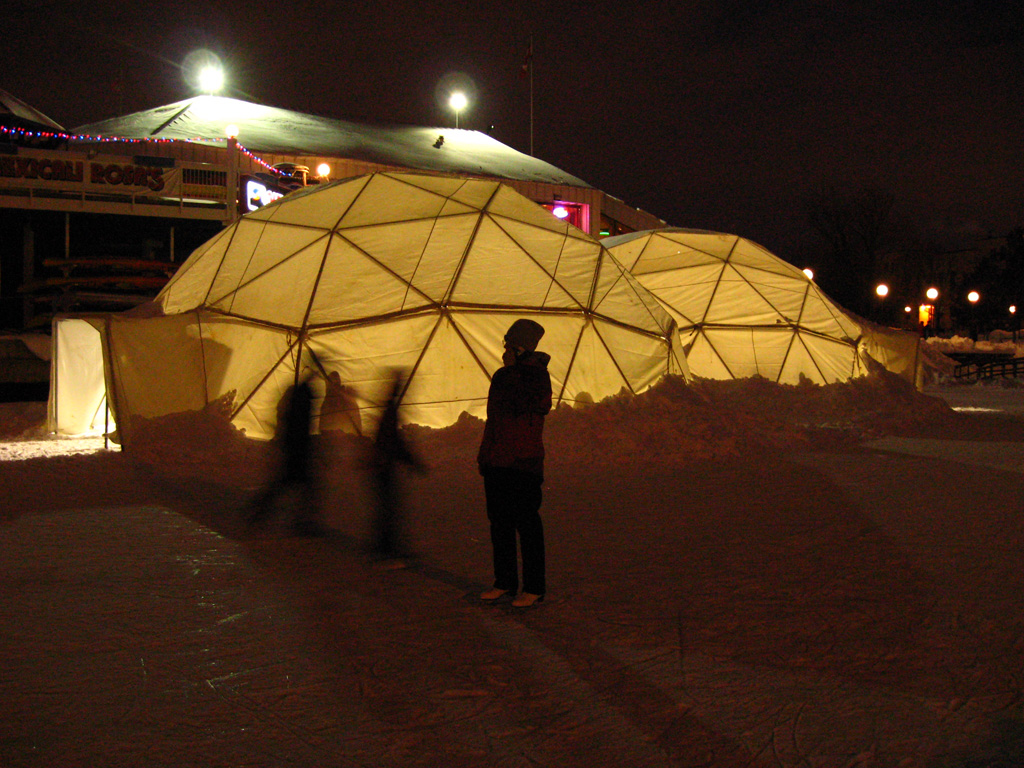
Geodesic domes at Winterlude

Canada’s federal government is launching an initiative to combat antibiotic resistant bacteria. This is a very sensible thing to do, given how bacterial evolution is creating resistant strains at a higher rate than the one at which we are inventing new antibiotics. MRSA and its relatives could well signal a return to a world in which morbidity and mortality from bacterial illness start shifting back towards the levels prevalent before antibiotics were widely available.

We largely have ourselves to blame for the existence of these bugs. Every time a doctor prescribes unnecessary antibiotics in order to get a patient out of their office, we give them another chance to get stronger. The same goes for when a patient stops taking an antibiotic prescription when they feel better, rather than when it runs out, potentially leaving a few of the most resistant bugs behind to infect others. The same is true for all the ‘antibacterial’ soaps and cleaning products out there. Putting triclosan in soap is pretty poor prioritization. Outside the body, it makes the most sense to kill bugs with things they cannot evolve resistance to: like alcohol or bleach. Using the precious chemicals that kill them but not us to clean countertops is just bad thinking. Finally, there is the antibiotic-factory farming connection discussed extensively here before.

The federal plan involves a number of prudent steps, many of them specifically targeted to MRSA and Clostridium difficile. These include more active patient screening, better sanitization of hospital rooms, use of prophylactics like gloves and masks, and the isolation of patients with resistant strains. Given that there were 13,458 MRSA infections in Ontario hospitals in 2006, it seems that such an initiative is overdue. It would be exceedingly tragic if we comprehensively undermined one of the greatest discoveries in the history of medicine through carelessness and neglect.

The failure of liberal dreams for Afghanistan

Sayed Pervez Kambaksh’s death sentence is a compelling demonstration of how thoroughly the west has failed in Afghanistan. The death sentence was issued by an Afghan court in response to the allegation that Kambaksh had downloaded and distributed a report about the oppression of women. This is not the first time a death sentence has been issued for blasphemy in Afghanistan since the imposition of the Karzai government, but it is a pretty egregious case. Yesterday, the sentence was confirmed by the Afghan Senate.

Is the whole point of the war in Afghanistan the replacement of one brutal band of thuggish warlords with another? Admittedly, the present government is better than the Taliban was, but that is hardly a ringing endorsement. Canada is considering an ever-more long term commitment to the protection of this government while, at the same time, we cannot trust them not to torture detainees that are transferred to them.

What is to be done in response? Do we become hard-headed realists, asserting that aiming to empower women or promote human rights was never a realistic or appropriate aim of the war in Afghanistan? Supporting a government just because they seem relatively pliable and seem to say the right things about cracking down on groups that worry us is certainly a practice with a long history. That said, it isn’t a very successful one. After all, it is why the west armed the Mujahideen in the first place (not to mention the Pinochets and Musharrafs of the world). Do we become isolationists, then, despairing of our ability to effect any progressive or worthwhile change in the world? That doesn’t seem practically or morally tenable in a world as interconnected as ours has become.

Perhaps all we can do is become a bit more cynical and a lot more critical about the supposed justifications for interventions. Rather than aspiring to replace oppressive societies with somewhat better ones, perhaps we should admit that overthrowing governments – however awful – will normally lead to horribly broken societies. That is not to say that it is always the worst option available. A horribly broken society is better than one in which an active genocide is occurring. With such exceptions admitted, it does seem as though the dream of a transition to liberal democracy through military intervention has been essentially invalidated by the experience of western states in Afghanistan and Iraq since 2001.

Taskforce calls for $2 billion for CCS

Blue shopping basket

In March 2007, the Canadian federal government and the Government of Alberta formed a task force to investigate carbon capture and storage (CCS) as a climate mitigation technology. Now, the report of that task force has been released: Canada’s Fossil Energy Future: The Way Forward on Carbon Capture and Storage. The report for $2 billion to be spent by federal and provincial governments in order to get five CCS facilities online by 2015. These five facilities would collectively sequester 5 Mt of CO2 per year. This is equivalent to about 0.6% of Canadian emissions.

Supporters of the plan argue that initial governmental support is essential for learning how to scale up the technology, making much larger (and presumably unsubsidized) reductions possible in the future. The report projects that as many as 600 megatonnes (Mt) of CO2 could be sequestered by 2050: a figure equivalent to about 85% of current Canadian emissions. Sequestration at this kind of scale is a key element of the climate plan recently announced by the Government of Alberta.

The announcement raises both practical and ethical questions. The first centre around the overall expense of the plan, the second around who is paying it. The report acknowledges that building CCS into facilities increases the cost substantially:

The financial gap associated with most commercial-scale CCS projects (ones with one megatonne or more of CO2 emission reductions per year) is on the order of hundreds of millions of dollars.

Businesses will only do this when either (a) the cost of emitting carbon justifies mitigation efforts of this expense or (b) they can convince someone else to foot the bill. The idea that federal and provincial governments should spend $2 billion to help the oil sector continue behaving as usual can be seen as objectionable. It certainly contradicts the Polluter Pays Principle. If carbon capture and storage is to rescue certain industries from the climate change externalities they are creating, it will have to be possible for them to pay for it themselves and remain profitable; otherwise, either public finances or the global environment will need to suffer to sustain their profits.

Earth Flotilla

Oleh Ilnyckyj

The 1997 and 1998 LIFEboat Flotillas were exceptional undertakings that I was privileged to participate in. Organized by Leadership Initiative for Earth, each centred around a week-long sailing experience in the Gulf Islands of British Columbia, intended to help make young people more aware of environmental issues and better connected with those similarly interested.

In March of this year, a smaller but similar expedition is taking place, organized by the World Wildlife Fund, in cooperation with some of the people involved in the original flotillas. Applicants must be residents of British Columbia between 13 and 17. They must be interested in environmental issues and willing to put in the time required.

As someone lucky enough to do something similar in the past, I recommend the opportunity wholeheartedly. If any readers of this blog match the description – or know people who do – application information is online.

[Update: 11 February 2008] I am pleased to report that Tristan’s brother will be participating in the Earth Flotilla, and because his family found out about it from this site, no less.

Canadian emissions by province

Canadian emissions by province

The chart above breaks down Canada’s 1990 and 2005 emissions by province. It shows emissions of all greenhouse gasses, measured in megatonnes of CO2 equivalent. It is interesting both in terms of totals and in terms of rates of change. The only jurisdiction where emissions declined was the Yukon, where they fell from 0.6 to 0.4 Mt CO2e. One obvious fact demonstrated by this chart is that it is possible to address Canadian emissions to a significant extent by focusing on just two provinces, with another three making more modest but still substantial contributions.

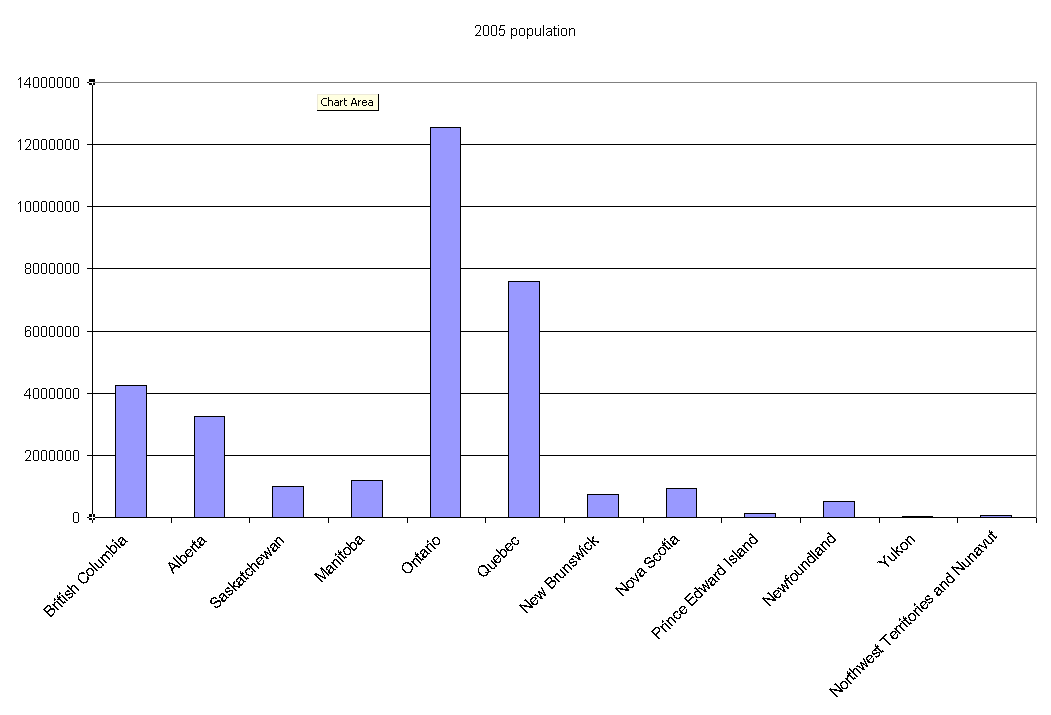
This chart shows the population distribution between the provinces in 2005:

Canadian provinces by population

Of course, it is unfair to directly compare emissions with population. When a driver in Ontario drives using gasoline extracted from the oil sands, Ontario bears some responsibility for those emissions. This is akin to the relationship between emissions and world trade, as discussed before. Even so, there is an obvious disjoint between the level of emissions in Alberta and their share of the Canadian population.

To reach a sustainable level of emissions, it will be necessary for everybody to cut their emissions significantly. That being said, the disaggregation of data can help us to make better choices about where to prioritize. From that perspective, the provincial policies of Ontario and Alberta start to look very important indeed.