Vorticity (4K) from Mike Olbinski on Vimeo.
Category: The outdoors
Hiking, camping, canoeing – if it’s an outdoor adventure, it should be under this heading
Dancing with the sky
I find that my Prism Quantum two-line kite is too frustrating to fly in winds of less than 16 knots (kn). The ideal range is 16-25 kn, with the wind consistent in power and coming from a consistent direction. That’s a rare situation indeed in Toronto, where winds are almost never so strong and tend to be turbulent and inconsistent when they are. Because of that, I check Windfinder.com for the Toronto Island Airport to spot days which may be plausible for good kiting.
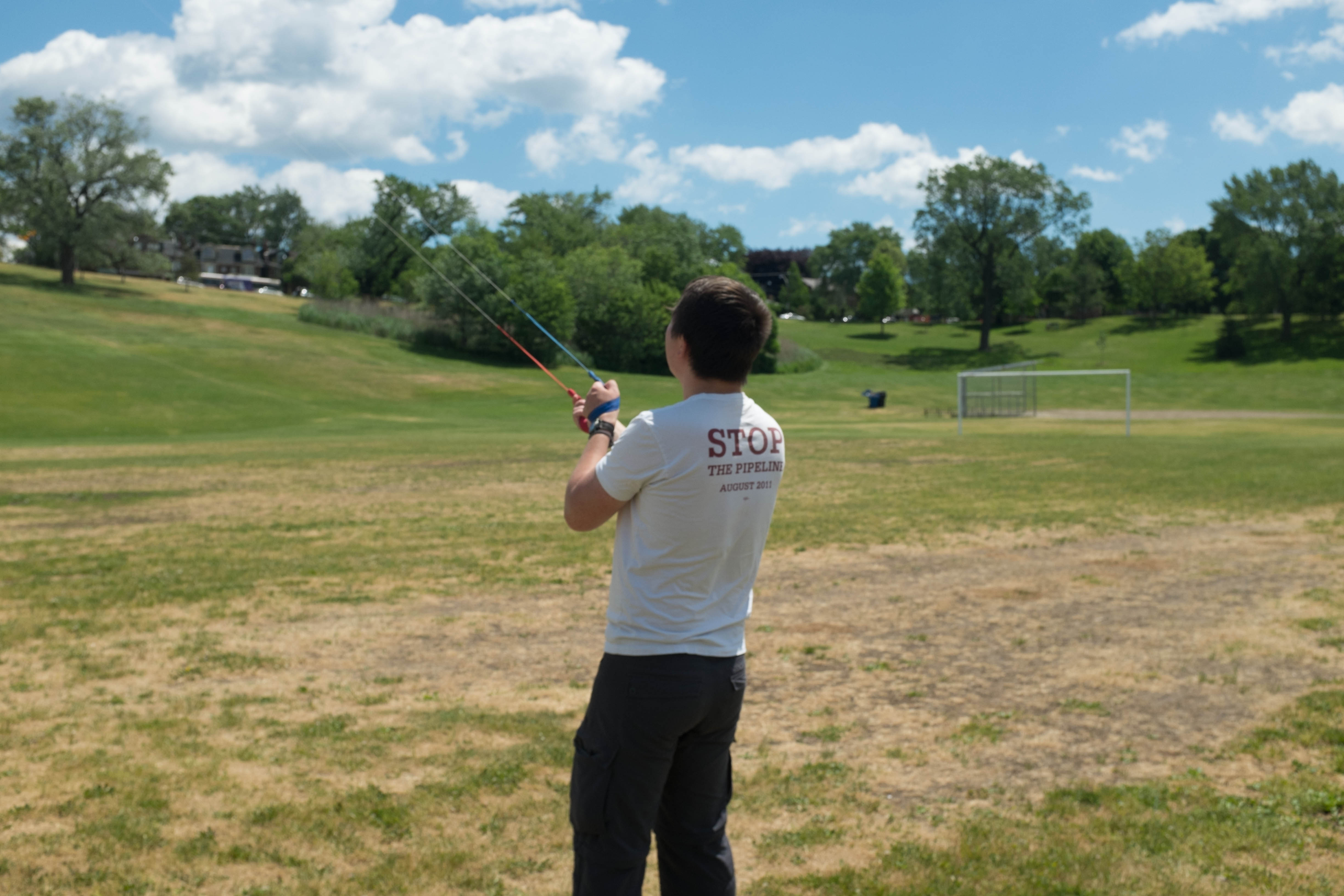
The forecast for today looked promising, so I went with my friend Nada to fly a bit in Riverside Park. It’s not as good a kiting location as Hanlan’s Point beach, but it’s a lot easier to reach and depart from and offers more options in the event of the summer downpours and thunderstorms that often accompany windy spring days.
All photos of me are by Nada Khalifa.

One of my favourite things about kiting is teaching it to less experienced flyers. Anyone who seems interested and heavy enough to safely use this particular kite in these particular wind conditions is encouraged to give it a try. All told with this kite — in a variety of locations around Toronto — I have helped at least 50 people take their first flight with a two-line kite, with inductees ranging from about ten years old to well over seventy. I make a special effort to encourage women of all ages to try it, since there seems to be some general set of social expectations that makes men and boys more willing to give it a try.
I feel like a few years of intermittent kiting (along with related reading, video tutorials, and inspiring acts of lunacy) have taught me a fair bit about aeronautics in an applied sense.
I tell my Massey friends that kiting is a bit like sailing for poor people. The Quantum has carbon fibre (or, apparently, “Pultruded Carbon“) spars and a sail made of material that would be suitable for a sailboat. Kite lines are highly specialized polymers. A kite lets you grab a little piece of the wind and feel how it’s moving across a fairly large area. As well as a meditative activity, it’s a cybernetic one: a complex interface between your body, a machine, and changing environmental conditions.
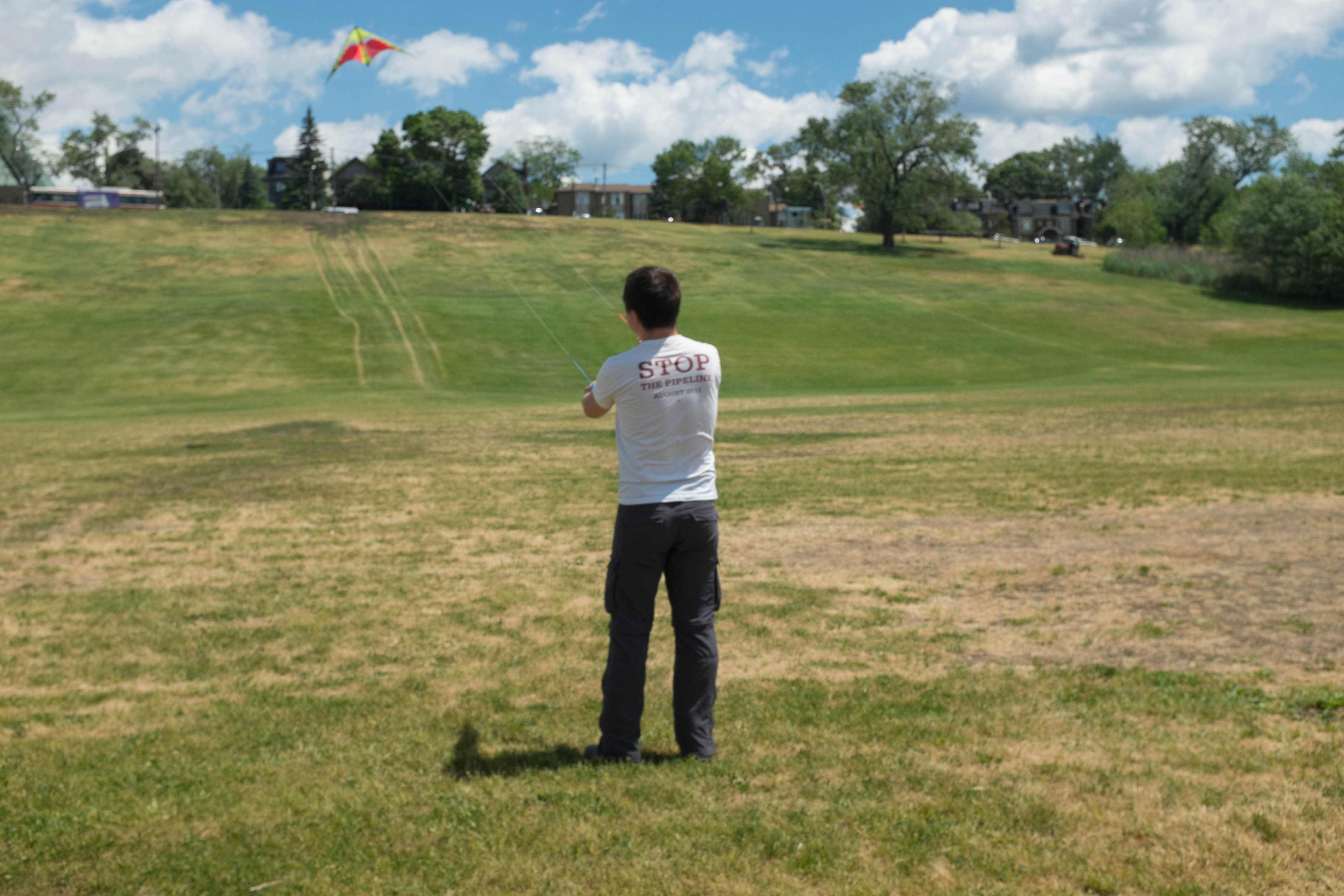
Early when I was reading about more advanced kites, I thought that more power and more lines (there are lots of four and five line kites) would probably produce a more sophisticated or interesting flying experience. Having seen people using large but much less maneuverable parasail-type kites for kiteboarding, I am quite happy with the flexibility and acrobatic potential of a two-line delta style kite like the Quantum.
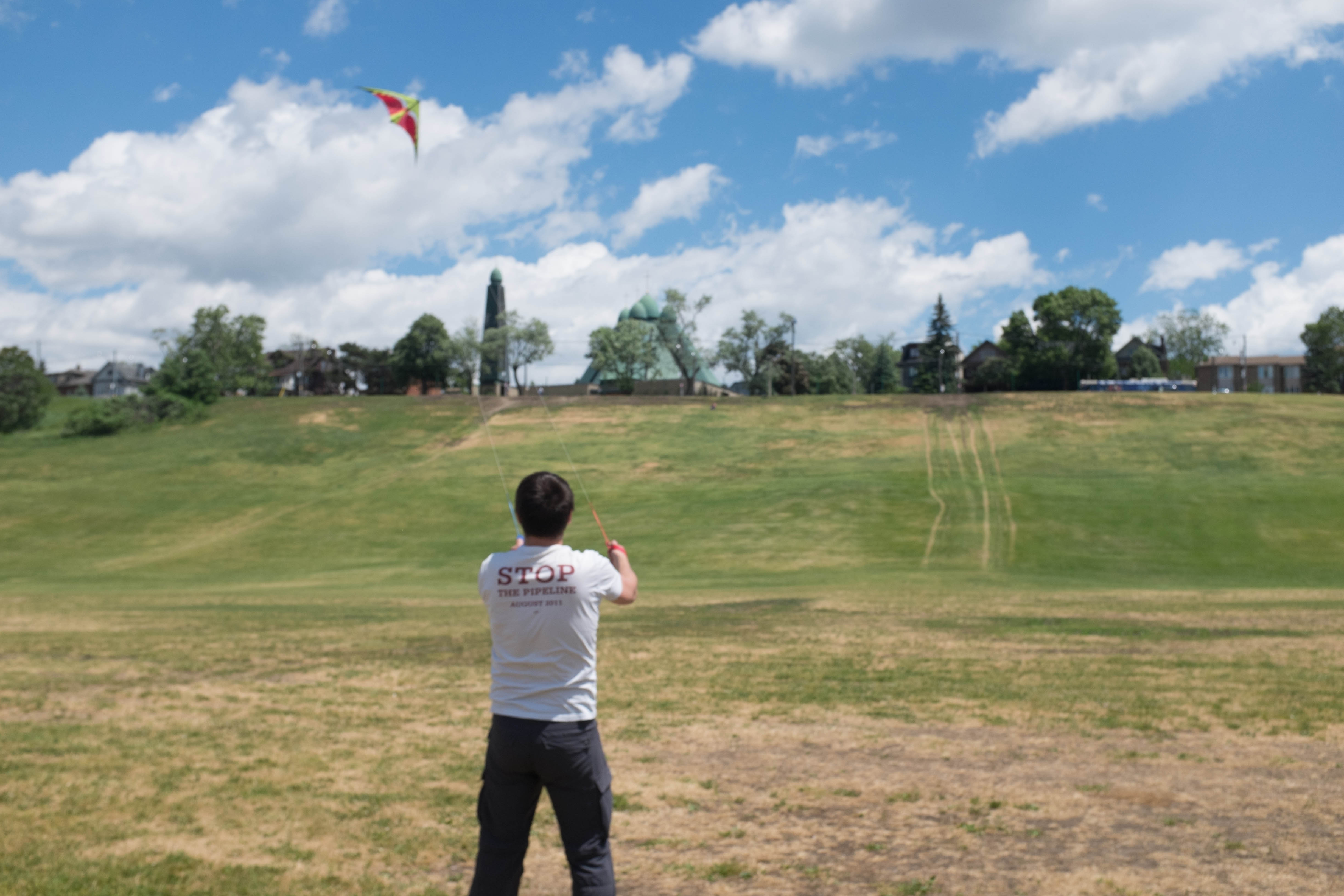
Concepts from kiting — about airflow, turbulence, attitude, and so on — seem generalizable to craft of many kinds. Indeed, thinking about attitude in the specific sense of simulated spacecraft in Kerbal Space Program has helped me disentangle some of the complex elements involved in precisely maneuvering a flying airfoil through a turbulent mass of air. Direction vector relative to the wind is crucial, as is responding to abrupt changes in air flow.
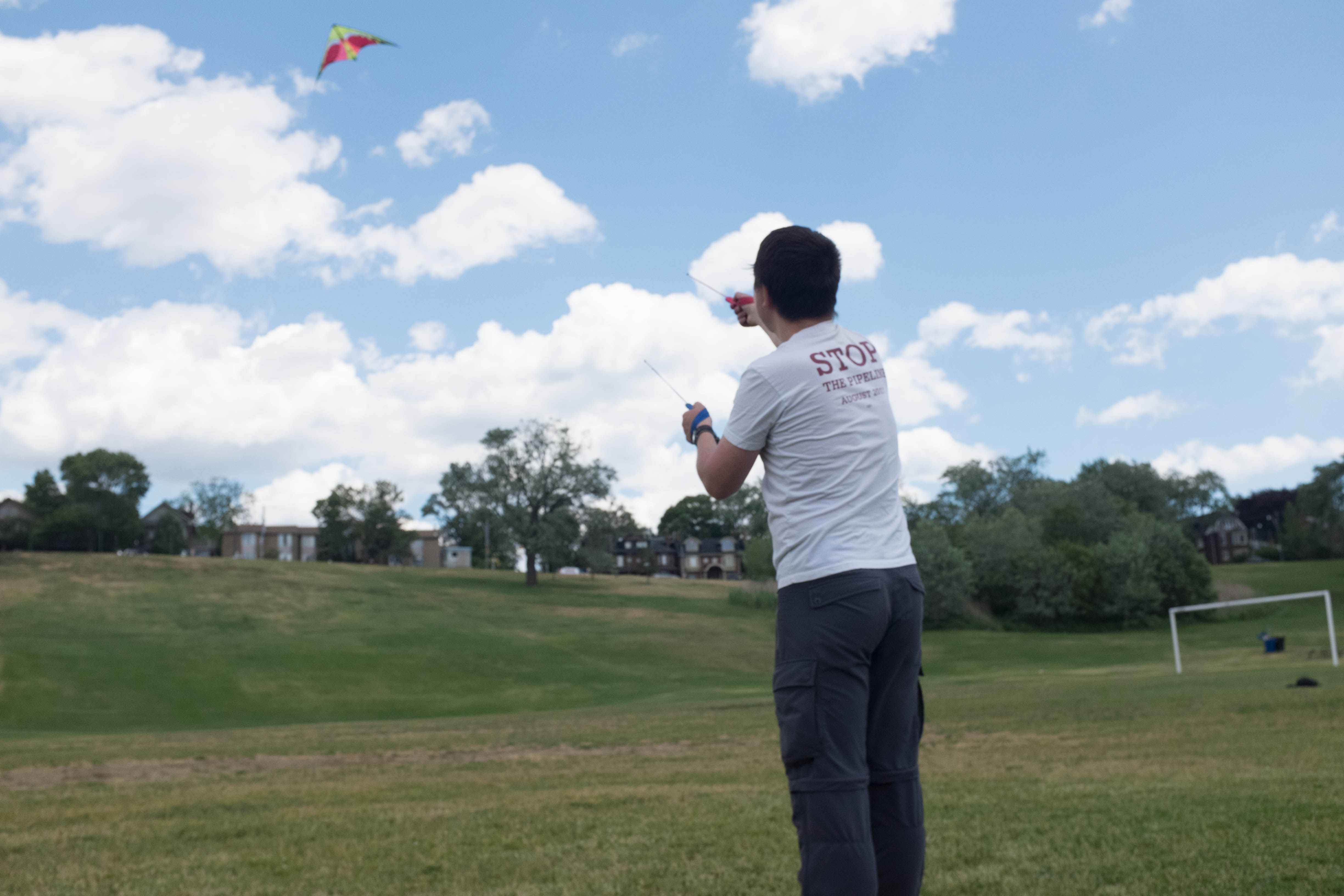
I would love to get a small soft kite with no hard parts, small enough to pack into the cargo pocket of my trousers or the poacher’s pocket in my winter jacket. With a light one-line kite, it would be possible to do a bit of flying whenever I happen to find myself in a decent wind. The Prism EO Atom is an intriguing possibility of this sort, though it’s hard to gauge how compact it is. Unlike most single-line kites, it offers a bit of variety in how it flies because you can pull it downward and watch it tumble and recover in interesting ways.
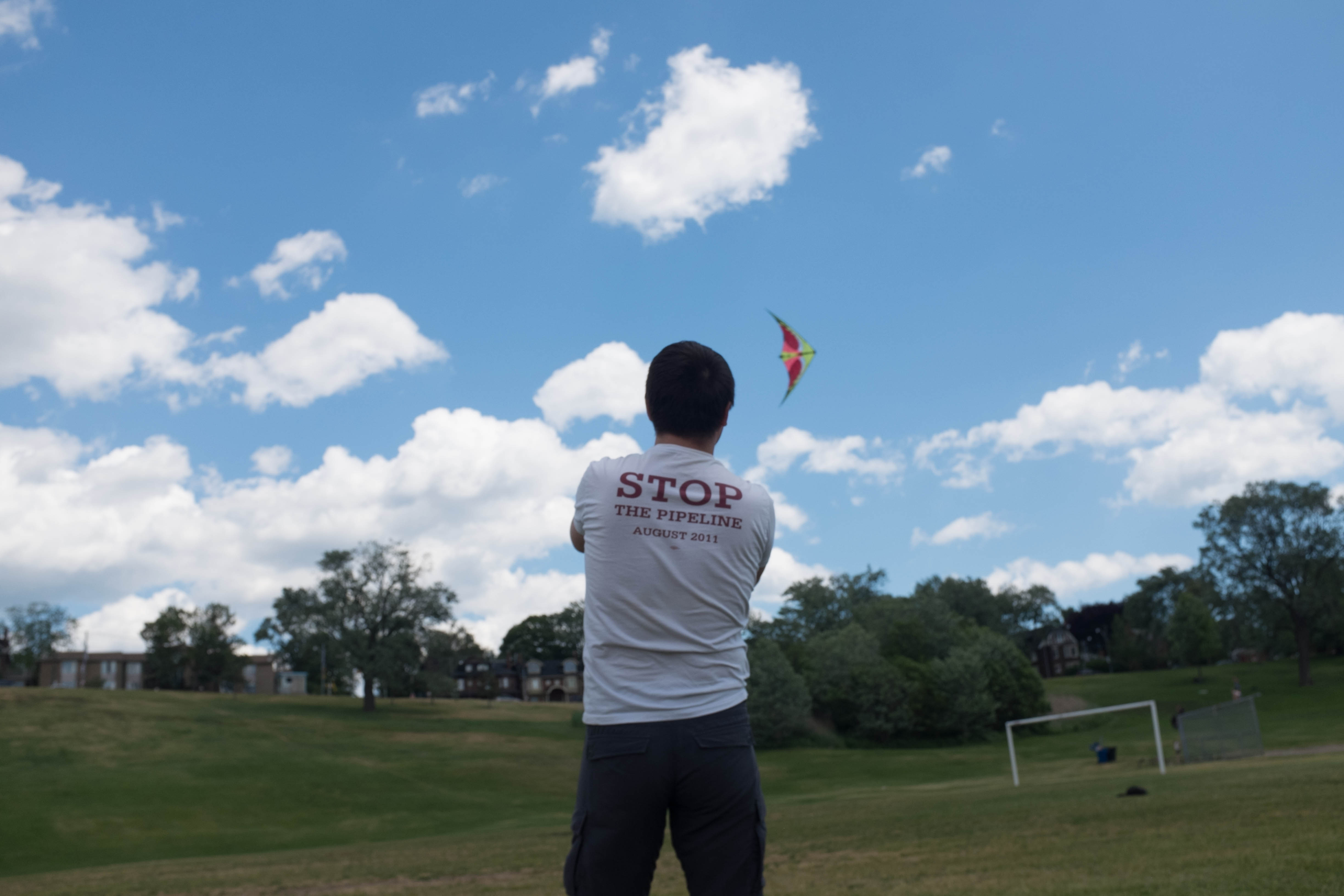
My sense is that kiting has therapeutic value for my chronic shoulder injury. The traction is probably similar to what physiotherapy elastic bands are meant to produce, and it’s a whole lot more fun.
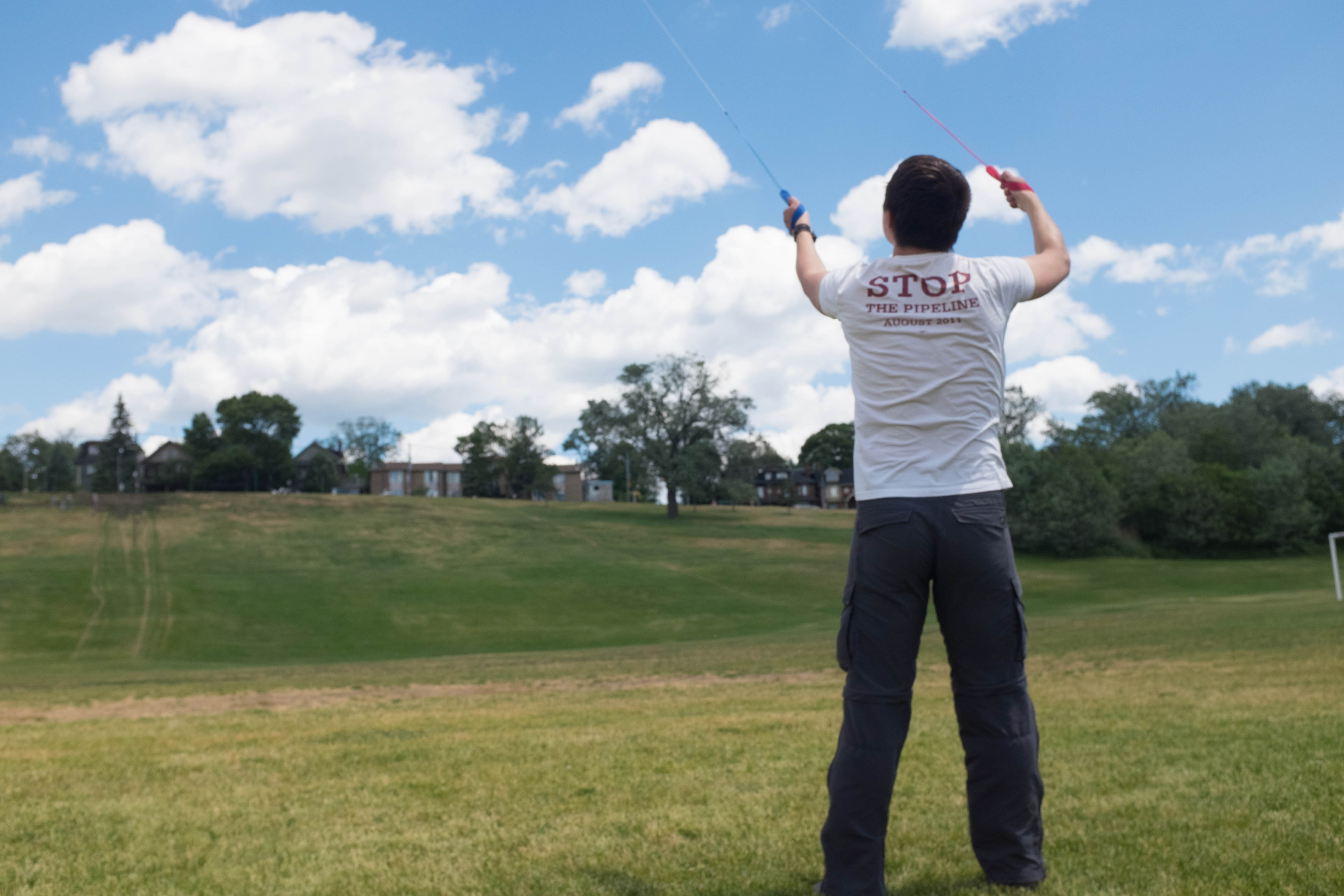
With very stable wind, kiting is an excellent solitary activity. I just start a set of lectures rolling on my iPod and keep going for as long as the wind supports me. This tends to work best during adverse weather — either days well below 0 ˚C or those interspersed with thunderstorms. In those conditions, good flying locations tend to be thinly populated. When the weather is fine, you are sometimes interrupted by (welcome) inquiries from people who want to give it a try, unwelcome complaints from the maddeningly large subset of the population who are reflexively anti-kite, and the thoughtless interference of people who aren’t paying attention to what is happening above and around them.
With variable wind, it’s highly useful to have a friend to help you re-position the kite for launch after a crash or a failure of the wind.
I love the paganism of kite flying: the immediate connection with natural forces vaster and more powerful than you, and efforts to work alongside them rather than seek to dominate them or escape from their power.
Barbour Beaufort jacket
About five years ago, soon after I moved to Toronto, I bought an olive-coloured Classic Beaufort jacket, manufactured by Barbour in the U.K. I was made aware of the brand and model by Fred Burton’s book Ghost: Confessions of a Counterterrorism Agent, in which he suggests that the jacket is a favourite among professionals who have to spend large amounts of time outside.
The jacket is excellent in a number of ways. I have worn it daily for at least half the year since getting it and have found it warm enough to cope with Toronto winter night temperatures, provided you wear an insulating layer underneath, and capable of coping with moderate rainfall. The provision of pockets is superb. There are two large exterior front pockets where I always carry both fingerless wool and leather gloves. There is a secure internal breast pocket which is insulated and ideal for an iPod. There is also a hidden pocket built into the (excessively expensive, $200) zip-in lining. Finally, there is a giant “poacher’s pocket” all along the bottom of the back of the jacket, which is large enough to carry a rabbit or a pheasant and which I have used to carry scarves, maps, photographic equipment, and so on. On the sides are two very useful open lined pockets where you can keep your hands warm.
The jacket has lots of little features that set it apart as a quality item. The zippers are of very good quality, especially the large zipper down the front. The flap around the neck is made of a quality corduroy-like material and it can be buttoned in place around your neck as a fairly effective scarf alternative.
The jacket is made of waxed cotton with a tartan internal lining. As such, even if you are careful to re-wax it every year, it eventually falls apart. Mine has started splitting at the cuffs. At the same time, holes have appeared all along the bottom of the sleeves. At the back and bottom of the jacket, where I inevitably sit on it, both the external waxed cotton and the internal lining have worn through in places. Also, in the last couple of days the small zipper on the breast pocket has broken in two different ways: the zip has come off one of the two rails, and a piece of one rail has detached from the rest of the jacket.
All told, the Beaufort is the best jacket I have owned for cool to frigid conditions and for photographic work. The one I have now remains quite functional, but is reaching the level of damage where I am considering replacing it. I know Barbour offers a well-regarded repair service, but it also seems like a jacket principally made of waxed cotton will inevitably weaken over time and that the money spent on shipping and repairs may be better invested in a whole new coat.
Evergreen Brick Works
My friend Rosie organized a Massey expedition to the former-brickworks-turned-community-space in the Don Valley.
It was a nice break from grading (and hourly email complaints for students demanding essay and participation grades).
I’m still recuperating a bit from the divestment setback, along with a string of other recent minor misfortunes, so getting out into Toronto’s remnants of green space was a good idea.
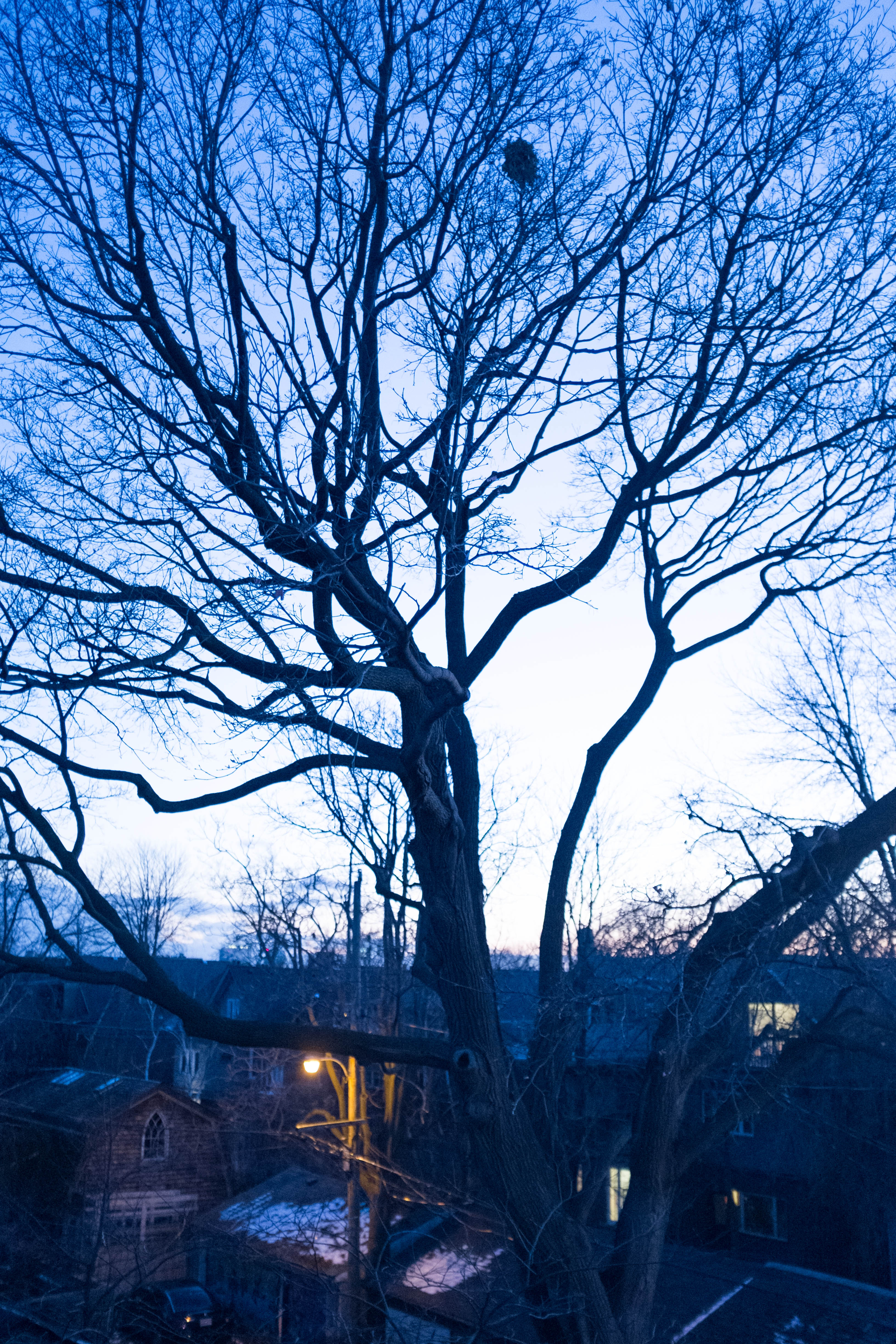
Winter and the Third Floor Neighbourhood
Astonishingly enduring boots
Back when I was in high school (before 2000), I was given a pair of Raichle hiking boots, purchased at Mountain Equipment Co-op (and also kindly mailed to me in Oxford before my first trip with the Walking Club).
The boots are excellent, with solid ankle support, a reliable ability to maintain grip in wet and slippery conditions, and excellent comfort. I hiked in them in the heat of Italy, Morocco, and Malta; on rain-covered rocks in Scotland, Wales, Ireland, England’s Lake District, and British Columbia; in ice-bound Tallinn, Vermont, and Helsinki; and tramping through the mud in Devon and Oxford’s Port Meadow.

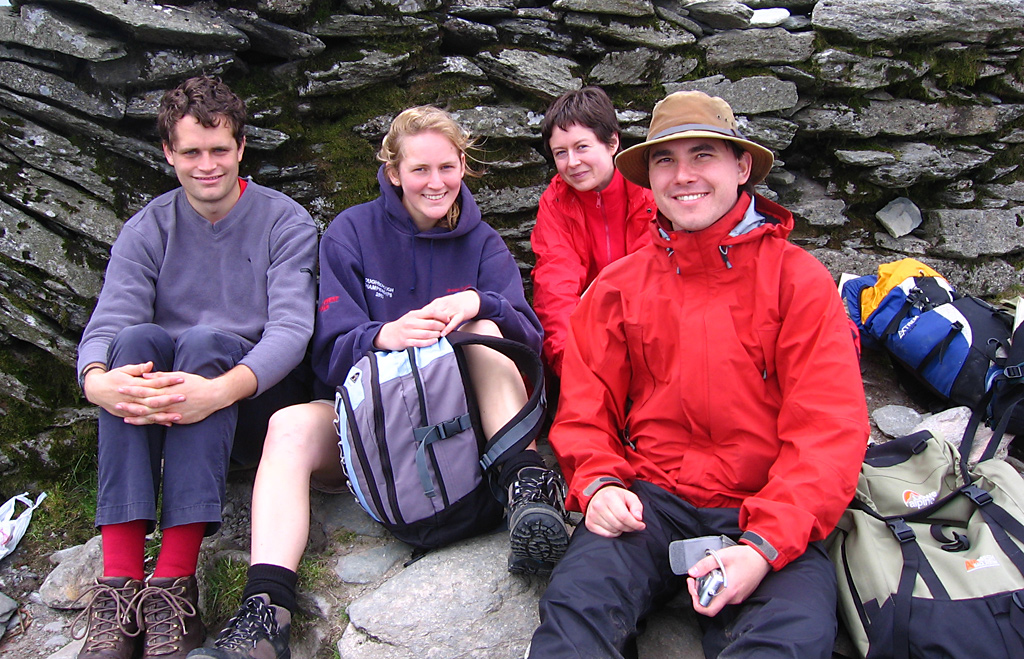

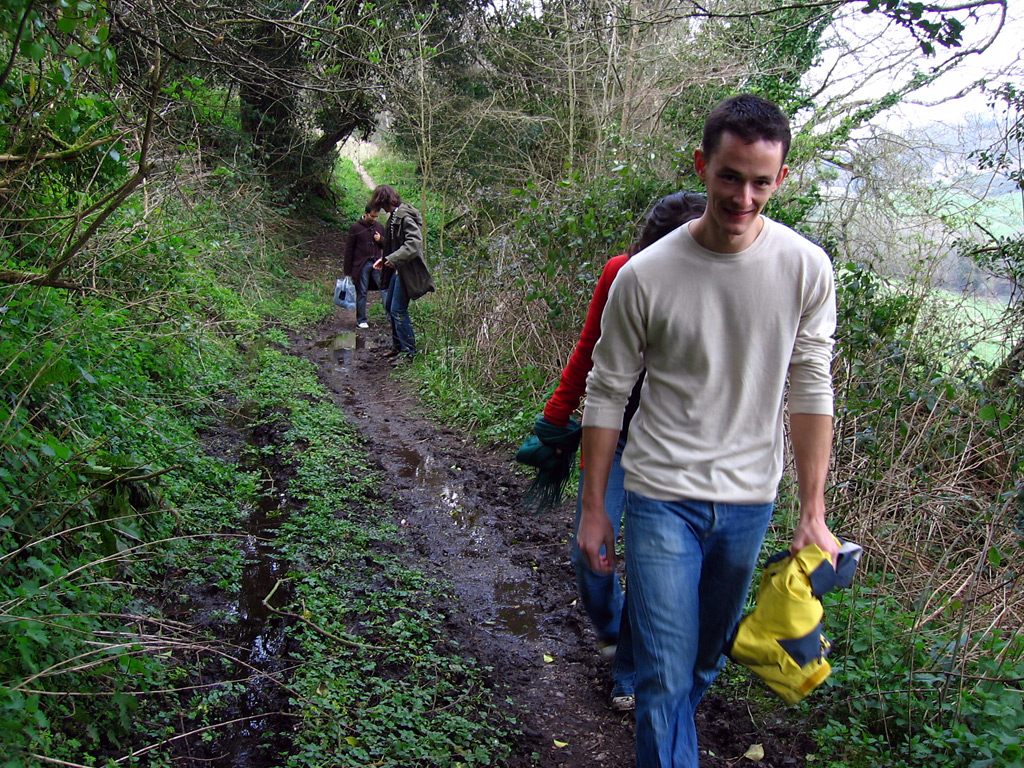
I am glad the people at MEC recommended these leather boots over Gore-Tex ones. They essentially never soaked through, even after the occasional slip into streams, and were comfortable with wool socks in even very hot conditions.
They have also been my standard winter boots for five years in Ottawa and four in Toronto. In all that time, I haven’t even had to replace the laces — though I have tied them to fix breaks two or three times.
Yesterday, part of the rear right heel came loose. I will check into whether replacing the Vibram soles is possible and affordable. If not, I will be in the market for a new pair of hiking boots for the first time in an absurdly long while. Without a doubt, these boots have held up to at least twenty times as much use as any other pair of shoes or boots that I have owned. It makes me wonder what makes all the rest of my footwear so inferior, including Blundstone boots which cost only a bit less than the Raichle’s did but which only ever last a couple of years and Allen Edmonds boots which cost over twice as much and which have needed multiple repairs despite only being worn for formal occasions.
Koffler Scientific Reserve
Rosie Martin, a Massey Junior Fellow, organized a trip on Saturday to the Koffler Scientific Reserve.
Getting out into the woods was a great pleasure, and it was fascinating to see some tiny pond-collected larvae and insects under optical stereo microscopes, including damselfly and dragonfly larvae.
Post-wedding brunch
This past weekend, I was in Midland for my cousin Marko’s wedding.
The official wedding photographers/videographers asserted their exclusive domain over the wedding and reception, preventing me from getting any shots there (and saving me 12+ hours of post-processing).
I did get some shots at the family brunch the next morning. Several of the photos are of my cousin Tamara’s son Mykyta, who I have photographed before.
Watching the aurora
Thanks to the intervention of my friend Amanda, I spent the weekend at my friend Sabrina’s cottage on Paugh Lake, near Barry’s Bay, Ontario.
I had high hopes for a clear view of the fading Perseid meteor shower on Friday and Saturday night. Friday night was overcast and raining, though it was still remarkable to be in a place where rain falling on roofs and water, along with animal noises, were the only things audible. I am not sure when I was last outside a major urban area, but there haven’t been many cases since I moved to Toronto.
Saturday gifted us with perfect astronomical viewing conditions: far from city lights, and untroubled by the moon. We didn’t see a lot of meteors, but the sky was so full of stars that it made identifying familiar constellations a challenge. Across the sky, the band of the Milky Way was clearly visible, wheeling above us as the night went on.
Experimenting with some long exposures with my Fuji X100S (and a stepladder and dishcloth as an improvised tripod) I was surprised to see that the vague light in the northern sky came out as brilliant colour when photographed at 1600 ISO with a 30″ exposure.
I ended up spending hours photographing the aurora. There will be high quality images soon (and animated GIF is a terribly low-quality format for something so beautiful), but I wanted to put something up right away that would show the movement of the lights.
You may need to click the thumbnail to see the animation:
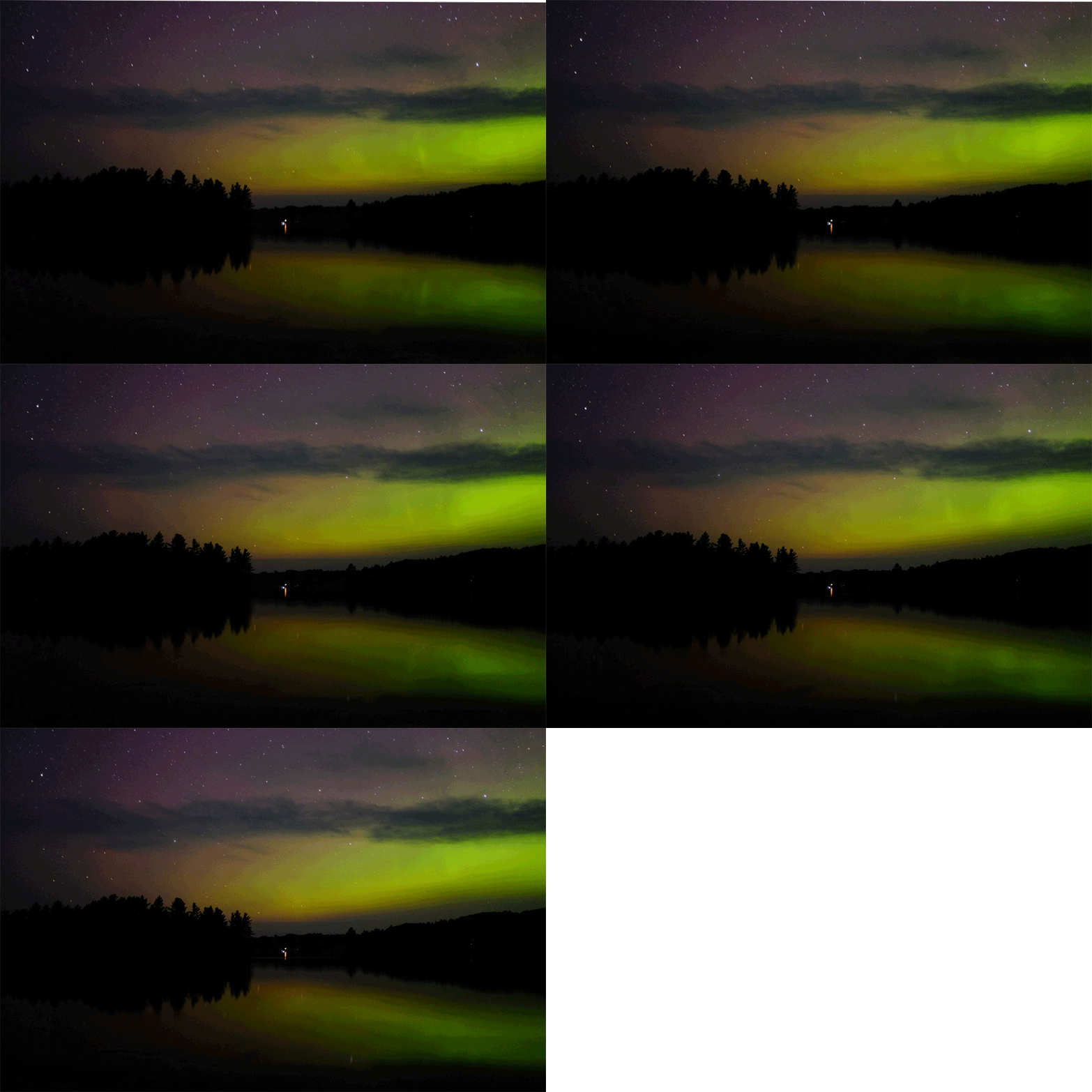
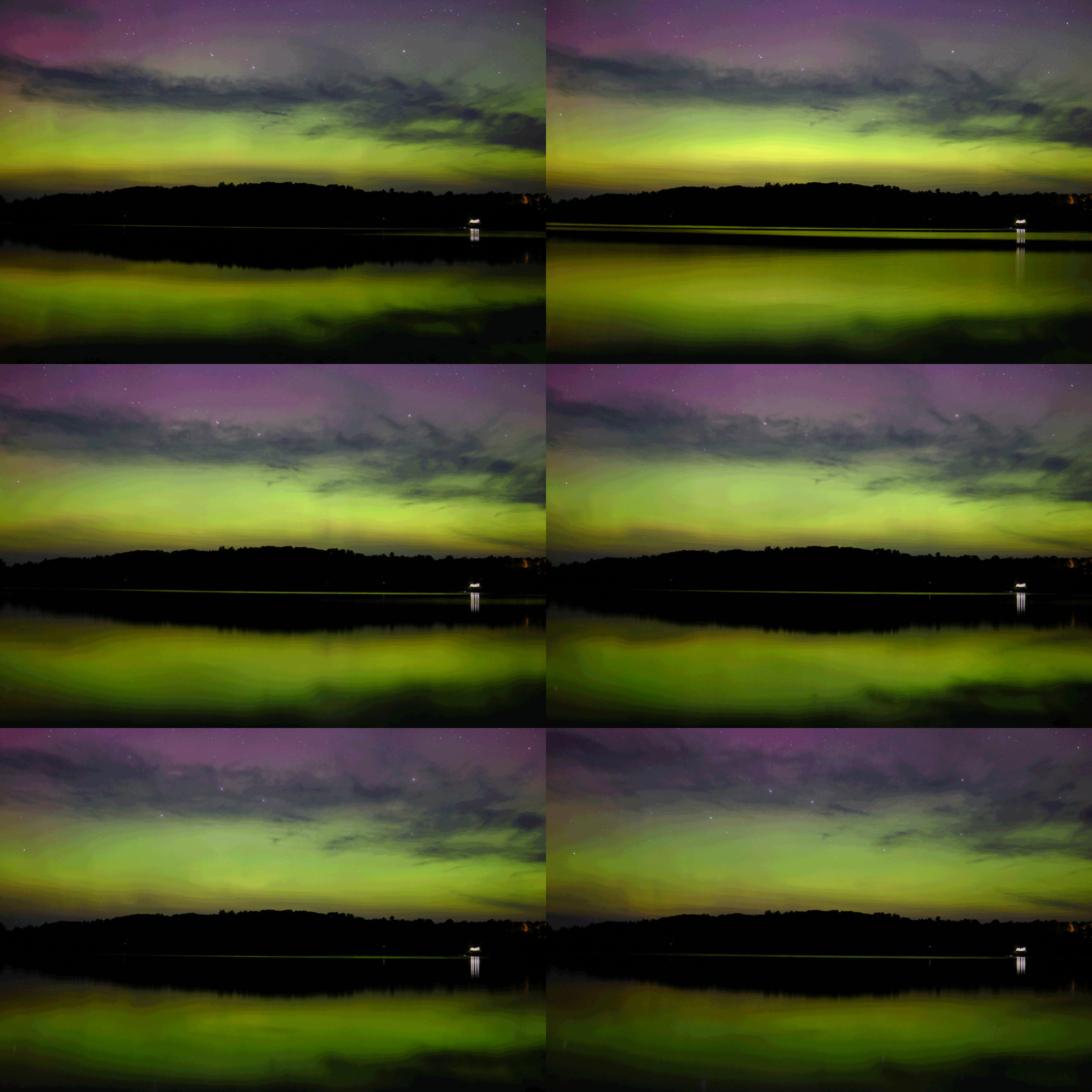
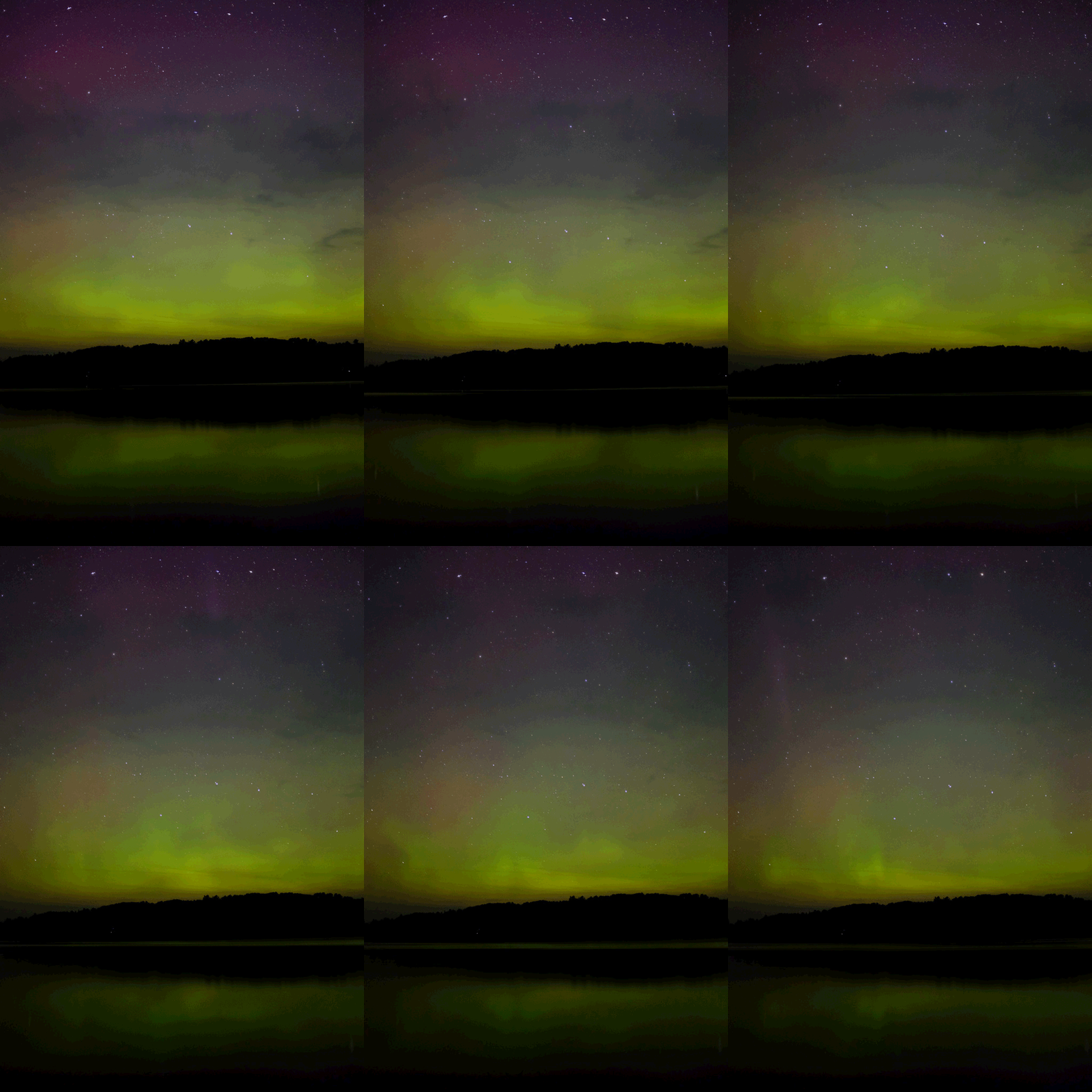
Aside from reducing the resolution and converting them to GIF format, these images are straight from the camera, not manipulated with any sort of software.
Riverdale Park