Helmets and driver psychology

Ian Walker, a researcher at the University of Bath, has uncovered an unfortunate tendency in human psychology. Drivers are more likely to hit cyclists who are wearing helmets. The hypothesis is that they compensate for the sight of a bare head by giving a wider berth when passing. On average, they gave a cyclist with a helmet 8.5cm (3.5″) less space. This was confirmed observationally by Walker himself, who used a sensor to evaluate 2,500 such incidents in Salisbury and Bristol. Motorists were most cautious around him when we wore a female wig and no helmet. Wearing the wig earned another 14cm (5.5″) of clearance, on average.

The study also found that larger vehicles are more likely to cut it close: “The average car passed 1.33 metres (4.4 feet) away from the bicycle, whereas the average truck got 19 centimetres (7.5 inches) closer and the average bus 23 centimetres (9 inches) closer.” That’s especially discouraging, given how the relative masses of a cyclist and a bus affect the dynamics of a possible colission.

A more comprehensive examination of the results (PDF) is available online.

The situation demonstrates the kind of game theory situation so common in safety and security. If you fall by the grace of your own actions, you are better off wearing a helmet. If a car actually does hit you, having a helmet is probably also a good idea. The degree of trade-off between reducing the probability of occurrence and mitigating the probable consequences is rarely easy to set effectively.

The take home lesson: there is a bit more reason to be wary of helmets, but cross-dressing could save your life.
Kosovo and Quebec

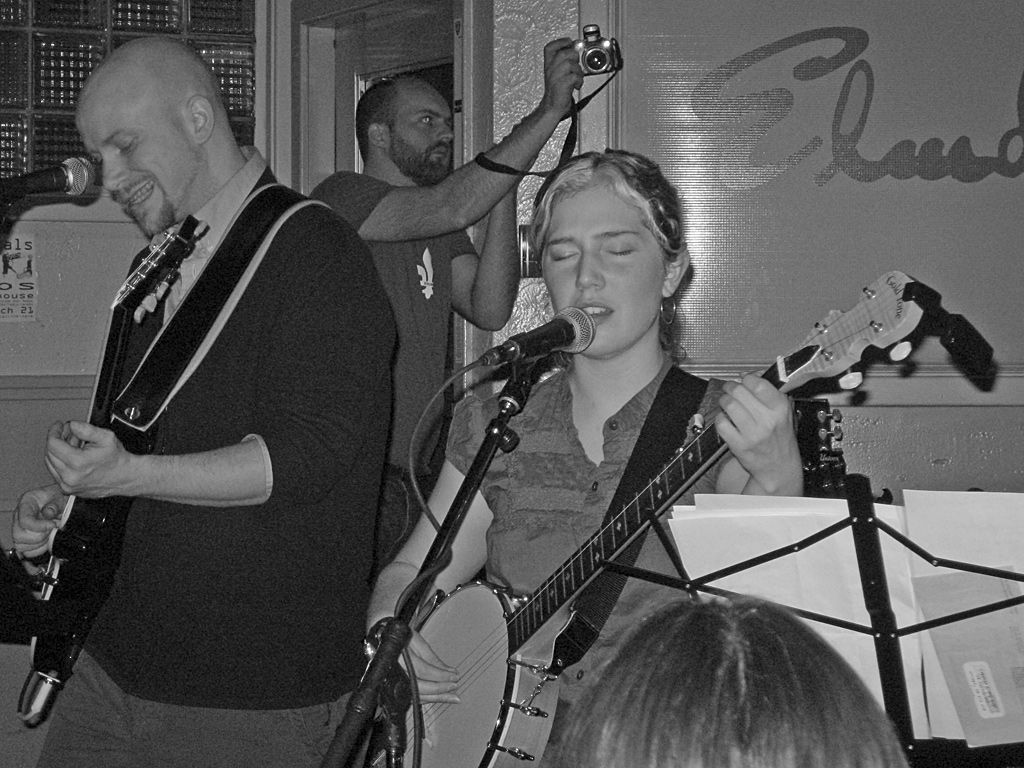
Andrea Simms-Karp at the Elmdale Tavern

A recent (and very unscientific) poll in The Globe and Mail suggests that many Canadians see the Kosovar declaration of independence as a “precedent that could be used in Quebec.” Personally, I found the question ambiguous. If anything, the situation in Kosovo is a demonstration of why Quebecois succession is a poor option.

Since at least the end of the first world war, there has been a profound tension between civic and ethnic nationalism. At best, ethnically defined nationalism has been a means of peacefully dividing empires into groups of states that get along decently; at worst, it has been a significant cause of genocide and ethnic cleansing. Virtually all states have minorities. Many have minorities in border regions, alongside states where those people have a majority. Given the difficulty and bloodiness of adjusting national borders, it is generally preferable to maintain states capable of accommodating members of ethnic minorities as full and equal members of the society – a possibility only likely to be manifest when the society has some philosophical basis other than ethnicity.

Normally, then, we should hope for pluralistic states that base their legitimacy around popular consent. What Kosovo exemplifies is a case where this has not occurred: where a central government has undermined its legitimacy in an entire region (as Russia has done in Chechnya) and has thus made it impossible for that area to be a legitimate portion of the state. The Kosovar case shows just how far such abuse must generally go before it constitutes good cause to break up a civil federation. Quebecois grievances are not on the same level, and thus do not constitute a license for succession.

CIA given license to torture

President Bush vetoed legislation that would have forbidden the CIA from using certain torture techniques, such as simulated drowning. It seems a clear sign of what we have lost due to excessive concern about terrorism – the understanding that governments are the most dangerous entities in the world. While they generally lack the desire to cause mayhem that defines terrorist groups, the powers governments have are so vast that they can do great harm through simple ineptitude, or a failure to police the actions of their agents. Facilitating torture is an international crime, and for good reason. It is a shame that geopolitics ensures that none of America’s new generation of torturers will even find themselves on trial in The Hague.

Stopping this legislation ensures that a few more people will be tortured needlessly, in violation of international law and the kind of ethics that we are supposedly trying to defend from terrorism. Furthermore, I think it’s likely that decisions like this will be looked back on in thirty years time much as we now look back on using the CIA to arm Osama bin Laden and the Mujahideen in Afghanistan, or help keep Pinochet in power. In the long term and in purely geopolitical terms, it will prove to be an own-goal for the United States – further tarnishing its increasingly shaky reputation on human rights and emboldening governments like China and Sudan to treat the idea even more disdainfully.

This Michael Ignatieff article, which I have doubtless linked previously, does a very good job of treating the subject of torture ethics intelligently. Henry Shue has a less convincing argument.

Pessimism and the Future Leaders Survey

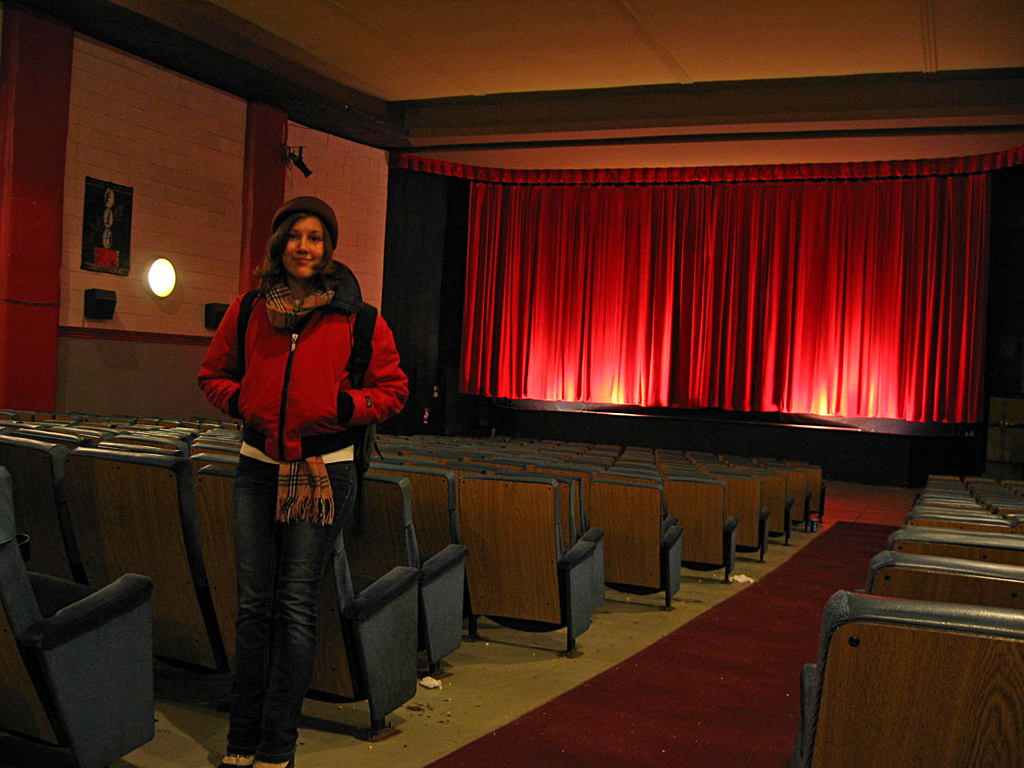
Emily Horn in the ByTowne Cinema

Increasingly, there seems to be a strong correlation between a young person’s level of education and their level of pessimism. Arguably, this is on account of the related correlation between education level and level of interest and engagement with current events. Somebody who never watches the news or picks up a newspaper just has less to worry about.

A recent British survey has produced some numbers that support the pessimism hypothesis. The Future Leaders Survey polled 25,000 applicants to British universities. The findings demonstrate a widespread anticipation of a worsening world:

Asked about likely outcomes for humanity by 2032, the responses are gloomy to say the least. Nine out of 10 surveyed think Africa will still be starving and oil will be prohibitively expensive, and eight in 10 expect more terrorism and the effects of climate change to be hitting hard. Inequality within the U.K. and between rich and poor nations will have worsened, according to around 70 percent of those surveyed. Half expect nuclear weapons will have been used again and that the U.S. will still be in Iraq.

16% of respondents said that they expected humanity to go extinct within a century; 78% of respondents said that could only be avoided through radical lifestyle changes. Admittedly, these are people who are just starting out at university, so it doesn’t demonstrate much about the linkage between education and pessimism. It would be quite interesting to have the same group re-polled in four years time. It would not surprise me if they were significantly more dispirited the second time.

One has to wonder whether this makes today’s society an aberration. Surely, history has been full of people who never really expected the world to change, one way or the other. Periods of history have also included large numbers of people believing that big improvements were possible or even inevitable. I am not sure if the kind of apocalyptic feeling spreading through the most influential segments of the most powerful states has much precedent. One can only speculate about what the long-term consequences might be.

Big picture uncertainty

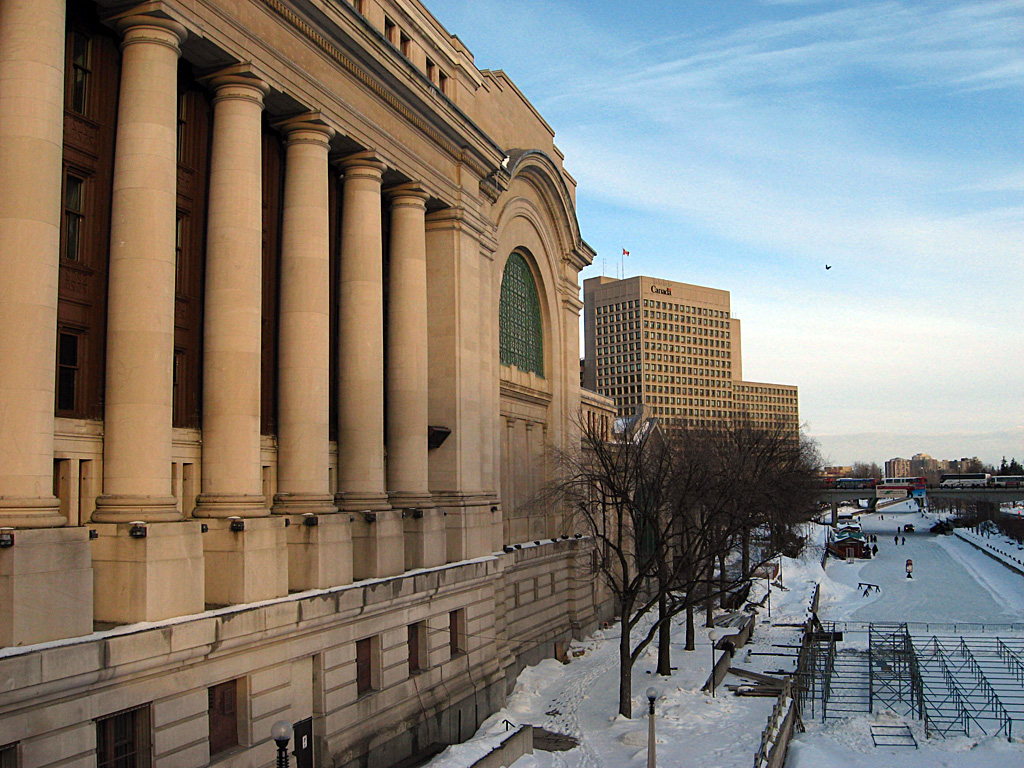
Buildings in central Ottawa

Climate change policy focuses on constant attempts to make guesses about the future: about economic development in rich states and poor, about patterns of technological evolution, about climatic responses to radiative forcing caused by changes in the gas mixture of the atmosphere. One cannot always evade the feeling that too many uncertainties are being layered. Consider, for instance, the possibility that hydrocarbon fuels will peak in world output within the next few decades. If that happened, most of our ‘business as usual’ economic projections would be badly wrong.

An even more ominous consideration relates to global conflict. When the world is generally doing well, it is devilishly hard to convince states to reduce their greenhouse gas emissions for the universal good. Imagine how hard it would be in a geopolitical environment based around rising tensions and the growing expectation of great power war. We make projections for 2100 without acknowledging that making it from now to then without such a war would be a historical aberration.

In the end, I suppose, cynicism does us little good. The vast majority of ordinary people – and of powerful people – will not believe in the disastrous potential consequences of climate change until they start to manifest themselves visibly. As such, agonizing about them just makes you more marginal to the debate that exists among those not kept awake by fear about the possibility for self-amplifying positive feedbacks in the climate system. We must do the best we can, avoid confusing engagement with the mainstream debate with genuine complacency, and hope that humanity possesses more wisdom than it has ever demonstrated before.

Natural gas and Russian politics

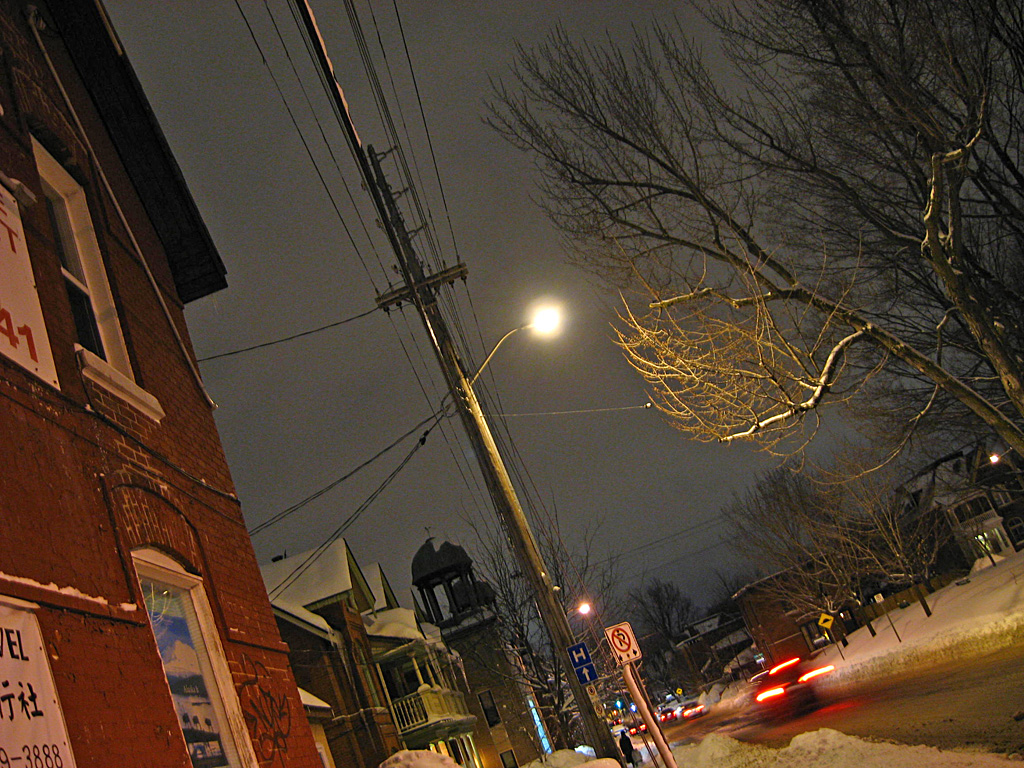
Snowy Ottawa street

The results of the election in Russia yesterday are not surprising, though they are part of a very worrisome overall trend. Bolstered by high energy prices and strategic overstretch on the part of the United States, Russia is regaining some of its nastier old habits. Of course, it is unreasonable and unacceptable to hope that Russia will remain as powerless as it has been since the fall of the Soviet Union. As much as is the case with China, the question of how a powerful Russia will return to geopolitics is an interesting and somewhat frightening one.

Europe’s vulnerability to Russian control of natural gas supplies has been well demonstrated of late. Poorer Central European states are potentially even worse off in the medium term, if Russia manages to build pipelines that go around them. Turning off the heat in Kiev is unlikely when it means doing the same in Berlin. Being able to do the first without the second would further worsen the strategic situation presented to the states in the middle. I expect they are feeling pretty nervous right now, given how generally spineless NATO and the EU have been recently in the face of Russian bullying.

Hopefully, concerns about access to gas will help to advance the drive towards renewable energy in Western Europe, eventually reducing the economic vulnerability of those states to Russian machinations. Such an outcome would have positive consequences in relation to the state of the global environment, and may embolden Europe’s democracies in relation to an increasingly assertive and unapologetically totalitarian Russia.

Seed vault opening

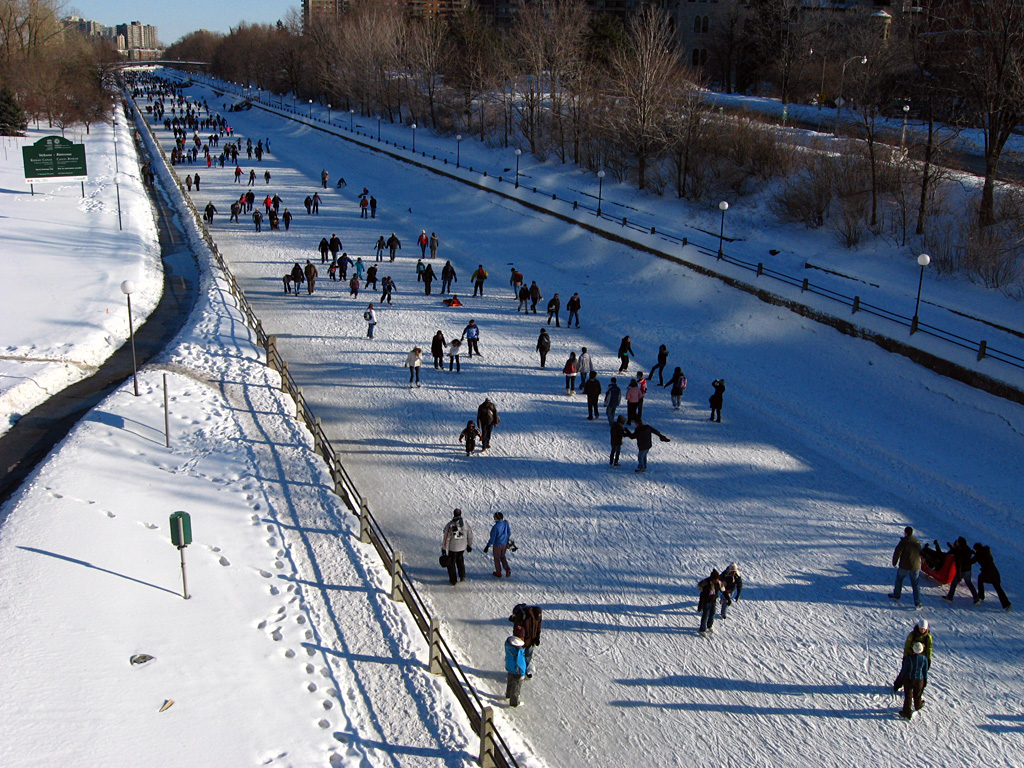
Skaters on the Rideau Canal

A particularly tangible sort of insurance policy is being initiated today, with the opening of the Svalbard Global Seed Vault. The underground facility is intended to protect the genetic diversity of plant species, in recognition of the risk that other seeds could be destroyed by a worldwide disaster. Eventually, the vault is meant to contain 4.5 million seed samples, deposited by governments from around the world.

The vault is buried 120m inside a sandstone mountain selected for remoteness, persistent cold, and lack of tectonic activity. The selection of a site 130m above sea level ensures that, even if all the world’s ice melts, it will not be submerged. The seeds will be kept at a temperature of -20 to -30 degrees Celsius using electrical power. In the event of a failure of refrigeration, several weeks would elapse before temperatures rose to the -3 degree temperature of the surrounding rock. The packaging of the seeds – along with their natural durability – should make at least some viable for long periods of time, even in the absence of refrigeration.

The $9.1 million project was financed by the Global Crop Diversity Trust. While there is no particular reason to believe that the world’s 1400 or so other seed banks would be universally unable to survive something like a nuclear war or a comet or asteroid impact, $9.1 million is probably a sensible expenditure when so many potentially vital species are to be protected. Less sensational disasters are also being insured against: from the destruction of national seedbanks through conflicts or errors to administrative blunders or localized natural disasters.

An interactive tour of the facility is accessible online.

Recovering encryption keys from RAM

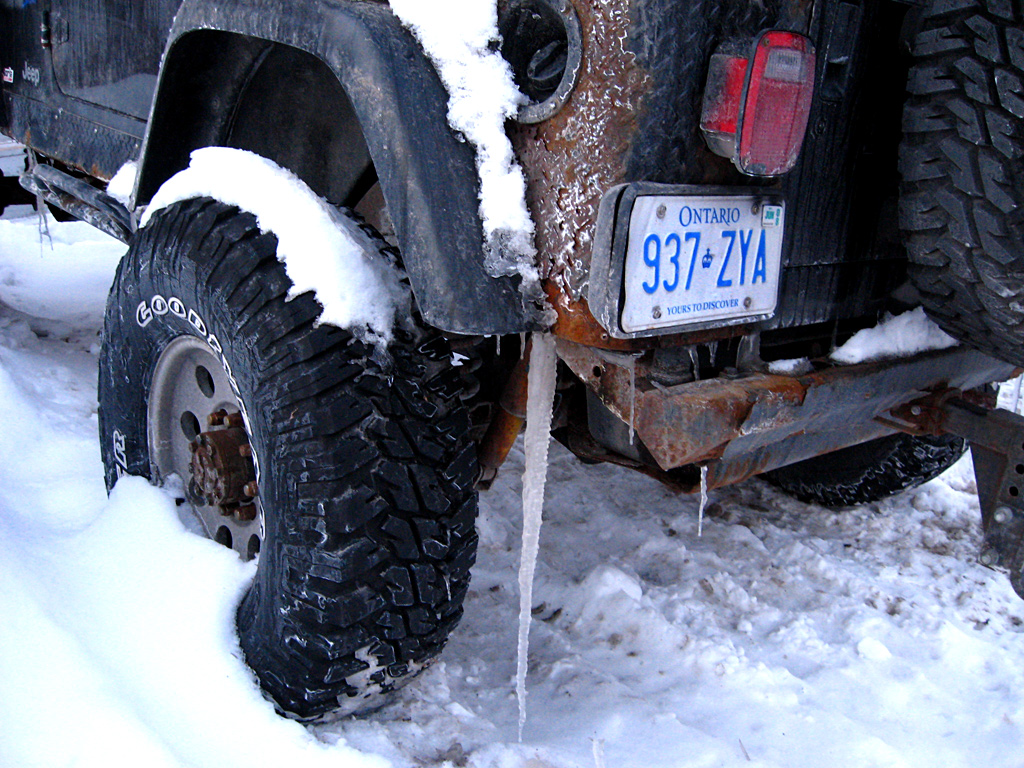
Rusty icy truck

Most successful attacks against strong, well-designed encryption take the form of ‘side channel’ attacks: ones that aren’t based on breaking the strong cryptographic algorithm, but which are based or circumventing it or subverting it somehow. Common varieties include timing attacks, which examine the precise amounts of time cryptographic equipment or software takes to perform operations, and power monitoring attacks, which examine which parts of a piece of equipment are using energy when.

Researchers at Princeton have recently uncovered a potentially significant side-channel attack against whole-disk encryption systems like BitLocker (built into Windows Vista), FileVault (same for Mac OS X), and Truecrypt. The attack is based on analyzing the random access memory (RAM) of a computer system once it has been turned off. Despite the common perception that this clears the contents of the RAM, they have demonstrated that it is possible to use simple techniques and equipment to get a copy of what is inside: including the cryptographic keys upon which these programs depend:

We found that information in most computers’ RAMs will persist from several seconds to a minute even at room temperature. We also found a cheap and widely available product — “canned air” spray dusters — can be used to produce temperatures cold enough to make RAM contents last for a long time even when the memory chips are physically removed from the computer. The other components of our attack are easy to automate and require nothing more unusual than a laptop and an Ethernet cable, or a USB Flash drive. With only these supplies, someone could carry out our attacks against a target computer in a matter of minutes.

This is bad news for anyone relying on encryption to protect the contents of their laptop: whether they are a banker, a spy, a human rights campaigner in China, or a criminal. Other technologies exist to help foil whole-disk encryption systems when the attackers are lucky enough to find a computer that is turned on and logged in.

Researchers in the same organization have done some good work on electronic voting machines.

Robert Gates posturing on missile defence

Everybody has probably heard about how the United States shot down a supposedly dangerous satellite with a ship-based kinetic kill interceptor. Now, US Secretary of Defence Robert Gates is saying that this proves missile defence works. Of course, this is absurd. Satellites follow very predictable orbits. As such, it is pretty easy to hit them with missiles. Commanders won’t have that advantage when trying to shoot down the incoming missiles of their enemies: especially since those missiles will often employ physical or electronic countermeasures.

It is also worthwhile to consider what they would be saying if this test had failed: “Of course, downing an ailing satellite is completely different from missile defence! The fact that this test didn’t succeed in no way suggests that America’s $12.8 billion per year missile program is ineffective, nor that missile defence technologies aren’t worthy of billions more taxpayer dollars.”

It’s a good thing Canada never bought into the idea.

Wikileaks and whistleblowers

My cousin Tamara and her SO

Wikileaks is a website that allows anonymous whistleblowers to disseminate sensitive or embarrassing documents online. These could be anything from evidence of corruption and bribery in government to corporate wrongdoings to secret military interrogation manuals. While the ability to publish anonymously does have potential for abuse, it is also a valuable public service. There are plenty of barriers that prevent people from becoming whistleblowers, even when there is massive evidence of wrongdoing. Having technological mechanisms to aid the process – and reduce the dangers of retribution – thus serves the public interest. Particularly in places where governments are undermining traditional forms of public and legal oversight, such as in the treatment of terrorist suspects, there is extra value in whatever sources of information remain accessible.

As of today, the site is suffering from a California court decision that required Dynadot – the domain name registry that associates the URL ‘Wikileaks.org’ with an IP address – to “prevent the domain name from resolving to the wikileaks.org Web site or any other Web site or server other than a blank park page until further notice.” This doesn’t make the site inaccessible, since the server can be accessed directly at http://88.80.13.160/, but it will prevent a good number of people from finding it. The ruling arose from proceedings involving Julius Baer – a Swiss bank that leaks have implicated in tax evasion and money laundering in the Cayman Islands. In addition to the DNS restriction, the site is apparently suffering from a denial of service attack, probably orchestrated by one or more organizations the site has embarrassed.

The final result of this will be an interesting development in the ongoing battle to control what kind of information can be distributed online, whether that can be done anonymously or not, and which jurisdictions are most accommodating towards such activities.